

Selecting the appropriate food preservation appliance is crucial for both commercial operations and residential use. Many people often confuse upright freezers and refrigerators, leading to suboptimal choices. As a professional with 28 years in the refrigeration industry, I understand these distinctions profoundly. We will clarify the core differences, helping you make an informed decision tailored to your specific needs.
Understanding the Core Functions of Upright Freezers and Refrigerators
Upright freezers and refrigerators are both essential for food preservation, but they serve distinct purposes based on their temperature capabilities. Each appliance is designed with specific operational parameters to maintain food safety and quality over different durations. Recognizing these fundamental functions is the first step in choosing the right equipment for your needs.
1. What is an Upright Freezer and How Does it Work?
An upright freezer is an appliance designed to maintain consistently sub-zero temperatures, typically between -15°C and -25°C (-13°F to 5°F). This temperature range is critical for long-term storage of perishable goods by halting bacterial growth and enzymatic activity. Freezers achieve this through a refrigeration cycle involving a compressor, condenser, expansion valve, and evaporator. The refrigerant circulates, absorbing heat from the freezer interior and releasing it outside, thus lowering the internal temperature significantly. For instance, our Camay Commercial Worktop Refrigerator Cooler Fridge (Model MWTF-27-L) can reach temperatures of -25°C to -15°C, ideal for deep freezing. Similarly, the Undercounter Refrigerator Freezer (Model MTF-48) offers a temperature range of -25°C to -15°C, ensuring robust freezing capabilities.
2. What is an Upright Refrigerator and How Does it Work?
An upright refrigerator maintains temperatures typically between 0.5°C and 5°C (33°F to 41°F). This range slows down bacterial growth and spoilage, preserving fresh food items for short to medium durations. Like freezers, refrigerators operate on a vapor-compression cycle, but they are calibrated for less extreme cooling. The primary goal is to keep food chilled without freezing it, which is essential for items like fresh produce, dairy, and cooked meals. Our Camay 60” Countertop Refrigerated Chef Base (Model MAR-60A) maintains an internal temperature of 0.5°C to 5°C, perfect for daily food preparation and storage. Another example is the Camay Commercial Solid Door Undercounter (Model MTR-72), which also operates within this optimal refrigeration range.
Key Differences in Temperature Control and Preservation Capabilities
The fundamental distinction between upright freezers and refrigerators lies in their temperature control and, consequently, their preservation capabilities. These differences dictate the types of food items each appliance can store effectively and the duration of that storage. Understanding these nuances is vital for efficient food management and safety.
1. Exploring the Distinct Temperature Ranges and Their Impact on Food Storage
Upright freezers operate at much colder temperatures than refrigerators. Freezers typically maintain temperatures below -18°C (0°F), which is the standard recommended temperature for long-term frozen food storage. This deep cold preserves food quality and safety for months, even years, by completely stopping microbial activity. For example, our 1-Door Commercial Solid Door Freezer (Model MF-23) reaches temperatures from -25°C to -15°C. In contrast, refrigerators maintain temperatures between 0.5°C and 5°C (33°F to 41°F). This range is suitable for short-term preservation, extending the shelf life of fresh foods for days or weeks. The warmer temperature range allows for easy access and consumption of daily staples.
2. How Different Cooling Systems Affect Preservation and Energy Efficiency
Both appliances use refrigeration systems, but their designs are optimized for their specific temperature ranges. Freezers often feature thicker insulation and more powerful compressors to achieve and maintain ultra-low temperatures, such as the -86 ULT freezers for lab, which operate between -15°C and -45°C. This robust construction leads to higher energy consumption per unit of volume compared to refrigerators. Refrigerators, while still requiring efficient cooling, do not need the same level of insulation or compressor power. Many modern refrigerators, especially commercial models, utilize ventilated cooling systems to ensure even temperature distribution and rapid recovery after door openings. For example, the Commercial Undercounter Refrigerator (Model MTR-60) uses a ventilated system with R290 refrigerant for efficient cooling.
Design, Capacity, and Features: A Comparative Look
Beyond temperature, the physical design, internal capacity, and specialized features of upright freezers and refrigerators also differ significantly. These elements are tailored to their primary functions, influencing user convenience, organization, and overall performance. We examine these aspects to provide a comprehensive comparison.
1. Analyzing Internal Layouts and Storage Capacities for Each Appliance Type
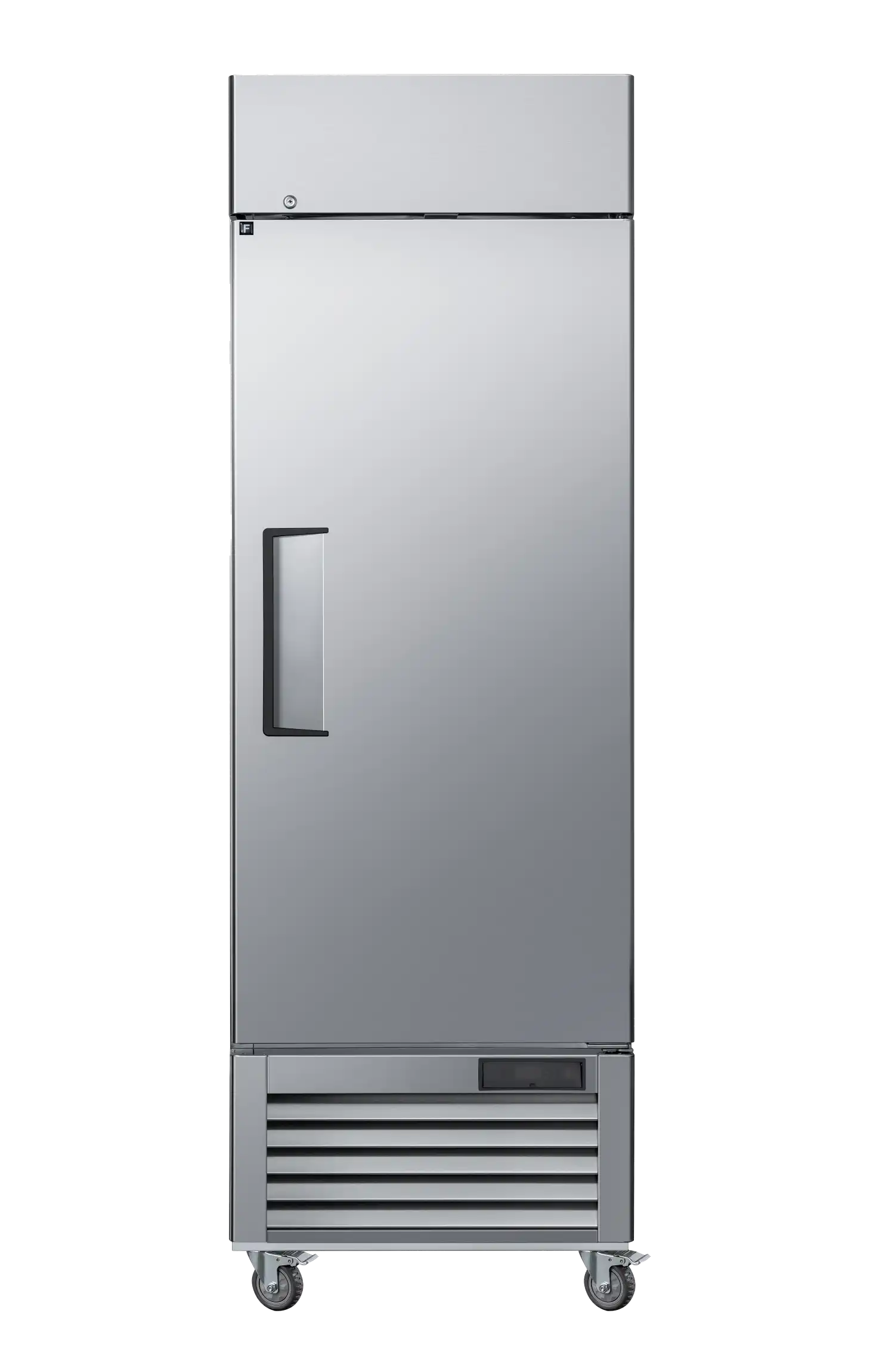
Upright freezers typically feature robust shelving and sometimes baskets, designed to hold heavy, often irregularly shaped frozen packages. The internal layout prioritizes maximum volume for bulk storage. For instance, a 1-Door Commercial Solid Door Freezer (Model MF-23) offers 547 liters of capacity with adjustable shelves, accommodating large quantities of frozen goods. Refrigerators, however, are designed for easier access and organization of frequently used items. They often include adjustable shelves, door bins, crisper drawers for produce, and specialized compartments for dairy or deli items. The 2-Door Commercial Undercounter Refrigerator (Model MTR-48) provides 368 liters of capacity, optimized for organized storage of fresh ingredients. The design of refrigerators aims to maximize visibility and accessibility.
2. Comparing Features Like Defrosting Mechanisms and Insulation Materials
Defrosting mechanisms vary considerably between freezers and refrigerators. Most modern freezers are “frost-free,” utilizing an automatic defrost system that periodically warms the evaporator coils to melt ice, then drains the water. This prevents ice buildup and maintains efficiency. Our Camay Commercial Worktop Refrigerator Cooler Fridge features an automatic defrost system. Refrigerators also commonly use automatic defrost, especially in commercial settings, to prevent frost accumulation on coils and ensure consistent cooling. For more information on defrosting, you can read Hot Gas Defrosting and Electric Heating Defrosting.
Insulation is another critical difference. Freezers require thicker, denser insulation to maintain extremely low temperatures and minimize energy loss. Polyurethane/Cyclopentane foam is a common, highly effective insulation material used in both types of appliances, but it is applied more generously in freezers. For example, the Camay Countertop Refrigerated Display Case (Model MWTF-27) uses this type of insulation for efficient cooling.
3. Understanding the Role of Refrigerants in Upright Freezers and Refrigerators
Refrigerants are the working fluids that absorb and release heat in both freezers and refrigerators. Historically, CFCs and HCFCs were common, but due to environmental concerns, eco-friendly alternatives like R290 (propane) and R600a (isobutane) are now widely used. These hydrocarbon refrigerants have lower global warming potential (GWP) and zero ozone depletion potential (ODP). For instance, our Camay Commercial Worktop Refrigerator Cooler Fridge uses R290 refrigerant. The choice of refrigerant impacts both the appliance’s energy efficiency and its environmental footprint. We consistently prioritize environmentally friendly refrigerants in our products. You can learn more about refrigerants in Common Refrigerator Refrigerants on the Market.
Application Scenarios: Choosing the Right Appliance for Your Needs
The selection between an upright freezer and a refrigerator largely depends on the specific application and the types of items requiring storage. Each appliance excels in different environments, from bustling commercial kitchens to quiet residential homes. Understanding these optimal use cases helps in making a strategic investment.
1. Ideal Uses for Upright Freezers in Commercial and Residential Settings
Upright freezers are indispensable for long-term storage of bulk perishable goods. In commercial kitchens, they store meats, seafood, prepared meals, and frozen vegetables, allowing for inventory management and reduced food waste. For example, restaurants utilize freezers like the Camay Commercial Worktop Refrigerator Cooler Fridge (Model MWTF-27-L) for ingredients that need to be kept frozen for extended periods. Residential settings benefit from freezers for storing seasonal produce, bulk purchases, and homemade meals. Ultra-low temperature freezers, such as the -86 ULT freezers for lab, are critical in laboratories and medical facilities for preserving biological samples and sensitive materials at extreme cold.
2. Optimal Applications for Upright Refrigerators in Various Environments
Refrigerators are designed for daily use and short-term preservation of fresh foods. In commercial environments, they are essential for storing dairy products, fresh produce, cooked foods, and beverages. Prep tables, like the Salad Prep Table (Model MSR-48M) or Pizza Prep Table (Model VRX395-1600), integrate refrigeration to keep ingredients fresh during food preparation. These are crucial for maintaining food safety and operational efficiency in restaurants and cafeterias. In homes, refrigerators are central to daily meal preparation, keeping fresh ingredients readily accessible. If you’re interested, check 《Boost Kitchen Efficiency with Integrated Worktop Refrigeration Solutions》.
3. Considerations for Commercial Kitchens and Food Service Operations
Commercial kitchens often require both freezers and refrigerators due to diverse storage needs. Space optimization, energy efficiency, and durability are paramount. Appliances like the Commercial Chef Base Manufacturer or Under Counter Refrigerator offer versatile solutions, combining storage with workspace. For example, the Camay 60” Countertop Refrigerated Chef Base (Model MAR-60A) provides refrigerated storage directly under a worktop, enhancing workflow. We design our commercial refrigeration equipment with robust stainless steel construction and advanced cooling systems to withstand demanding environments. Considerations also include compliance with health and safety regulations, which often specify precise temperature controls.
Energy Consumption and Environmental Impact Comparison
Energy consumption and environmental impact are increasingly important factors in appliance selection. Both upright freezers and refrigerators contribute to energy usage and carbon footprint, but their operational differences lead to varying levels of impact. We examine these aspects to highlight the importance of sustainable choices.
1. Evaluating Energy Efficiency Ratings and Long-Term Operating Costs
Freezers generally consume more energy than refrigerators because they maintain significantly lower temperatures and often have more powerful compressors. However, advancements in insulation and compressor technology have improved their efficiency. Energy Star ratings provide a standardized way to compare the energy performance of different models. For example, our Undercounter Refrigerator Freezer (Model MTF-48) is designed with integrated foamed-in polyurethane insulation to reduce energy consumption. Investing in an energy-efficient model can lead to substantial long-term savings on electricity bills, particularly for commercial operations running multiple units. We offer many ETL and Energy Star certified products, demonstrating our commitment to efficiency.
2. The Role of Eco-Friendly Refrigerants and Insulation in Modern Appliances
The refrigeration industry has shifted towards more environmentally friendly refrigerants, primarily R290 and R600a, to reduce the environmental impact of appliances. These refrigerants have a much lower global warming potential (GWP) compared to older HFCs. Our products, including the Camay Commercial Worktop Refrigerator Cooler Fridge, utilize R290 refrigerant. Similarly, insulation materials like polyurethane/cyclopentane are chosen for their excellent thermal properties and CFC-free composition, further minimizing environmental harm. These material choices reflect a commitment to sustainability and compliance with evolving environmental regulations. If you’re interested, check 《The Fourth Generation Refrigerants》.
Making the Best Choice: Factors to Consider Before Purchasing
Choosing between an upright freezer and a refrigerator, or deciding on specific models, requires careful consideration of several factors. These include your storage requirements, budget, and expectations for maintenance and longevity. A thorough evaluation ensures that your investment aligns with your operational needs and financial planning.
1. Assessing Your Specific Storage Requirements and Volume Needs
First, determine the types of items you need to store and their required temperature. If you need to preserve food for extended periods, an upright freezer is essential. If your primary need is for fresh ingredients and daily consumables, a refrigerator is more appropriate. Consider the volume of items you will store. For high-volume commercial operations, larger units like the 2-Door Commercial Undercounter Refrigerator (Model MTR-48) or the 2 door commercial refrigerator (Model MR-49) might be necessary. For smaller spaces or specific needs, a Under Counter Refrigerator or Under Counter Refrigerator Freezer Combo could be ideal.
2. Budgetary Considerations and Return on Investment for Each Type
Initial purchase price is a significant factor, but consider the total cost of ownership, which includes energy consumption, maintenance, and potential repair costs. Energy-efficient models, though sometimes more expensive upfront, offer lower operating costs over their lifespan. Commercial-grade appliances, while pricier, often provide greater durability and reliability, leading to a better return on investment in demanding environments. We offer a range of products designed for long-term value, including those with ETL and Energy Star certifications.
3. Maintenance and Longevity Expectations for Upright Freezers and Refrigerators
Regular maintenance, such as cleaning coils and checking door seals, extends the lifespan of both freezers and refrigerators. Commercial units are built for heavy use and typically have longer lifespans than residential models, assuming proper care. Our products feature stainless steel construction and removable gaskets for easy cleaning, contributing to their longevity. Automatic defrost systems also reduce maintenance effort. Understanding these factors helps in planning for appliance care and replacement cycles. For tips on extending appliance life, see How to Prolong the Lifespan of Your Refrigerator: Expert Tips.
Contact Us for Your Refrigeration Needs
Choosing the right refrigeration equipment is a critical decision that impacts food safety, operational efficiency, and long-term costs. At ZHEJIANG KAIMEI CATERING EQUIPMENT CO., LTD., we specialize in providing professional, high-quality refrigeration solutions tailored to your specific demands. Whether you require an upright freezer for bulk storage or a refrigerator for daily fresh ingredients, our extensive product range and 28 years of industry expertise ensure you find the perfect fit. Contact us today to discuss your requirements and discover how our innovative and energy-efficient appliances can benefit your business.
Phone: +86 181 5720 2219
Email: Sales@hzcamay.com
About the Author
David Qian has a background in refrigeration equipment and 28 years of experience in the refrigeration industry.
FAQs
1. Can an upright freezer be converted into a refrigerator, or vice versa?
Converting an upright freezer to a refrigerator is generally not recommended due to fundamental differences in insulation, compressor size, and thermostat calibration. Freezers are designed for much colder temperatures, and attempting to operate them at refrigerator temperatures can lead to inefficient operation, premature wear, and potential food safety issues. The reverse conversion is also impractical.
2. What are the typical lifespan differences between upright freezers and refrigerators?
Both upright freezers and refrigerators typically last between 10 to 15 years, with commercial models often designed for greater durability and a longer lifespan under heavy use. Factors such as maintenance, usage patterns, and environmental conditions significantly influence their longevity. Regular cleaning and timely repairs can extend their operational life.
3. How do commercial upright freezers and refrigerators differ from residential models?
Commercial models are built with more robust materials, such as stainless steel, and feature more powerful compressors for frequent door openings and demanding environments. They often have larger capacities, advanced temperature controls, and certifications for food safety. Residential models prioritize aesthetics and lower energy consumption for lighter use.
4. What are the most common refrigerants used in modern upright freezers and refrigerators?
Modern upright freezers and refrigerators commonly use eco-friendly refrigerants like R290 (propane) and R600a (isobutane). These hydrocarbons have a low global warming potential (GWP) and zero ozone depletion potential (ODP), making them environmentally responsible choices compared to older refrigerants like HFCs.
5. Is there a significant difference in noise levels between upright freezers and refrigerators?
Generally, freezers can be slightly noisier than refrigerators due to their more powerful compressors and fans required to maintain lower temperatures. However, modern appliances from reputable manufacturers are designed with noise reduction technologies. Commercial units might also produce more operational noise due to their larger size and higher performance demands.