
The rhythm of a busy coffee shop depends on small things going right. Ice is one of them. When the afternoon rush hits and every second counts, reaching for ice that isn’t there—or waiting on a delivery that’s running late—can throw off an entire service window. That’s why more cafes are bringing ice production in-house with compact machines that fit their space and match their pace.
Why On-Demand Ice Changes the Workflow
Placing a small ice maker directly in the service area removes a surprising number of friction points. There’s no walking to a back freezer, no digging through bags, no guessing whether the morning delivery will arrive before the lunch crowd. The ice is just there, ready when the barista needs it.
This matters more than it might seem. A few extra steps per drink add up across hundreds of orders. When ice production happens on-site and on-demand, baristas stay in their flow. Drinks come out faster. Customers notice the difference, even if they can’t name exactly what changed.
The traditional approach—buying bagged ice, storing it in a separate freezer, hauling it to the bar—introduces variables that are hard to control. Bags run out at inconvenient times. Freezer space gets crowded. The ice itself can pick up off-flavors if it sits too long. An in-house system sidesteps most of these issues by keeping production close to the point of use.
The Financial Case for Making Your Own Ice
Switching from purchased ice to in-house production involves an upfront investment, but the math tends to work out faster than expected. Bagged ice carries recurring costs that accumulate quietly—the bags themselves, delivery fees, the freezer space they occupy, the labor involved in managing inventory.
| Feature | Bagged Ice | In-House Ice (e.g., Cube Ice Making Machine) |
|---|---|---|
| Cost | High recurring purchase costs | Lower long-term operational costs |
| Availability | Dependent on supplier deliveries | On-demand, consistent supply |
| Storage | Requires dedicated freezer space | Integrated, often compact storage |
| Hygiene | Risk of contamination during transport | Controlled, in-house production |
| Labor | Manual handling, stocking | Minimal, automated production |
| Quality | Varies, potential for freezer burn | Fresh, consistent quality |
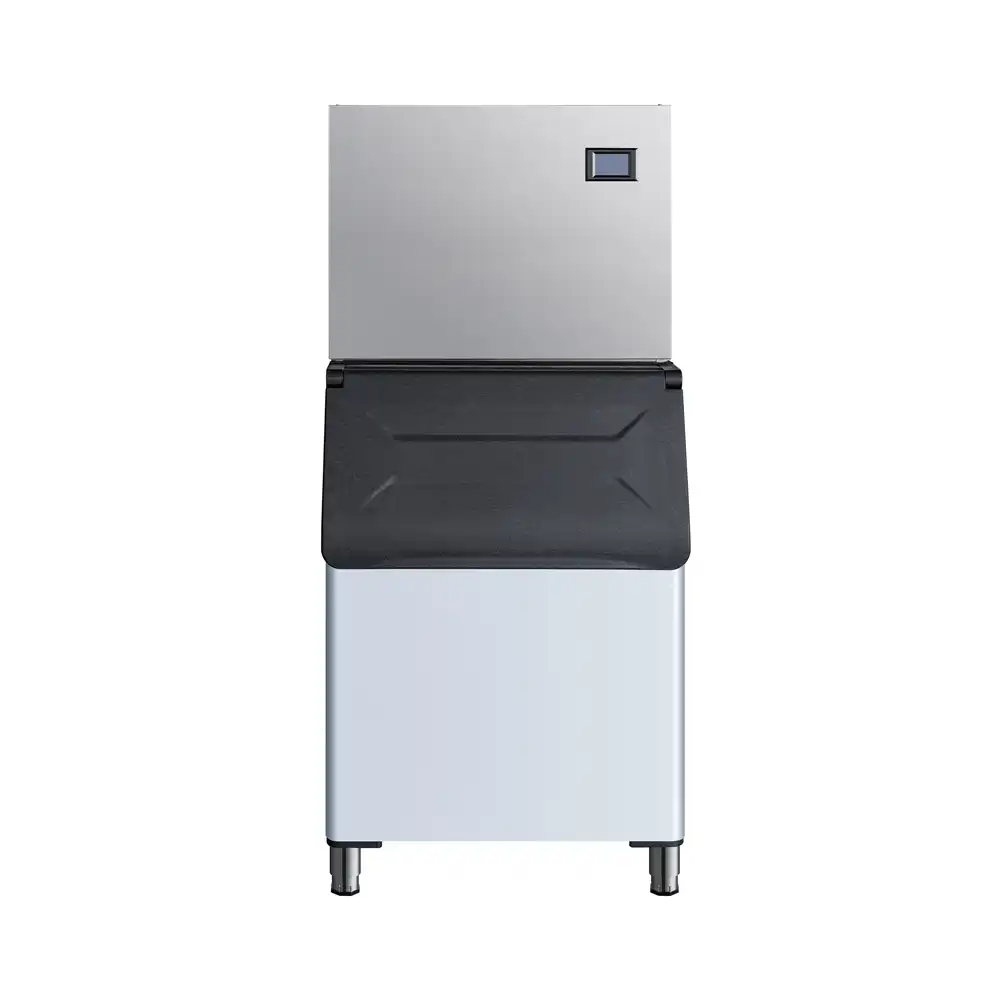
A machine like the Cube Ice Making Machine (Model FB210A) uses a water-flow system that increases capacity by roughly 10% compared to similar units. That efficiency shows up in energy bills and daily output. The R290 refrigerant contributes to lower operating costs while meeting current environmental standards.
If you’re interested, check 《Boost Kitchen Efficiency Workflow Optimization with Chef Base Fridges》.
Ice Quality Affects What Ends Up in the Cup
This is something that doesn’t get discussed enough. Ice isn’t just frozen water. It carries whatever was in that water—minerals, chlorine, trace flavors from old pipes. In a cold brew or an iced latte, where the ice melts directly into the drink, those impurities become part of what the customer tastes.
Using filtered water for ice production makes a noticeable difference. So does the material the machine is made from. Food-grade 304 stainless steel prevents the kind of corrosion and contamination that cheaper materials can introduce over time.
Hygiene extends beyond the water source. Ice bins need regular cleaning. Internal components accumulate mineral deposits. Bacterial growth happens in any moist environment that isn’t maintained. A good cleaning schedule—daily wipe-downs of accessible surfaces, deeper cleaning every few months—keeps the ice safe and the machine running properly.
What are the best types of ice for coffee shop beverages?
Nugget ice works well for blended drinks and iced lattes because it’s soft, chewable, and integrates smoothly into the beverage. Full cube ice melts more slowly, which makes it better for cold brew or iced espresso where you want the flavor to hold without dilution. The right choice depends on your menu. If you serve a lot of blended drinks, nugget ice might be worth prioritizing. If straight iced coffee dominates your sales, full cubes will serve you better.
Fitting a Small Ice Maker into a Tight Space
Most coffee shops don’t have extra square footage to spare. The counter is already crowded with espresso machines, grinders, and POS systems. The back of house is packed with storage and prep equipment.
This is where compact design becomes essential. Under-counter models slide into spaces that would otherwise go unused. Countertop units can sit near the service area without blocking workflow. The key is finding a machine that fits the available footprint while still producing enough ice to meet demand.
Heat dissipation matters in tight installations. A machine that vents hot air from the sides or front can be placed against a wall or tucked into a corner without overheating. The Cube Ice Making Machine uses front air intake and side exhaust specifically to allow flexible placement. This kind of engineering detail makes the difference between a machine that works in your space and one that doesn’t.
Matching Capacity to Actual Demand
Undersizing an Ice Maker leads to running out during busy periods. Oversizing wastes money and space. Getting the capacity right requires some honest calculation.
Start with your average daily ice consumption, then factor in peak hours. A cafe that serves 200 iced drinks on a typical day needs more ice than one serving 50. But the timing matters too—if most of those drinks happen between 2 PM and 5 PM, the machine needs to keep up with that concentrated demand, not just the daily total.
Can a small ice maker handle peak coffee shop demand?
Many compact commercial models produce enough ice for busy cafes. The FB210A, for example, generates up to 100 kg of ice per 24 hours and stores 45 kg at a time. For most small to medium coffee shops, that’s sufficient headroom. The important step is calculating your actual needs—both average and peak—before selecting a model. Building in a buffer helps avoid the stress of running low during an unexpected rush.
Keeping the Machine Running Long-Term
An ice maker is a mechanical system that works hard in a demanding environment. Without regular attention, performance degrades. Ice quality drops. Eventually, something breaks.
Preventative maintenance isn’t complicated, but it needs to happen consistently. Daily tasks include wiping down exterior surfaces and checking the ice bin. Weekly tasks might involve inspecting water lines and cleaning accessible components. Every six months or so, a deeper cleaning addresses mineral buildup inside the machine and ensures all parts are functioning correctly.
How often should a commercial ice maker be cleaned?
A full deep cleaning every six months is the standard recommendation for commercial ice makers. This addresses mineral scale, bacterial growth, and any buildup that routine cleaning misses. Between deep cleanings, daily and weekly maintenance of accessible parts—the bin, exterior surfaces, and water lines—keeps the machine running efficiently and the ice safe to serve.
Some machines simplify this process. Self-cleaning functions and removable dust filters reduce the time and effort required for upkeep. These features don’t eliminate the need for maintenance, but they make it easier to stay on schedule.
Working with ZHEJIANG KAIMEI
ZHEJIANG KAIMEI CATERING EQUIPMENT CO., LTD manufactures compact refrigeration equipment designed for commercial food service environments. Our ice makers are built for the demands of busy cafes—reliable production, efficient energy use, and designs that fit real-world kitchen layouts. If you’re evaluating options for your coffee shop, we can help match the right equipment to your specific operation. Reach out at Sales@hzcamay.com or call +8618157202219.