
After 26 years in commercial refrigeration, I’ve learned that holding tight on prep-table temperatures isn’t just “good practice”—it’s what keeps people safe. One busy Friday, a line cook flagged me because the salsa station “felt warm.” A quick probe read 44°F; we swapped pans and adjusted airflow before service even noticed. Moments like that underline the point: staying out of the danger zone prevents bacterial growth, protects diners, and shields a business’s hard-earned reputation.
Why Maintaining Correct Food Prep Table Temperature Zones is Crucial for Food Safety
Keeping prep tables in the right temperature zones is foundational to food safety. When temperatures drift, bacteria can multiply fast, increasing the chance of foodborne illness. Staying within strict temperature guidelines protects guests and shields businesses from legal trouble and costly fallout.
1. Understanding the Danger Zone and its Risks
The “danger zone” is 41°F (5°C) to 135°F (57°C). In that range, bacteria grow quickly. Food that lingers there becomes unsafe. Pathogens like Salmonella, E. coli, and Listeria thrive under these conditions and can cause severe illness, hospitalization, or worse. For commercial kitchens, that translates into violations, fines, lawsuits, and reputational damage. Keeping food out of—and minimizing time in—the danger zone is one of the most important daily tasks in any food service operation.
2. Legal and Regulatory Requirements for Food Temperature Control
Food safety rules—such as the FDA Food Code in the U.S.—require tight temperature control during cold holding, hot holding, cooking, and cooling. These ranges aren’t suggestions; they’re legal standards, verified through regular inspections. Falling short can trigger shutdowns, major fines, or even criminal charges in extreme cases. The only way to stay compliant is with the right equipment and well-trained staff who follow procedures consistently.
Essential Temperature Zones for Different Food Types on Prep Tables
Different foods have different sweet spots for safe holding—and knowing them is non-negotiable. Managing temperatures precisely prevents spoilage and suppresses bacterial growth. Here’s how to handle common categories.
1. Optimal Cold Holding Temperatures for Perishable Ingredients
Perishables belong at or below 41°F (5°C). At that point, the vast majority of harmful microorganisms are slowed way down. Prep tables with built-in refrigeration are designed to hold these temps, but they still need attention. Think cut vegetables, cheeses, and deli meats—keep them consistently cold and check those readings regularly. Doing so safeguards quality and keeps you inspection-ready.
2. Safe Hot Holding Temperatures for Cooked Foods
Cooked foods meant for immediate service should be held at or above 135°F (57°C). This keeps post-cook bacterial growth in check. Use hot holding gear—steam tables, heated tops—and verify temperatures with calibrated thermometers during service. And remember: hot holding is not reheating. It won’t bring food up to safe cooking temps quickly or evenly.
3. Specific Temperature Requirements for Meat, Dairy, and Produce
- Raw meats and poultry: 40°F (4°C) or below.
- Dairy (milk, cheese, etc.): at or below 41°F (5°C).
- Fresh produce, especially pre-cut: keep below 41°F (5°C) to prevent spoilage and microbial growth.
- Whole, uncut produce: can sometimes be held slightly warmer, but cooler, controlled storage is still best practice.
Always confirm specifics with local health codes.
Maintaining optimal temperature zones is critical for food safety and operational efficiency. If you’re interested, check Optimizing Kitchen Efficiency with Integrated Worktop Refrigeration.
Best Practices for Effective Temperature Management on Food Prep Tables
Staying in range takes the right equipment, smart setup, and steady monitoring. Done well, it reduces risk and improves workflow—two wins every kitchen can appreciate.
1. Choosing the Right Commercial Food Prep Equipment
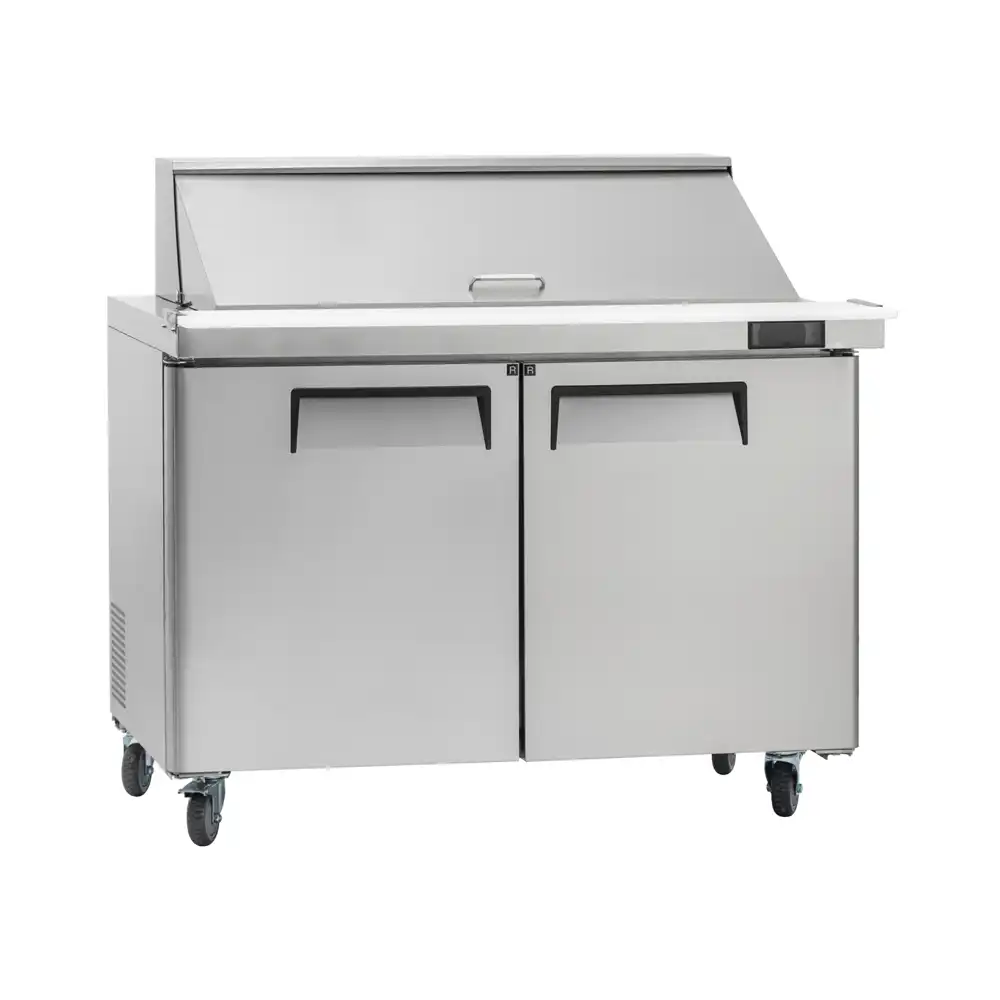
Start with equipment built for consistency: strong refrigeration systems, tight insulation, and stainless steel for durability and cleanability. Digital controls make fine adjustments and monitoring easier. A Salad Prep Table or Pizza Table with integrated refrigeration keeps high-use ingredients safely cold on the line. Look for ventilated (fan-assisted) cooling to maintain even temperatures across the entire unit.
| Model | Classification | Inner Temperature Range | Refrigerant | Key Features |
|---|---|---|---|---|
| MWTF-27-L | Freezer | -25°C to -15°C / -13°F to 5°F | R290 | Smart digital temperature system, eco-friendly, self-closing door |
| MAR-60A | Refrigerator | 0.5°C to 5°C / 33°F to 41°F | R290 | Sturdy integrated worktop, easy-to-clean design, smart digital control |
| MTR-72 | Refrigerator | 0.5°C to 5°C / 33°F to 41°F | R290 | Stainless steel construction, eco-friendly, energy-efficient |
| MSR-48M | Salad Prep Table | 0.5°C to 5°C / 33°F to 41°F | R290 | Stainless steel, R290 refrigerant, self-closing doors, smart digital control |
| VRX395-1600 | Pizza Prep Table | +2 to +8°C | R290 | Stable refrigeration, display lid, high-quality stainless steel |
2. Proper Loading and Organization of Prep Table Ingredients
How you load matters. Don’t overfill—restricted airflow creates hot spots. Use shallow pans so cold reaches ingredients quickly and evenly. Put high-use items front and center to limit door and lid openings. Keep lids on pans to stabilize temps and reduce cross-contamination. A tidy layout speeds service and keeps temperatures steady.
3. Regular Monitoring and Calibration of Temperature Systems
Trust, but verify. Check food temperatures (not just air temps) with calibrated thermometers on a set schedule, and log the results for inspector-ready records. Calibrate tools regularly. If a unit can’t hold setpoints, fix it right away—whether it needs a service call or a replacement. Small drifts become big problems if you ignore them.
Advanced Solutions for Ensuring Consistent Temperature Zones in Commercial Kitchens
Today’s kitchens benefit from tech that tightens control and simplifies oversight—ideally without disrupting the flow of service.
1. Leveraging Smart Digital Temperature Control Systems
Smart digital controls offer precise setpoints and continuous visibility. Many prep tables—such as the Camay Commercial Worktop Refrigerator Cooler Fridge—include these systems, with optional IoT and WiFi. Remote dashboards and alerts give real-time updates if temps stray, letting you act before a minor deviation turns into a safety issue.
2. The Role of Efficient Refrigeration and Insulation in Prep Tables
Solid refrigeration paired with excellent insulation makes all the difference. Eco-friendly R290 (used in our Camay units) cools effectively and efficiently. Polyurethane/Cyclopentane foamed insulation helps lock in temperatures and cuts energy use by reducing ambient heat transfer. The result: stable internal temps, even during rushes.
3. Integrating High-Performance Prep Tables into Your Workflow
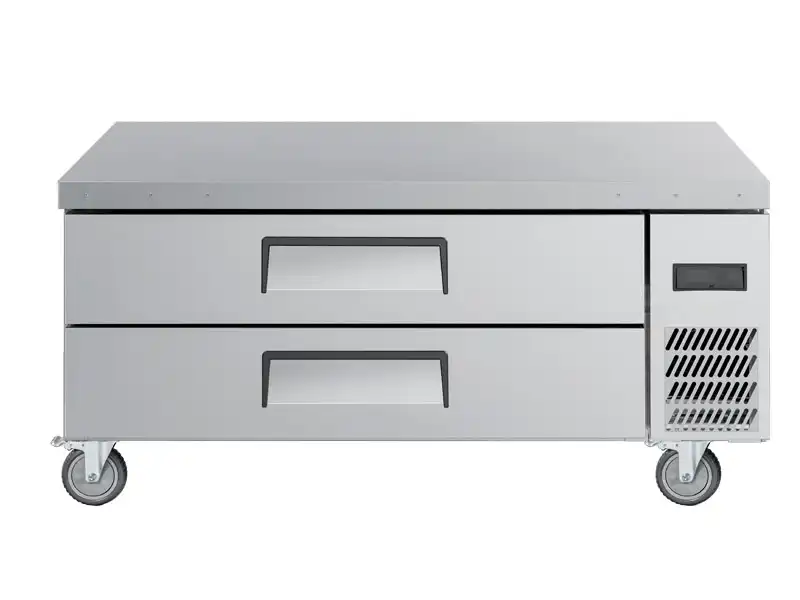
Build safety into the line. The Camay 60” Countertop Refrigerated Chef Base and the Camay Commercial Solid Door Undercounter bring dependable cold storage right to the prep station. Stainless steel construction, self-closing doors, and easy-to-clean surfaces are made for heavy use. With steady temperature zones at arm’s reach, ingredients stay fresh and ready—service after service.
For more information on optimizing your kitchen, consider reading Boost Kitchen Efficiency Workflow Optimization with Chef Base Fridges.
Partner with ZHEJIANG KAIMEI for Superior Refrigeration Solutions
Precise temperature control is the backbone of food safety. At ZHEJIANG KAIMEI CATERING EQUIPMENT CO., LTD, we build high-performance refrigeration that meets rigorous standards and the realities of a busy line. Drawing on 26 years of experience, we deliver reliable, energy-efficient equipment and flexible OEM/ODM options. Our Camay Salad Prep Table and Camay Pizza Prep Table combine advanced temperature control with robust construction. Reach out—we’ll help tailor the right solution to elevate your kitchen’s safety and efficiency.
Phone: +86 181 5720 2219
Email: Sales@hzcamay.com
FAQs
1. What is the “danger zone” for food, and why is it important to avoid?
It’s 41°F (5°C) to 135°F (57°C). In that range, bacteria multiply quickly, raising the risk of foodborne illness. Keeping food out of this zone helps prevent dangerous pathogen growth.
2. How often should I check the temperature of food on a prep table?
At least every four hours. If you discover food has been in the danger zone for more than two hours, it should be discarded.
3. What features should I look for in a commercial food prep table to ensure temperature control?
Reliable refrigeration, strong insulation (e.g., polyurethane/cyclopentane), digital temperature controls, and ventilated cooling are key. Stainless steel construction and self-closing doors also help stabilize temps.
4. Can I use a regular refrigerator for food prep, or do I need a specialized prep table?
Use a specialized prep table for commercial operations. They’re designed for frequent access and have integrated cold wells to keep ingredients safe during active prep—something a standard fridge isn’t built to handle.
5. What are the consequences of failing to maintain proper food prep temperatures?
You risk foodborne illness, health code violations, fines, legal exposure, and serious reputational harm. Ultimately, it jeopardizes public health and your operation’s integrity.