
Selecting undercounter refrigeration for a commercial kitchen affects food safety, speed, and the rhythm of service. We’ve seen how the right setup smooths the rush and cuts waste. This overview compares undercounter freezers and refrigerators so you can match equipment to your operation and budget. The aim is steady efficiency with gear you can count on.
Understanding the Core Differences Between Undercounter Freezers and Refrigerators for Commercial Use
Commercial kitchens rely on tight temperature control to protect food quality. Undercounter freezers and refrigerators serve different jobs, driven mainly by their temperature ranges. Knowing how they differ helps you design a storage plan that supports your menu and workflow.
1. Temperature Range and Food Preservation Capabilities
Undercounter freezers maintain temperatures significantly below freezing, ranging from -25°C to -15°C (-13°F to 5°F). This ultra-cold environment halts microbial growth and enzyme activity, preserving food quality for extended periods. Freezing is ideal for raw meats, poultry, seafood, prepared meals, and baked goods that require long-term storage. The deep freeze prevents spoilage and maintains nutritional value over months.
In contrast, undercounter refrigerators operate at temperatures between 0.5°C and 5°C (33°F to 41°F). This range slows bacterial growth, keeping perishable items fresh for several days to a few weeks. Refrigerators are essential for daily-use ingredients such as fresh produce, dairy products, deli meats, and prepped components. They provide accessible, short-term storage for items frequently rotated in a busy kitchen.
2. Energy Consumption and Operational Costs
Freezers generally consume more energy than refrigerators due to the lower temperatures they must maintain. The compressor works harder to remove heat and sustain sub-zero conditions, increasing electricity usage. Factors like insulation thickness, refrigerant type, and compressor efficiency significantly impact energy consumption. Modern units often utilize eco-friendly R290 refrigerant and advanced insulation, such as polyurethane/cyclopentane, to enhance energy efficiency.
Operational costs also include maintenance and potential food spoilage. While freezers have higher energy costs, they reduce waste by extending shelf life. Refrigerators, with lower energy demands, require diligent inventory management to prevent spoilage of fresh ingredients. The overall cost-effectiveness depends on how well the unit aligns with specific storage needs and usage patterns.
3. Ideal Applications and Storage Needs
Undercounter freezers are best suited for bulk storage, backup inventory, or items that require long-term preservation. They are invaluable for kitchens that purchase ingredients in large quantities or prepare components in advance. For example, a restaurant might freeze pre-portioned meat or sauces.
Undercounter refrigerators are essential for daily operations, providing quick access to ingredients for meal preparation. They are often integrated into prep stations, allowing chefs to retrieve fresh items without disrupting workflow. Restaurants, cafes, and bars rely on these units for immediate access to chilled goods.
Key Factors to Consider When Choosing Between an Undercounter Freezer and Refrigerator
Making the optimal choice between an undercounter freezer and refrigerator requires a comprehensive evaluation of several operational factors. These considerations ensure the unit integrates seamlessly into your commercial kitchen, maximizing efficiency and minimizing costs.
1. Available Space and Kitchen Layout Efficiency
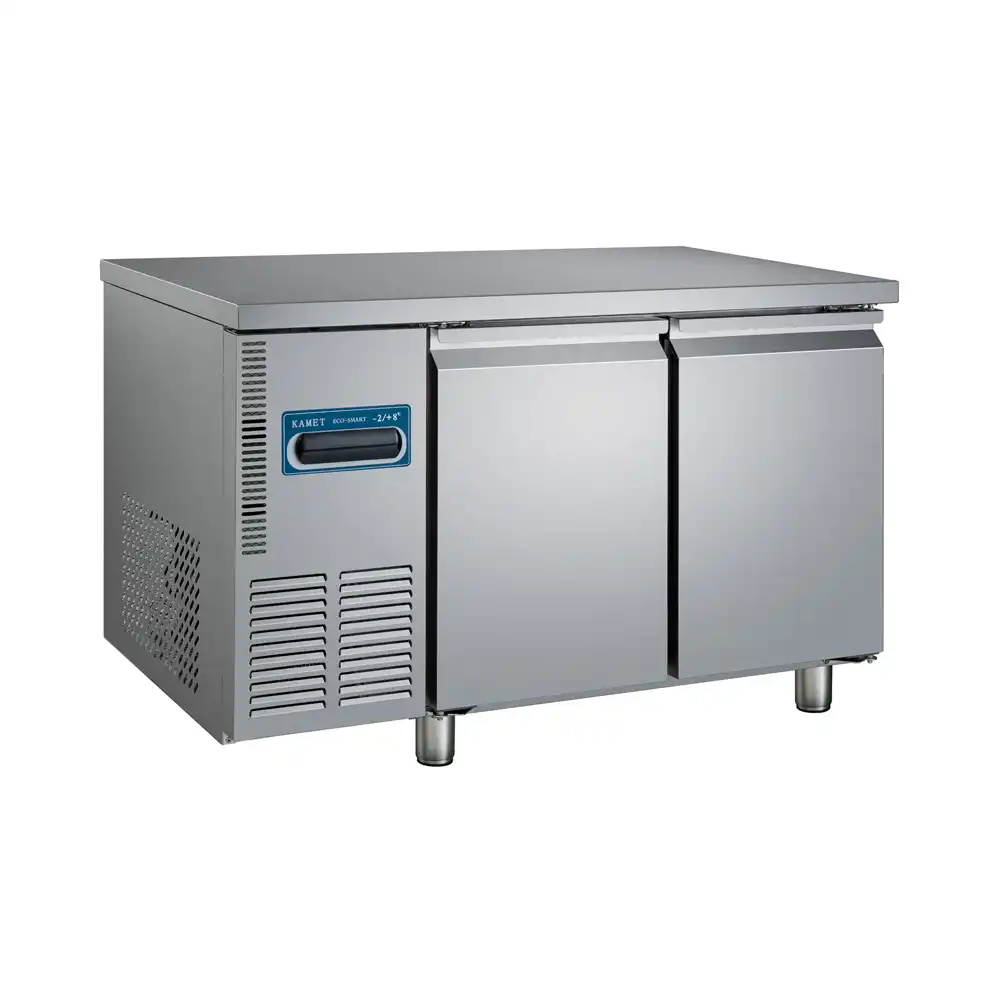
Commercial kitchens often operate with limited space, making undercounter units a valuable asset. Measure the available footprint accurately, considering height, width, and depth. Ensure adequate clearance for door swings and ventilation. A compact design allows for strategic placement under existing countertops or as part of a work station. For example, a Work Top unit can combine storage with a preparation surface. Efficient layout minimizes staff movement and improves workflow.
2. Specific Food Storage Requirements and Inventory Management
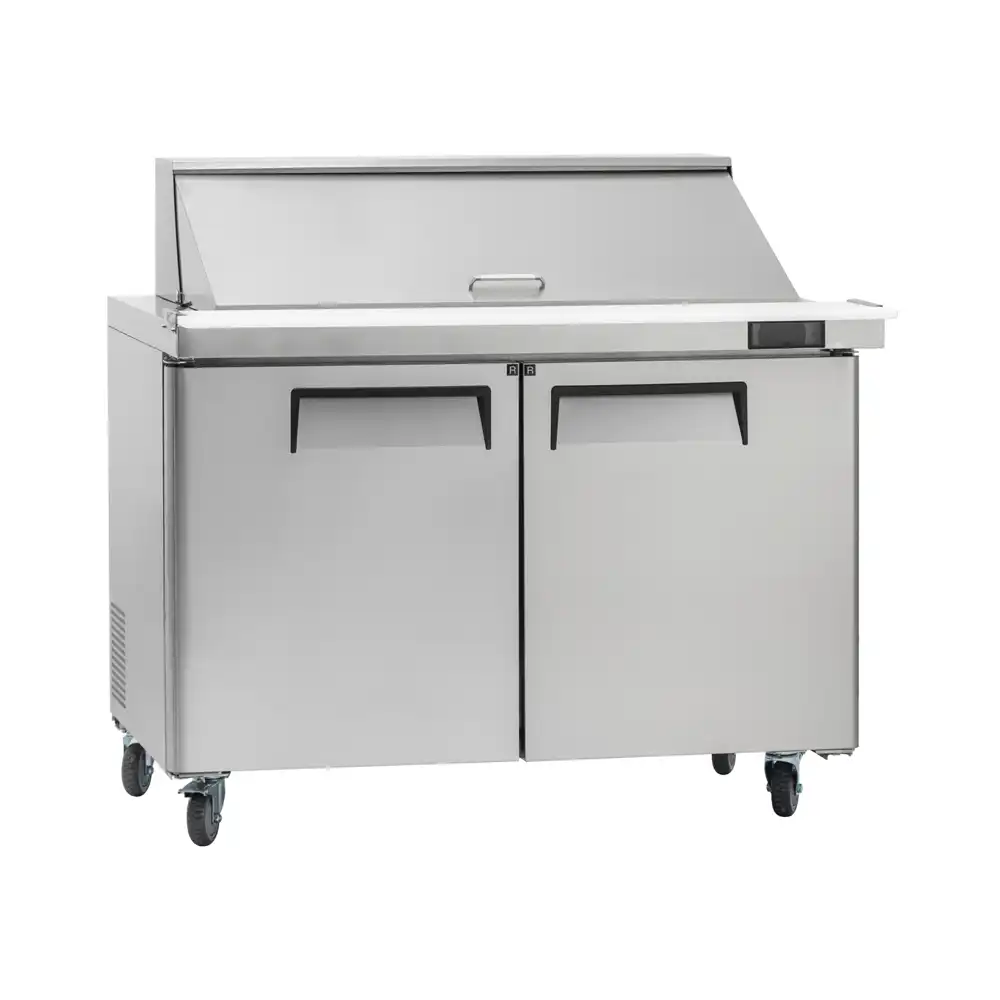
Assess the types and quantities of food items you need to store. If your menu relies heavily on fresh produce, dairy, or daily prepped ingredients, a refrigerator is paramount. If you stock bulk items, frozen meats, or prepared components for future use, a freezer is necessary. Effective inventory management dictates the required capacity and accessibility. Consider whether you need a dedicated unit for specific items, like a Semi Mega Salad Table for fresh greens.
3. Budget, Energy Efficiency, and Long-Term ROI
Initial purchase cost is one factor, but long-term operational expenses are equally important. Energy-efficient models, often certified by ENERGY STAR, can significantly reduce electricity bills over time. Look for features like R290 refrigerant and robust insulation. While an energy-efficient unit might have a higher upfront cost, its lower running costs and reduced carbon footprint can provide a substantial return on investment (ROI). For a deeper dive into energy efficiency, consider reading Boost Savings with Energy Efficient Commercial Upright Freezers.
4. Features and Technologies: Refrigerant, Cooling System, and Smart Controls
Modern undercounter units offer a range of features that enhance performance and convenience.
| Feature/Technology | Description | Benefits |
|---|---|---|
| R290 Refrigerant | Eco-friendly hydrocarbon refrigerant. | Lower environmental impact, energy efficiency. |
| Ventilated Cooling System | Even temperature distribution, rapid cooling recovery. | Consistent temperatures, better food preservation. |
| Automatic Defrost System | Prevents ice buildup without manual intervention. | Reduces maintenance, maintains efficiency. |
| Cubigel Compressor | High-performance, reliable compressor. | Durable, efficient cooling. |
| Smart Digital Temperature Control | Precise temperature management, optional IoT/WiFi. | Enhanced monitoring, remote control, data logging. |
| Stainless Steel Construction | Durable interior and exterior. | Longevity, hygiene, easy cleaning. |
| Polyurethane/Cyclopentane Insulation | CFC-free foamed insulation. | Superior thermal retention, energy savings. |
These technologies contribute to reliable operation, easier maintenance, and better food safety.
Benefits and Drawbacks of Commercial Undercounter Freezers
Undercounter freezers offer distinct advantages for commercial kitchens, but also come with certain limitations that operators must consider.
1. Advantages of Freezing for Extended Shelf Life
Freezers provide an optimal environment for extending the shelf life of various food products. This capability allows kitchens to purchase ingredients in bulk, reducing costs and ensuring a consistent supply. Freezing also facilitates advanced meal preparation, enabling chefs to make sauces, stocks, or pre-portioned proteins ahead of time. This significantly reduces prep time during peak hours and minimizes food waste. Freezing preserves the nutritional content and flavor of many foods for longer periods compared to refrigeration.
2. Limitations in Daily Accessibility and Thawing Time
The primary drawback of undercounter freezers is the need for thawing. Frozen items require time to defrost, which can slow down operations during busy shifts if not planned properly. This limits their utility for ingredients needed immediately. Additionally, frequent opening and closing of freezer doors can cause temperature fluctuations, potentially affecting food quality and increasing energy consumption. Therefore, freezers are less suitable for high-frequency access items.
3. Product Spotlight: Camay Commercial Undercounter Freezers (e.g., MWTF-27-L, MTF-48)
Camay offers robust undercounter freezers designed for demanding commercial environments.
| Specification | Camay MWTF-27-L (Freezer) | Camay MTF-48 (Freezer) |
|---|---|---|
| Classification | Freezer | Freezer |
| Inner Temperature | -25°C to -15°C / -13°F to 5°F | -25°C to -15°C / -13°F to 5°F |
| Capacity | 202 L / 7.13 Cuft | 368 L / 13 Cuft |
| Cabinet Dimension (WxDxH) | 698×787×938 mm / 27.5×31×36.9 inch | 1225×787×872 mm / 48.2×31×34.3 inch |
| Refrigerant | R290 | R290 |
| Insulation | Polyurethane/Cyclopentane, CFC-free | Polyurethane/Cyclopentane, CFC-free |
| Cooling System | Ventilated | Ventilated |
| Compressor | Cubigel | Cubigel |
| Doors | 1 | 2 |
| Certifications | ETL, DOE, ENERGY-STAR, CE, etc. | ETL Safety, DOE, ENERGY STAR, etc. |
These models feature durable stainless steel construction, eco-friendly R290 refrigerant, and efficient ventilated cooling systems. They are equipped with smart digital temperature controls and automatic defrost systems, ensuring reliable performance and ease of maintenance.
Benefits and Drawbacks of Commercial Undercounter Refrigerators
Undercounter refrigerators are indispensable in commercial kitchens for their ability to keep fresh ingredients readily available. However, their limitations regarding long-term storage are also important to acknowledge.
1. Advantages of Refrigeration for Fresh Ingredients and Daily Prep
Undercounter refrigerators excel at maintaining fresh ingredients at safe temperatures for immediate use. Their accessible design and moderate temperature range (0.5°C to 5°C) make them perfect for high-turnover items like produce, dairy, and prepped components. This proximity to prep stations enhances kitchen efficiency, allowing chefs to work quickly and without interruption. Refrigerators are crucial for maintaining the quality and safety of foods that are consumed or prepared within a few days. For more on optimizing kitchen efficiency, consider Optimizing Kitchen Efficiency with Integrated Worktop Refrigeration.
2. Limitations in Long-Term Storage and Specific Item Preservation
While excellent for daily use, undercounter refrigerators are not suitable for long-term food preservation. Their temperature range only slows spoilage, rather than halting it, meaning items have a limited shelf life. They cannot preserve foods like raw meats or frozen desserts for extended periods. Additionally, certain delicate items may require specific humidity levels or colder temperatures that standard refrigerators cannot provide, necessitating specialized storage solutions.
3. Product Spotlight: Camay Commercial Undercounter Refrigerators (e.g., MTR-72, MTR-60, MTR-48, GNTR1360L2)
Camay offers a range of undercounter refrigerators designed for diverse commercial kitchen needs.
| Specification | Camay MTR-72 | Camay MTR-60 | Camay MTR-48 | Camay GNTR1360L2 |
|---|---|---|---|---|
| Classification | Refrigerator | Refrigerator | Refrigerator | Refrigerator Undercounter |
| Inner Temperature | 0.5°C to 5°C | 0.5°C to 5°C | 0.5°C to 5°C | -2°C to 8°C |
| Capacity | 576 L / 20.34 Cuft | 476 L / 16.81 Cuft | 368 L / 13.00 Cuft | 225 L |
| Cabinet Dimension (WxDxH) | 1846×787×872 mm | 1530×787×872 mm | 1225×787×872 mm | 1360×700×850 mm |
| Refrigerant | R290 | R290 | R290 | R290 |
| Insulation | Polyurethane/Cyclopentane, CFC-free | Polyurethane/Cyclopentane, CFC-free | Polyurethane/Cyclopentane, CFC-free | Polyurethane/Cyclopentane, CFC-free |
| Cooling System | Ventilated | Ventilated | Ventilated | Air Cooling |
| Compressor | Cubigel | Cubigel | Cubigel | Cubigel / Embraco |
| Doors | 3 | 2 | 2 | 2 |
| Certifications | ETL, DOE, ENERGY-STAR, CE, etc. | ETL, DOE, ENERGY-STAR, CE, etc. | ETL, DOE, ENERGY-STAR, CE, etc. | ETL Safety, DOE, ENERGY STAR, etc. |
These models feature durable stainless steel construction, eco-friendly R290 refrigerant, and ventilated cooling systems. They are equipped with smart digital temperature controls, ensuring optimal freshness and ease of use.
Making the Right Choice: Practical Scenarios and Recommendations for Your Commercial Kitchen
The decision between an undercounter freezer and refrigerator depends heavily on your specific commercial kitchen’s operational model and menu. We provide tailored recommendations for various food service establishments.
1. High-Volume Restaurants and Cafes
High-volume establishments require a balance of both freezing and refrigeration capabilities. We recommend multiple undercounter refrigerators for immediate access to frequently used ingredients near prep stations. For example, a Food Prep Table Specification Sheet unit can be integrated directly into a workstation. A dedicated undercounter freezer is essential for bulk storage of proteins, pre-made sauces, and backup inventory. This combination optimizes workflow and reduces the need for frequent trips to a walk-in unit.
2. Bakeries and Dessert Shops
Bakeries and dessert shops often handle ingredients with varying temperature requirements. Undercounter freezers are crucial for storing dough, unbaked pastries, and certain finished desserts that require freezing to maintain structure and extend shelf life. Refrigerators are vital for dairy, fresh fruit fillings, and finished products like cakes and custards. A strategic placement of both types of units near baking and decorating stations will enhance efficiency.
3. Bars and Beverage-Focused Establishments
Bars primarily need undercounter refrigerators to keep beverages, garnishes, and mixers chilled and readily accessible. Speed of service is paramount, so easy access to cold items is critical. A Back Bar refrigerator, for instance, provides convenient storage and display. While freezers might be less critical, a small undercounter freezer could be useful for storing ice or frozen fruit purees for specialty cocktails.
4. Specialized Food Service Operations
Specialized operations, such as catering companies or food trucks, have unique needs. Catering businesses might prioritize undercounter freezers for transporting frozen meals or components to events, ensuring food safety over longer durations. Food trucks, with extremely limited space, might opt for combination units or prioritize the unit that stores their most critical ingredients. Understanding the specific demands of your niche is key.
Optimize Your Kitchen with Camay Refrigeration Solutions
Choosing the right undercounter freezer or refrigerator is a strategic investment in your commercial kitchen’s efficiency, food safety, and profitability. At ZHEJIANG KAIMEI CATERING EQUIPMENT CO., LTD, we offer a comprehensive range of high-quality, energy-efficient undercounter refrigeration solutions designed to meet the diverse needs of modern food service operations. Our products feature durable stainless steel construction, eco-friendly R290 refrigerant, and advanced temperature control systems, ensuring reliability and longevity.
Contact us today to discuss your specific requirements and find the perfect refrigeration equipment for your business. Our team of experts is ready to provide tailored recommendations and support.
Phone: +86 181 5720 2219
Email: Sales@hzcamay.com
FAQs
1. What is the main difference between an undercounter freezer and an undercounter refrigerator?
The main difference lies in their operating temperature ranges. An undercounter freezer maintains temperatures between -25°C and -15°C (-13°F to 5°F) for long-term preservation, while an undercounter refrigerator operates between 0.5°C and 5°C (33°F to 41°F) for short-term storage of fresh ingredients.
2. Can an undercounter freezer also function as a refrigerator?
No. Under counter freezers are engineered for sub-zero performance, which would freeze items intended for refrigeration. While some units offer convertible modes, a dedicated freezer or refrigerator is generally more efficient and reliable for its intended purpose.
3. What are the typical temperature ranges for commercial undercounter freezers and refrigerators?
Commercial undercounter freezers operate between -25°C to -15°C (-13°F to 5°F). Commercial undercounter refrigerators maintain temperatures between 0.5°C to 5°C (33°F to 41°F). These ranges are crucial for food safety and optimal preservation.
4. How do I determine the right size and capacity for my commercial kitchen?
Assess your menu, ingredient turnover rate, and available space. Factor in peak demand and inventory practices. Measure the installation area precisely, including clearance. Consult with a refrigeration specialist to match unit specifications to your operational needs.
5. Are undercounter units energy efficient, and what should I look for?
Many modern undercounter units are energy efficient, especially those with ENERGY STAR certification. Look for features like R290 refrigerant, polyurethane/cyclopentane insulation, ventilated cooling systems, and smart digital temperature controls. These components minimize energy consumption and reduce operational costs over the unit’s lifespan.