

Selecting the right ultra-low temperature freezer combination for ingredient storage involves more than comparing temperature ratings. In over twenty years of manufacturing commercial refrigeration equipment, I have seen kitchens struggle with freezer setups that fail to hold stable deep cold during heavy use, leading to texture loss and higher waste. While many guides stop at generic storage tips, this article addresses the equipment choices and pairing strategies that actually determine long-term food quality and operational efficiency. Understanding compressor design, insulation integrity, and how to coordinate freezers with other refrigeration units can significantly improve ingredient preservation.
What Sets Ultra-Low Temperature Freezers Apart
Ultra-low temperature freezers work in a range that ordinary commercial freezers cannot reach. A standard upright freezer typically operates between -18°C and -22°C. That is sufficient for short-term storage of most baked goods and pre-processed items, but it falls short for high-value proteins, seafood, and sensitive doughs where ice crystal size and enzyme activity dictate shelf life. Ultra-low units, in contrast, push into the -40°C to -86°C range, slowing molecular movement enough to preserve texture for months.
Temperature Ranges and Food Safety Zones
Ingredient safety and quality depend on maintaining a consistent temperature band. The table below summarizes the recommended deep-freeze ranges for different ingredient categories.
| Ingredient Type | Recommended Storage Temperature | Typical Quality Window at Constant Temperature |
|---|---|---|
| Seafood (raw, sushi-grade) | -40°C to -60°C | 12–18 months |
| Red meat (vacuum-sealed) | -25°C to -35°C | 8–14 months |
| Poultry | -18°C to -25°C | 6–12 months |
| Bakery doughs, laminated pastries | -25°C to -30°C | 3–8 months |
| Processed foods, prepared meals | -18°C to -22°C | 6–12 months |
When temperatures fluctuate by even a few degrees, ice crystals grow and puncture cell walls. The result is drip loss during thawing and a mealy texture in the final product. For high-volume kitchens, selecting a freezer that holds its setpoint within a narrow band, not just occasionally, is what separates consistent output from avoidable waste.
Cascade vs. Single-Stage Refrigeration
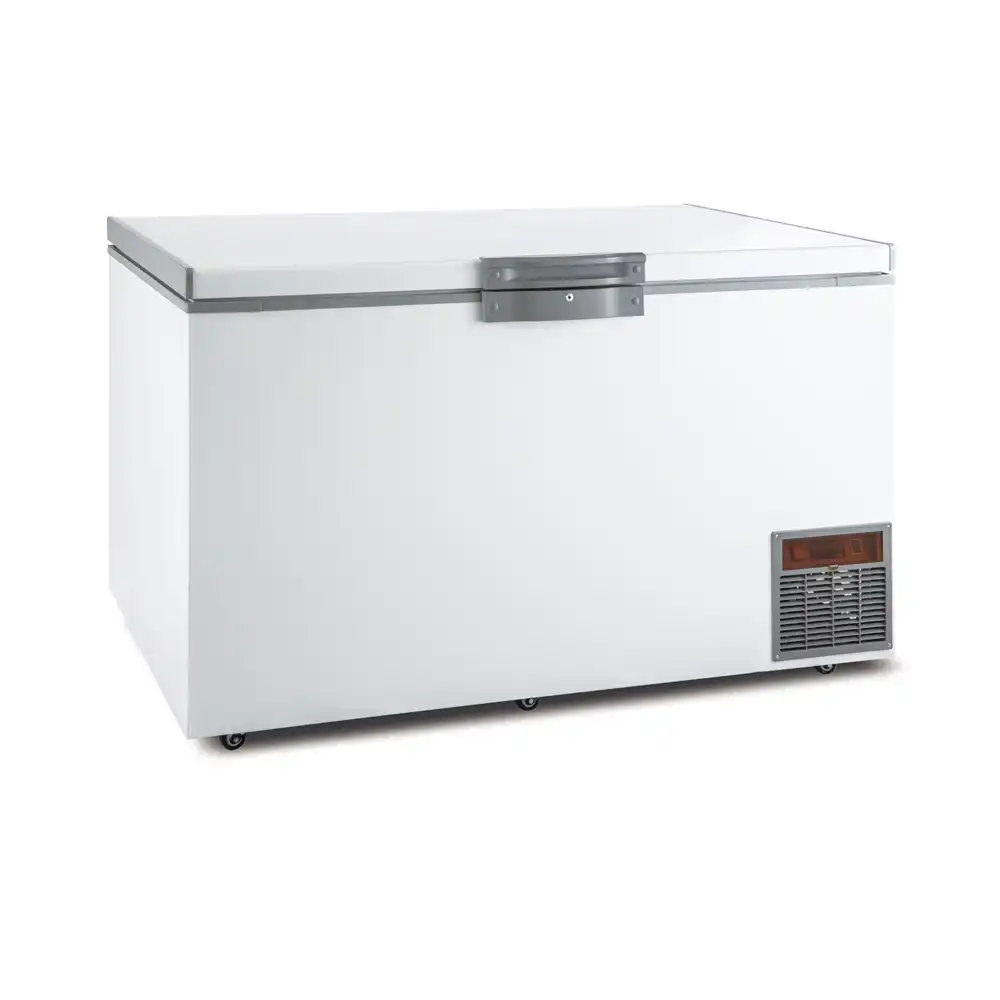
Most commercial freezers use a single-stage compression cycle. That works for -18°C to -25°C, but trying to pull a single compressor down to -45°C stresses the system and shortens compressor life. Ultra-low freezers designed for ingredient storage rely on cascade refrigeration, where one circuit cools the condenser of a second circuit, achieving stable low temperatures without forcing a single compressor beyond its design envelope. In the units we manufacture under the Camay brand, such as the DW45W788, a SECOP compressor drives a self-cascading system that holds a range of -15°C to -45°C with far less cycling wear than a single-stage machine operating at its limit.
Essential Specifications for Long-Term Ingredient Storage
When buyers evaluate ultra-low freezers, temperature range often gets the most attention, but three other specifications have a more direct impact on daily performance: compressor pedigree, insulation quality, and door seal integrity.
Compressor Type and Condenser Design
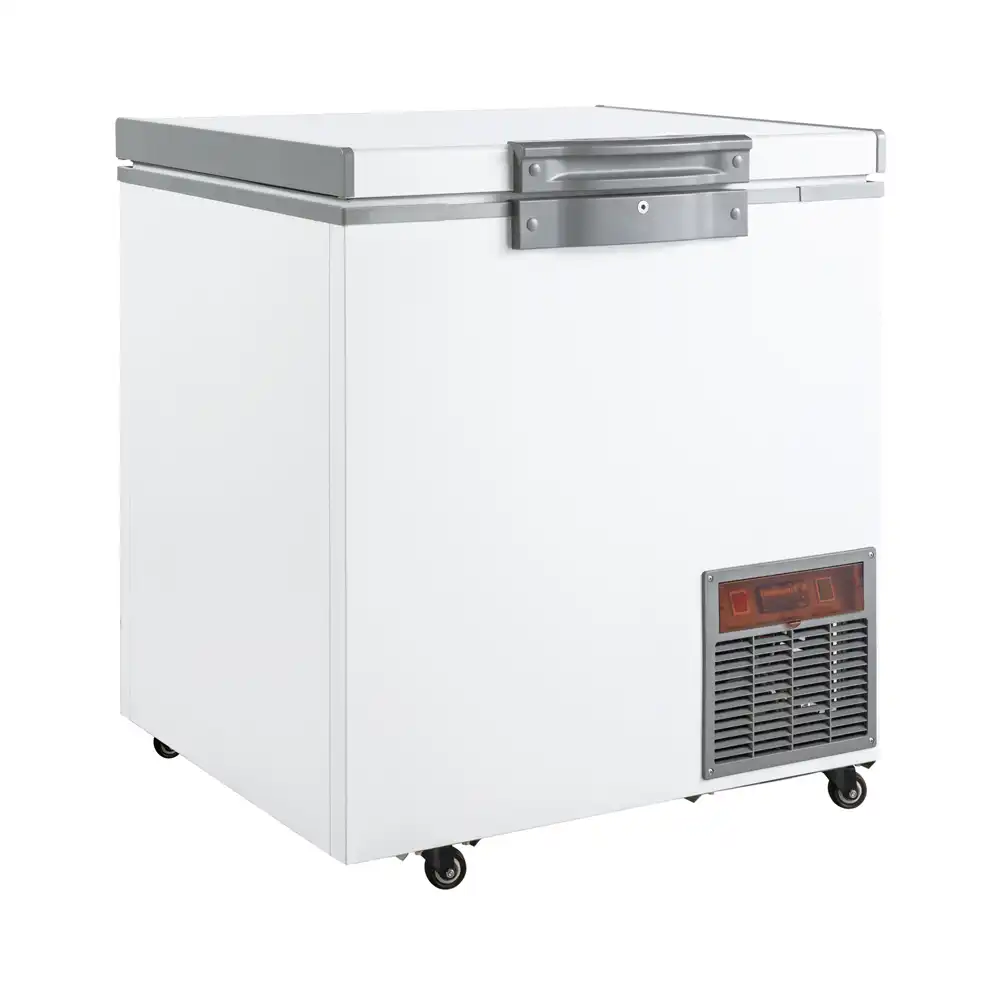
The compressor is the heart of any deep-freeze system. Hermetic compressors from established manufacturers like SECOP maintain tighter pressure differentials and run cooler than generic alternatives. That matters in a busy kitchen where the freezer door opens dozens of times per shift; a robust compressor recovers temperature faster and draws less current during pull-down. In the DW45W788 and DW45W685 models, the SECOP compressor is paired with a forced-air condenser designed to reject heat quickly, even when ambient kitchen temperatures approach 38°C.
Insulation Thickness and Door Seal Integrity
A thick, well-foamed cabinet keeps the cold in and reduces the compressor’s run time. Cyclopentane-blown polyurethane insulation, CFC-free and typically 60mm or more in the walls, provides a thermal barrier that cheap foam cannot sustain over years. We have seen units where thinning insulation leads to cold spots and ice buildup, forcing the compressor to run longer and pushing energy costs up by 20% or more. Door seals are equally critical; a multi-layer magnetic gasket that sits flush against a flat cabinet face keeps moisture out and prevents interior frost. The table below compares the two Camay ultra-low freezer models commonly used in ingredient storage setups.
| Model | Capacity | Temperature Range | Compressor | Power | Insulation | Defrost |
|---|---|---|---|---|---|---|
| DW45W788 | 768 L | -15 to -45°C | SECOP | 750 W | Polyurethane, CFC-free | Automatic |
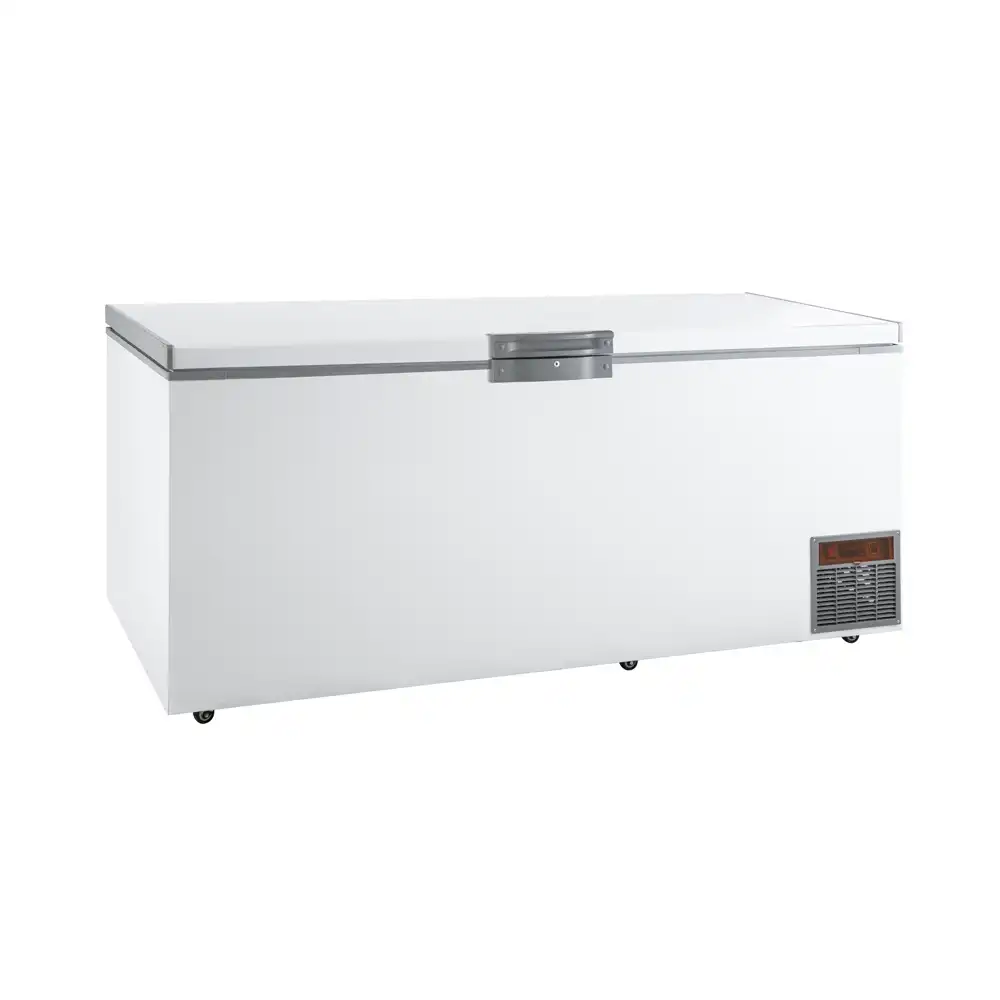
| DW45W685 | 665 L | -15 to -45°C | SECOP | 700 W | Polyurethane, CFC-free | Automatic |
Combining Freezers for Efficient Kitchen Workflow
A single ultra-low freezer rarely serves all ingredient storage needs in a production kitchen. The most efficient setups treat deep freezing as one station in a cold chain that includes worktop refrigeration and, increasingly, blast chilling.
Pairing Ultra-Freezers with Worktop Fridges
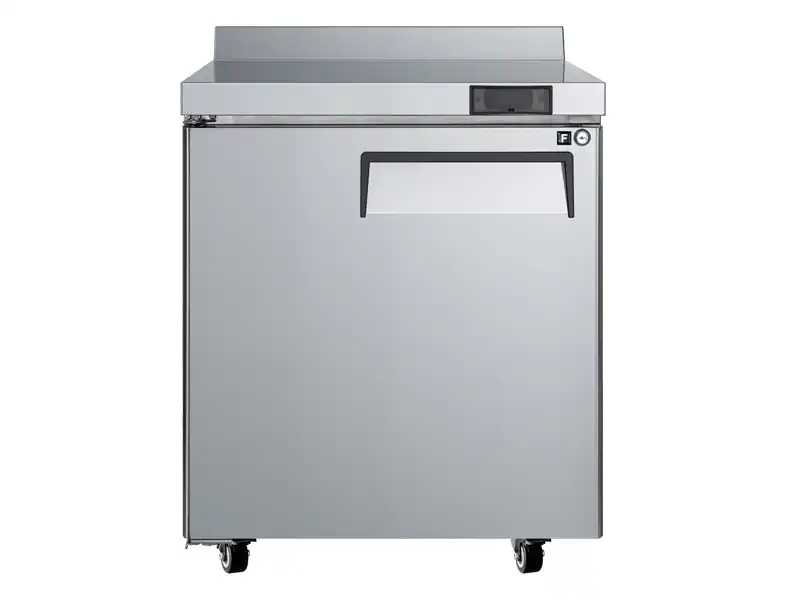
For kitchens that prep ingredients in batches, a refrigerated worktop positioned close to the ultra-low freezer eliminates the walk-in cold room as a bottleneck. The Camay MWTF-27-L worktop freezer, for example, operates between -25°C and -15°C and provides 202 liters of storage directly under a stainless steel work surface. A cook can portion dough balls or vacuum-sealed proteins on the worktop, then transfer them directly into the ultra-low unit a few steps away without breaking the cold chain. This configuration also reduces foot traffic through temperature-critical areas.
Blast Chiller Integration for Pre-Freezing
When ingredients arrive fresh and need rapid cooling before long-term storage, a blast chiller ahead of the ultra-low freezer protects food safety and preserves cellular structure. A blast chiller brings core temperature down from 70°C to 3°C in under 90 minutes, far faster than placing warm product directly in a freezer, which would spike the internal temperature and cause surrounding items to partially thaw. Once blast-chilled, the product enters the ultra-low freezer at a stable low temperature, minimizing the energy pull-down and maintaining uniform storage conditions. If your kitchen produces cooked proteins or stock daily, a blast chiller paired with an ultra-low freezer is not a luxury; it is the only way to meet HACCP cooling requirements without compromising your frozen inventory.
If your operation handles high-value items like sushi-grade fish or specialty laminated doughs, specifying the right combination of worktop, blast chiller, and ultra-low freezer pays for itself quickly through reduced waste. Reach out at Sales@hzcamay.com to review your throughput and storage timelines before selecting equipment.
What to Look for in Manufacturing Quality
When an ultra-low freezer fails, the financial impact goes beyond the repair cost. Lost inventory, missed production, and the risk of compromised food safety can be severe. That is why manufacturing quality should be evaluated alongside specification sheets.
Certifications and Factory Audits
A dependable ultra-low freezer carries more than a CE mark. Look for ETL safety certification, DOE energy compliance, and ENERGY STAR ratings where applicable. These are not formalities; they require third-party testing of electrical safety, temperature performance, and energy consumption. The ZHEJIANG KAIMEI facility that produces Camay equipment holds ISO 9001 for quality management, ISO 14001 for environmental control, and ISO 45001 for occupational health and safety, and all work is performed under that certified system. In our experience, factories that maintain these certifications treat quality as a continuous process, not an end-of-line inspection.
Material Construction and Long-Term Reliability
Exterior grade matters. A cabinet built from 304-grade stainless steel resists the inevitable dings and cleaning chemicals in a working kitchen better than thinner 201 or 430 grades. Inside, rounded corners, removable gaskets, and sealed wiring chambers make cleaning easier and prevent bacterial colonies. Steel thickness in the door frame and hinge plates also determines how well the door will seal after years of heavy use. Minor deflection in a door panel can break the magnetic gasket contact, introducing moisture and accelerating frost. These are the kinds of construction details that separate a freezer that lasts from one that becomes a maintenance headache after three years.
Maintenance and Energy-Saving Practices
Even the best-built ultra-low freezer requires a maintenance rhythm that matches its workload. Relying on automatic defrost alone is not enough.
Routine Cleaning and Defrosting
Condenser coils collect grease and dust quickly in a busy kitchen. A clogged condenser raises head pressure, cuts cooling capacity, and can shorten compressor life. I recommend cleaning coils with a soft brush and a vacuum every two weeks in high-use environments and inspecting door gaskets monthly for tears or permanent compression. If the freezer accumulates frost on the interior walls more than once a month, the defrost sensor or door alignment may need adjustment.
Optimizing Energy Use
Energy efficiency in an ultra-low freezer starts with loading practices. Avoid filling the cabinet above 80% capacity, because air needs to circulate around each package to maintain even temperature. Stacking boxes tightly against the back wall blocks the evaporator airflow and creates warm zones. Organize ingredients by access frequency so the door spends less time open. Also, check the unit’s ambient temperature rating; operating a freezer rated for 38°C ambient in a corner that reaches 45°C near an oven line will cause excessive run time and ice buildup.
For ingredient storage that needs to perform every day over multi-year service, investing in a freezer built with a SECOP compressor and properly foamed polyurethane insulation lowers the total cost of ownership. At ZHEJIANG KAIMEI, our ultra-low freezer line is engineered for exactly that kind of consistent output. Send your part number, capacity, and temperature requirements to Sales@hzcamay.com or call +8618157202219, and our engineering team will configure a storage combination that fits your kitchen’s workflow and ingredient profile.
Common Questions About Ultra-Low Freezer Storage
What temperature should I set for mixed ingredient storage?
The simplest answer is to pick a setpoint that satisfies the most sensitive ingredient in your inventory. If you store both meat and seafood, set the unit to -40°C to protect the seafood’s cell structure. Meat can tolerate slightly warmer temperatures, but it will not be harmed by the colder environment. A single temperature setting is easier to manage and avoids the risk of mislabeling and recirculation errors.
Can a standard commercial freezer replace an ultra-low unit?
No, not for ingredients that rely on deep freeze for structural preservation. Standard freezers reach approximately -18°C, which is fine for many bakery and pre-cooked items, but seafood, high-moisture doughs, and protein-heavy preparations degrade noticeably over weeks in that range due to ongoing enzymatic activity. If your menu depends on texture, you need the -40°C or lower that only an ultra-low freezer provides.
How often should door seals be inspected?
Monthly, with a visual and physical check. Wipe the gasket with a mild detergent solution and run your hand along its length to feel for cracks or flattening. A failing door seal lets in ambient humidity, which condenses as ice on the evaporator and forces the compressor to run longer. We provide replacement gaskets for Camay freezers for exactly this reason; a US$50 gasket can prevent hundreds of dollars in energy waste each year.
What is the typical operational lifespan of an ultra-low freezer?
With regular maintenance, a well-built ultra-low freezer using a SECOP compressor and proper insulation can remain in service for 15 years or longer. The compressors in our DW45W788 and DW45W685 models are rated for continuous operation in industrial environments, and the polyurethane insulation does not settle or degrade like some fiber-based alternatives. When you plan a long-term cold storage investment, share your projected loading and ambient conditions, and we can estimate lifecycle costs for your specific use case.
If you’re interested, check out these related articles:
Boost Kitchen Efficiency Workflow Optimization with Chef Base Fridges
Essential Commercial Chef Base Fridge Installation Tips
Essential Maintenance Tips for Your Commercial Chef Base Refrigerator
Choosing the Best Commercial Reach In Fridge for Your Restaurant
How to Choose the Best Chef Base Refrigerator for Your Kitchen