

Ultra-low temperature freezing changed how I think about food preservation. The first time I saw a properly flash-frozen salmon fillet thaw out looking almost fresh-caught, the difference from conventional freezing was impossible to ignore. That experience shapes how I approach this technology — not as a theoretical improvement, but as a practical tool that solves real problems in food safety and quality retention.
How Ultra-Low Temperature Freezing Actually Works
Ultra-low temperature freezing operates on a straightforward principle that produces dramatic results. The technology rapidly drops food products to extremely low temperatures — typically below -30°C, often reaching -45°C or even -86°C. What matters here is speed, not just the final temperature.
The science centers on ice crystal formation. When food freezes slowly, water molecules have time to organize into large, jagged ice crystals. These crystals puncture cell walls like tiny daggers, causing irreversible structural damage. Rapid freezing prevents this by moving through the critical temperature zone so quickly that only micro-crystals form. These small, uniform crystals sit harmlessly within cells rather than destroying them.
This process goes by several names — blast freezing, cryogenic freezing, flash freezing — but the mechanism remains consistent. Precise temperature control and optimized freezing curves determine success. The equipment must achieve specific cooling rates to maintain cold chain integrity from the moment product enters the freezer until it reaches storage temperature.
Why Conventional Freezing Falls Short
The contrast between conventional and ultra-low freezing becomes obvious when you examine what happens at the cellular level. Slow freezing gives ice crystals time to grow large and irregular. Upon thawing, these damaged cells release their contents as drip loss — that pool of liquid you see under conventionally frozen meat. The texture suffers too, turning firm products soft and mushy.
Ultra-low temperature freezing sidesteps this problem entirely. Products frozen rapidly retain their original cellular structure, which translates directly to better texture, reduced drip loss, and preserved quality.
| Feature | Conventional Freezing | Ultra-Low Freezing |
|---|---|---|
| Freezing Speed | Slow | Rapid |
| Ice Crystal Size | Large, irregular | Small, uniform |
| Cellular Damage | High | Minimal |
| Drip Loss | Significant | Reduced |
| Texture Post-Thaw | Soft, mushy | Firm, original |
| Energy Efficiency | Variable, often less efficient | Optimized for speed, long-term savings |
Food Safety Gains From Rapid Temperature Reduction
High-speed freezing delivers measurable food safety improvements that go beyond quality considerations. Rapid temperature reduction creates conditions where harmful bacteria simply cannot proliferate. The faster a product’s core temperature drops, the smaller the window for microbial growth.
Enzymatic activity slows dramatically at ultra-low temperatures as well. Enzymes responsible for spoilage reactions become essentially inactive, extending the safe consumption window significantly. This matters for regulatory compliance — systems engineered for rapid freezing support HACCP protocols and FDA standards by design.
The technology forms a practical foundation for food safety management systems. Consistent, verifiable temperature control reduces risks associated with cross-contamination and provides documented evidence of proper handling throughout the product’s extended shelf life.
Meeting Regulatory Standards Through Proper Equipment
Food businesses operate under non-negotiable regulatory requirements. Ultra-low temperature freezing equipment directly supports compliance with global food safety initiatives including GFSI, BRC, and SQF certification standards.
Effective implementation requires more than just purchasing the right equipment. Rigorous temperature monitoring, precise control systems, and detailed traceability records all contribute to successful audits. Risk assessment becomes more straightforward when freezing data clearly demonstrates consistent performance within required parameters. Quality control teams benefit from equipment that produces repeatable results rather than variable outcomes dependent on operator skill.
Quality Preservation Beyond Basic Freezing
Rapid freezing protects product quality in ways that extend far beyond preventing spoilage. The original texture, flavor, color, and nutritional content of food products remain largely intact when ice crystal damage is minimized.
Consider what happens to a strawberry frozen conventionally versus one processed through ultra-low temperature freezing. The slow-frozen berry thaws into a soft, weeping mass. The rapidly frozen berry maintains its structure, color, and much of its original texture. The same principle applies across product categories — from delicate seafood to prepared meals.
Nutrient retention improves as well. Cell damage releases vitamins and other compounds that would otherwise remain locked within intact cellular structures. Products frozen rapidly preserve more of their original nutritional value, which matters increasingly to health-conscious consumers.
Preventing Freezer Burn and Texture Loss
Freezer burn appears as dry, discolored patches on frozen products — the result of sublimation and dehydration during storage. This damage occurs more readily when initial freezing happens slowly or improperly, leaving products vulnerable during extended storage.
Ultra-low temperature freezers reduce freezer burn risk by rapidly solidifying water content throughout the product. Quick freezing also prevents ice recrystallization, a phenomenon where small ice crystals gradually merge into larger ones during temperature fluctuations. This recrystallization causes ongoing cellular damage even after initial freezing, leading to progressive quality degradation.
Precision-engineered systems maintain cell structure integrity, ensuring products retain their desired texture and quality characteristics through storage and thawing.
Operational Benefits for Commercial Food Operations
Commercial ultra-low temperature freezers deliver practical operational advantages that affect the bottom line. Energy efficiency improvements over older freezing units translate to measurable cost reductions. Optimized freezing cycles complete faster while consuming less power per unit of product processed.
Throughput increases when freezing happens rapidly. Batch processing flexibility improves because equipment can handle varying product loads without compromising freezing quality. Operations gain the ability to preserve delicate or high-value items that would suffer unacceptable quality loss under conventional freezing conditions.
Cold storage optimization and streamlined supply chain operations contribute to return on investment calculations. Commercial kitchens and food processing plants benefit from equipment that performs consistently across demanding production schedules.
Matching Equipment to Operational Requirements
Selecting appropriate industrial freezers requires honest assessment of specific operational needs. Temperature range requirements vary by product — some applications need -45°C capability while others require -86°C for research or specialized preservation.
Capacity planning must account for peak production volumes, not just average throughput. Energy consumption affects operating costs over the equipment’s lifespan. Refrigerant type matters for both environmental compliance and long-term availability.
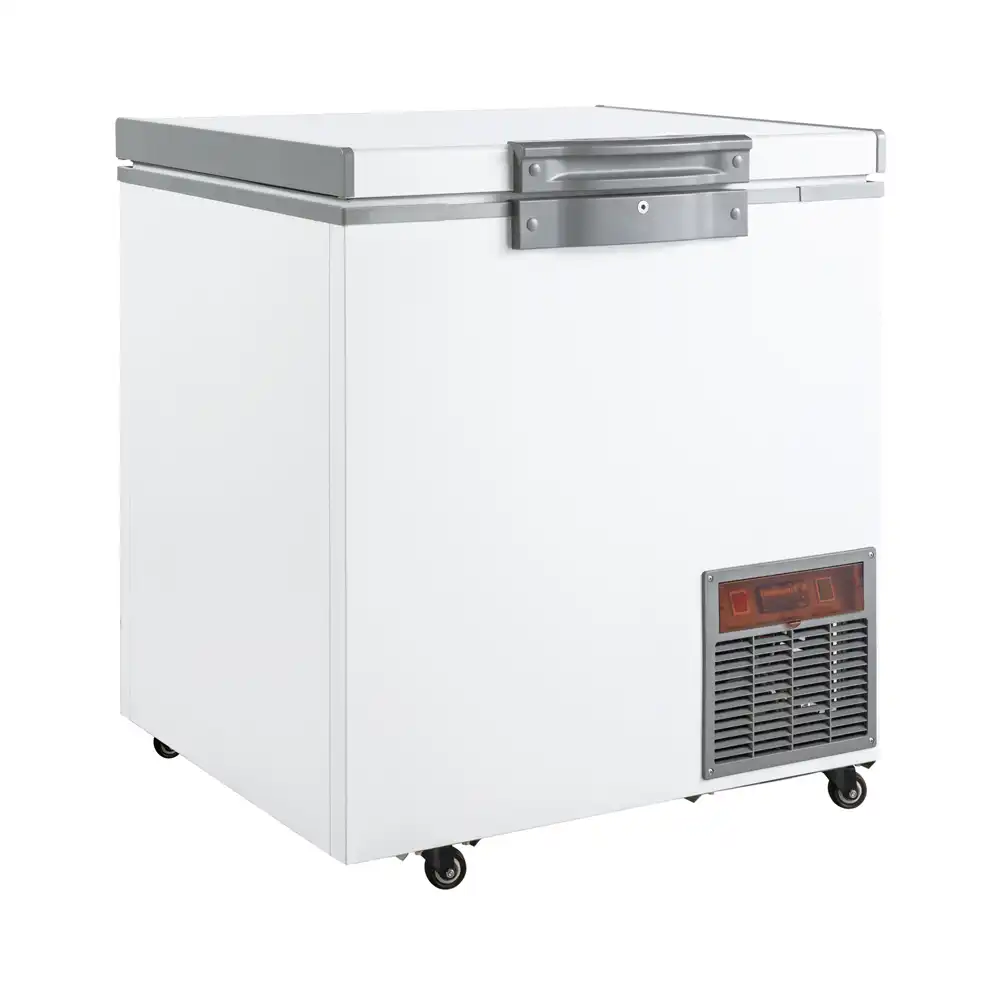
The -86 ULT freezers for lab applications, such as Model DW45W788, illustrate how specifications align with requirements. This unit offers 768 L capacity with temperature maintenance from -15°C to -45°C. Hydrocarbon mixed refrigerants and SECOP compressors provide reliable performance for demanding applications.
| Criteria | Consideration | ZHEJIANG KAIMEI Solution Example (-86 ULT Freezer) |
|---|---|---|
| Temperature Range | Specific product requirements (e.g., -15°C to -45°C) | -15 to -45°C |
| Capacity | Volume of product to be frozen/stored | 768 L |
| Refrigerant Type | Environmental impact, efficiency | Hydrocarbon mixed refrigerant |
| Compressor Brand | Reliability, performance | SECOP |
| Insulation | Energy efficiency, thermal retention | Polyurethane/Cyclopentane/CFC Free |
| Certifications | Compliance with industry standards | ETL, DOE, ENERGY-STAR, CE (general product certs) |
Maintenance requirements and installation constraints also factor into equipment selection. Informed decisions require understanding the full picture, not just headline specifications.
Where High-Speed Freezing Technology Is Heading
High-speed freezing technology continues evolving along several clear trajectories. Sustainable freezing methods using eco-friendly refrigerants like R290 are becoming standard rather than exceptional — many current products already incorporate these refrigerants.
Smart freezers integrating AI-driven optimization and advanced automation represent the next operational frontier. These systems can adjust freezing parameters in real-time based on product load, ambient conditions, and energy costs. Energy recovery systems capture waste heat for other facility uses.
Internet of Things connectivity in cold chain management enables real-time monitoring and predictive maintenance. Equipment can alert operators to developing problems before they cause product loss or safety issues. These capabilities point toward more intelligent, environmentally responsible, and efficient freezing solutions that maintain product safety and quality while reducing operational burden.
Partner with ZHEJIANG KAIMEI for Advanced Freezing Solutions
Improve your food safety standards and product quality with ultra-low temperature freezing solutions designed for commercial demands. ZHEJIANG KAIMEI CATERING EQUIPMENT CO., LTD operates as a professional one-stop-shop refrigeration equipment manufacturer, offering tailored expertise and reliable equipment for diverse applications. Contact us today for a consultation to discuss how advanced freezers can address your specific operational requirements. Phone: +8618157202219, Email: Sales@hzcamay.com.
Frequently Asked Questions About Ultra-Low Temperature Freezing
What makes ultra-low temperature freezers worth the investment for food businesses?
Ultra-low temperature freezers justify their cost through multiple operational improvements. Food safety improves because rapid freezing inhibits microbial growth and enzymatic activity far more effectively than conventional methods. Product quality — texture, flavor, nutritional value — remains closer to fresh state, which reduces waste from quality-related rejections. Extended shelf life opens distribution possibilities that weren’t practical before, and operational efficiency gains compound over time.
How does ZHEJIANG KAIMEI maintain equipment reliability and efficiency?
Reliability and efficiency stem from design choices and manufacturing quality. High-grade components like SECOP compressors and eco-friendly R290 refrigerant provide the foundation. Advanced insulation and precise temperature control systems ensure consistent performance. Factory certifications including ISO 9001:2015, ISO 14001:2015, and ISO 45001:2018 reflect systematic quality management rather than one-time compliance efforts.
Which food products benefit most from ultra-low temperature freezing?
Ultra-low temperature freezing works across a broad range of food products, though some benefit more dramatically than others. Delicate items like seafood, berries, and premium meats show the most obvious quality improvements because their cellular structures are particularly vulnerable to ice crystal damage. Prepared meals, baked goods, and certain dairy products also maintain better quality through rapid freezing. The technology proves most valuable where preserving original texture and flavor directly affects product value.
What maintenance keeps commercial ultra-low temperature freezers performing well?
Regular maintenance protects both equipment longevity and freezing performance. Routine tasks include cleaning condensers and evaporators, inspecting door seals for integrity, and monitoring refrigerant levels. Periodic checks of electrical components and compressor performance catch developing issues before they cause failures. Following manufacturer guidelines and scheduling professional servicing ensures continuous, efficient operation throughout the equipment’s service life.
If you’re interested, check out these related articles:
Upright Freezer vs Refrigerator Key Differences Explained
Essential Commercial Chef Base Fridge Installation Tips
How to Choose the Best Chef Base Refrigerator for Your Kitchen
Heavy Duty Chef Base Refrigeration for Efficient Commercial Kitchens