
Most standard commercial freezers cannot maintain the temperature stability needed to preserve sashimi-grade fish for longer than a few days without noticeable texture loss. Ultra-low temperature freezers, operating in the range of -45°C to -60°C, prevent the large ice crystals that rupture cell walls and degrade the protein structure responsible for firm, translucent flesh. Drawing on over twenty years of manufacturing refrigeration equipment, this article explains the engineering reasons behind that performance gap and what to look for in a dedicated ultra freezer for sashimi and sushi operations.
The Problem of Sashimi Quality During Storage
Storing sashimi or sushi in a standard freezer creates a problem that is not visible until the fish is thawed. At temperatures typical of a standard commercial freezer, around -18°C, the water inside the fish tissue freezes slowly, forming large, irregular ice crystals. When these crystals grow, they puncture the cell walls of the muscle fibers. After thawing, the damaged cells release moisture, and the texture turns mushy rather than firm and resilient.
The effect is most obvious in fatty fish like salmon and tuna, where the lipid content adds another layer of complexity. Lipid oxidation accelerates at -18°C compared to lower temperatures, and the resulting rancid notes over several weeks of storage make the fish unacceptable for raw consumption. A standard freezer cannot arrest these chemical reactions quickly enough, and the automatic defrost cycle most models run every 6 to 8 hours temporarily raises the cabinet temperature above the freezing point, causing partial thawing and refreezing that compounds the ice crystal damage over time.
Why Standard Freezers Fall Short
Standard commercial freezers are designed for holding frozen goods at a stable temperature, not for rapidly pulling down the core temperature of fresh product. That difference matters critically for sashimi. When a standard freezer is loaded with several kilos of fresh tuna loins, the evaporator has to remove both the sensible heat from the product and the latent heat of freezing. In a typical single-stage compressor system, the evaporator temperature may rise significantly during the pull-down phase, slowing the freezing rate and allowing large ice crystals to form.
Additionally, the defrost cycle in most standard units uses electric heaters to melt frost on the evaporator coil. During defrost, the air temperature inside the cabinet can briefly rise to 10°C or higher. While the product itself may remain frozen if the defrost is short, the surface temperature spikes, encouraging sublimation of ice and moisture migration within the packaging. Over a month of storage, repeated defrost cycles produce noticeable freezer burn and degrade the texture.
Regulatory guidelines for parasite control in fish intended for raw consumption cite two options: freezing at -20°C for a minimum of 7 days or at -35°C for at least 15 hours. These thresholds address food safety, not quality preservation. For maintaining the visual appearance, mouthfeel, and fresh flavor that sashimi customers expect, the freezing temperature must be substantially lower. Above -23°C, enzymatic activity that leads to protein degradation does not fully stop; it slows but continues to break down muscle structure over weeks. Below -40°C, most enzymatic reactions become negligible. That is the temperature regime where ultra freezers operate. At these temperatures, freezing occurs rapidly enough that only tiny, evenly distributed ice crystals form, minimizing cell damage. In my experience working with restaurant chains that source high-grade fish for sashimi, switching from -18°C storage to -45°C extended the usable storage life from roughly two weeks to over two months without any observable quality loss.
The table below compares the key specifications of a typical commercial freezer with an ultra-low temperature freezer designed for sashimi storage.
| Feature | Standard Commercial Freezer | Ultra Freezer for Sashimi |
|---|---|---|
| Minimum Temperature | -18°C to -22°C | -45°C to -60°C |
| Compressor Type | Single-stage | Self-cascading or two-stage |
| Insulation Thickness | 50-60 mm | 80-100 mm |
| Defrost Cycle | Electric defrost every 6-8 hours | Manual or hot gas defrost, less frequent |
| Temperature Recovery After Door Opening | 20-30 minutes | Under 10 minutes |
Key Features of a Commercial Ultra Freezer
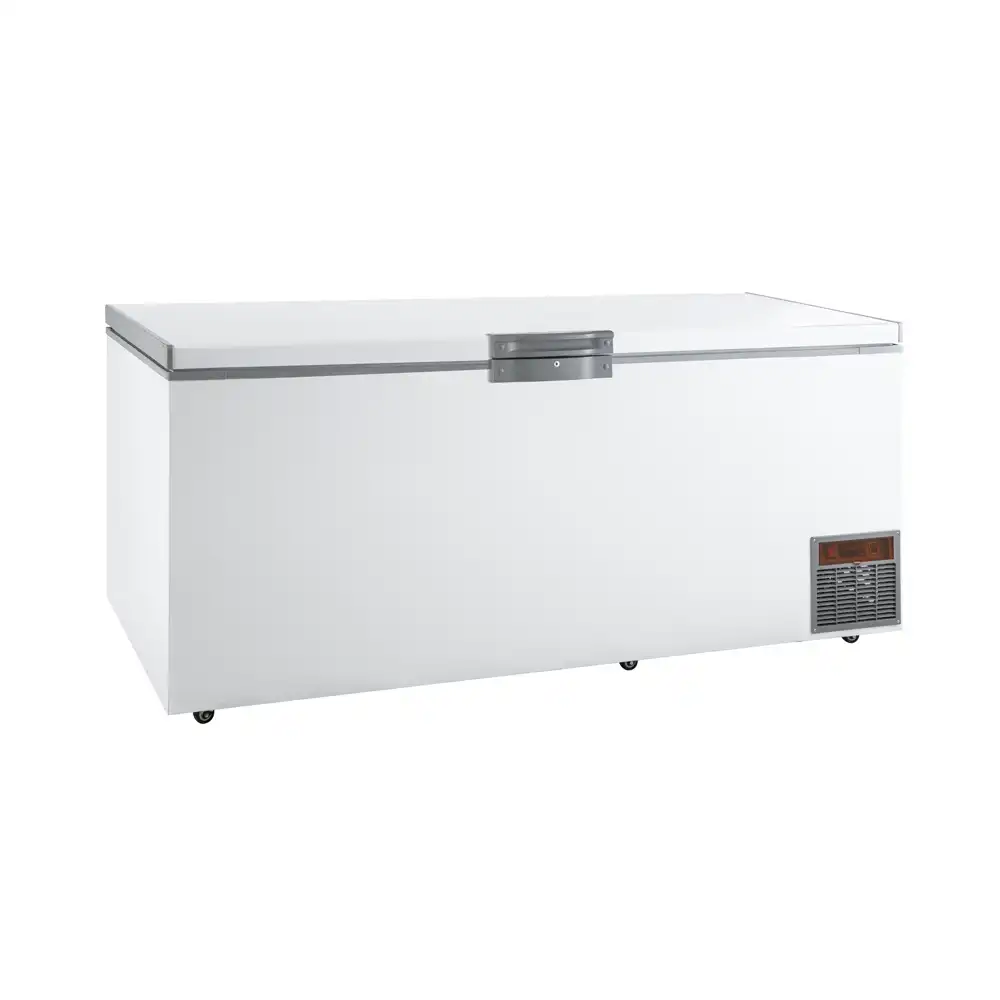
The refrigeration circuit is the foundation. A self-cascading system, which uses a single compressor and a phase-change cascade heat exchanger, achieves temperatures below -60°C with a simpler mechanical layout than a traditional two-stage cascade. This design reduces maintenance points and improves reliability, which is why we specify self-cascading compressors from manufacturers like Secop in our Camay ULT freezers.
Insulation thickness plays an equally critical role. Thick polyurethane foam insulation, at least 80 mm, minimizes heat gain when the ambient kitchen temperature rises. Every millimeter of insulation directly reduces compressor runtime and energy consumption. The double door seal design on models like the Camay DW45W788 creates an additional thermal break that further stabilizes internal temperature.
The control system provides the feedback loop that prevents quality drift. A microcomputer controller with 0.1°C resolution and alarm outputs for temperature deviation alerts staff before the product temperature ever approaches the danger zone. Integrated data logging, optional on many models, delivers the HACCP documentation needed for health inspections.
The interior layout affects cleaning frequency and product organization. Stainless steel liners with rounded corners simplify cleaning and prevent ice accumulation in areas that are difficult to reach. Adjustable shelves allow customizing the space for different product forms, from whole loins to portioned packs.
When sourcing a unit, confirm the manufacturer can supply third-party temperature mapping data for a full 24-hour cycle under load. This data often reveals the practical gap between a spec sheet and real-world performance, as our engineering team validates on every unit we ship. If your operation handles more than 20 kg of sashimi-grade fish per week, a properly sized ultra freezer can recover its cost within a year through reduced waste. To confirm the right model for your throughput, email Sales@hzcamay.com.
Implementing an Ultra Freezer in Your Kitchen
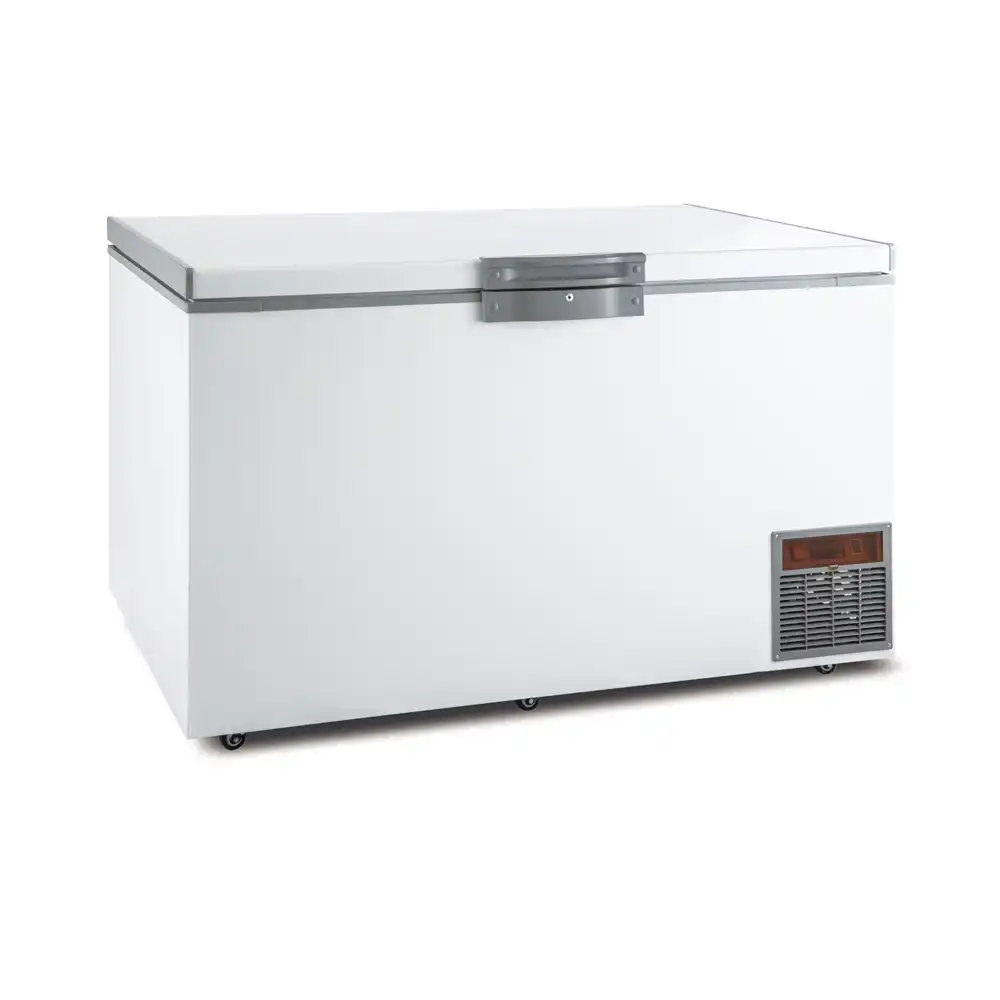
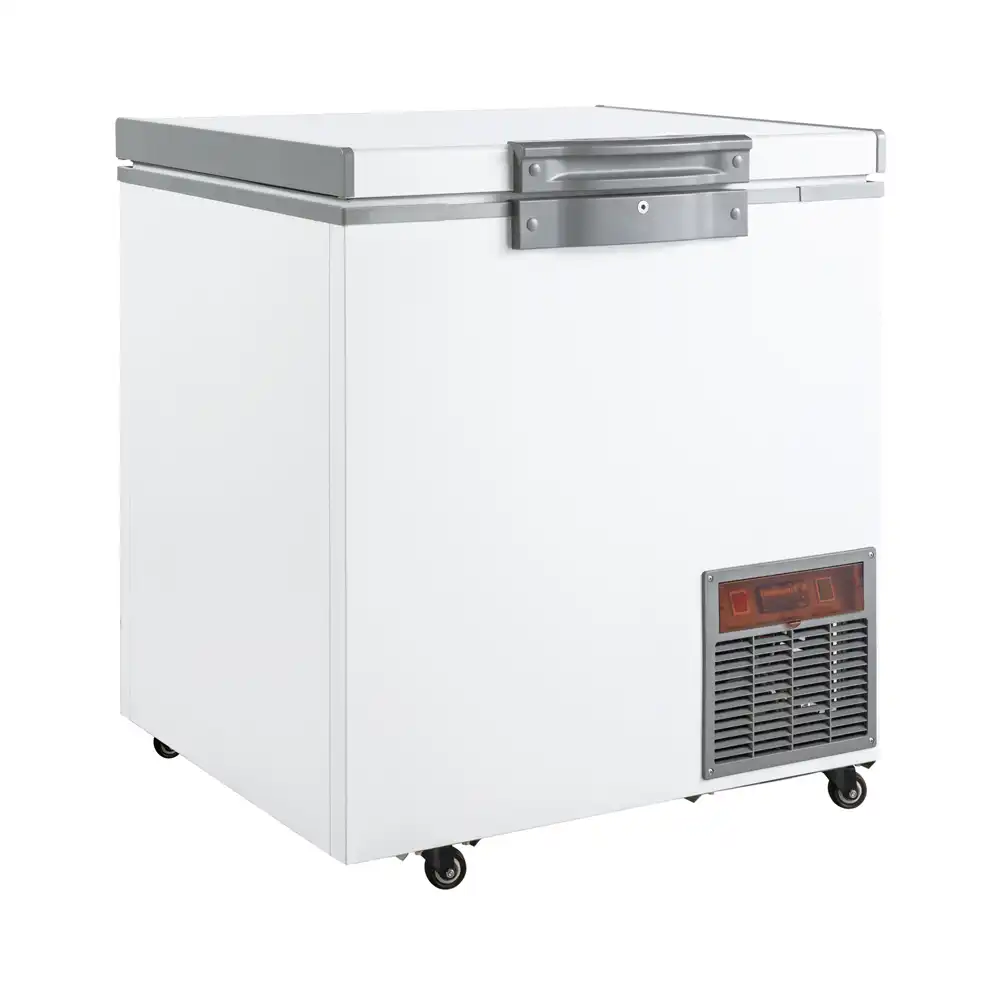
The physical size of an ultra freezer typically ranges from under-counter units to full-sized reach-in cabinets, and floor space is always at a premium in a commercial kitchen. Choosing a model that slides under a countertop or aligns with existing shelving is often the difference between a seamless integration and a cramped floor plan. Our Camay ultra freezer models are designed with casters that allow reconfiguring the layout when needed, and the single-door access avoids the aisle clearance problems that double-door freezers create.
Running a freezer at -45°C seems energy intensive, but the actual operating cost is often lower than expected when you account for reduced waste and longer product life. The thick insulation and efficient compressor design in commercial ultra freezers mean that once the cabinet reaches setpoint, the duty cycle is comparatively low due to minimal heat ingress.
The ultra freezer’s efficiency comes not just from the compressor but from the insulation quality, <Boost Savings with Energy Efficient Commercial Upright Freezers> highlights how polyurethane foam thickness and consistent door sealing can cut annual electricity usage by 15-25% in commercial upright freezers.
From a cost perspective, the real return comes from not discarding product. In a high-volume sashimi operation, losing even one tuna loin to freezer burn costs more than several months of electricity for the ultra freezer. A standard freezer might preserve that loin for a couple of weeks; an ultra freezer keeps it marketable for months.
Daily maintenance is straightforward but must be regular. The door gasket should be inspected weekly for compression set that can permit warm air infiltration. The condenser coil, if the kitchen is busy and air quality is poor, may need cleaning every month to maintain efficiency. Keep a chart of pull-down times for a standard test load; if the time gradually increases, it signals that the compressor or refrigerant charge needs attention before a full failure occurs. That proactive approach is part of the operating discipline that separates kitchens with consistently excellent sashimi from those that struggle with consistency.
Get Expert Help with Ultra Freezer Selection for Sashimi
A standard freezer is an economical holding cabinet for cooked and frozen products, but it cannot deliver the temperature stability and low-temperature reach that sashimi-grade fish demand. Investing in a dedicated ultra freezer changes the economics of menu planning; you can hold premium product longer, respond to fluctuations in customer demand, and reduce the waste that erodes margins on high-value seafood.
To identify the right ultra freezer capacity and feature set for your sushi bar or restaurant kitchen, contact us at Sales@hzcamay.com or call +8618157202219. Please share your typical weekly sashimi volume and the available floor space, and our engineering team will recommend a configuration that fits your operation.
Frequently Asked Questions About Sashimi Freezing
Can I just set my existing standard freezer to its coldest setting?
Even if the thermostat is cranked to its minimum, a standard single-stage compressor system cannot physically reach -40°C; the evaporator design and compressor capacity limit the achievable temperature to around -25°C in most cases. The cold setting may also cause the compressor to run continuously, leading to overheating and premature failure without getting the freezer any colder. A freezer not designed for ultra-low temperatures simply lacks the refrigerant and mechanical design to operate there safely and efficiently.
Does freezing fish at any temperature kill all parasites?
Freezing at -20°C for seven days or -35°C for 15 hours effectively kills parasites that pose health risks, but these guidelines are about food safety, not about preserving the eating quality. At -20°C, the fish tissue can still degrade texturally and develop off-flavors over time. A lower temperature like -45°C addresses both safety and quality simultaneously, so you do not have to choose between serving safe fish and serving excellent fish.
How long does sashimi actually last in an ultra freezer?
With proper vacuum packaging and storage at -45°C, sashimi-grade tuna can maintain its firm texture and bright color for 2 to 3 months. Fatty fish like salmon have a shorter shelf life due to lipid oxidation, typically 1 to 2 months. The key is to minimize temperature fluctuation; each cycle of warming and cooling, even by a few degrees, shortens product life. Once a package is opened, the clock accelerates, so portioning before freezing is critical.
Is it worth buying an ultra freezer instead of using a blast chiller then standard freezer?
A blast chiller rapidly pulls down the temperature of fresh fish to -18°C or lower, which improves initial ice crystal formation compared to a standard freezer. However, if the storage temperature thereafter remains -18°C, the same degradation processes will occur, just slower initially. For long-term storage, you need a dedicated ultra freezer. The two pieces of equipment serve different roles; a blast chiller is for rapid cooling after processing, while an ultra freezer is for long-term holding. For operations that handle significant sashimi volume, having both is the ideal setup.
What should I check before ordering an ultra freezer?
First, verify the electrical supply; many ultra freezers require a dedicated circuit with adequate voltage stability. Second, measure door clearances and aisle widths to confirm the unit can be delivered and positioned without disassembly. Third, request a temperature recovery test report from the manufacturer showing how quickly the cabinet returns to setpoint after a door opening of 30 seconds. Our team at Camay supplies this data with every quote, because the recovery time is what determines real-world performance, not just the steady-state temperature.
Share your dimensions and sashimi volume, and we can confirm the right ultra freezer model for your kitchen: Sales@hzcamay.com.
If you’re interested, check out these related articles:
Ultimate Buyers Guide for Commercial Reach In Refrigerators
Essential Maintenance Tips for Your Commercial Chef Base Refrigerator