

Selecting the right undercounter refrigerator does more than check a box on a spec sheet. It tightens your workflow, keeps food safe, and protects margin. After 26 years building and troubleshooting commercial refrigeration, I have learned to read between the lines on capacity, cooling systems, controls, and construction. Below, I lay out how I size and select these units in real kitchens, the features that actually matter during a rush, and which Camay models fit common scenarios so you can invest with confidence.
Understanding the Essential Role of Undercounter Refrigerators in Commercial Settings
Undercounter refrigerators earn their keep by putting cold storage exactly where cooks reach first. Tucked under the line, they free up floor space and reduce steps during peak service. In practice, that proximity keeps stations tight and the pass moving. These units are not just boxes for food, they are part of the line’s rhythm.
1. Space-Saving Solutions for Efficient Kitchen Operations
Most commercial kitchens are measured in inches, not feet. Undercounter units fit under benches and prep tables, making smart use of vertical and horizontal space. With proteins, dairy, or garnishes sitting within arm’s reach, staff move less and plate faster. Better space use translates into a cleaner station and a steadier pace.
2. Maintaining Optimal Food Safety and Freshness Standards
Consistent temperature holds food quality and stops bacterial growth. Good undercounter units recover quickly after door openings, which matters when a door sees constant traffic. That consistency helps meet health codes and keeps guests happy. Stable control also cuts spoilage, which saves real money.
Key Factors to Consider When Choosing an Undercounter Refrigerator
Choosing the right unit means weighing how it will perform day after day in your setup. The key pieces are capacity, refrigeration type, temperature control, durability, energy use, and mobility.
1. Assessing Your Specific Capacity and Size Requirements
Start with your menu and turnover, then match the internal volume to how you work. Measure the space for width, depth, and height, including clearance. Balance interior capacity with exterior dimensions so it actually fits. Guessing too big wastes space, too small creates choke points. A careful survey up front prevents hassles later.
2. Evaluating Different Refrigeration System Types and Their Benefits
Commercial undercounter refrigerators use self-contained or remote systems. Self-contained units install quickly and move easily, which suits smaller operations or changing layouts. Remote systems run quieter and dump less heat into the kitchen. We recommend self-contained systems for most undercounter applications due to their simplicity and cost-effectiveness. The layout and ventilation will point you to the right choice.
3. Understanding Temperature Control and Monitoring Features
Precise control protects food. Digital thermostats with accurate set points and real-time displays are a must. Models with smart connectivity add remote monitoring and alerts, which is handy for compliance and after-hours coverage. Tight, steady temperatures preserve product and reduce waste.
4. Prioritizing Durability and Material Construction for Longevity
Commercial gear takes a beating. Stainless steel inside and out resists corrosion and cleans quickly. Quality insulation, such as polyurethane or cyclopentane, holds temperature and trims energy use. Heavy-duty hinges, handles, and shelves extend service life. I look for parts that can handle door slams and fully loaded pans without complaint.
5. Analyzing Energy Efficiency and Environmental Impact
Efficient units lower utility bills and shrink the footprint. ENERGY STAR on the label is a strong signal. Eco-friendly refrigerants like R290 and efficient compressors keep consumption down. Spending a bit more upfront often pays back through long-term savings without giving up performance.
6. Considering Mobility and Installation Flexibility Options
Heavy-duty casters make cleaning behind the line far less of a chore and let you reconfigure stations as the menu evolves. Adjustable legs help when floors are not perfectly level. Check electrical needs and ventilation clearances before ordering. Small touches, such as recessed handles, improve ergonomics when space is tight.
Exploring Types of Commercial Undercounter Refrigerators
Configurations vary by task. Matching the type to the job keeps the line smooth and prep efficient.
1. Standard Undercounter Refrigerators for General Storage
Standard units cover broad needs, from beverages and dairy to prep items and produce. They slide into tight footprints and keep what you use most right where you need it. Many kitchens rely on them as everyday workhorses.
2. Undercounter Freezers for Deep Freezing Needs
When you need frozen storage at the station, these compact freezers handle meats, seafood, and desserts. With low holding temperatures, they preserve texture and shelf life. They are especially helpful where walk-in space is limited.
3. Worktop and Chef Base Refrigerators for Integrated Prep Stations
Worktop and chef base units pair cold storage with a tough surface on top, built to support equipment. Ingredients stay chilled under the station where you cook or prep, which shortens steps and cuts cross-contamination risk.
If you’re interested, check Boost Kitchen Efficiency Workflow Optimization with Chef Base Fridges.
4. Specialized Undercounter Units for Specific Applications
Purpose-built options, such as pizza prep tables with ingredient rails or sandwich and salad stations, speed up repetitive tasks. These keep items cold and organized right at the point of assembly.
Essential Features and Certifications for Commercial Undercounter Units
Certain features and third-party marks separate dependable units from the rest. These elements help ensure performance, safety, and compliance.
1. Self-Closing Doors and Security Features
Self-closing doors keep cold air where it belongs and prevent energy waste when hands are full. Locks and keys protect high-value or sensitive items. Both features support smooth operations and reduce losses.
2. Easy Cleaning and Maintenance Considerations
Sanitation starts with good design. Rounded interior corners, removable gaskets, and accessible condenser coils make cleaning faster and more thorough. Plan on routine coil cleaning to maintain performance and extend the life of the unit.
For more information, consider Essential Maintenance Tips for Your Commercial Chef Base Refrigerator.
3. Digital Temperature Control and Smart Connectivity
Digital controls allow precise set points with clear readings. IoT and WiFi options enable remote checks and alerts, so managers can verify compliance and respond quickly. Smart oversight adds another layer of protection.
4. Industry Certifications and Compliance Standards
Look for ETL, DOE, ENERGY STAR, and NSF (ETL Sanitation). These signals confirm safety, efficiency, and sanitation performance. Verifying the right certifications for your region keeps inspections straightforward.
Why ZHEJIANG KAIMEI (Camay) Undercounter Refrigerators Are a Smart Investment
ZHEJIANG KAIMEI CATERING EQUIPMENT CO., LTD, under the Camay brand, brings 26 years of commercial refrigeration experience. We build reliable, efficient undercounter units that hold up in demanding environments. The focus is innovation with real-world payoffs and support that sticks with you after install.
1. Showcasing Camay’s Commitment to Quality and Innovation
Camay pairs robust construction with modern tech. We use eco-friendly R290 refrigerant and high-performance compressors like Cubigel. Our manufacturing aligns with ISO 9001:2015, ISO 14001:2015, and ISO 45001:2018. The result is durable equipment with steady performance and strong efficiency.
2. Highlighting Key Features Across Camay’s Undercounter Range
Expect stainless steel inside and out for durability and easy cleaning. Smart digital controls are standard, with optional IoT and WiFi for tighter oversight. Self-closing, lockable doors, recessed handles, and removable gaskets round out daily usability. Everything centers on food quality and day-to-day convenience.
3. Camay Commercial Solid Door Undercounter (Model MTR-72) for High Capacity Needs
The Camay Commercial Solid Door Undercounter (Model MTR-72) handles larger storage loads with a ventilated system and three solid doors. It suits high-volume kitchens that cannot afford temperature drift. Strong build quality and efficient operation make it a dependable anchor on busy lines.
| Specification | Details |
|---|---|
| Model | MTR-72 |
| Classification | Refrigerator |
| Capacity | 576 L / 20.34 Cuft |
| Inner Temperature | 0.5°C to 5°C / 33°F to 41°F |
| Doors | 3 |
| Refrigerant | R290 |
| Certifications | ETL, DOE, ENERGY-STAR, CE, IEC-CB, PSE, SAA, KC, NOM, EAC |
4. Camay Commercial Undercounter Refrigerator (Model MTR-60) for Versatile Storage
The Camay Commercial Undercounter Refrigerator (Model MTR-60) offers two solid doors and a balanced footprint for medium-size operations. It doubles as a handy work surface. With R290 and ventilated cooling, it maintains set temperatures while trimming energy use.
| Specification | Details |
|---|---|
| Model | MTR-60 |
| Classification | Refrigerator |
| Capacity | 476 L / 16.81 Cuft |
| Inner Temperature | 0.5°C to 5°C / 33°F to 41°F |
| Doors | 2 |
| Refrigerant | R290 |
| Certifications | ETL, DOE, ENERGY-STAR, CE, IEC-CB, PSE, SAA, KC, NOM, EAC |
5. Camay MTR-48 2-Door Commercial Undercounter Refrigerator for Compact Efficiency
The Camay MTR-48 2-Door Commercial Undercounter Refrigerator fits smaller spaces without giving up steady temperature control. It is a natural fit for cafes, bakeries, or satellite stations. Stainless steel construction and R290 refrigerant support durability and efficient cooling in a compact footprint.
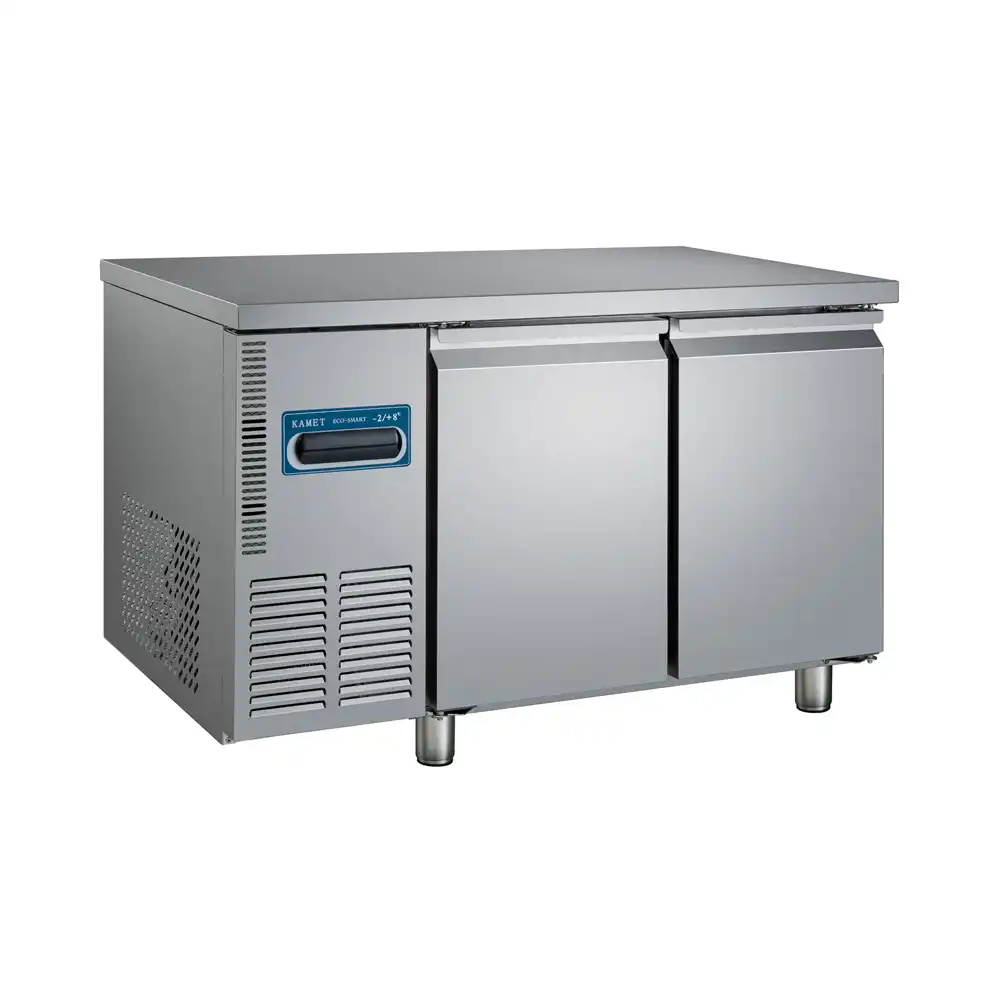
| Specification | Details |
|---|---|
| Model | MTR-48 |
| Classification | Refrigerator |
| Capacity | 368 L / 13.00 Cuft |
| Inner Temperature | 0.5°C to 5°C / 33°F to 41°F |
| Doors | 2 |
| Refrigerant | R290 |
| Certifications | ETL, DOE, ENERGY-STAR, CE, IEC-CB, PSE, SAA, KC, NOM, EAC |
6. Camay Commercial Worktop Refrigerator Cooler Fridge (Model MWTF-27-L) for Dual Functionality
The Camay Commercial Worktop Refrigerator Cooler Fridge (Model MWTF-27-L) pairs cold storage with a practical prep surface. Ideal when space is tight, it uses R290 and smart digital control to keep product within range. A single door keeps access simple at small stations.
| Specification | Details |
|---|---|
| Model | MWTF-27-L |
| Classification | Freezer |
| Capacity | 202 L / 7.13 Cuft |
| Inner Temperature | -25°C to -15°C / -13°F to 5°F |
| Doors | 1 |
| Refrigerant | R290 |
| Certifications | ETL, DOE, ENERGY-STAR, CE, IEC-CB, PSE, SAA, KC, NOM, EAC |
7. Camay 60” Countertop Refrigerated Chef Base (Model MAR-60A) for Integrated Prep
The Camay 60” Countertop Refrigerated Chef Base (Model MAR-60A) supports heavy equipment on a one-piece top while storing chilled items below. On a busy line, it keeps ingredients within reach and temperatures stable, which tightens prep and service.
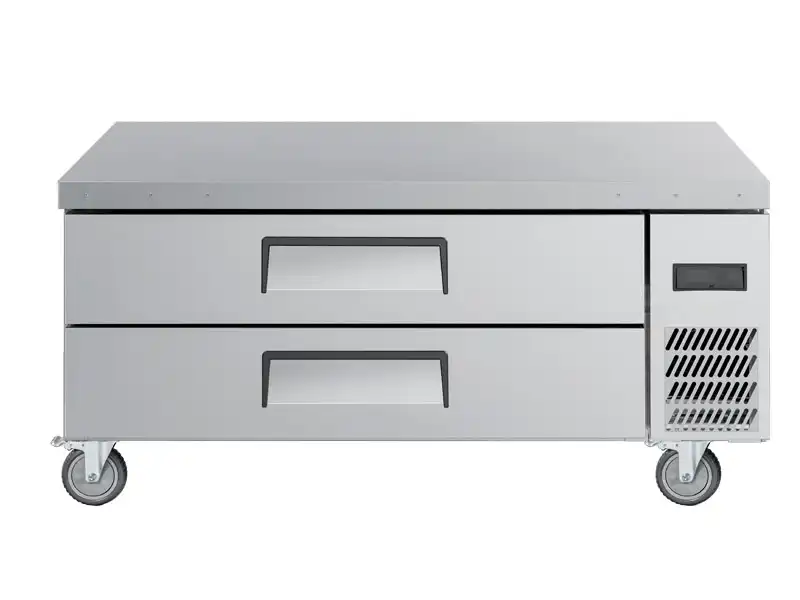
| Specification | Details |
|---|---|
| Model | MAR-60A |
| Classification | Chef Base |
| Dimensions (WxDxH) | 1535×840×681 mm / 60.4×33.1×26.6 inch |
| Internal Temperature | 0.5°C to 5°C / 33°F to 41°F |
| Capacity | 117 L / 4.13 Cuft |
| Refrigerant | R290 |
| Casters | 4-inch |
| Certifications | ETL, DOE, ENERGY-STAR, CE |
8. The Benefits of Choosing a Manufacturer with 26 Years of Experience
Two and a half decades of building commercial refrigeration shows up in the details. We back reliable products with OEM and ODM services and global support. That experience produces durable, efficient equipment that adapts as kitchens change, which makes for a steady, long-term partnership.
Connect with ZHEJIANG KAIMEI (Camay) for Your Refrigeration Needs
Choosing the right undercounter unit affects daily service and long-term costs. Tap our experience and full product line to match a model to your operation. Reach out with your dimensions, menu, and throughput, and we will help you dial in the right fit.
Phone: +86 181 5720 2219
Email: Sales@hzcamay.com
FAQs
1. What is the difference between an undercounter refrigerator and a chef base?
An undercounter refrigerator provides cold storage under a counter. A chef base adds a heavy-duty worktop designed to support cooking equipment while keeping ingredients chilled below. Chef bases serve as integrated prep stations that streamline the line.
2. How important is the refrigerant type in a commercial undercounter refrigerator?
Refrigerant choice affects efficiency and environmental compliance. R290 has a lower global warming potential and helps reduce operating costs while aligning with regulations. We prioritize these refrigerants for performance that is both efficient and responsible.
3. What certifications should I look for when buying a commercial undercounter refrigerator?
ETL, DOE, ENERGY STAR, and NSF (ETL Sanitation) signal safety, energy performance, and sanitation compliance. These marks help ensure the unit meets code and performs as expected in food service.
4. Can undercounter refrigerators be easily moved or relocated?
Units with optional casters are easy to reposition for cleaning or layout changes. If a unit lacks casters, use professional movers or proper dollies to avoid damage during a move.
5. How often should I clean my commercial undercounter refrigerator?
Clean interior surfaces daily and exterior surfaces weekly. Clean the condenser coil monthly or quarterly, based on kitchen conditions. Routine cleaning protects hygiene, performance, and service life.