

Stainless Steel Prep Tables vs Standard Options for Commercial Kitchens
When you spend enough time around commercial kitchens, you start to notice which equipment holds up and which quietly becomes a problem. Prep tables fall squarely into the category of things that either work reliably for years or create ongoing headaches. The material choice matters more than most operators realize at the point of purchase. This comparison breaks down the practical differences between stainless steel and standard alternatives, covering hygiene performance, durability under real conditions, workflow impact, and long-term cost implications.
Material Science and Hygiene Standards in Food Preparation
The surface where food gets prepped carries direct responsibility for sanitation outcomes. Stainless steel behaves differently than wood or plastic laminate at a fundamental level. Its non-porous structure means bacteria have nowhere to settle and multiply. Wood absorbs moisture and creates hidden environments for pathogens. Plastic laminates start smooth but develop scratches that become bacterial reservoirs over time.
The smooth finish of stainless steel allows cleaning agents to make full contact with the surface. Disinfection actually works the way it should. Products like the Camay Commercial Worktop Refrigerator Cooler Fridge (Model MWTF-27-L) and the Camay 60″ Countertop Refrigerated Chef Base (Model MAR-60A) use high-quality stainless steel construction. Both carry ETL Sanitation (NSF Standard) certification. The corrosion resistance also means acidic foods and harsh cleaning chemicals don’t degrade the surface over months and years of use.
| Feature | Stainless Steel | Wood/Plastic Laminate |
|---|---|---|
| Porous Nature | Non-porous | Porous (wood), Semi-porous (plastic laminate) |
| Bacterial Growth | Highly resistant | Prone to bacterial absorption and growth |
| Cleaning Ease | Very easy to sanitize, resists stains | Difficult to sanitize, absorbs odors and stains |
| Chemical Resist. | Excellent resistance to harsh cleaners | Degrades with strong chemicals |
| Moisture Resist. | Impervious to moisture | Warps, swells, or delaminates with moisture exposure |
Durability, Longevity, and Structural Integrity Assessment
Commercial kitchen equipment represents a significant capital commitment. The question isn’t just what works today but what still works five or ten years from now. Stainless steel prep tables handle the punishment of daily service without showing it. They resist corrosion, shrug off impacts, and tolerate heat that would damage other materials.
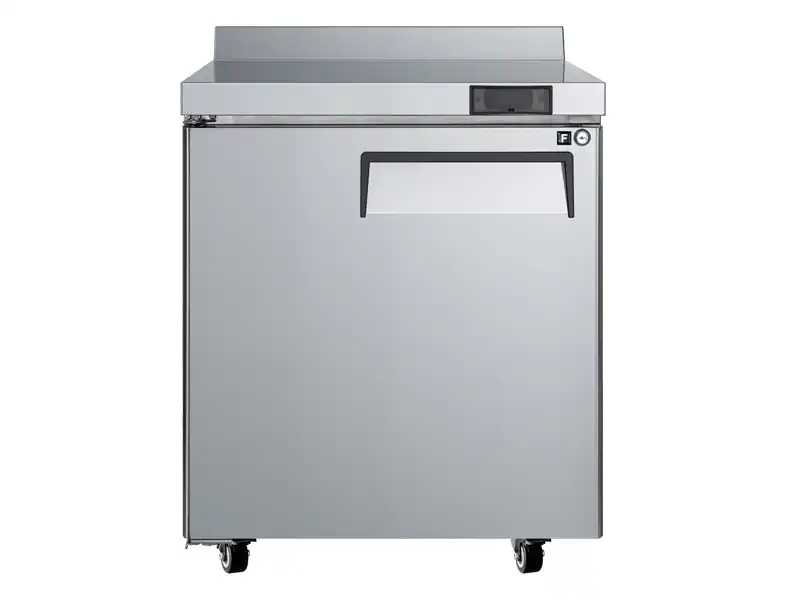
The Camay Commercial Solid Door Undercounter (Model MTR-72) uses stainless steel for both interior and exterior construction. This approach maintains structural integrity through years of heavy use. Wood tables eventually splinter and crack. Plastic laminates chip at edges and delaminate where moisture gets underneath. These failures mean repair costs or full replacement cycles that add up quickly. Stainless steel surfaces accept hot pans directly without warping or scorching. A dropped pot might leave a dent, but it won’t compromise the working surface.
| Material | Expected Lifespan (Years) | Typical Maintenance Costs (Annual) | Resistance to Impact | Heat Resistance |
|---|---|---|---|---|
| Stainless Steel | 15-20+ | Low | High | High |
| Wood | 5-10 | Moderate to High | Moderate | Low |
| Plastic Laminate | 3-7 | Moderate | Low | Low |
Operational Efficiency and Workflow Optimization Benefits
The prep table surface affects how quickly a kitchen can reset between tasks. Stainless steel cleans fast because nothing sticks and nothing absorbs. The Camay Commercial Undercounter Refrigerator (Model MTR-60) includes removable gaskets and round-corner inner shelves specifically to reduce cleaning time. These design choices eliminate the corners and crevices where food debris hides.
Stainless steel also plays well with other equipment. It supports heavy appliances without flexing or sagging. The neutral appearance fits any kitchen aesthetic. Many models include optional casters for repositioning during deep cleaning or layout changes. This flexibility matters in kitchens where space constraints force regular reconfiguration.
Investment Value and Return for Commercial Kitchens
The upfront price difference between stainless steel and standard alternatives looks significant on a purchase order. The math changes when you extend the timeline. A laminate table that costs less initially might need replacement in three to five years. The stainless steel option that seemed expensive can still be in service two decades later.
Maintenance costs stay low because there’s less to maintain. Sanitation issues that trigger health department concerns become rare rather than recurring. The professional appearance contributes to customer confidence in ways that don’t show up on a balance sheet but matter to the business. The total cost of ownership calculation favors stainless steel by a wide margin for operations planning to stay open long-term.
Compliance and Regulatory Mandates for Food Service
Health inspectors look at prep surfaces with particular attention. Stainless steel meets the requirements they’re checking for. Its non-porous nature and sanitation characteristics align with what health departments and food safety agencies expect. NSF International certification confirms equipment meets public health standards. Products like the MSR-48M Salad Prep Table carry ETL Sanitation (NSF Standard) certification.
Wood and plastic laminate surfaces create compliance risk. Wood absorbs liquids despite surface treatments. Plastic scratches accumulate over time. Both materials can lead to inspection failures, fines, or forced closures. Stainless steel removes this category of operational risk. The surface stays compliant because its properties don’t change with use.
Work with ZHEJIANG KAIMEI CATERING EQUIPMENT
ZHEJIANG KAIMEI CATERING EQUIPMENT CO., LTD. manufactures refrigeration equipment for commercial food service operations. Our stainless steel prep tables and refrigeration units address the durability, hygiene, and efficiency requirements of professional kitchens. Contact us for consultation on equipment selection. Phone: +8618157202219 | Email: Sales@hzcamay.com
Frequently Asked Questions About Commercial Prep Tables
What are the key benefits of stainless steel prep tables for food safety?
Stainless steel prep tables prevent bacterial growth because the non-porous surface offers nowhere for pathogens to establish. Cleaning and sanitizing actually removes contaminants rather than pushing them into material pores. The surface resists corrosion and staining through years of use. These properties make stainless steel the standard choice for operations that take food safety seriously.
How does the lifespan of stainless steel tables compare to other materials?
Stainless steel tables routinely last 15 to 20 years or longer under commercial kitchen conditions. Wood tables typically need replacement within 5 to 10 years. Plastic laminate surfaces often fail within 3 to 7 years. The durability difference translates directly into lower replacement frequency and reduced total equipment costs over the life of a food service operation.
Are stainless steel prep tables a worthwhile investment for new restaurants?
New restaurants benefit significantly from starting with stainless steel prep tables. The higher initial cost avoids the replacement cycles and compliance risks that come with cheaper alternatives. The professional appearance supports the brand image from day one. The hygiene advantages reduce food safety incidents during the critical early period when reputation is being established.