

When comparing solid door vs glass door back-of-house units, the decision shapes compressor duty cycle, energy consumption, and equipment lifespan far more than kitchen aesthetics. Over twenty-six years in commercial refrigeration manufacturing, I’ve watched procurement teams overestimate the value of glass-door visibility while underestimating the insulation penalty. A back-of-house refrigerator is a cold-storage workhorse, not a display case. This article walks through the thermal performance, durability, and total-cost differences that most buying guides skip, so you can match the door type to how your kitchen actually runs.
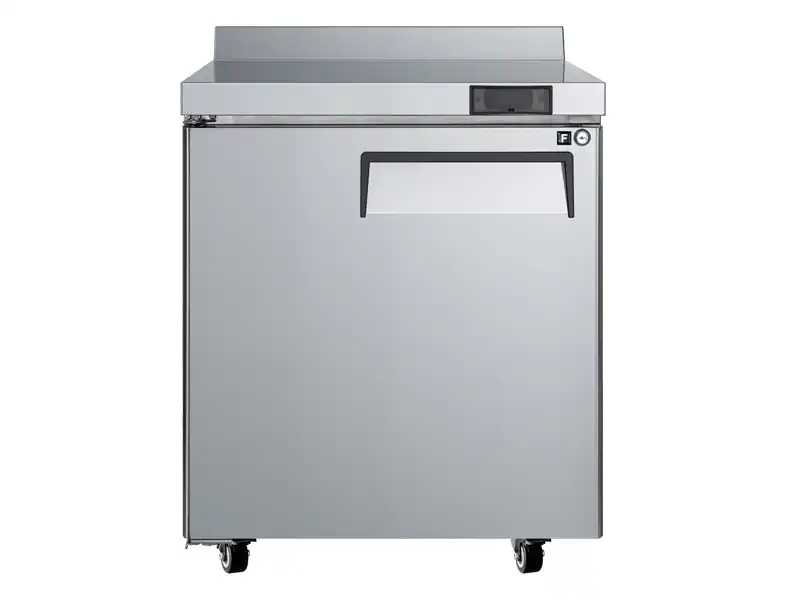
Solid Door and Glass Door Construction Differences
Solid door back-of-house refrigerators pair a full stainless steel outer panel with a thick polyurethane foam core, typically 50 to 60 millimeters, and a smooth inner liner. The Camay MTR-series undercounter models, for instance, use polyurethane/cyclopentane insulation with a solid door design that blocks ambient heat far better than any transparent interface. Glass door units rely on double- or triple-pane tempered glass, a low-emissivity coating, and an argon-filled gap. While this construction slows heat transfer, the insulation value remains a fraction of what foam delivers. The glass surface conducts heat constantly, and in a back-of-house zone where ambient temperatures regularly climb above 38°C, the compressor runs longer to hold set point.
| Feature | Solid Door Unit | Glass Door Unit |
|---|---|---|
| Door insulation | Thick foam (≥50mm) | Double-pane glass, minimal foam frame |
| Heat gain | Low | Higher, proportional to glass surface |
| Visual inventory check | Opening door required | Immediate visual access |
| Typical use case | General storage, dry goods, prep-area backup | Transition-area grab-and-go, light-use |
Thermal Insulation and Energy Efficiency
Polyurethane foam traps air in closed cells and resists heat flow; glass, even with low-e coating, remains thermally conductive. That basic material difference creates a measurable gap in energy performance. In our production testing, solid door undercounter units maintain a 0.5–5°C interior with noticeably shorter compressor cycles, often 10–15% less runtime compared with a glass door equivalent in the same hot-ambient test cell. Over a 24-hour period, that translates to lower kilowatt-hour consumption and fewer start-stop surges that age the compressor and electrical components.
Why Solid Door Units Keep the Compressor Working Less
Every compressor cycle starts with an inrush current spike and adds a thermal load. A solid door reduces the number of these cycles simply by keeping ambient heat out. Glass door manufacturers add low-e coatings and frame heaters to fight condensation, but those countermeasures consume additional energy and partially offset the benefits of the insulated frame. The net effect is that a solid door unit operates closer to its rated efficiency under real kitchen conditions.
Durability and Maintenance in Busy Kitchens
Back-of-house kitchens subject equipment to daily physical abuse from carts, sheet pans, and cleaning gear. A solid stainless steel door absorbs impacts without functional damage. Glass doors, though made of tempered safety glass, remain vulnerable to a sharp strike. A shattered door not only demands an emergency service call but also puts stored food at risk if the unit cannot hold safe temperature. Our manufacturing team has designed solid door cabinets with reinforced hinges, self-closing mechanisms, and lock-and-key hardware to survive these conditions. In projects we have supplied to large hotel kitchens across Asia-Pacific and the Middle East, the service logs consistently show fewer door-related call-outs on solid door configurations.
Compressor Load and Long-Term Operational Cost
Superior insulation means fewer and shorter compressor runs. Over a five- to seven-year service life, that reduction can meaningfully offset any upfront price difference. Solid door units also tend to require fewer gasket replacements because the door structure is simpler and the seal faces less thermal expansion stress. If your kitchen operates sixteen hours a day in a hot climate, the cumulative energy saving belongs in the procurement spreadsheet. For a rough payback estimate based on your local rate and door-opening patterns, you can reach the engineering team at Sales@hzcamay.com.
Matching Door Type to Your Back-of-House Operation
Solid doors serve best where reliability and energy control outweigh the need for instant visual access. Walk-in coolers, dry-goods storage, and prep-area backup coolers all fit that profile. Glass doors offer a practical advantage where staff need to identify stock at a glance, such as a transition area between a prep line and a pass-through. However, my experience is that many kitchens overrate that glass-door convenience while underrating the insulation penalty. For the majority of back-of-house cold-storage roles, a solid door unit delivers better long-term cost per cubic foot and more predictable service life.
For a custom configuration built around your kitchen layout, we manufacture solid door undercounter and reach-in refrigerators with R290 refrigerant and heavy-duty Cubigel compressors. Contact ZHEJIANG KAIMEI CATERING EQUIPMENT CO., LTD (Camay brand) at Sales@hzcamay.com or call +8618157202219. Share your capacity, dimensions, and door-opening requirements, and we will recommend a unit that fits your workflow.
Common Questions About Back-of-House Refrigeration Doors
Are glass door back-of-house refrigerators less durable than solid door units?
Glass doors, even when made of tempered safety glass, still crack under sharp impact. A solid stainless steel door withstands daily bumps from carts and pans without damage. In high-traffic kitchens, solid doors reduce the risk of unexpected downtime and the cost of emergency glass replacement.
Does a glass door affect temperature stability inside the refrigerator?
Yes. Glass transmits more ambient heat into the cabinet, causing the thermostat to call for cooling more often. This leads to slightly wider temperature swings, which can be a concern for proteins or dairy stored near the door. A solid door unit maintains a more consistent cold-holding pattern.
What type of door is easier to keep clean in a commercial kitchen?
Solid doors with a brushed stainless steel finish are easier to wipe down and hide minor scratches better than glass. Glass doors show fingerprints and condensation almost immediately and need frequent cleaning to stay clear. Over a shift, solid doors demand less maintenance attention.
Can I retrofit a glass door onto a solid door unit?
Retrofitting is generally not practical. The door frame, hinge mounts, and gasket sealing surfaces are designed specifically for the door type. Replacing the door requires matching the exact model series from the manufacturer. Buying a unit built for the desired door configuration from the start is the more cost-effective approach.
What door do you recommend for a high‑volume restaurant kitchen?
For high‑volume kitchens where mechanical reliability and long‑term operating cost take priority, I recommend solid door units. The service histories we have reviewed across thousands of installations show lower overall maintenance expense with solid door cabinets. To discuss your specific kitchen layout and explore stock configurations, email Sales@hzcamay.com.
If you’re interested, check out these related articles:
Boost Kitchen Efficiency Workflow Optimization with Chef Base Fridges
Upright Freezer vs Refrigerator Key Differences Explained
Boost Efficiency Energy Efficient Chef Base Units for Commercial Kitchens
Essential Maintenance Tips for Commercial Reach In Refrigerators
Ultimate Buyers Guide for Commercial Reach In Refrigerators