

Smoothie stations thrive on speed and freshness. Undercounter refrigeration anchors that workflow, storing cut fruits, dairy, and bases at safe temperatures directly within arm’s reach. In over two decades of working with commercial kitchens, I’ve seen too many operators struggle with fridges that cannot maintain consistent cooling when the lunch crowd hits, or units that become cleaning nightmares because nobody considered rounded corners and removable gaskets. The right undercounter fridge eliminates those headaches and pays for itself through reduced spoilage and faster service. This guide walks through the key decisions that make a difference.
Why Undercounter Refrigeration Is Essential for Smoothie Stations
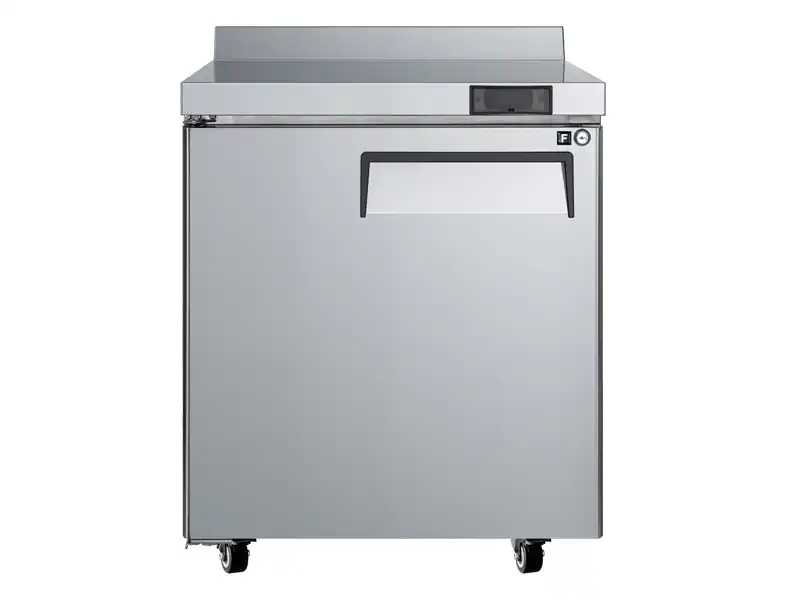
Smoothie ingredients fall into two categories: dry goods like powders and sweeteners, and temperature-sensitive products such as fresh fruit, yogurt, and alternative milks. The second group demands refrigeration. A reach-in cooler placed ten feet away costs seconds per drink, and those seconds pile up during a rush. Placing an undercounter refrigerator directly beneath the blending station keeps every container at fingertip reach.
There’s a bigger reason to choose carefully: temperature stability. Units that cycle too widely or recover slowly after the door opens accelerate spoilage. Commercial undercounter fridges like the Camay MTR series hold a tight 0.5°C to 5°C band even with frequent door openings. That consistency preserves the texture and safety of cut fruit and dairy, which degrade quickly above 5°C.
Calculating the Right Capacity for Your Smoothie Volume
Sizing means matching internal storage volume to your peak-period ingredient needs. A juice bar that sells 80 smoothies a day has very different requirements from a high-throughput shop pushing 300 drinks. Start with a pan plan: how many 1/3 GN pans of strawberries, mangoes, bananas, spinach, and dairy bases do you need at the ready? Multiply by volume and add 20 percent for peak-day surges.
The table below compares three Camay undercounter models frequently spec’d for smoothie stations:
| Model | Width (mm) | Capacity (L) | Number of Doors |
|---|---|---|---|
| MTR-48 | 1225 | 368 | 2 |
| MTR-60 | 1530 | 476 | 2 |
| MTR-72 | 1846 | 576 | 3 |
A 48-inch unit fits into narrow galley layouts, while the 72-inch model handles the ingredient diversity a full menu demands.
Key Features That Prevent Service Bottlenecks
Walk into a struggling smoothie bar on a Saturday morning and the friction points jump out. The fridge door that will not stay open while you load strawberries. The sticky gasket that traps pulp. The compressor that kicks on loudly every four minutes. Three features separate a unit that fades into the background from one that interrupts your team.
Self-closing doors with stay-open hinges. You need both: a door that closes itself to save energy, but that can be locked open during high-volume stretches. All Camay undercounter models use left/right convertible hinges with an adjustable stay-open mechanism.
Smart digital temperature control. A basic mechanical thermostat can drift. Digital controllers hold the set point and provide visual alerts if the temperature rises. Units in the MTR series also offer optional IoT connectivity, letting a manager check conditions remotely.
Clean-in-place design. Rounded inner corners eliminate the crevices where fruit pulp and dairy residue collect. Removable door gaskets make deep cleaning straightforward. Automatic defrost prevents ice buildup that can block airflow and force the compressor to work harder.
If your layout places the unit under a custom bar top, confirm the required clearance for heat dissipation. A front-breathing ventilation system can handle tighter fits; a rear-discharge design needs a planned gap behind the cabinet. It’s worth sharing your floor plan with the manufacturer before ordering. Send us your dimensions and we’ll verify which configuration fits the space.
Integrating the Fridge into Your Smoothie Station Layout
Undercounter units do not live in a vacuum. The surrounding footprint includes the blender ledge, sink, ice bin, and server pickup area. A mistake I’ve seen repeatedly during factory visits is treating the fridge as a standalone box instead of a workstation anchor.
Position the unit so the door swing does not collide with the blender operator’s left hand, and so the most-used pans sit on top shelves at knee-to-waist height. If you use casters, lock them after positioning: an unbraked fridge can shift under repeated door opening and create a pinch hazard.
Ventilation requirements dictate minimum clearances around the compressor compartment. For Camay’s ventilated cooling systems, the specification calls for at least 10 cm on each side and 15 cm at the rear when the unit is installed under a counter with closed sides. Open-air installations allow tighter clearances.
Keeping the Fridge Clean and Food-Safe
A consistent schedule is non-negotiable. Daily: wipe interior surfaces and gaskets with a food-safe sanitizer, and check that the drain is clear. Weekly: vacuum the condenser coil and inspect the door seal for tears or looseness. Monthly: verify the digital display reading against an independent thermometer placed in the center of the cabinet.
The polyurethane insulation in Camay units contributes to energy efficiency, but it also reduces compressor runtime. Fewer cycles mean less heat rejection into the kitchen, which matters in a small smoothie bar where every watt of cooling load raises the ambient temperature.
Choosing the Right Undercounter Refrigeration for Your Smoothie Business
The undercounter fridge you choose will still be in service a decade from now if it’s built properly. Cutting corners on material thickness, compressor specification, or insulation invites a cycle of repairs that erode your margins. A stainless steel cabinet, CFC-free polyurethane insulation, and a heavy-duty Cubigel compressor are starting points, not upgrades.
If you’re planning a new smoothie station or re-equipping an existing one, send your ingredient list, daily volume estimates, and the available floor space to Sales@hzcamay.com or call +8618157202219. We’ll recommend a unit that matches your workflow and fits within your layout constraints.
Common Questions About Smoothie Station Undercounter Refrigeration
Can I use a residential undercounter fridge for a smoothie shop?
No. Residential units use lighter insulation, weaker compressors, and consumer-grade thermostats. They cannot handle the 30 to 50 door openings per hour that a smoothie station generates, nor can they recover temperature quickly enough. Health codes in most jurisdictions require NSF-listed commercial equipment for food establishments. A residential fridge used commercially will fail an inspection and cost far more in lost product than the initial savings.
What temperature should my fridge maintain for fresh fruit and yogurt?
Keep the cabinet between 0.5°C and 4°C. Cut fruit spoils rapidly above 5°C, and dairy products lose texture and safety when held too warm. Most commercial undercounter units ship pre-set to 2°C to 3°C. Do not turn the temperature below 0°C; soft fruits like bananas and mangoes sustain cellular damage at freezing.
How do I keep the door seal from getting sticky?
Fruit pulp and smoothie splatter are enemy number one for gaskets. The daily wipe-down should include a pass with warm, soapy water across the full length of the seal. Camay units use removable gaskets, which simplifies replacement when the seal eventually hardens or tears. Avoid petroleum-based cleaners on the gasket; they accelerate the rubber’s deterioration.
I only have 110 centimeters of width. Can I fit an undercounter fridge?
A 110 cm gap allows a model up to roughly 105 cm wide, leaving room for side clearance. The Camay MTR-48 is 122.5 cm wide, so it will not fit. In that case, consider a taller, narrower reach-in cooler or reconfigure the layout to free up width. Submit your available footprint and we will work through the constraints; compact kitchens often need custom approaches that the right manufacturer can support.
If you’re interested, check out these related articles:
Boost Kitchen Efficiency Workflow Optimization with Chef Base Fridges
How to Choose the Best Chef Base Refrigerator for Your Kitchen
Heavy Duty Chef Base Refrigeration for Efficient Commercial Kitchens
Essential Maintenance Tips for Your Commercial Chef Base Refrigerator
Chef Base Fridge vs Undercounter Fridge Which Is Best for Your Kitchen