
Running a small restaurant means every square foot has to earn its keep. You learn quickly that cramped kitchens slow down service, cluttered storage leads to waste, and awkward dining layouts leave money on the table. The restaurants that thrive in tight spaces aren’t just squeezing more in—they’re rethinking how everything flows together. What follows draws from real operational challenges and the solutions that actually work when space is the constraint you can’t change.
Kitchen Layouts That Actually Speed Up Service
The layout of a small restaurant kitchen determines how fast food moves from prep to plate. Poor design forces cooks to backtrack, creates bottlenecks during rush periods, and wears out staff faster than necessary. The goal isn’t cramming equipment into corners—it’s building a workflow where movement feels natural.
The classic “golden triangle” concept—positioning stove, sink, and refrigerator within easy reach—still holds, but small kitchens demand tighter interpretation. In practice, this means keeping frequently used items within arm’s reach of each station and eliminating any step that doesn’t add value. Compact commercial appliances help here, but only if they’re positioned where the workflow actually needs them.
Vertical space often goes underused. Wall-mounted shelving, overhead ingredient bins, and magnetic knife strips free up counter real estate without sacrificing accessibility. Flexible workstations that serve multiple purposes throughout the day—prep in the morning, plating during service—squeeze more function from the same footprint.
Multi-purpose equipment makes a measurable difference. Combination ovens that steam, bake, and roast reduce the need for separate units. Under-counter refrigeration keeps cold storage close to prep areas without eating into floor space. The restaurants that get this right typically report faster ticket times and less physical strain on kitchen staff.
Refrigeration That Fits Without Compromising Capacity
Traditional commercial refrigerators consume serious floor space, which creates problems in kitchens where every inch matters. The good news is that refrigeration technology has caught up with the small restaurant reality. Modern compact units deliver the storage capacity kitchens need while maintaining a footprint that doesn’t crowd out everything else.
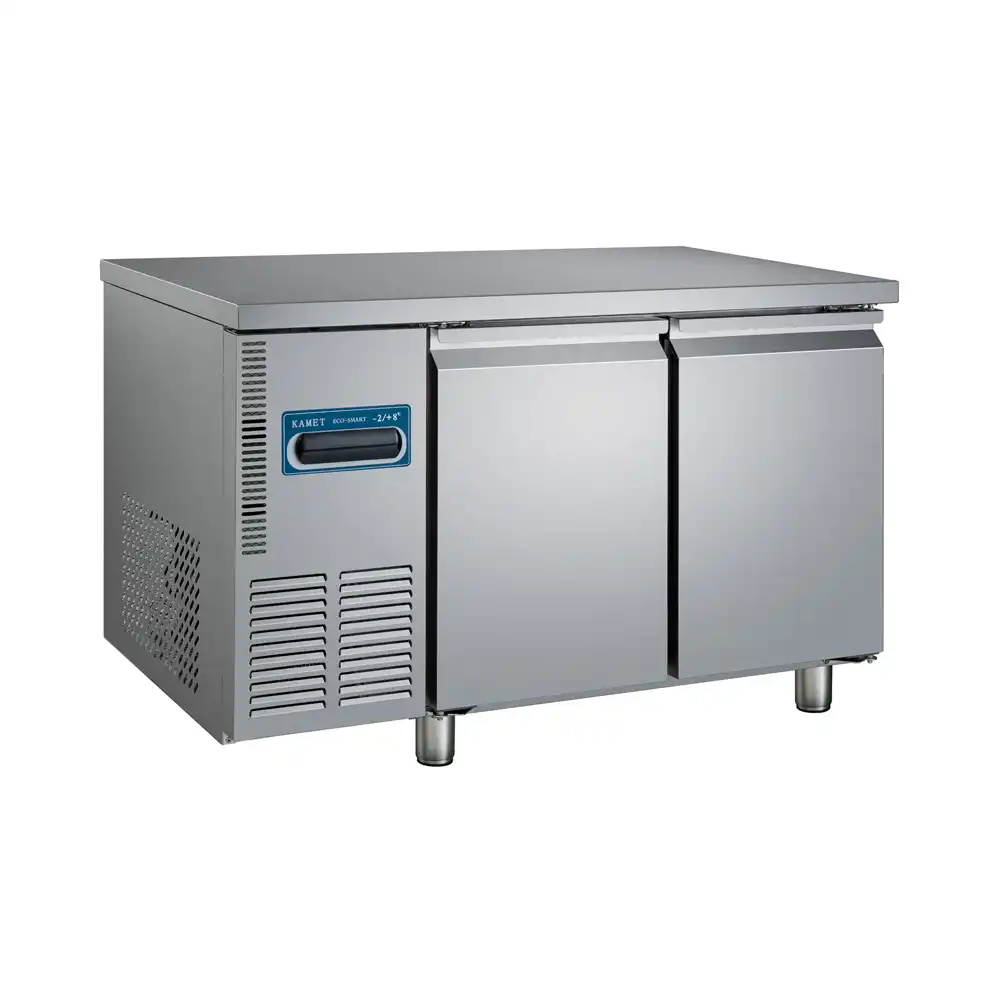
Under-counter units serve double duty—cold storage below, work surface above. Slim-line reach-in refrigerators offer vertical capacity without the width that blocks traffic flow. Modular systems let operators configure storage to match their specific layout rather than forcing the kitchen to adapt to the equipment.
Energy efficiency matters beyond the utility bill. Efficient cooling systems generate less heat, which reduces strain on kitchen ventilation and keeps the workspace more comfortable during long shifts.
| Model | Classification | Dimensions (WxDxH) | Capacity | Key Feature for Small Spaces |
|---|---|---|---|---|
| Camay MWTF-27-L | Freezer | 698×787×938 mm | 202 L | Worktop surface, compact |
| Camay MTR-72 | Refrigerator | 1846×787×872 mm | 576 L | Undercounter, integrated worktable |
| Camay MAR-60A | Chef Base | 1535×840×681 mm | 117 L | Sturdy integrated worktop |
| Camay MTR-48 | Refrigerator | 1225×787×872 mm | 368 L | 2-door undercounter, space-saving |
For further insights into optimizing your kitchen’s efficiency with specialized refrigeration, consider reading 《Optimizing Kitchen Efficiency with Integrated Worktop Refrigeration》.
Getting More Covers From the Same Dining Room
The front of house presents its own space puzzle. More seats generally mean more revenue, but cramming tables together drives customers away. The balance lies in layouts that feel comfortable while maximizing capacity.
Two-top tables that combine easily for larger parties offer flexibility that fixed four-tops can’t match. Banquette seating along walls accommodates more guests per square foot than freestanding chairs while creating a sense of intimacy. The geometry matters—angled table placement often fits more covers than straight rows while improving traffic flow.
Service stations need careful positioning. Placed wrong, they create bottlenecks that slow servers and frustrate guests. Placed right, they shorten the distance between kitchen and table, speeding turnover without making diners feel rushed.
Customer flow deserves attention from the entrance through payment. Clear pathways prevent the awkward shuffling that happens when servers and guests compete for the same narrow space. Thoughtful placement of host stands, waiting areas, and payment points keeps traffic moving smoothly even during peak periods.
Storage Systems That Prevent Kitchen Chaos
Disorganized storage creates problems that ripple through every service. Staff waste time hunting for ingredients. Items get buried and spoil. Prep slows down because the tools aren’t where they should be. In small kitchens, these inefficiencies compound quickly.
Vertical storage systems—tall shelving units, wall-mounted racks, overhead bins—make use of cubic space that often goes ignored. The key is matching storage height to access frequency. Items used constantly belong at arm level. Bulk supplies and rarely needed equipment can go higher or lower.
Adjustable shelving adapts as inventory needs change. Pull-out shelves improve visibility and access for items stored in deeper cabinets. Clear containers and consistent labeling eliminate the guesswork that slows down prep cooks.
The spaces that seem unusable often aren’t. The area beneath prep tables, above doorways, inside cabinet doors—all of it can hold something. The trick is reserving these spots for items that don’t need quick access while keeping high-turnover ingredients within easy reach.
Frequently Asked Questions About Small Restaurant Space Optimization
Why does space optimization affect profitability so directly?
Revenue in a small restaurant is fundamentally constrained by how many customers you can serve and how quickly you can serve them. Efficient kitchen layouts reduce ticket times, which increases turnover. Smart dining room design adds covers without sacrificing comfort. Better storage reduces waste and speeds prep. None of these require expanding your lease—they just require using what you have more intelligently. The restaurants that optimize space typically see measurable improvements in both revenue per square foot and operational costs.
Which compact refrigeration units work best in tight kitchen spaces?
The right choice depends on your specific layout and menu requirements. Under-counter refrigerators and freezers like the Camay MTR-72 or MWTF-27-L provide cold storage while adding work surface—a genuine two-for-one in space-constrained kitchens. Slim-line reach-in units like the MR-49 offer significant vertical capacity without blocking traffic lanes. Chef bases like the MAR-60A support heavy equipment above while providing refrigerated storage below. The common thread is equipment that serves multiple purposes or fits into spaces that would otherwise go unused.
How do you make a small restaurant feel spacious without wasting functional space?
The perception of space and the efficient use of space aren’t mutually exclusive. Strategic mirror placement creates visual depth. Lighter color palettes and good lighting make rooms feel larger. Multi-functional furniture serves practical needs while maintaining clean sight lines. Vertical storage keeps clutter off surfaces and out of view. The goal is ensuring every design element contributes something—either functional value, aesthetic appeal, or ideally both. Restaurants that achieve this balance feel welcoming to guests while operating efficiently behind the scenes.
Partner with ZHEJIANG KAIMEI for Optimized Solutions
ZHEJIANG KAIMEI CATERING EQUIPMENT CO., LTD offers professional one-stop-shop refrigeration equipment designed for optimal efficiency and footprint. Contact us today for a consultation or to explore how our innovative solutions can transform your operations. Phone: +8618157202219 | Email: Sales@hzcamay.com