
Most restaurant kitchens evaluate salad stations by sticker price alone, but the design of a semi mega salad table—its pan layout, cold rail depth, and compressor performance—can make or break dinner rush efficiency. In my 26 years as a commercial refrigeration equipment engineer, I’ve repeatedly seen how the right salad table configuration directly cuts prep times and reduces food waste, while a poorly matched setup forces cooks to waste steps. This case study illustrates how a properly specified mega salad table improves kitchen throughput and why engineering details matter more than upfront cost.
Understanding Semi and Mega Salad Table Configurations
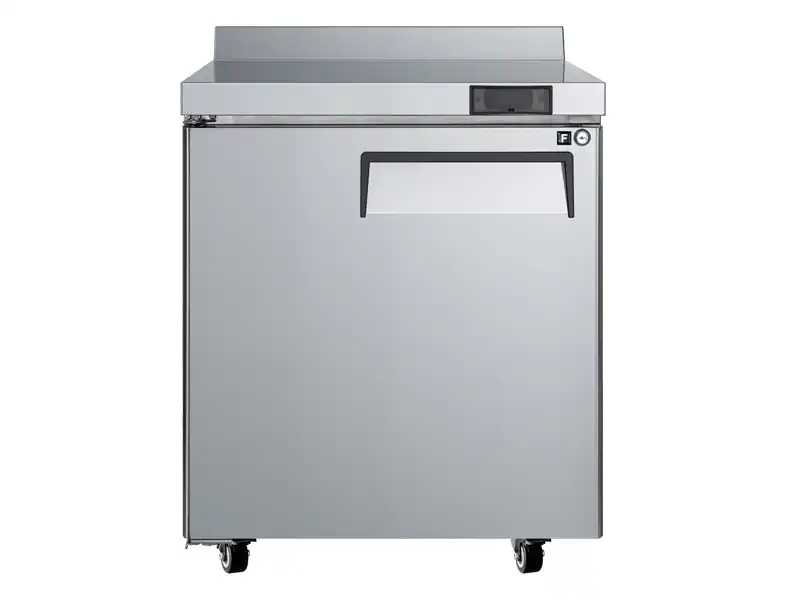
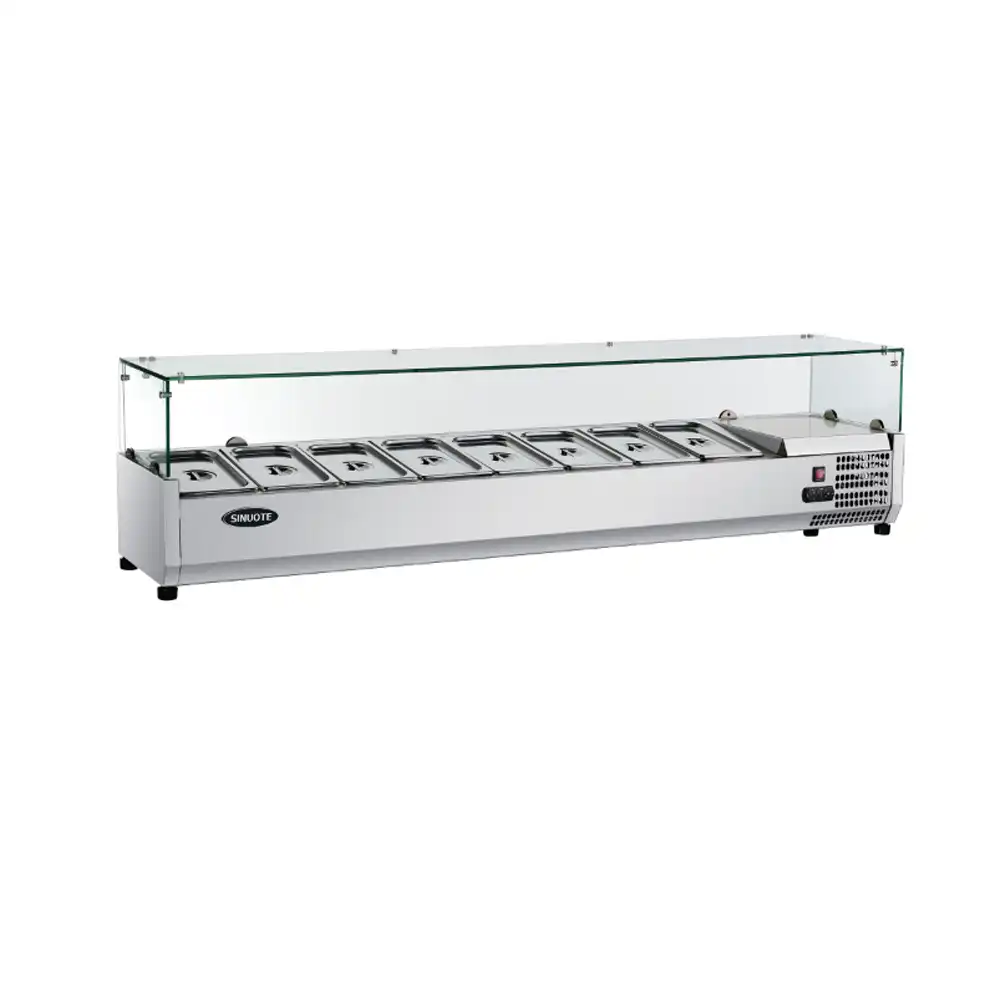
Semi salad tables and mega salad tables differ primarily in width, pan capacity, and the integration of the top rail cooling system. A semi table typically fits in smaller spaces with a shorter top rail, accommodating a limited number of gastronorm (GN) pans. A mega salad table extends the cold rail surface, often across a 48‑inch or wider cabinet, allowing more pans to sit directly over the refrigerated compartment.
The mega top design is the key. Instead of relying on ice‑filled hotel pans or intermittent access to a reach‑in cooler, the mega salad table’s top rail uses forced air circulation to maintain ingredient pans at 0.5°C to 5°C. This keeps cut lettuce, dressings, and proteins at precise temperatures without the mess and inconsistency of melting ice. In a Camay MSR‑48M mega salad table, for example, the top rail can hold up to twelve 1/6 GN pans, while the undercounter space provides 368 liters of additional cold storage. The forced air system pulls chilled air from the evaporator coil and directs it across the pan bottoms, so every pan sees the same temperature gradient.
Pan Configuration and Ingredient Organization
The layout of pan openings directly affects how a cook moves during assembly. With a full‑width rail, ingredients can be arranged in the sequence of the menu’s most frequent salads: greens first, then proteins, cheeses, and garnishes. A single cook can build a plate without stepping away from the table. By contrast, a narrow semi table forces cooks to rotate or walk to a nearby reach‑in for less‑frequent ingredients, breaking rhythm.
Impact of Salad Table Design on Kitchen Workflow
Placing a mega salad table on the cook line rather than a separate salad station reduces travel time for the expeditor and line cooks. When the table is positioned between the hot line and the pass, one person can assemble cold plates while the rest of the team focuses on hot items. The top rail eliminates the need to open undercounter doors repeatedly, because the most‑used pans sit exposed and cold.
Staff fatigue drops when the walk‑to‑reach‑in step is removed. During a dinner rush, a cook might assemble 60 to 80 salads in three hours. If each salad requires a three‑step walk to a remote cooler, that adds hundreds of unnecessary meters of movement. With a properly configured mega table, all 12 pans are within a 180‑degree arm’s reach. In kitchen designs where I’ve helped integrate this layout, I consistently see salad assembly times fall by 25–30 percent, simply because the ingredients are where the hands already are.
A Kitchen Efficiency Case Study with a Semi Mega Salad Table
Consider a 200‑seat restaurant running 300 covers during a Friday dinner service. The kitchen previously relied on a standard stainless worktop with pans set into ice—a common setup in facilities that haven’t yet upgraded to top rail refrigeration. The salad cook walked to a separate two‑door reach‑in refrigerator for backup greens, proteins, and dressings. When the dining room filled, salad ticket times stretched past eight minutes, and the station required a second cook to keep pace.
After evaluating the flow, the operation switched to a Camay MSR‑48M mega salad table. Twelve GN pans now sit directly on the cold rail, each holding a specific ingredient: mixed greens, Caesar dressing, grilled chicken, croutons, and so on. The undercounter storage holds backup containers, and the forced air cooling keeps the rail stable between 0.5°C and 5°C all shift.
| Metric | Previous Setup | Mega Salad Table Setup |
|---|---|---|
| Pan positions within arm’s reach | 6 (ice-filled pan wells) | 12 (cold rail) |
| Walking distance per salad | ~8 meters (round trip to reach-in) | <1 meter (all ingredients in front) |
| Average salad assembly time | 3 min 10 s | 1 min 50 s |
| Peak-hour staff at salad station | 2 | 1 |
The most immediate change was that the salad cook no longer left the station. Backup ingredient replenishment happened between rushes through the undercounter doors. With ice eliminated, the station stayed cleaner and required less mid‑service attention. Ticket times for salads dropped below two minutes, and the second cook was redeployed to the hot line. Over six months, the reduction in labor at the salad station alone covered the incremental investment in the mega table.
This is not a one‑off result. In multiple kitchens where I’ve helped specify equipment, moving from a standard prep table to an engineered top‑rail unit had a measurable throughput effect. The deciding factor was always the pan count and the forced air cooling, not the brand name.
Key Factors for Choosing the Right Salad Table Configuration
Matching a salad table to a kitchen involves more than knowing the menu’s ingredient count. Peak‑hour throughput, pan size preferences, and available floor space all weigh in.
First, calculate the maximum number of distinct cold ingredients that the salad station must hold during the busiest 60 minutes. Each 1/6 GN pan typically holds about 3 liters of product; if a station uses 18 different ingredients, a 12‑pan mega table might need a second tier, or the operation might limit “display” pans to the most popular 12 and store the rest underneath. Semi tables can work well when the menu is small, but they leave no room for future menu expansion.
Second, factor in staff movement patterns. A mega table placed at the end of the cook line should allow the salad cook to hand off plates directly to the expeditor. In some layouts, a 60‑inch unit with additional undercounter drawers gives the cook storage for to‑go containers right at the station, further reducing steps.
Third, consider customization. Camay offers drawer configurations, castors for mobility, and black inner box options. A unit that arrives pre‑configured for the kitchen’s specific GN pan layout saves the crew hours of trial‑and‑error organization in the first week. If your menu requires unusual pan sizes like GN 1/4 or a mix of 1/3 and 1/6, discussing the pan rail cut‑outs with the manufacturer before ordering prevents a mismatch that would defeat the whole efficiency purpose.
Long-Term Reliability and Energy Efficiency of Commercial Salad Tables
Efficiency isn’t only about tonight’s service. A salad table’s refrigeration system determines how reliably it performs year after year and what it costs to operate.
The Camay MSR‑48M uses a Cubigel compressor running on R290 refrigerant, a hydrocarbon with low global warming potential and excellent thermodynamic properties. That refrigerant, combined with polyurethane/cyclopentane CFC‑free insulation, allows the unit to hold precise temperatures while consuming less energy than older HFC‑based systems. In the climate class ST~T (ambient up to 38°C), the ventilated cooling and automatic defrost keep the compressor cycling efficiently rather than running constantly.
Certifications matter here. The table carries ETL Safety, ETL Sanitation (NSF standard), DOE, and ENERGY STAR marks. For operators with corporate sustainability targets, those certifications provide documented verification of energy performance—something a generic prep table lacks.
Maintenance‑friendly design contributes to long‑term cost control. Removable gaskets, rounded interior corners, and accessible condenser coils cut cleaning time and reduce the chance of dust accumulation that shortens compressor life. In busy kitchens, those small details translate into fewer service calls and a consistent cold chain year after year.
Evaluating Your Salad Table Needs
Choosing between a semi and mega salad table ultimately comes down to throughput requirements and station layout. A low‑volume café might do fine with a compact semi unit; a high‑turnover restaurant routinely serving 200 or more covers per dinner benefits substantially from the pan capacity and direct‑rail cooling of a mega table.
The real risk is under‑specifying the station. When a kitchen chef base or reach‑in ends up supplementing a salad table that’s too small, the money saved at purchase leaks away in labor and slower ticket times. The opposite risk—a table that’s too large—simply gives the operation room to grow into a broader menu.
If you’re refining your kitchen’s salad station, I recommend measuring the number of cold ingredients needed at peak and the walk path from the salad station to the nearest backup cooler. That data lets you specify a table that eliminates unnecessary movement. Our engineering team at Zhejiang Kaimei works regularly with clients to configure the exact pan layout, undercounter drawer arrangement, and refrigeration package that matches your operation. Share your kitchen dimensions and ingredient list by reaching out at Sales@hzcamay.com or calling +86 181 5720 2219. A well‑chosen salad table pays for itself faster than most operators expect.
Common Questions About Semi Mega Salad Tables
What is the difference between a semi and mega salad table?
A semi salad table has a shorter top rail, typically holding 6–8 pans, and fits into tighter spaces. A mega salad table extends the cold rail across 48 inches or more, providing 10–12 pan positions directly over the refrigerated cabinet. The mega configuration reduces the need for a separate reach‑in cooler at the station and allows a single cook to build any salad without walking. In kitchens with broad menus, the mega design nearly eliminates the need for backup ingredient runs during peak periods.
How many pans can a typical mega salad table hold?
The exact count depends on the unit’s width and pan size. A 48‑inch mega salad table, such as the Camay MSR‑48M, generally accommodates twelve 1/6 GN pans on the top rail. If the kitchen uses 1/3 GN pans, the number drops to four to six, depending on divider spacing. Custom pan rail cut‑outs allow operators to mix sizes. Specifying the pan layout before ordering ensures the rail matches the menu’s ingredient count exactly.
Can a salad table really improve kitchen efficiency?
In kitchens I’ve worked with, moving from a standard ice‑pan setup to a top‑rail mega salad table cut salad assembly times by 25–35 percent and reduced staff movement by over 80 percent. The improvement comes from keeping every required ingredient within arm’s reach and from the forced air cooling that maintains consistent temperature without melting ice. Efficiency improves further when the table is placed directly on the cook line, so plates move straight to the pass.
What is the expected lifespan of a commercial salad table?
A well‑built salad table using a Cubigel or Embraco compressor, R290 refrigerant, and polyurethane insulation can reliably operate for 10–15 years with routine maintenance. Key practices include quarterly condenser coil cleaning, checking door gaskets for wear, and ensuring the unit runs in a ventilated area. Units that carry ETL Sanitation and ENERGY STAR ratings typically use components engineered for continuous commercial use, which extends service intervals and reduces the frequency of major repairs.
Is a custom salad table configuration worth the lead time?
In high‑volume kitchens, a table configured for the menu’s exact pan sizes and ingredient sequence prevents the daily friction of a mismatched station. The extra few weeks of lead time typically return themselves in the first month of operation through faster ticket times and fewer staff complaints. If your program involves specialized ingredients or high turnover at the salad station, it is worth confirming the pan layout and cooling specifications before ordering. Share your requirements and we’ll verify the configuration matches your throughput.
If you’re interested, check out these related articles:
Boost Savings with Energy Efficient Commercial Upright Freezers
Ultimate Buyers Guide for Commercial Reach In Refrigerators
Essential Maintenance Tips for Commercial Reach In Refrigerators
Upright Freezer vs Refrigerator Key Differences Explained
Boost Efficiency Energy Efficient Chef Base Units for Commercial Kitchens