
Choosing the right freezer for a food processing line is one of those decisions that ripples through everything else. Get it wrong, and you’re dealing with inconsistent product quality, compliance headaches, and energy bills that quietly erode your margins. Get it right, and the equipment becomes invisible in the best way—it just works, year after year, while you focus on what actually moves the business forward.
What Your Products Actually Need From a Freezer
The starting point isn’t the freezer itself—it’s the food. Different products demand different freezing approaches, and mismatching the two creates problems that no amount of operational adjustment can fix.
Delicate items or products that need to stay separated benefit from IQF (Individual Quick Freezing) systems, which freeze each piece independently and preserve texture. Bulk storage operations typically need walk-in freezers with the capacity to handle large inventory volumes. Smaller, frequently accessed items work better with reach-in freezers that prioritize accessibility over raw capacity. Shelf life requirements also dictate how precisely the unit needs to hold temperature—some products tolerate minor fluctuations, others don’t.
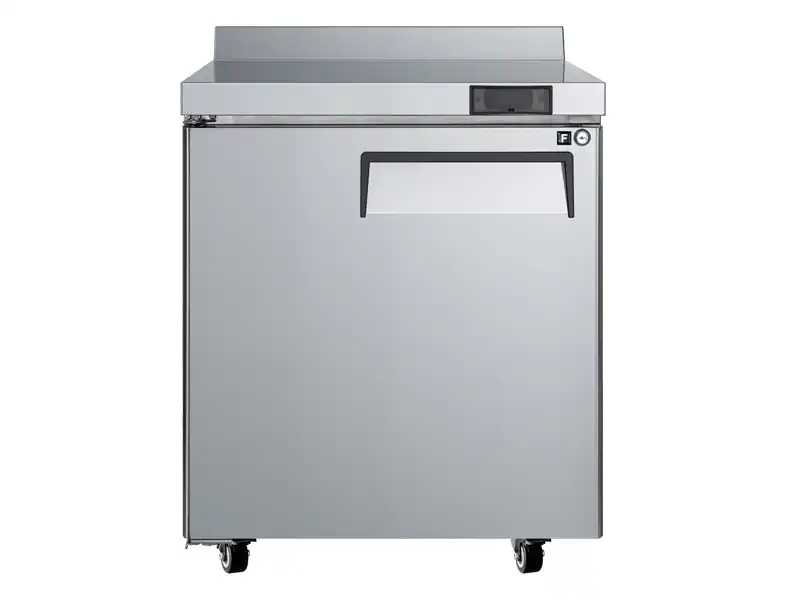
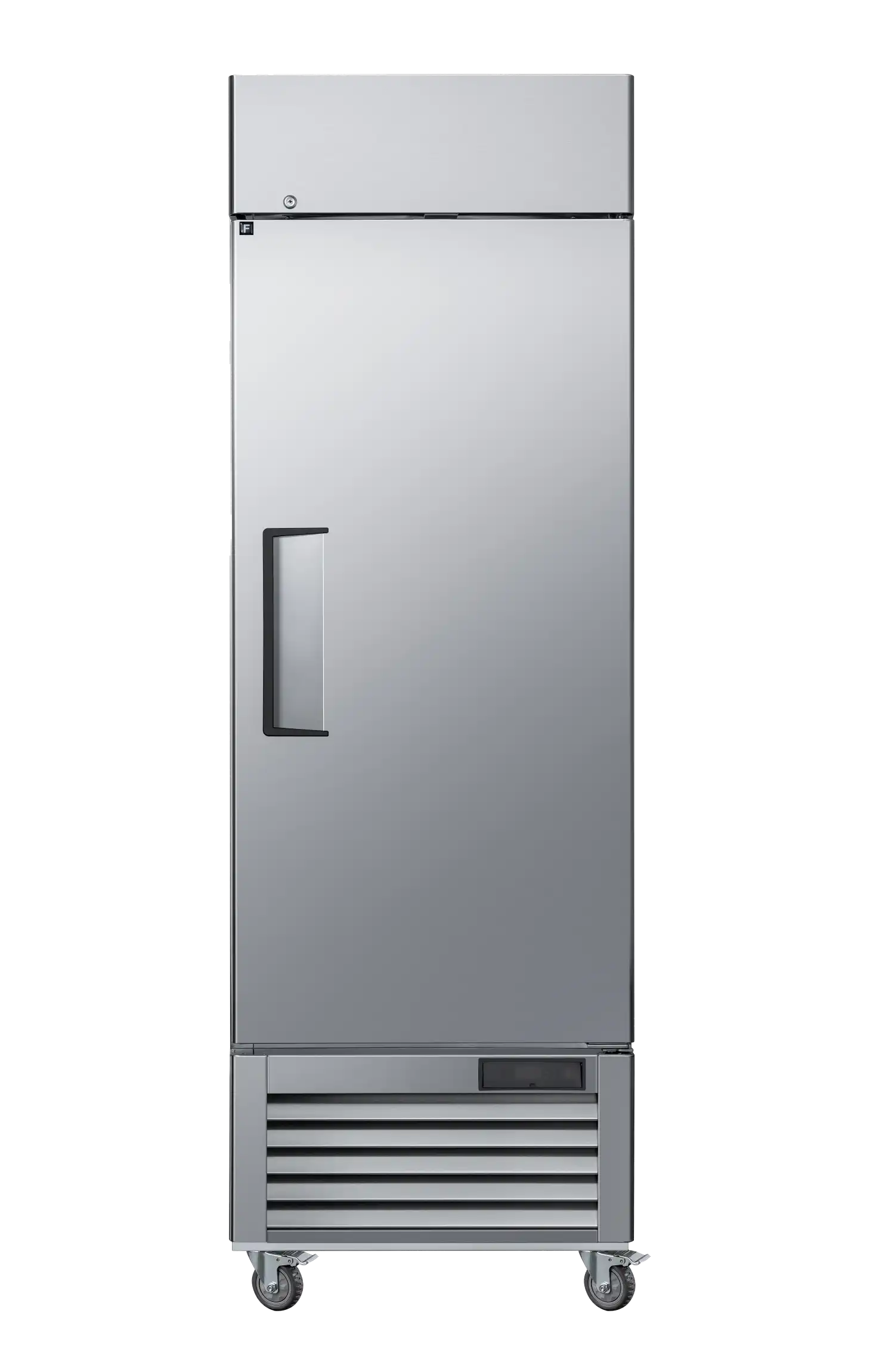
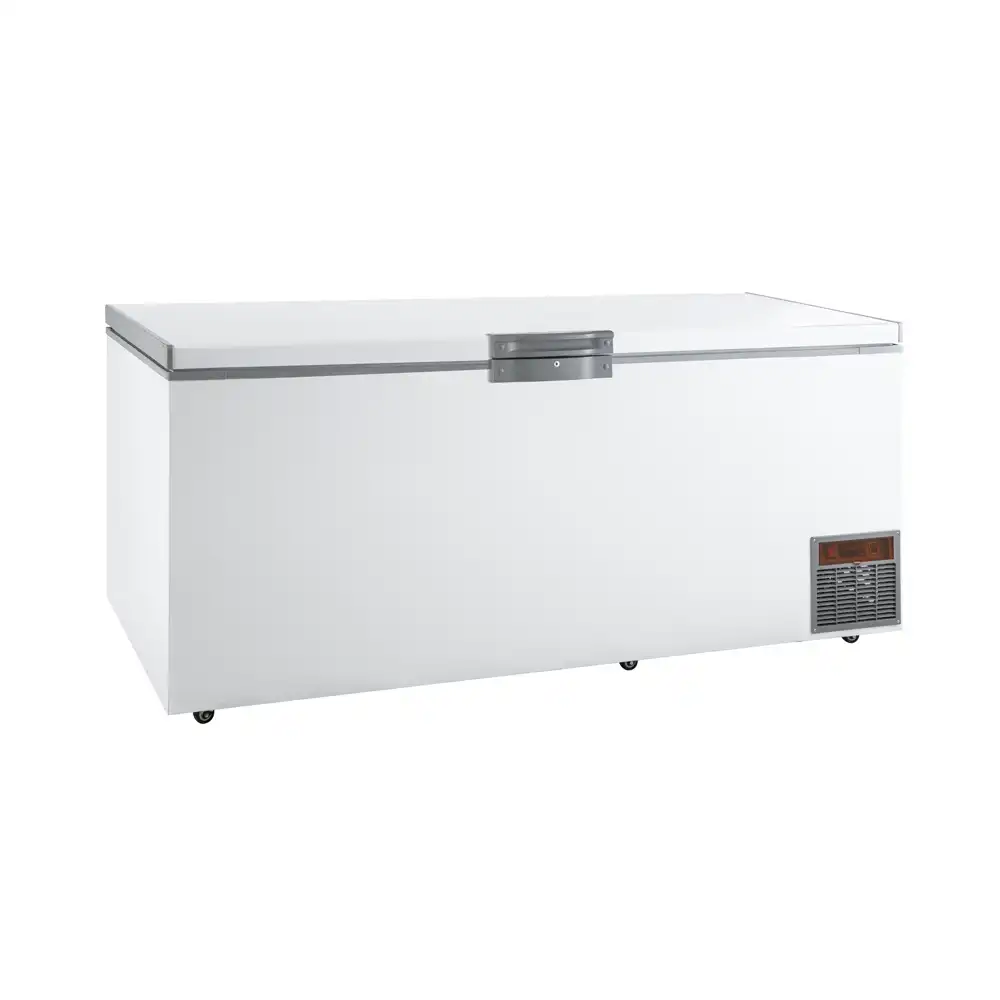
Our commercial freezers and industrial refrigeration units cover this range. The Camay Commercial Worktop Refrigerator Cooler Fridge (MWTF-27-L) maintains temperatures from -25°C to -15°C while doubling as a prep surface—useful when floor space is tight. For larger volumes, the 1-Door Commercial Solid Door Freezer (MF-23) offers 547 liters within the same temperature range. Specialized applications requiring ultra-low temperatures can use our -86°C ULT Freezer (DW45W788) for sensitive items that standard freezers can’t handle.
Matching the freezer to the product prevents quality degradation and keeps throughput where it needs to be. This isn’t a decision to rush.
| Freezer Type | Typical Application | Temperature Range (approx.) | Key Benefit |
|---|---|---|---|
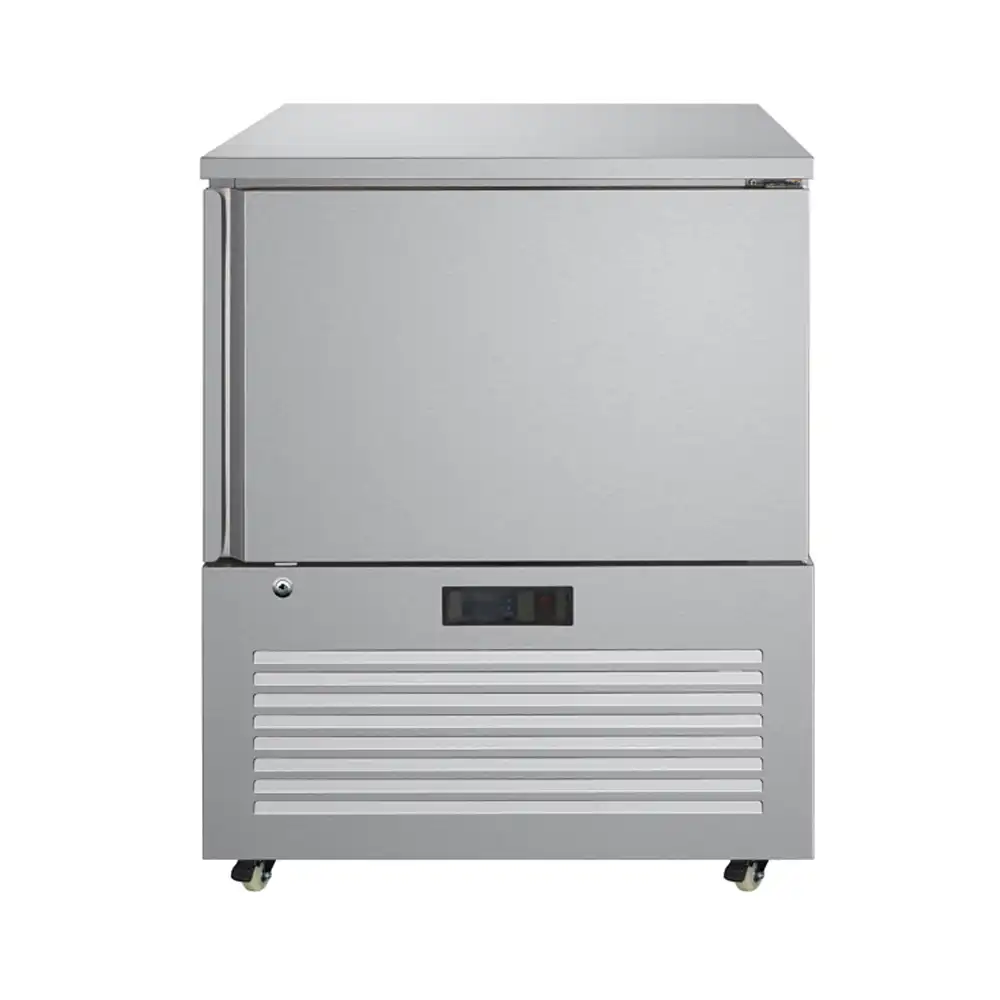
| Blast freezers | Rapid freezing of fresh produce, prepared meals | -30°C to -40°C | Preserves texture, minimizes ice crystal formation |
| Walk-in freezers | Bulk storage, large inventory management | -18°C to -25°C | High capacity, flexible storage |
| Reach-in freezers | Point-of-use storage, ingredient staging | -18°C to -25°C | Accessibility, space-efficient |
| Ultra freezers | Specialized storage for sensitive ingredients, research | -45°C to -86°C | Extreme preservation, scientific applications |
Why Energy Efficiency Determines Long-Term Costs
The purchase price of a high-capacity freezer is only part of the equation. Energy consumption over a 10-15 year lifespan often exceeds the initial investment, which makes efficiency a financial priority rather than just an environmental one.
Refrigerant choice matters here. We use R290 refrigerant across most product lines because it delivers high thermodynamic efficiency while carrying a low global warming potential. Compressor technology is equally important—units equipped with Cubigel or Secop compressors provide reliable, efficient cooling under continuous operation.
Insulation does the quiet work of keeping energy costs down. Polyurethane/cyclopentane foamed insulation reduces heat transfer through the walls, which means the compressor runs less frequently to maintain target temperatures. Optimized defrost cycles prevent ice buildup that would otherwise force the system to work harder. Humidity control and monitoring systems allow operators to catch inefficiencies before they become expensive problems.
The ROI on energy-efficient units becomes clear within the first few years of operation.
What Technologies Are Improving Freezer Efficiency Now?
Smart controls and IoT monitoring have changed what’s possible. Variable speed compressors adjust cooling output based on actual demand rather than running at full capacity regardless of load—this saves significant energy during off-peak periods. Our units offer optional IoT and WiFi functions for intelligent monitoring, enabling real-time performance tracking and remote management. Operators can identify issues before they escalate into failures or efficiency losses.
Meeting Food Safety Standards Without Compromise
Temperature control in food processing isn’t just about quality—it’s a regulatory requirement. Freezers that can’t maintain consistent temperatures create compliance risks and potential safety issues.
HACCP and FDA standards set the baseline. Our units maintain temperatures between -25°C and -15°C with the precision needed to prevent bacterial growth and spoilage. The consistency matters as much as the target temperature; fluctuations can compromise product integrity even if the average stays within range.
Material selection supports sanitation requirements. We build our freezers with stainless steel interiors and exteriors because the material resists corrosion and cleans easily—both critical for facilities that undergo regular inspections. ETL, DOE, ENERGY-STAR, and CE certifications confirm that our equipment meets international safety and performance benchmarks.
What Temperature Range Should Food Processing Freezers Maintain?
General storage typically requires -18°C to -25°C (-0.4°F to -13°F). Products that need rapid freezing to preserve cell structure and texture may require temperatures down to -40°C. Ultra-low temperature freezers operating at -86°C serve highly specialized applications—certain marine products, biological samples, or research materials that standard freezing would damage.
Planning Capacity Without Wasting Space or Money
Oversizing a freezer wastes energy and floor space. Undersizing limits production capacity and creates bottlenecks. Neither mistake is easy to correct after installation.
Accurate capacity calculation starts with current throughput but must account for peak demand periods and realistic growth projections. Volume requirements should be measured in cubic feet or tonnage, factoring in product density, packaging dimensions, and the air circulation space needed around stored items.
Footprint optimization ensures the freezer fits into existing facility layouts without disrupting workflow. Modular freezer designs offer flexibility for businesses that expect to scale—adding capacity becomes possible without replacing the entire system. Automated storage integration can further improve space utilization while reducing manual handling.
We work with clients to design solutions that serve current needs while accommodating future expansion. This prevents the costly scenario of outgrowing equipment within a few years of purchase.
How Do You Calculate Required Freezer Capacity?
Start with the maximum product volume you’ll store at any given time. Factor in product density and packaging dimensions. Account for air circulation space around products and shelving—freezers packed too tightly don’t cool evenly. Add headroom for peak demand periods and projected growth. This approach prevents both over-capacity (wasted energy and space) and under-capacity (production constraints).
What Keeps a Freezer Running for 15 Years
Durability and maintenance accessibility determine whether a freezer delivers value over its full potential lifespan or becomes a recurring expense.
Heavy-duty stainless steel construction handles the demanding conditions of food processing environments—temperature extremes, moisture, cleaning chemicals, and constant use. Material quality directly affects how long the unit performs reliably.
Maintenance-friendly design features matter more than they might seem. Removable gaskets and rounded inner corners simplify cleaning. Easy access to components reduces service time and cost. Spare parts availability prevents extended downtime when repairs are needed.
Our 13-month after-sales service includes a proportion of free spare parts and permanent online technical support. This support structure protects the investment and keeps total cost of ownership predictable over time.
Finding a Refrigeration Partner, Not Just a Supplier
The equipment matters, but so does the relationship with the company behind it. A provider that offers expertise, support, and custom solutions delivers more value than one that simply ships units.
We function as a one-stop-shop for industrial freezers and refrigeration units, drawing on 26 years of industry experience. This depth allows us to offer tailored solutions rather than forcing clients to adapt their operations to off-the-shelf equipment.
Installation services, after-sales support, and project management capabilities ensure seamless integration. Our global OEM and ODM cooperation experiences reflect a commitment to quality and client satisfaction that extends beyond the initial sale.
When evaluating suppliers, look for proven industry expertise, robust quality control, and a track record of long-term reliability. The right partner makes the difference between equipment that performs and equipment that creates ongoing problems.
Frequently Asked Questions About Food Processing Freezers
What is the typical lifespan of a high-capacity food processing freezer?
High-capacity food processing freezers typically last 10 to 15 years, often longer with proper maintenance. Component quality drives durability—compressors from manufacturers like Cubigel and Secop, robust insulation materials, and consistent preventative maintenance all extend useful life. Our stainless steel construction and comprehensive after-sales support aim to maximize equipment lifespan.
How does freezer insulation impact energy costs in food processing?
Insulation creates a thermal barrier that minimizes heat gain from the surrounding environment. High-performance polyurethane/cyclopentane foam reduces the workload on the compressor by maintaining stable internal temperatures with less energy input. Better insulation translates directly to lower operating costs over the equipment’s lifespan.
Can ZHEJIANG KAIMEI provide custom refrigeration solutions for unique food processing requirements?
Yes. As a one-stop-shop manufacturer with 26 years of experience, we offer OEM/ODM services for clients with specific operational needs. Custom high-capacity freezers can be designed to address particular space constraints, temperature requirements, or regulatory compliance challenges that standard units don’t fully meet.
Start With the Right Conversation
ZHEJIANG KAIMEI CATERING EQUIPMENT CO., LTD offers industrial freezers designed for efficiency, compliance, and durability. Contact our team for a consultation that starts with your specific requirements rather than a product catalog. Phone: +8618157202219 | Email: Sales@hzcamay.com
If you’re interested, check out these related articles:
Essential Maintenance Tips for Your Commercial Chef Base Refrigerator
Boost Kitchen Efficiency Workflow Optimization with Chef Base Fridges
Heavy Duty Chef Base Refrigeration for Efficient Commercial Kitchens