

Small kitchens force you to think differently about every appliance. When counter space disappears under a stand mixer, toaster, and cutting board, the refrigerator becomes the elephant in the room—literally taking up floor space that could serve other purposes. Under-counter refrigerators solve this by tucking cold storage into the dead zone beneath your counters, turning wasted cabinet depth into functional refrigeration. For anyone working with limited square footage, this shift from vertical to horizontal storage changes how the entire kitchen operates.
Why Under-Counter Placement Changes Everything in Tight Kitchens
The space beneath standard counters sits at roughly 34 inches high—enough vertical clearance for a properly sized refrigeration unit, yet often filled with pots, pans, or nothing at all. Under-counter refrigeration units claim this territory for temperature-controlled storage, which immediately opens up floor space where a traditional fridge would stand. That recovered square footage translates directly into more room for prep work, additional storage, or simply moving around without bumping into appliances.
Beyond the footprint math, there’s a workflow benefit that becomes obvious once you’ve used one. Ingredients stay within arm’s reach of your cutting board. You’re not walking across the kitchen every time you need butter or vegetables. In professional settings, this proximity shaves seconds off every task—seconds that compound into real efficiency gains over a full service. For home cooks in apartment kitchen storage situations, the same principle applies on a smaller scale.
The visual impact matters too. A refrigerator integrated into cabinetry reads as furniture rather than appliance, which makes compact spaces feel less cluttered. This clean-line approach works particularly well in studio apartment kitchen layouts where the cooking area shares sight lines with living spaces.
Matching Unit Types to Specific Storage Needs
Not all under-counter refrigerators serve the same purpose, and picking the wrong type wastes the space-saving advantage you’re trying to capture. The choice depends on what you’re storing, how often you access it, and whether you need refrigeration, freezing, or both.
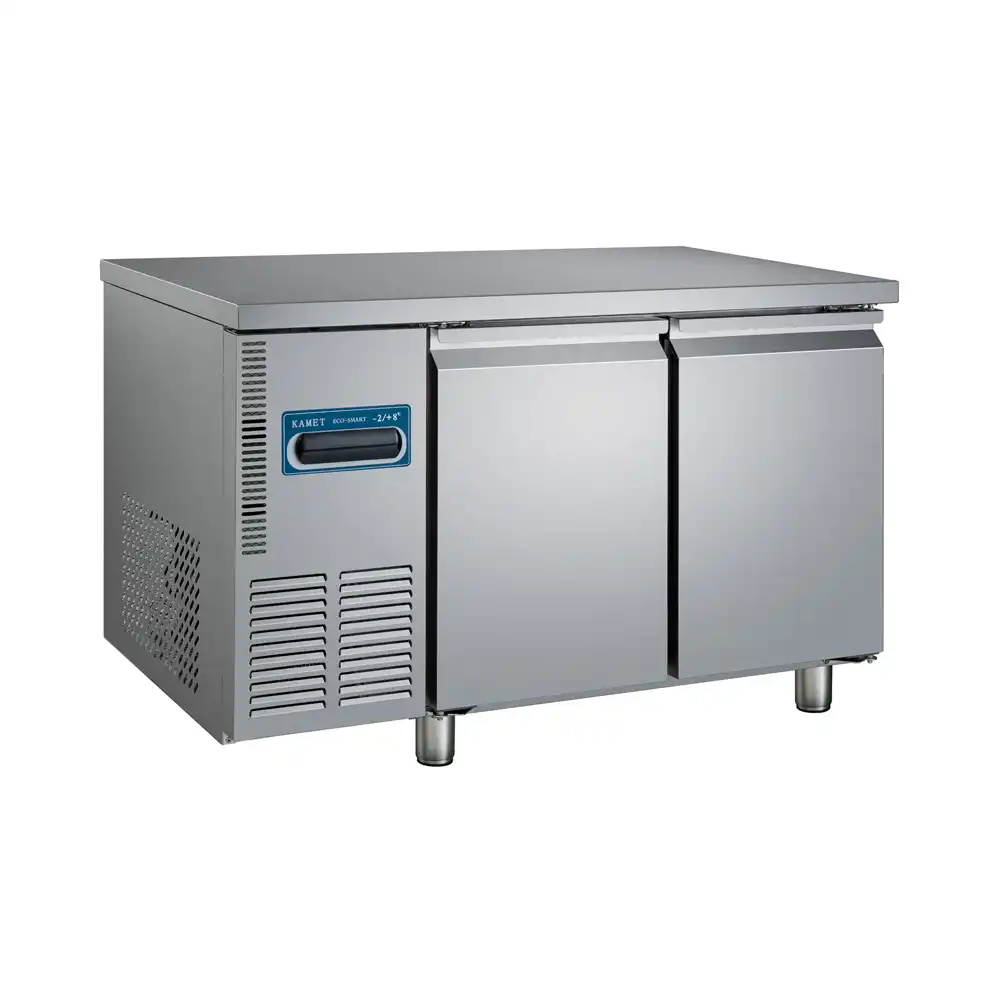
Solid-door units like the Camay Commercial Solid Door Undercounter provide straightforward cold storage with excellent insulation. The stainless steel construction handles commercial kitchen abuse, while R290 refrigerant delivers efficient cooling without the environmental concerns of older refrigerants. These units double as work surfaces—their tops are rated for food prep, which effectively gives you both storage and counter space from a single footprint.
| Model | Classification | Capacity (L/Cuft) | Inner Temperature (°C/°F) | Dimensions (WxDxH mm) | Doors | Shelves |
|---|---|---|---|---|---|---|
| MTR-72 | Refrigerator | 576 L / 20.34 | 0.5-5°C / 33-41°F | 1846×787×872 | 3 | 3 |
| MTR-60 | Refrigerator | 476 L / 16.81 | 0.5-5°C / 33-41°F | 1530×787×872 | 2 | 2 |
| MTR-48 | Refrigerator | 368 L / 13.00 | 0.5-5°C / 33-41°F | 1225×787×872 | 2 | 2 |
| MTF-48 | Freezer | 368 L / 13.00 | -25 to -15°C / -13 to 5°F | 1225×787×872 | 2 | 2 |
| MWTF-27-L | Freezer | 202 L / 7.13 | -25 to -15°C / -13 to 5°F | 698×787×938 | 1 | 1 |
Drawer configurations offer a different advantage. Instead of swinging doors that require clearance space, drawers pull straight out. This makes them easier to organize—you can dedicate one drawer to proteins, another to produce—and easier to access without bending awkwardly. For anyone dealing with tight galley layouts, the reduced door swing radius alone justifies the drawer format.
Dedicated beverage coolers and wine coolers serve a narrower purpose but free up main refrigerator capacity for actual food storage. If your primary fridge is constantly crowded with drinks, moving those to a separate under-counter unit solves the problem without adding floor space consumption. This kind of specialized storage makes sense in compact living solutions where every cubic foot of refrigeration needs to earn its place.
For a deeper comparison of different base-level refrigeration options, 《Chef Base Fridge vs Undercounter Fridge Which Is Best for Your Kitchen》 covers the distinctions worth considering.
Planning Placement for Real-World Kitchen Workflow
Where you position an Under Counter unit matters as much as which unit you choose. The goal is reducing unnecessary movement during cooking—keeping cold ingredients close to where they’ll be prepped and cooked.
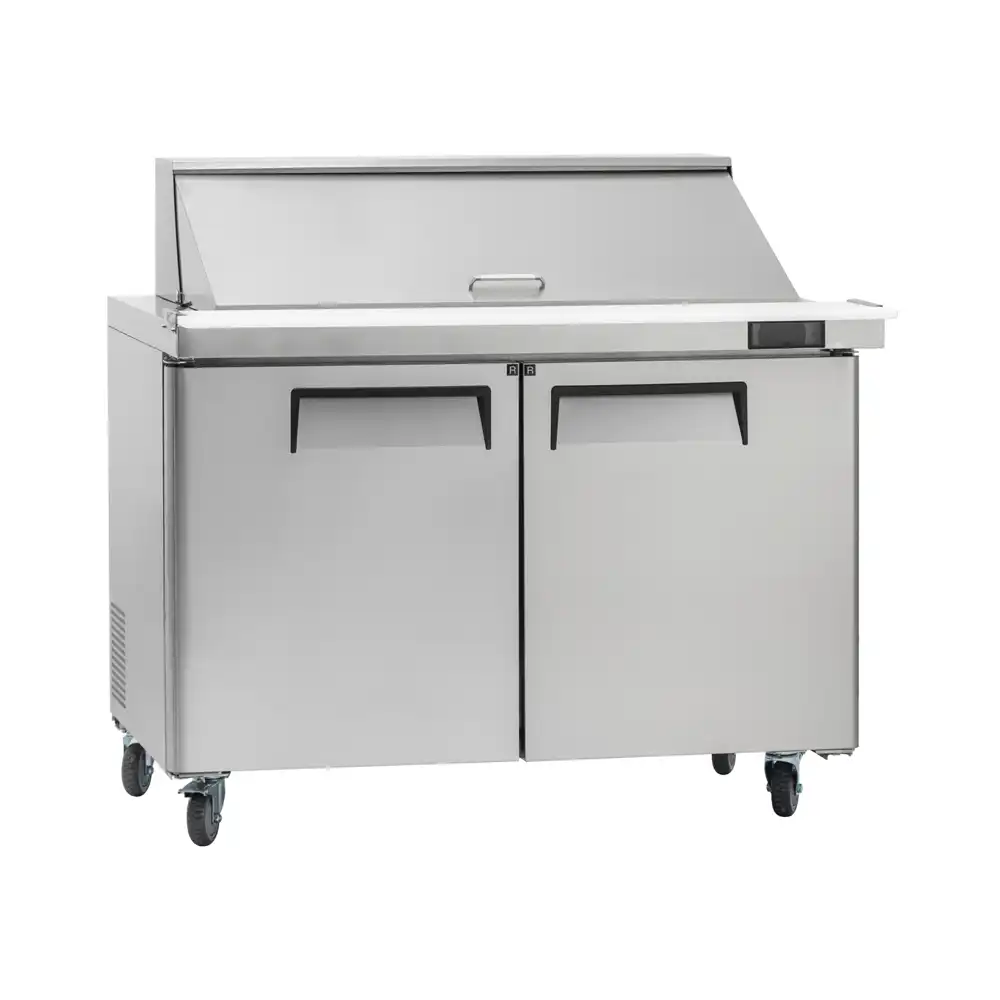
In most kitchen layouts, this means placing refrigeration near the primary prep surface. A chef base positioned directly beneath a cutting station puts proteins and vegetables within immediate reach. The Camay 60″ Countertop Refrigerated Chef Base (Model MAR-60A) exemplifies this approach: the top surface serves as a prep station with a drip-resistant V edge, while the cabinet below maintains refrigeration temperatures. Four-inch casters allow repositioning when deep cleaning or reconfiguring the space.
For residential small kitchen design, the same logic applies with different equipment. An under-counter refrigerator positioned adjacent to the stove keeps cooking ingredients accessible without crossing the room. If your layout includes an island or peninsula, integrating refrigeration there creates a self-contained prep zone.
Aesthetic continuity deserves consideration during modular kitchen design projects. Panel-ready units accept custom fronts that match surrounding cabinetry, making the refrigerator visually disappear into the kitchen architecture. This integration particularly benefits open-concept spaces where kitchen appliances remain visible from living areas.
Running Costs and Keeping Units Performing Long-Term
Energy consumption varies significantly between under-counter models, and the differences compound over years of daily operation. Modern units using R290 refrigerant paired with polyurethane and cyclopentane foamed insulation achieve notably lower electricity draw than older designs. This matters for the total cost of undercounter refrigerators—purchase price tells only part of the story.
Maintenance requirements stay manageable with proper attention. Removable door gaskets simplify cleaning, which prevents the seal degradation that forces compressors to work harder. Accessible condenser coils allow dust removal without disassembling the unit. These features, standard on commercial-grade equipment like the Camay Commercial Worktop Refrigerator, reduce long-term service costs.
Consistent cleaning schedules prevent the small problems that become expensive repairs. Wiping gaskets weekly, vacuuming condenser coils monthly, and checking drain lines quarterly keeps most units running efficiently for their full expected lifespan. 《Essential Maintenance Tips for Your Commercial Chef Base Refrigerator》 provides detailed care protocols for anyone operating professional equipment.
The Case for Under-Counter Units Beyond Square Footage
Space savings drive most purchasing decisions, but the benefits extend further. Specialized temperature zones allow proper storage conditions for items that suffer in standard refrigerators. Wine maintains ideal aging temperatures. Produce stays crisper in dedicated humidity-controlled drawers. Proteins hold safely at the lower end of refrigeration ranges without freezing.
Work Top refrigeration units deliver dual functionality that standalone refrigerators cannot match. The top surface handles food prep, hot pans, or heavy equipment while the interior maintains cold storage. This combination proves invaluable in restaurant kitchen space saving scenarios where every piece of equipment needs to justify its footprint twice over.
The reduced visual bulk of under-counter placement also changes how a kitchen feels. Full-height refrigerators dominate sight lines and make small spaces feel smaller. Tucking that same storage capacity below counter level opens vertical space, creating the perception of a larger room even when square footage remains unchanged.
Professional Refrigeration Solutions from ZHEJIANG KAIMEI
ZHEJIANG KAIMEI CATERING EQUIPMENT CO., LTD manufactures under-counter refrigeration units designed for both commercial durability and space-efficient residential applications. Our product range includes solid-door refrigerators, freezers, drawer units, and chef bases—each engineered for reliable performance in compact environments. Reach our team at +8618157202219 or Sales@hzcamay.com to discuss which configurations fit your specific kitchen requirements.
Frequently Asked Questions About Under-Counter Refrigeration
What is the average lifespan of an under-counter refrigerator?
Quality under-counter refrigerators typically operate reliably for 10 to 15 years with proper maintenance. Commercial-grade construction using stainless steel exteriors and robust compressor systems extends this range toward the upper end. The key variables are usage intensity, ambient temperature conditions, and how consistently maintenance schedules are followed. Units in high-volume commercial settings may see shorter lifespans than those in residential applications simply due to door-open frequency and thermal cycling stress.
Are under-counter refrigerators energy efficient for daily use?
Current under-counter models achieve strong efficiency ratings through improved insulation materials and modern refrigerants. R290 refrigerant, now standard in many commercial units, provides excellent thermodynamic properties while meeting environmental regulations. Polyurethane foam insulation minimizes thermal transfer through cabinet walls. The net result is lower electricity consumption compared to older designs—a meaningful factor given that refrigeration runs continuously. Checking energy ratings before purchase helps identify the most efficient options within your capacity requirements.
How much does it cost to install an under-counter refrigerator in an existing kitchen?
Installation costs depend heavily on existing infrastructure. If electrical outlets and ventilation already accommodate the unit, installation may involve simply sliding the refrigerator into place and leveling it—minimal expense beyond delivery. Custom cabinetry modifications, new electrical circuits, or ventilation work increase costs substantially. Built-in models requiring panel matching add another layer of expense. Getting quotes from qualified installers before purchasing helps avoid surprises, particularly in older kitchens where electrical systems may need upgrading to handle additional appliance loads.