
Getting salad service right comes down to how everything is arranged. The layout shapes how fast customers move, how fresh ingredients stay, and whether staff can keep up during a lunch rush. I’ve seen operations transform simply by rethinking where things sit in relation to each other.
Why Salad Bar Layout Determines Service Speed
A salad bar that flows well keeps customers moving without creating those frustrating bottlenecks at the dressing station. The goal is intuitive navigation—people should understand where to go next without thinking about it. When the path from greens to toppings to checkout feels natural, service speeds up automatically.
Ergonomic considerations matter more than most operators realize. If customers have to reach awkwardly or backtrack for forgotten items, the whole line slows down. Accessibility affects everyone, not just those with mobility challenges.
What is the best layout for a self-service salad bar?
The right configuration depends on your space constraints and traffic patterns. Linear layouts work well in narrow areas because they guide customers through a clear sequence—greens first, then proteins, then toppings, then dressings. There’s no confusion about where to go next.
Island configurations suit larger spaces where you want multiple access points. Customers can approach from different angles, which distributes traffic and reduces queue buildup during peak periods. U-shaped designs offer a middle ground, giving good ingredient visibility while keeping the flow organized. Each approach improves salad service efficiency when matched to the actual space.
Keeping Ingredients Fresh Without Constant Monitoring
The prep station setup determines how much time staff spend on replenishment versus actual service. Proper storage and rotation systems mean ingredients stay fresh longer, and nobody has to scramble mid-rush to restock the cherry tomatoes.
Temperature control is non-negotiable here. Ingredients held at the wrong temperature don’t just pose food safety risks—they wilt, discolor, and look unappetizing. Customers notice when the spinach looks tired.
How can I reduce food waste in my salad bar operation?
Portion control is the starting point. Smaller containers that get refilled more frequently look fuller and fresher than large pans that sit half-empty. FIFO rotation—using older stock before newer deliveries—prevents ingredients from aging out in the back of the cooler.
Demand forecasting based on actual sales data helps with ordering. If Tuesdays are consistently slow, you don’t need Thursday-level prep. Regular monitoring catches problems early, and staff training ensures everyone follows the same protocols. These practices combined can cut waste significantly while maintaining salad service efficiency.
Placing Refrigeration Where It Actually Helps
Equipment placement affects both food safety and workflow. A cold well positioned too far from the prep area means extra steps for staff. One placed where customers can’t easily reach ingredients creates its own bottleneck.
Different refrigeration types serve different purposes. Drop-in cold wells integrate into countertops for a seamless look and consistent temperature maintenance. Refrigerated display cases work better for front-of-house areas where visibility matters.
For further insights into integrated refrigeration solutions, consider reading about 《Optimizing Kitchen Efficiency with Integrated Worktop Refrigeration》.
What type of refrigeration is ideal for a high-volume salad station?
High-volume operations need equipment that can maintain temperatures under constant use. Drop-in cold wells handle this well because they’re designed for continuous cold holding even when lids are frequently lifted. Refrigerated display cases offer better visibility for customers while keeping temperatures precise.
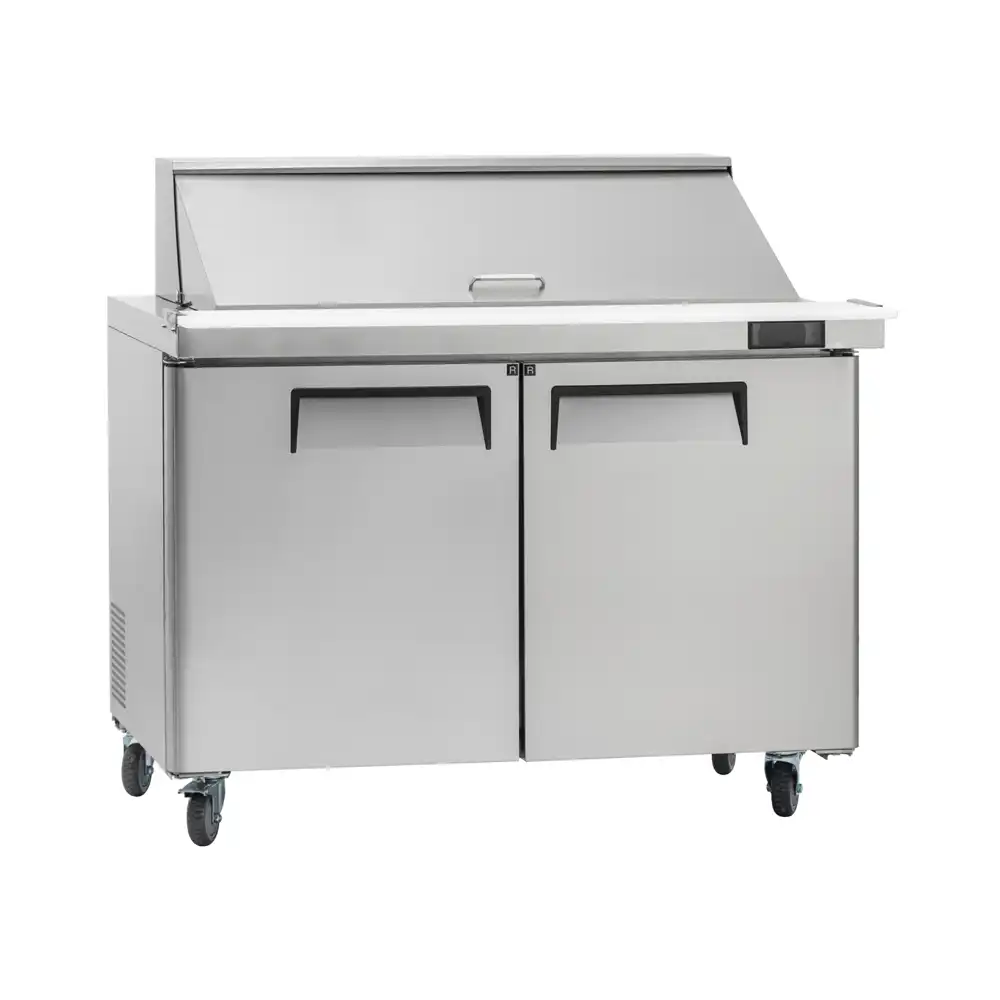
The Camay MSR-48M salad prep table provides 13 cuft capacity with a temperature range of 0.5–5°C (33–41°F), which covers the food safety requirements while giving adequate space for busy service periods.
| Refrigeration Type | Key Features | Ideal Application |
|---|---|---|
| Drop-in Cold Wells | Seamless integration, consistent cooling | Buffet lines, self-service salad bars |
| Refrigerated Display Cases | High visibility, precise temperature control | Front-of-house displays, prepared salads |
| Undercounter Refrigerators | Dual storage and prep surface | Back-of-house ingredient staging |
| Chef Bases | Heavy-duty worktop, integrated cold storage | Prep stations for high-volume operations |
Designing Service Areas That Support Staff Movement
Every unnecessary step a staff member takes during service adds up. Over a busy lunch period, poor placement of utensils, condiments, or waste bins can add hundreds of extra movements that slow everything down.
The layout should minimize crossing paths. When the person restocking ingredients doesn’t have to squeeze past the person serving customers, both work faster. Strategic placement of service points reduces friction and makes training new staff easier—the logical flow becomes obvious.
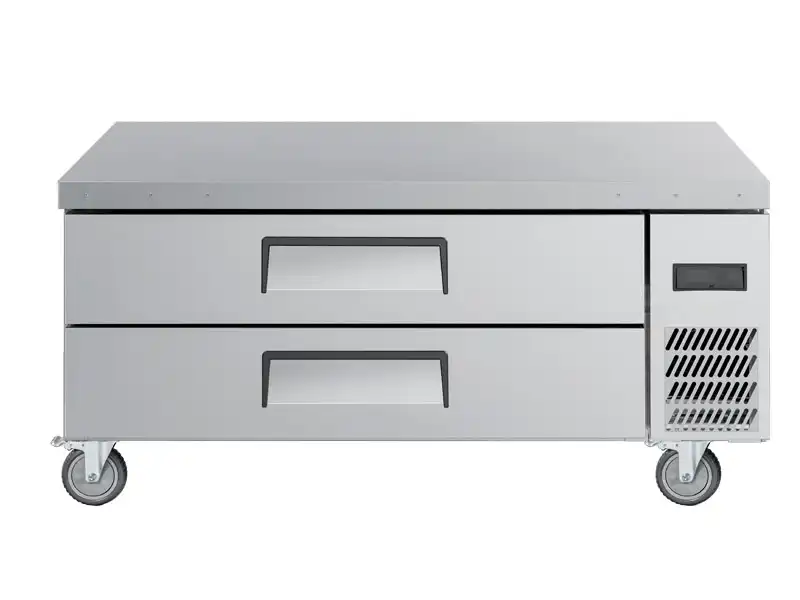
For more information on optimizing kitchen workflow, explore 《Boost Kitchen Efficiency Workflow Optimization with Chef Base Fridges》.
How does efficient layout impact salad service profitability?
The financial impact shows up in multiple areas simultaneously. Faster customer throughput means more transactions per hour during peak periods. Lower waste percentages reduce food costs directly. Staff who aren’t fighting the layout accomplish more in less time.
Customer satisfaction drives repeat business, and nothing frustrates customers like slow-moving lines or wilted ingredients. The salad service efficiency gains compound over time as loyal customers return and operational costs stay controlled.
| Benefit Category | Impact of Efficient Layout | Estimated Savings/Increase |
|---|---|---|
| Labor Costs | Reduced staff movement, faster service | 10-15% reduction |
| Food Waste | Better inventory rotation, proper storage | 5-10% reduction |
| Sales Volume | Improved customer experience, faster throughput | 5-20% increase |
| Customer Loyalty | Enhanced satisfaction, positive perception | Long-term revenue growth |
Making Layout Changes That Last
The best salad bar layouts balance customer experience with operational reality. They account for peak traffic patterns, staff capabilities, and the specific constraints of the physical space. A layout that looks good on paper but ignores how people actually move through the space won’t deliver results.
Starting with refrigeration placement often makes sense because those decisions constrain everything else. Once the cold equipment is positioned for both food safety and accessibility, the rest of the layout can flow from there.
Enhance Your Salad Service with Expert Refrigeration Solutions
ZHEJIANG KAIMEI CATERING EQUIPMENT CO., LTD is your trusted partner for professional, one-stop refrigeration equipment. Optimize your salad bar’s efficiency and food safety with our advanced cold well solutions and display cases. Contact us today for a consultation or to explore our extensive range of high-quality catering equipment tailored to your specific needs. Phone: +8618157202219 | Email: Sales@hzcamay.com
Frequently Asked Questions About Salad Service Efficiency
What are the primary benefits of an optimized salad bar layout?
Better customer flow tops the list—shorter wait times mean happier customers and more transactions per hour. Reduced food waste follows closely, since proper refrigeration placement and ingredient rotation keep everything fresher longer. Staff work more efficiently when the layout supports natural movement patterns rather than fighting against them. These factors combine to improve both the customer experience and the bottom line.
How can refrigeration equipment contribute to salad service efficiency and food safety?
Refrigeration maintains the temperature control that food safety regulations require, but it also affects how ingredients look and taste throughout service. Cold wells and display cases positioned correctly keep everything at safe temperatures while remaining accessible to both staff and customers. Well-maintained units prevent the temperature fluctuations that accelerate spoilage and create food safety risks.
What role does staff training play in improving salad service efficiency?
Training ensures everyone follows the same replenishment schedules, rotation protocols, and hygiene standards. Staff who understand the reasoning behind FIFO rotation or temperature monitoring catch problems before they become serious. Good training also means new employees get up to speed faster because the layout and procedures make logical sense. The combination of smart design and trained staff creates consistent salad service efficiency.