
Commercial kitchens live and die by their ability to keep food safe and sellable. The freezing method you choose shapes everything from texture retention to waste percentages, and the gap between rapid cooling and standard freezing is wider than most operators realize. Getting this decision right affects daily operations, compliance records, and ultimately the bottom line.
What Actually Happens During Rapid Cooling Versus Standard Freezing
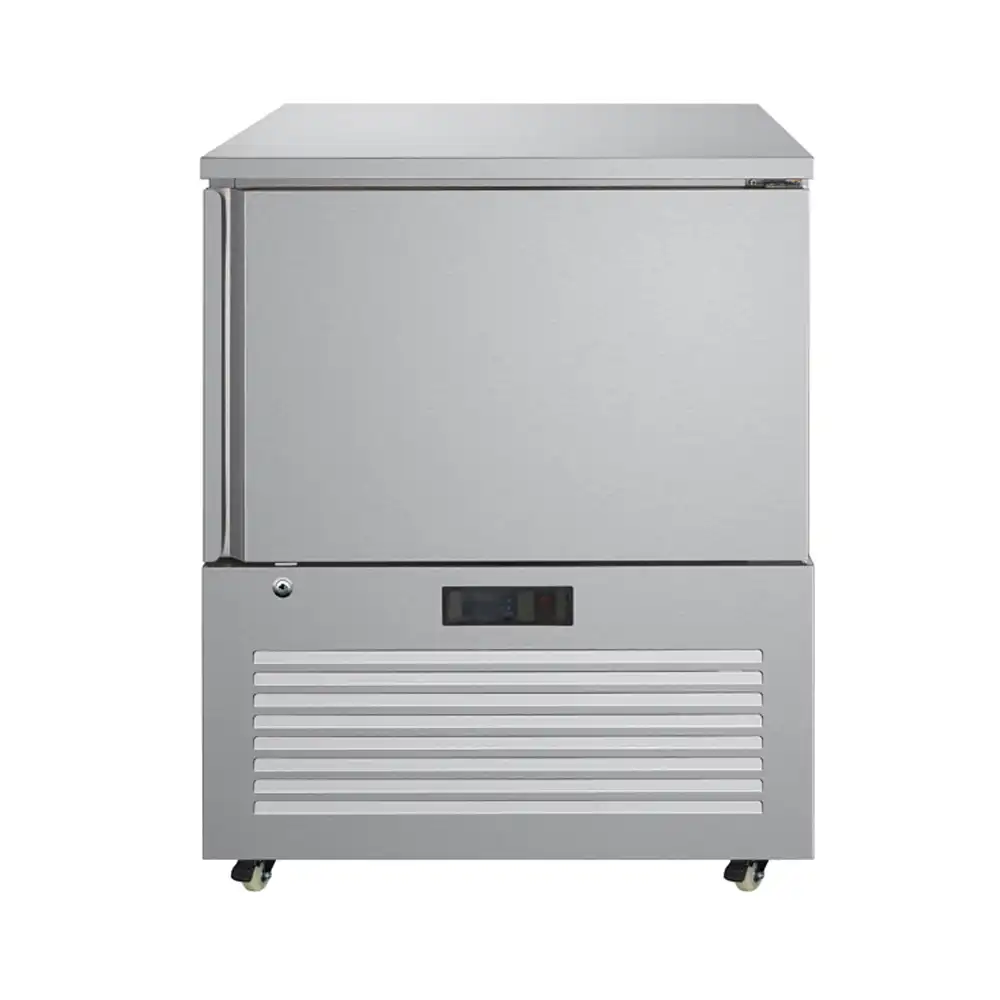
Rapid cooling pushes food temperatures down fast through forced cold air circulation. The target is specific: drop the core temperature from cooking heat to below 5°C within 90 minutes for chilling, or hit -18°C within 240 minutes for freezing. ZHEJIANG KAIMEI CATERING EQUIPMENT CO., LTD. builds blast chillers engineered to hit these marks consistently.
Standard freezing works differently. Food goes into a conventional freezer and temperatures fall gradually, sometimes taking a full day to reach the target. The speed difference matters because it determines ice crystal size. Rapid cooling keeps crystals small and uniform, which protects cellular structure. Standard freezing allows larger crystals to form, and those crystals puncture cell walls.
| Feature | Rapid Cooling (Blast Chilling/Shock Freezing) | Standard Freezing (Conventional) |
|---|---|---|
| Cooling Speed | Very fast (minutes to a few hours) | Slow (several hours to a full day) |
| Ice Crystal Size | Small, uniform | Large, irregular |
| Temperature Range | Chilling: +3°C to -5°C; Freezing: -18°C to -40°C | Typically -18°C to -25°C |
| Airflow | Forced, high velocity | Natural convection or gentle circulation |
| Food Quality | Superior (texture, taste, nutrition) | Good, but potential for degradation |
| Applications | Cooked foods, delicate items, prepared meals | Bulk storage, less delicate foods |
Why Ice Crystal Size Determines Food Quality
Large ice crystals rupture cell walls. When food thaws, the damaged cells release moisture, creating drip loss. That moisture carries flavor compounds and leaves behind a dry, fibrous texture. Anyone who has thawed a poorly frozen steak knows exactly what this looks like.
Rapid cooling technology keeps ice crystals small enough that cell walls stay intact. The food retains its natural moisture content and structural integrity through the freeze-thaw cycle. This matters most for high-value items where texture degradation translates directly to customer complaints or rejected product.
Nutrient retention follows a similar pattern. Rapid temperature drops slow enzymatic activity and reduce oxidation during the freezing window. Slower freezing gives these degradation processes more time to work. Seafood, baked goods, and prepared sauces show the difference most clearly. Cryogenic freezing pushes this advantage even further for ultra-delicate items, though the equipment costs scale accordingly.
How does rapid cooling impact food quality and safety compared to conventional freezing methods?
Rapid cooling drops temperatures fast enough to starve bacteria of their growth window. The danger zone between 5°C and 60°C is where pathogens multiply most aggressively, and rapid cooling minimizes time spent in that range. The smaller ice crystals preserve cellular structure, which means better texture, retained flavor, and less drip loss when thawing. Conventional freezing takes longer to clear the danger zone and produces larger crystals that damage cells. The quality gap shows up in everything from mouthfeel to moisture content.
Food Safety Gains From Faster Temperature Drops
The bacterial danger zone between 5°C and 60°C is where most foodborne illness risks concentrate. Rapid cooling moves food through this range quickly, limiting the time pathogens have to multiply. Standard freezing leaves food in the danger zone longer, which increases contamination risk even if the final frozen state is identical.
HACCP compliance depends on documented temperature control, and rapid cooling systems generate the records auditors want to see. The shorter cooling curves demonstrate active management of microbial risk rather than passive reliance on eventual freezing.
Shelf life extends as a direct consequence. Food that spends less time in the danger zone starts its frozen storage with lower bacterial loads and fewer spoilage organisms. This translates to longer usable life after thawing, reduced waste, and more flexibility in inventory management.
Real Costs Behind Equipment Decisions
Blast chillers cost more upfront than standard freezers. That initial gap narrows when you factor in operational realities. Rapid cooling systems process food faster, which reduces labor time dedicated to monitoring cooling cycles. Kitchen workflow improves because product moves through the cooling stage predictably.
Energy consumption patterns differ too. Rapid cooling equipment draws more power during active cycles but runs those cycles for shorter periods. Standard freezers run continuously at lower draw but accumulate energy costs over extended cooling times. Our blast chillers use R290 refrigerant, which improves efficiency while meeting environmental standards.
The waste reduction argument carries the most weight for high-volume operations. Food that maintains quality through freezing sells at full price. Food that degrades gets discounted or discarded. The ROI calculation on rapid cooling equipment often hinges on spoilage percentages more than energy costs.
What are the long-term cost implications of investing in rapid cooling technology for commercial kitchens?
The upfront cost runs higher than standard freezers, but the payback period tends to be shorter than operators expect. Waste reduction drives most of the savings. Food that freezes well sells at full margin instead of getting marked down or thrown out. Energy consumption per unit of food processed often favors rapid cooling because the shorter cycle times offset the higher power draw. Over a five to seven year equipment lifespan, these efficiencies compound into meaningful cost advantages.
Matching Equipment to Operational Realities
The right choice depends on what you’re freezing and how much of it moves through your operation. Restaurants preparing large batches for later service need rapid cooling to maintain quality standards. Catering operations face the same requirements, often with tighter timing constraints. Bakeries freezing delicate pastries cannot afford the texture damage from slow freezing.
Bulk storage of less sensitive items can work with standard freezers. Frozen vegetables, portioned proteins for long-term inventory, and similar products tolerate slower freezing better than prepared dishes. Even these operations sometimes benefit from rapid cooling specific product lines while using standard freezers for the rest.
Volume matters. High-throughput kitchens processing hundreds of portions daily see faster returns on rapid cooling investment. Smaller operations might find the equipment capacity exceeds their needs. Our Product Catalogue covers the range from compact units to high-capacity systems.
Where Commercial Freezing Technology Is Heading
Equipment development is moving toward smarter systems with better efficiency. Compressor technology keeps improving, insulation materials are getting more effective, and control systems now integrate IoT connectivity for remote monitoring and predictive maintenance.
Natural refrigerants like R290 are becoming standard rather than premium options. Regulatory pressure and sustainability commitments are accelerating this shift. ZHEJIANG KAIMEI CATERING EQUIPMENT CO., LTD. already incorporates R290 in many units, positioning for where the market is heading rather than where it has been.
Real-time temperature logging and automated alerts reduce the monitoring burden on kitchen staff. These features also generate the documentation that food safety audits require, turning compliance from a manual task into a system output.
Partner With ZHEJIANG KAIMEI for Your Refrigeration Needs
ZHEJIANG KAIMEI CATERING EQUIPMENT CO., LTD specializes in refrigeration solutions for the HORECA sector. Our rapid cooling and freezing equipment is engineered for the demands of commercial food operations. Reach us at +8618157202219 or Sales@hzcamay.com to discuss your specific requirements and find the right fit for your operation.
FAQ
What are the primary differences between rapid cooling and standard freezing for food preservation?
Rapid cooling drops temperatures fast through forced air circulation, targeting specific timeframes that limit bacterial growth and keep ice crystals small. Standard freezing works gradually, which allows larger crystal formation and longer exposure to the danger zone. The practical difference shows up in texture retention, moisture loss, and shelf life. ZHEJIANG KAIMEI rapid cooling systems are built to hit the temperature targets that preserve quality.
Is rapid cooling more energy-efficient than standard freezing in the long run?
The energy picture is more nuanced than a simple comparison of power ratings. Rapid cooling equipment draws more power during active cycles but completes those cycles faster. Standard freezers run longer at lower draw. When you add waste reduction to the calculation, rapid cooling often comes out ahead on total cost per unit of usable frozen product.
Which types of food benefit most from rapid cooling technology?
High-moisture foods show the biggest quality difference. Cooked dishes, baked goods, and fresh produce all freeze better with rapid cooling. Prepared meals, sauces, and delicate proteins like seafood benefit significantly. The texture and flavor preservation matters most for items where customers will notice degradation. High-volume operations processing these categories see the clearest returns on rapid cooling investment.