
A pizza table that doesn’t align with your kitchen’s movement pattern wastes more labor than a broken mixer. I’ve walked through hundreds of commercial kitchens, and the ones that consistently push out high volumes share a common trait: the pizza station is laid out so that the cook barely needs to pivot. The right table design turns scattered steps into a tight, repeatable sequence—and that starts with understanding the equipment not as a standalone fridge, but as the structural center of the make line. This article addresses how specific design features of commercial pizza prep tables—from pan configuration to station integration—can measurably improve kitchen efficiency, drawn from our own manufacturing experience supplying Camay pizza tables to pizzerias, hotels, and chain restaurants worldwide.
Why a Pizza Table Is More Than a Refrigerated Cabinet
A refrigerated cabinet keeps ingredients cold. A properly designed pizza table keeps the cook in motion. The distinction matters because in a busy pizza kitchen, every second spent reaching, turning, or walking away from the prep surface compounds across hundreds of pies. The table’s value comes from how it organizes the workspace, not just from the temperature it holds.
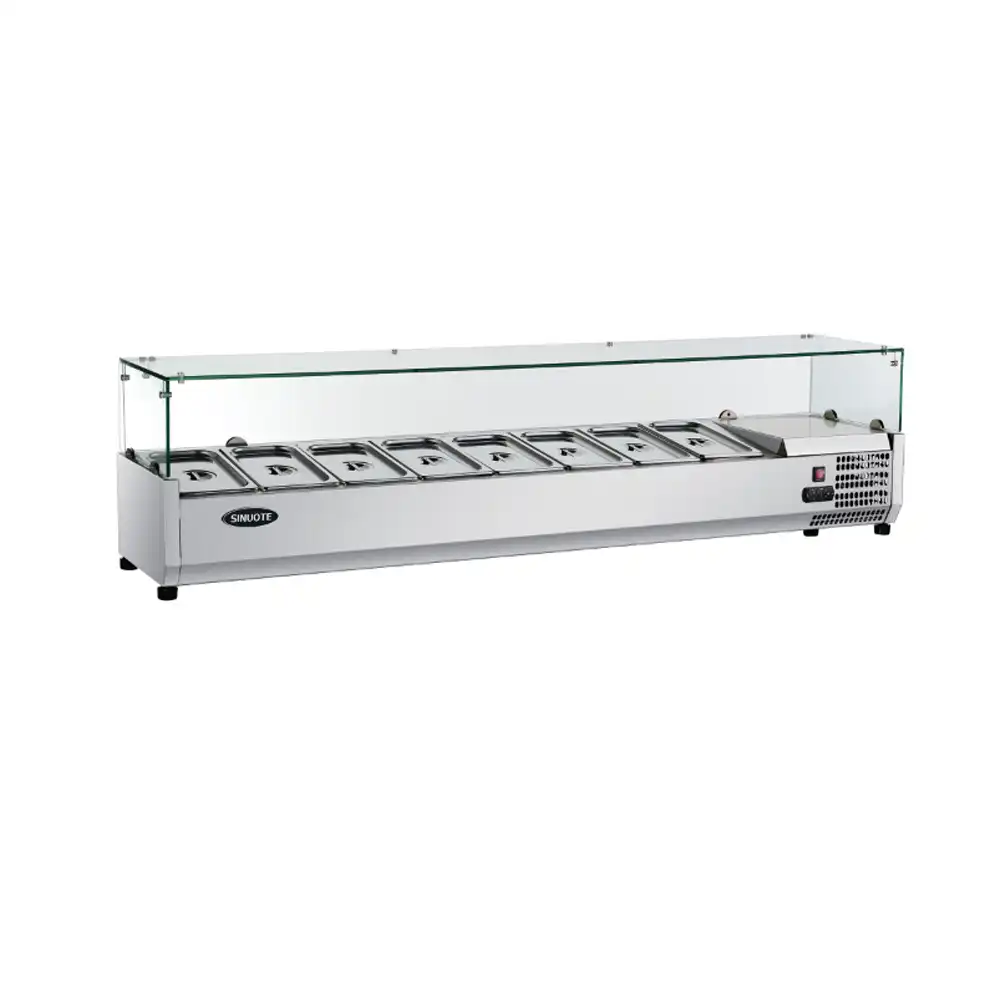
What transforms a basic refrigerated cabinet into a true pizza workstation are the details: a rail of gastronorm pans that put toppings within arm’s reach, a durable stainless-steel worktop wide enough for stretching dough without crowding, and downward refrigeration that cools ingredients without drying out the flour on the board. When we engineer a pizza table at Camay, we are not just building a box that gets cold—we are designing a platform where the entire topping sequence happens without interruption. The table must also maintain steady airflow so the exposed pans on the rail stay at safe temperatures without freezing, while the cabinet below holds backup stock at a slightly colder range. This dual-zone effect, achieved through ventilated cooling and proper insulation, is the first efficiency gain most kitchens overlook.
Design Features That Directly Impact Kitchen Speed
One of the most common mistakes I see in pizza kitchen layouts is accepting whatever pan configuration comes with the table, then building the workflow around it. It should be the other way around. The way the top rail is divided, the position of the cutting board, and the height of the work surface all determine how many movements a cook makes per pizza.
The optimal layout stacks ingredients from left to right in the order of assembly: sauce, cheese, meats, vegetables, finish. A table designed for GN 1/3 pans, like the Camay VRX395 series, gives you the flexibility to swap pan positions without custom fabrication. With six to eight pan wells, you can assign wider bins to high-velocity toppings and narrow ones to garnishes, reducing the need to refill mid-shift. The worktop material also matters. A stainless-steel surface, specifically 304 or 430 grade, stands up to constant scraping and flour dust without corroding, and more importantly, it transfers minimal heat to the dough. If the steel is too thin, the surface warms up from ambient kitchen temperature, causing dough to stick and slowing the peel work. We use restaurant-grade panel thickness—typically 0.6 mm or higher—to keep the worktop thermally stable.
| Feature | Impact on Speed | Typical Specification |
|---|---|---|
| Pan configuration | Reduces reach distance, organizes topping sequence | GN 1/3 × 6 or 8 pans |
| Worktop height | Affects ergonomic reach and dough handling | 850–950 mm with adjustable legs/casters |
| Insulation quality | Prevents temperature fluctuation, reduces compressor cycling | Polyurethane/cyclopentane, CFC-free, 60 mm door panels |
| Mobility | Allows repositioning for rush-hour layout changes | 2-inch casters with locks |
Ergonomic height is another often-ignored factor. If the table is too low, cooks stoop; too high, they lift shoulders. Over an eight-hour shift, that difference adds up to slower transitions and more fatigue. A table with adjustable casters or legs, like the 2-inch casters on our MTR undercounter series, lets you fine-tune the working height to your team’s average reach. This is especially valuable in kitchens that use one pizza table across different shifts or rotate staff.
Positioning Your Pizza Table for Optimal Workflow
The best pizza table design loses half its value if it’s placed on the wrong side of the oven. I’ve seen tables squeezed against a wall with only front access, forcing the cook to walk around the oven to grab backup ingredients from the lower cabinet. That single misstep can add ten seconds per pie—which, in a shop making 200 pies a night, is over half an hour of wasted movement.
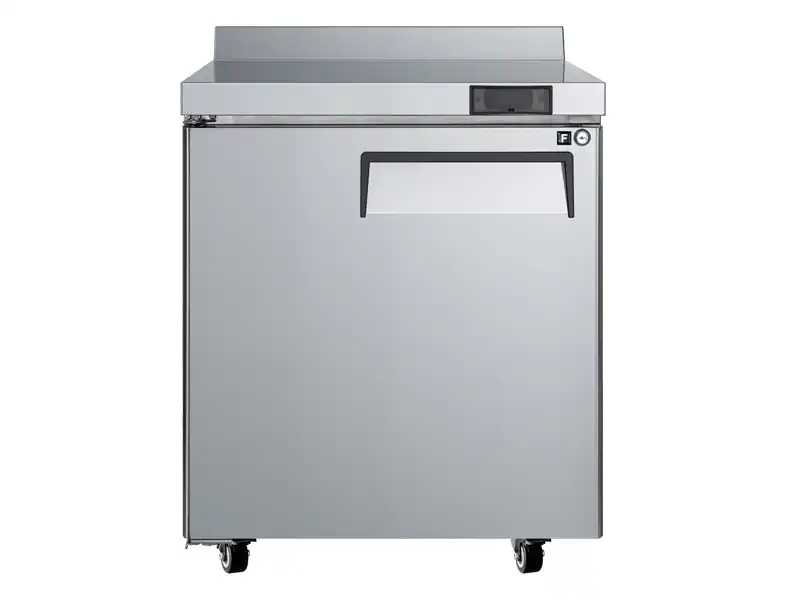
The table should sit parallel to the oven deck, with the cook standing between the two. This creates a linear flow: dough stretch on the left side of the table, sauce and cheese from the rail, and then a single step to place the assembled pizza into the oven on the right. The lower refrigerated cabinet should face the aisle or a rear prep zone so that restocking does not cross the assembly path. If space is tight, a smaller table like the 1500 mm model can still work if you position backup ingredients on a wheeled speed rack immediately behind the cook. The goal is to eliminate any transverse movement across the make line.
During peak hours, the placement of the cutting board section also matters. A removable cutting board that sits flush with the worktop, rather than a separate side table, lets the cook trim dough and slide it directly onto the peel without lifting. In our VRX395-1600 model, the full-width stainless top gives enough surface for both stretching and assembling in one seamless motion. When we consult on kitchen layouts for new pizzerias, we often recommend placing the pizza table at the head of the cook line, with the oven on one side and a prep counter on the other for boxing and finishing. This anchors the whole hot-side workflow.
Integrating Your Pizza Table with Other Kitchen Stations
A pizza table rarely operates in isolation. In a high-volume kitchen, it connects to undercounter refrigerators for dough storage, chef bases for hot holding, and prep counters for finished pizzas. The efficiency gain from the table multiplies when these stations are aligned in a logical sequence.
Consider a scenario where the dough is stored in an undercounter unit directly beneath the pizza table’s right side. The cook bends down, pulls a dough ball, and rises to the worktop in one motion. If that undercounter unit was instead ten feet away by the back wall, the cook would walk those ten feet for every single pizza. The same logic applies to the topping backup: a reach-in cooler located behind the pizza station, accessible without leaving the line, means refilling the rail pans takes seconds, not minutes. When we design custom solutions for chain restaurants, we often pair a Camay MTR-60 undercounter refrigerator with a pizza table so the dough storage and topping backup are vertically stacked. The MTR-60’s 476-liter capacity holds enough dough for a full dinner rush while keeping the drawer-level access aligned with the prep surface.
Hot-holding coordination is subtler. If your menu includes hot toppings like meatballs or roasted vegetables, they should be kept in a commercial chef base or hot food well positioned to the left of the pizza table, before the sauce station. This way, the cook adds hot items immediately after the base sauce without backtracking. A common layout we see in high-efficiency kitchens is: chef base (hot toppings) → pizza table (cold toppings and assembly) → oven → warming rack → boxing station. Every step moves forward. Camay’s MAR-60A countertop chef base, with its sturdy one-piece worktop and 117-liter capacity, slots neatly into this sequence, providing hot holding without breaking the line.
Maintaining Your Pizza Table for Consistent Performance
Efficiency doesn’t end with the layout. A pizza table that struggles to hold temperature during peak hours because the condenser coil is clogged will slow down the kitchen more than a broken mixer. I’ve seen kitchens where the staff didn’t clean the coil for a year, and the compressor was running continuously just to maintain 5°C, wasting energy and risking ingredient safety. Simple maintenance keeps the table performing at its engineered capability.
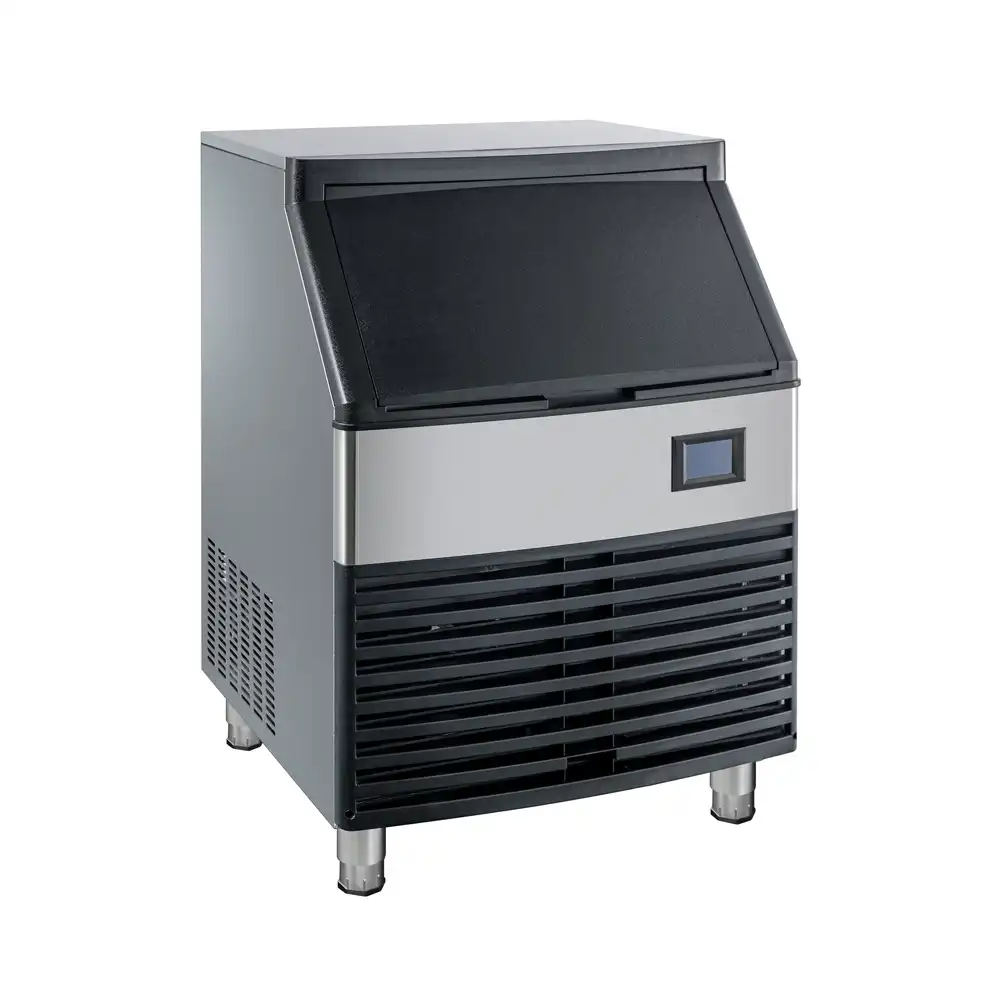
The first priority is the condenser coil. A removable grille and accessible coil—like on our ventilated refrigeration systems—let you brush or vacuum the fins weekly. If the coil is buried behind a non-removable panel, cleaning becomes a major task that never happens. We design our pizza tables with a removable anti-dust mesh on the air intake to make this a two-minute job. The second priority is the door gasket. A worn gasket leaks cold air and increases compressor runtime. A removable gasket, which can be pulled off and rinsed, eliminates the mold buildup that occurs in fixed-gasket designs. Food debris around the pan rail is another silent efficiency killer. If the rail frame has gaps where cheese and sauce can fall into the refrigerated compartment, it not only contaminates the cold zone but also clogs the defrost drain over time. A well-built pizza table has tight-fitting rail pans and a continuous lip around the rail edge to prevent spillage. I recommend wiping the rail frame with a sanitizing cloth after every shift, not just at closing.
Energy efficiency matters for the long-term cost picture, too. Polyurethane/cyclopentane insulation, which we foam into the full cabinet walls, reduces heat transfer better than older Styrofoam-type materials. The R290 refrigerant we use in the VRX395 series also has a lower global warming potential and better thermodynamic performance than older HFC refrigerants, so the compressor cycles less often, saving electricity. In a kitchen running 14 hours a day, that difference compounds to a noticeable reduction in the utility bill.
Common Questions About Pizza Prep Table Efficiency
How many pan wells do I really need?
A six-pan configuration fits most independent pizzerias, but if your menu has more than eight standard toppings, go for an eight-pan model. The extra wells prevent topping overflow, reduce mid-rush refills, and let you organize by assembly order more precisely. What matters more than the count is the pan depth: shallow 100 mm pans expose more surface area to cold air, keeping sensitive items like fresh mozzarella at the right temperature without freezing. If your kitchen runs two simultaneous make lines, a single long table with eight wells often outperforms two separate smaller tables because it reduces the distance between shared ingredients.
Should I choose a flat top or raised rail design?
Raised rails hold pans at an angle facing the cook, making it easier to see and scoop ingredients without leaning over. This design works best for kitchens with a dedicated pizza station where the cook stands in one spot. A flat-top design, where pans sit flush with the work surface, provides a larger continuous prep area and is better suited for kitchens that use the table for both pizza assembly and other prep tasks. The decision hinges on whether your table is a single-task station or a multi-use surface. In our experience, raised rails improve speed for pure pizza assembly, while flat tops offer flexibility for smaller kitchens.
What’s the ideal temperature setting for a pizza table?
Keep the rail pans at +2°C to +5°C to hold toppings safely without freezing delicate ingredients like fresh basil or sliced tomatoes. The refrigerated cabinet below can run slightly colder, typically around 0°C to 3°C, because backup stock is sealed in containers and doesn’t have the same exposure to ambient air. If you notice frost forming on the rail pans, the thermostat is set too low or the airflow is unbalanced. A digital controller, like the smart temperature system we include as standard, lets you monitor and adjust in 0.5°C increments. I check the controller display at the start of each shift—it takes five seconds and catches drift before it becomes a food safety issue.
How do I stop dough from sticking to the table?
The most common cause is a worktop that warms up from ambient kitchen heat. Insist on a table with adequate insulation under the worktop deck and a stainless steel thickness of at least 0.6 mm. A light dusting of flour on the worktop before each stretch also helps, but if the steel is thin and uninsulated, the dough will stick regardless of how much flour you use. Additionally, position the table away from direct heat sources like the oven mouth or a salamander broiler. Even a few degrees of surface warming can turn a smooth dough stretch into a struggle. A dough that releases cleanly from the peel saves about two seconds per pizza, which is more significant than it sounds when multiplied across hundreds of orders.
How can I source a pizza table that fits my exact kitchen layout?
The most direct route to a table that matches your space and workflow is to work with a manufacturer that offers OEM and ODM services, so you can specify dimensions, pan configuration, caster height, and even door swing direction rather than compromising on a catalog-spec unit. With our 26 years of commercial refrigeration manufacturing at Camay, we routinely customize pizza tables for chain restaurants, hotel kitchens, and institutional food service—adjusting the worktop size, rail layout, and compressor placement to suit the client’s existing cook line. If your program requires a specific configuration or multizone cooling to handle both dough and toppings in one station, email us your layout dimensions and daily volume at Sales@hzcamay.com or call +8618157202219, and we’ll confirm feasibility and lead time before you commit to a purchase.
If you’re interested, check out these related articles:
Essential Maintenance Tips for Your Commercial Chef Base Refrigerator
Boost Kitchen Efficiency Workflow Optimization with Chef Base Fridges
Boost Savings with Energy Efficient Commercial Upright Freezers
Optimizing Kitchen Efficiency with Integrated Worktop Refrigeration
Upright Freezer vs Refrigerator Key Differences Explained