

Running a pizza shop means every minute counts during the dinner rush. The right serving table does more than hold toppings—it shapes how fast orders move out and how consistently ingredients stay at safe temperatures. After working with commercial kitchens for years, I’ve seen firsthand how the details of a pizza prep table design ripple through an entire operation.
What Makes a Pizza Prep Table Actually Efficient
High-efficiency pizza prep tables aren’t just refrigerators with a flat top. They’re built around reducing the small delays that add up across hundreds of orders. The layout matters. The cooling system matters. Even the height of the topping rail affects how quickly a line cook can dress a pie.
An optimized table layout and feature set can cut prep time by 15-20%. That’s not marketing speak—it’s what happens when ingredients sit at arm’s reach, the cutting surface doesn’t require constant repositioning, and the refrigeration recovers quickly after repeated door openings.
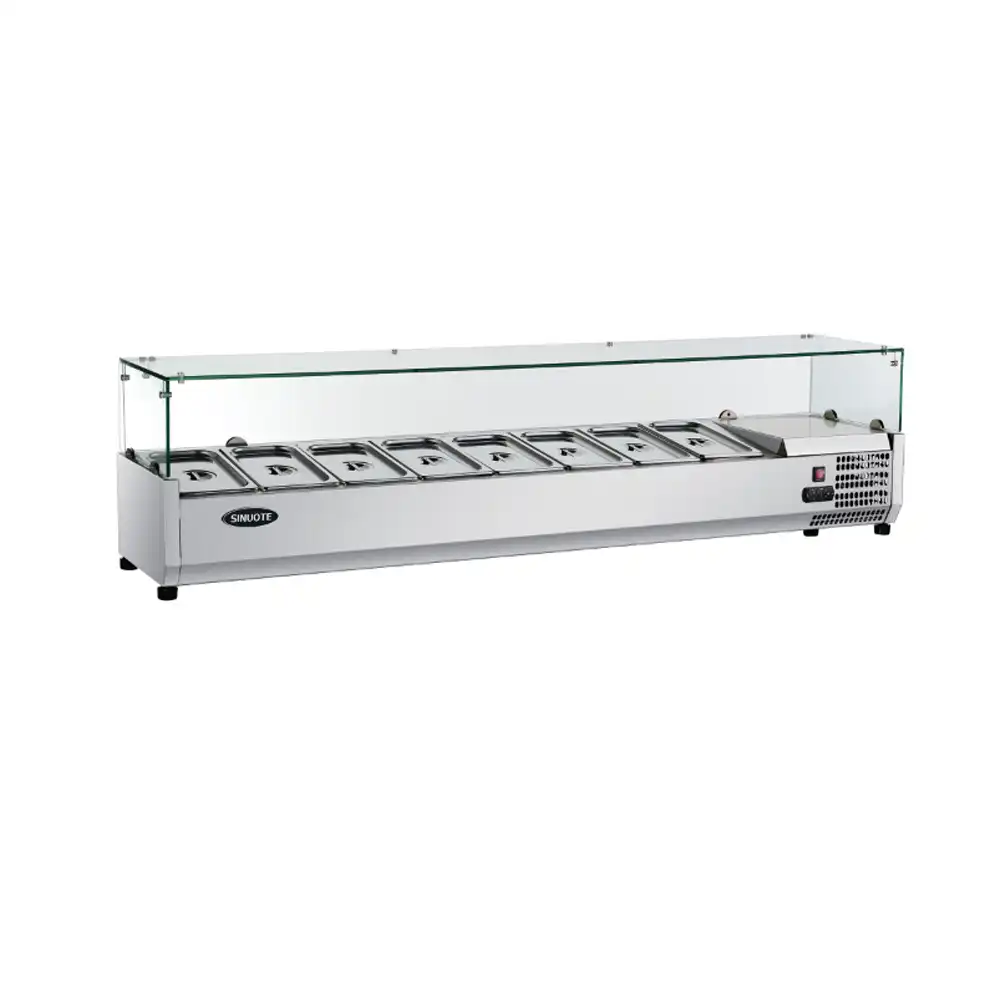
| Feature | Benefit |
|---|---|
| Refrigerated Topping Rails | Keeps ingredients fresh and accessible |
| Durable Cutting Board | Provides a hygienic, convenient prep surface |
| Ample Storage Capacity | Reduces restocking frequency |
| Ergonomic Design | Minimizes staff fatigue, boosts productivity |
| NSF Certification | Ensures food safety and regulatory compliance |
NSF certification isn’t optional for serious operations. It confirms that materials and construction meet strict hygiene requirements—something health inspectors look for and customers assume you’ve handled. Camay pizza prep tables like the VRX395-1600 and VRX395-1500 check these boxes while maintaining stable refrigeration temperatures. The 304-grade stainless steel construction also simplifies cleaning, which matters when you’re wiping down surfaces between rushes.
How Layout Decisions Shape Kitchen Speed
Where you place a pizza serving table changes how your staff moves. Position it too far from the oven, and you’ve added steps to every order. Block the path to the walk-in, and restocking becomes a chore that interrupts service.
Proper kitchen workflow design can increase order fulfillment speed by up to 25%. That’s a significant margin in a business where peak hours determine profitability.
Modular designs offer roughly 30% more adaptability for different kitchen footprints. Not every pizza shop has the same square footage or the same bottlenecks. A Pizza Table that can be configured to fit your specific space—rather than forcing you to work around it—pays dividends over time.
The Connection Between Table Design and Daily Operations
A well-designed pizza prep table reduces unnecessary staff movement by around 20%. That’s less fatigue at the end of a shift and faster service during the busiest hours.
The details add up: integrated cutting boards eliminate the need to grab separate boards from storage. Accessible refrigerated compartments mean toppings stay cold without constant trips to a separate cooler. Adjustable shelving lets you organize ingredients based on how frequently you use them, not how the manufacturer assumed you’d use them.
Customizable prep tables allow businesses to tailor units to specific operational needs. If your shop does heavy catering and needs more pan storage, that’s a different configuration than a takeout-focused operation that prioritizes speed over capacity.
For more on integrating refrigeration into your kitchen design, 《Optimizing Kitchen Efficiency with Integrated Worktop Refrigeration》 covers the broader principles.
Temperature Control and Why It Actually Matters
Inadequate refrigeration contributes to roughly 15% of foodborne illness outbreaks in commercial settings. That’s a risk no pizza shop can afford—both for customer safety and for the business consequences of a health code violation.
Modern refrigerated pizza tables maintain ingredients within safe ranges: 0.5°C to 5°C for refrigeration, -22°C to -18°C for freezers. The precision matters because temperature fluctuations accelerate spoilage and create conditions where bacteria can multiply.
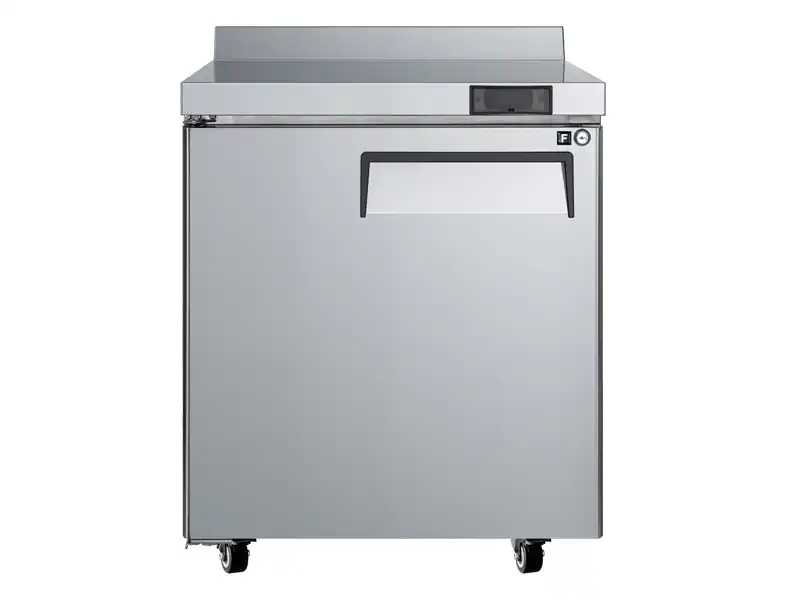
Units using eco-friendly R290 refrigerant and ventilated cooling systems can reduce energy consumption by up to 35%. That’s a meaningful reduction in monthly utility costs, especially for shops running multiple refrigeration units.
| Feature | Forced Air Cooling | Cold Wall Cooling |
|---|---|---|
| Air Circulation | Even temperature distribution, rapid recovery | Static cooling, less air movement |
| Temperature Stability | Excellent for frequent door openings | Stable, but slower recovery |
| Moisture Control | Can dry out uncovered foods faster | Better for moisture retention |
| Energy Efficiency | Generally higher energy usage due to fan operation | Lower energy usage, but less uniform cooling |
| Application | High-traffic prep tables | Storage units with less frequent access |
What Separates High-Efficiency Units from Basic Models
A high-efficiency pizza serving table combines robust insulation, precise temperature control, and ergonomic design. The insulation piece often gets overlooked, but CFC-free polyurethane/cyclopentane foamed insulation makes a real difference in thermal preservation—and in how hard the compressor has to work to maintain temperature.
Smart digital temperature systems allow for accurate monitoring. Some units now offer optional IoT and WiFi connectivity, which lets managers track temperatures remotely and catch problems before they become food safety incidents. Whether that level of monitoring is necessary depends on your operation’s scale and how much you trust your staff to check temperatures manually.
Why Material Choices Affect Long-Term Costs
The upfront price of a pizza prep table tells only part of the story. A cheaper unit that corrodes in two years or requires frequent repairs ends up costing more than a quality unit that lasts a decade.
Stainless steel grade matters more than most buyers realize. 304-grade stainless steel extends equipment lifespan by roughly 50% compared to lower grades like 430. The difference is corrosion resistance—304 handles the moisture, acids, and cleaning chemicals of a commercial kitchen without pitting or staining.
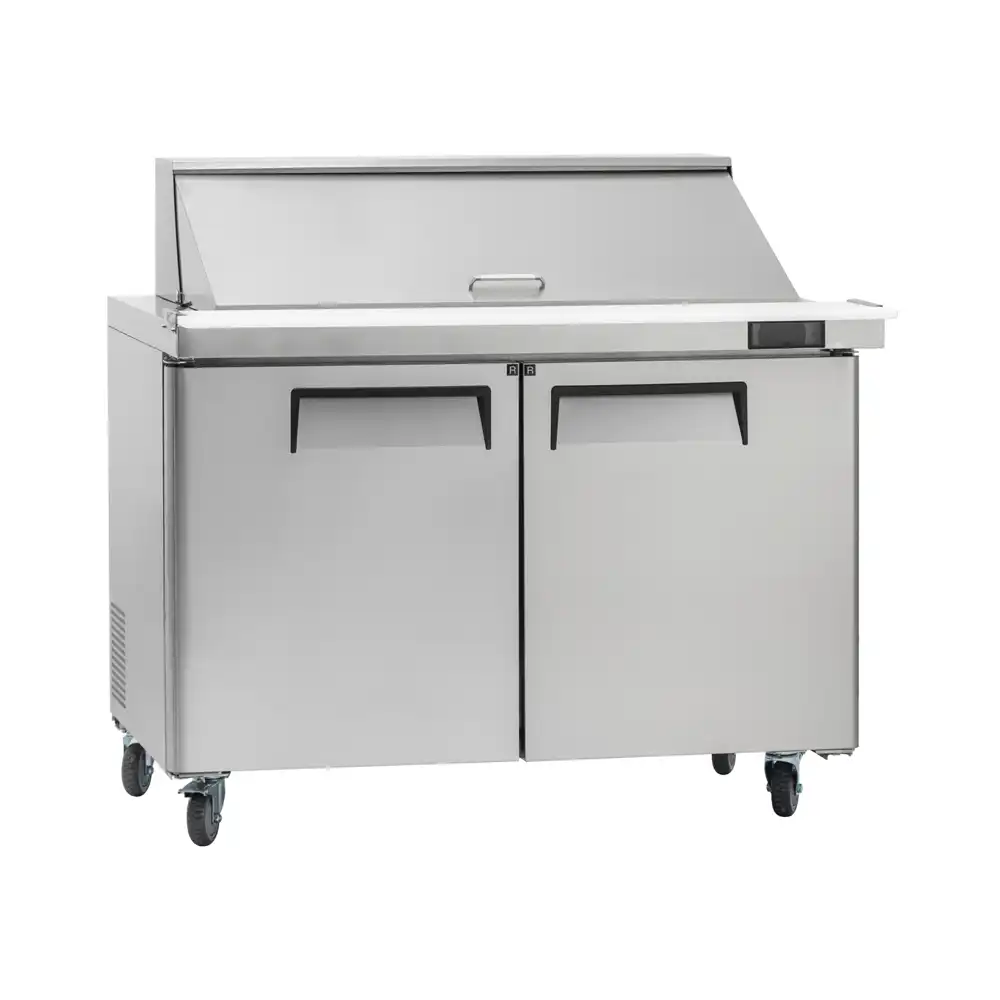
| Material Type | Advantages | Disadvantages |
|---|---|---|
| 304 Stainless Steel | Highly durable, corrosion-resistant, hygienic | Higher initial cost |
| 430 Stainless Steel | More affordable, magnetic | Less corrosion-resistant, prone to staining |
| High-Density Polyethylene (HDPE) | Food-grade, non-porous, knife-friendly | Can scratch, requires regular sanitization |
| Wood (Maple/Oak) | Traditional, aesthetically pleasing | Porous, difficult to sanitize, prone to bacteria |
For cutting surfaces, high-density polyethylene (HDPE) reduces bacterial cross-contamination by about 40% compared to porous materials. The surface is non-porous, which means bacteria can’t hide in microscopic cracks the way they can with wood.
Building a Table That Survives Commercial Kitchen Conditions
A durable Pizza Table needs reinforced construction throughout, not just a stainless exterior over flimsy framing. Heavy-gauge 304-grade stainless steel for both exterior and interior surfaces is the standard for equipment that will see daily use for years.
Self-closing doors with robust hinges reduce wear from staff who don’t always close doors gently during a rush. Recessed handles are less likely to catch on aprons or get damaged by carts. Integrated foamed-in polyurethane insulation adds structural rigidity while improving energy efficiency.
These aren’t glamorous features, but they’re the difference between equipment that performs consistently and equipment that starts failing when you need it most.
Calculating the Real Return on Equipment Investment
Energy-efficient models can save up to $500 annually in utility costs per unit. Multiply that across several refrigeration units, and the savings become substantial.
Reduced food waste from superior refrigeration can increase profit margins by 2-3%. In a business with tight margins, that’s meaningful. Every container of toppings that spoils before use is money thrown away.
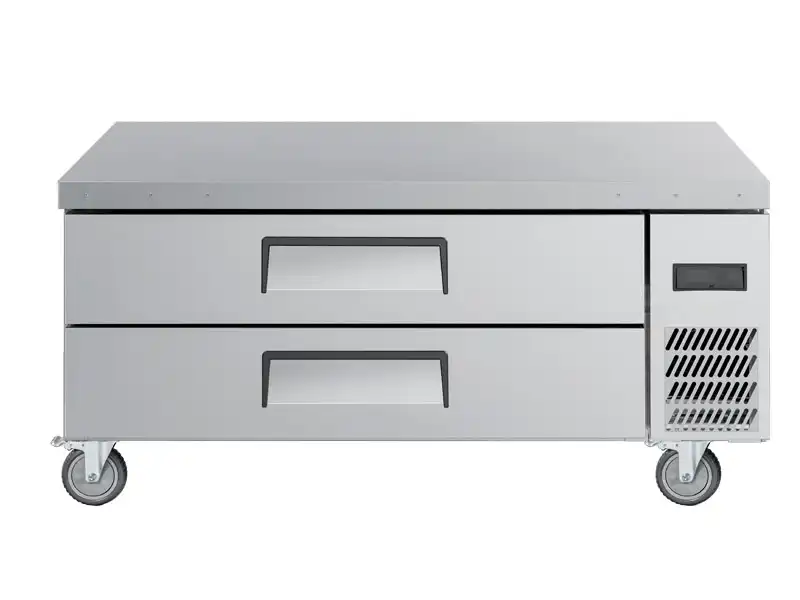
| Factor | Impact on ROI |
|---|---|
| Energy Efficiency | Lower monthly utility bills |
| Food Waste Reduction | Decreased ingredient spoilage, higher profit margins |
| Labor Efficiency | Faster prep times, reduced labor costs |
| Equipment Lifespan | Longer service life, delayed replacement costs |
| Maintenance Costs | Lower repair frequency with durable units |
How Better Equipment Translates to Better Margins
A high-efficiency serving table improves profitability through several channels working together. Faster prep times mean more orders fulfilled during peak hours without adding staff. Superior refrigeration means fewer ingredients spoil before use. Lower energy consumption reduces monthly overhead.
None of these factors alone transforms a struggling shop into a profitable one. But combined, they create operational advantages that compound over time. The shop that wastes less, moves faster, and spends less on utilities has more room to invest in quality ingredients, marketing, or staff—whatever the business needs most.
Partner with ZHEJIANG KAIMEI for Your Pizza Prep Solutions
ZHEJIANG KAIMEI CATERING EQUIPMENT CO., LTD offers professional refrigeration solutions designed for commercial kitchen demands. As a one-stop-shop manufacturer, we provide customizable serving tables built for peak performance and long-term reliability. Contact us at +8618157202219 or Sales@hzcamay.com for a consultation tailored to your operation’s specific needs.
Frequently Asked Questions About Pizza Serving Tables
Why is NSF certification crucial for pizza prep tables?
NSF certification confirms that a pizza prep table meets public health and safety standards for material safety, design, construction, and performance. For a high-efficiency pizza serving table, this means the unit minimizes food contamination risks through its design and is constructed for easy cleaning. Health inspectors look for this certification, and it provides assurance that the equipment meets baseline safety requirements. Our certified Work Top units adhere to these standards.
Which materials are best for maintaining hygiene in pizza preparation areas?
304-grade stainless steel is the preferred material for the main construction of serving tables. Its corrosion resistance and smooth surface make it easy to sanitize and durable enough to handle daily cleaning chemicals. For cutting surfaces, high-density polyethylene (HDPE) or similar food-grade materials work best because they’re non-porous and resist bacterial growth. Wood surfaces, while traditional, are porous and harder to keep sanitary in a commercial setting.
How does ZHEJIANG KAIMEI ensure the durability of its pizza serving tables?
ZHEJIANG KAIMEI CATERING EQUIPMENT CO., LTD builds durability into pizza serving tables through material selection and construction methods. We use high-grade stainless steel throughout, not just on visible surfaces. Heavy-duty components, robust hinges, and integrated foamed-in polyurethane insulation contribute to structural integrity. Our refrigeration equipment is designed for demanding commercial kitchen environments and undergoes quality control testing to verify performance under continuous use conditions.