

When you’re running a high-volume commercial kitchen, the worktop layout either works for you or against you. There’s no middle ground. Every unnecessary step, every awkward reach, every moment spent hunting for ingredients adds up fast during a dinner rush. A thoughtful layout cuts wasted motion, keeps traffic flowing, and lets your team focus on what actually matters: getting quality food out quickly and safely.
Strategic Zoning Gets You Through Peak Hours
Good workflow starts with clear zones. Break the kitchen into functional areas: receiving, storage, cold prep, hot prep, cooking, plating, and dishwashing. Each zone needs the right worktop setup and equipment within arm’s reach.
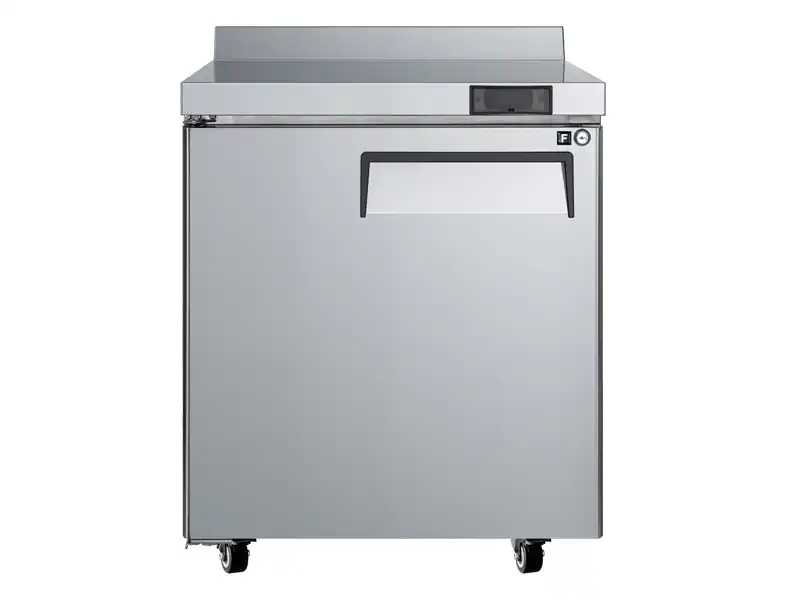
Take cold prep. You want refrigeration right there, not across the room. The Camay Commercial Worktop Refrigerator Cooler Fridge (Model MWTF-27-L) handles this well. Stainless steel build, R290 refrigerant for efficiency, and a prep surface on top. Ingredients stay cold, and you’re not walking back and forth to a walk-in.
The layout itself matters just as much as the equipment. Linear or U-shaped arrangements minimize cross-traffic. Keep raw ingredient prep physically separated from cooked food plating. This isn’t just about speed. It’s about preventing contamination and keeping health inspectors happy.
Specialized stations make a real difference in output. A pizza prep table like the Camay VRX395-1600 in a dedicated pizza zone, or a salad prep table like the Camay MSR-48M for salad assembly. These setups keep ingredients chilled and organized, which shows in both speed and product consistency.
graph TD
    A[Receiving & Storage] --> B(Food Preparation - Cold)
    B --> C(Food Preparation - Hot)
    C --> D(Cooking)
    D --> E(Plating)
    E --> F(Service)
    F --> G(Dishwashing)
    G --> A
For more on streamlining operations, see our article on 《Boost Kitchen Efficiency Workflow Optimization with Chef Base Fridges》.
Ergonomic Design Keeps Your Team Going
Staff burn out fast in poorly designed kitchens. Worktop heights, depths, and clearances need to accommodate different body types and tasks. Adjustable surfaces help, though fixed heights at appropriate levels work too. The point is reducing strain from repetitive motions and awkward postures.
Lighting and ventilation often get overlooked, but they matter. Good illumination prevents eye strain during detailed work. Proper ventilation pulls heat and fumes away, making the environment more bearable during long shifts. Position frequently used tools and ingredients within easy reach. Less bending, less stretching, more energy for the work that counts.
The Camay 60″ Countertop Refrigerated Chef Base (Model MAR-60A) addresses this by putting refrigerated storage directly under a sturdy work surface. Chefs grab ingredients without walking anywhere. The 4-inch casters allow repositioning when needed.
| Task Type | Recommended Height (cm) | Features to Consider |
|---|---|---|
| General Preparation | 90-95 | Ample space for chopping, mixing |
| Detailed Work | 95-100 | Slightly higher for precision tasks |
| Heavy Duty Tasks | 85-90 | Lower for leverage with heavy pots/equipment |
| Accessibility (ADA) | 71-86 | Clear knee space, easy reach |
Material Choices Affect Longevity and Safety
Stainless steel remains the standard for commercial worktops, and for good reason. SS304 or SS201 grades offer non-porous surfaces that resist corrosion, handle harsh cleaning chemicals, and tolerate high temperatures. In a busy kitchen, surfaces take abuse. Stainless steel holds up.
Our Camay Commercial Solid Door Undercounter units use stainless steel inside and out. This construction meets hygiene regulations and lasts through years of heavy use. Other materials like composites can work for specific applications, offering aesthetic options with reasonable hygiene properties. But for durability under constant commercial pressure, stainless steel usually wins.
Whatever material you choose, cleaning protocols matter. Surfaces need to resist bacterial growth and allow quick sanitization between tasks. Cross-contamination risks are real in high-volume environments. Quality materials reduce replacement frequency and keep operations running smoothly.
| Material | Durability | Hygiene Ease | Heat Resistance | Cost | Notes |
|---|---|---|---|---|---|
| Stainless Steel | Excellent | Excellent | High | Moderate | Industry standard, versatile |
| Quartz | Very Good | Excellent | Moderate | High | Aesthetic, requires specific care |
| Solid Surface | Good | Very Good | Moderate | Moderate | Seamless, repairable |
| Wood (Butcher Block) | Good | Moderate | Low | Moderate | Requires sealing, best for dry prep |
Refrigeration and Cooking Stations Need to Work Together
Where you place refrigeration relative to cooking equipment shapes how smoothly service runs. Refrigerated worktops like the Camay Commercial Worktop Refrigerator Cooler Fridge serve double duty: cold storage underneath, prep surface on top. This cuts steps between grabbing ingredients and using them.
Hot and cold zones require thoughtful positioning. Cooking ranges belong near prep areas that feed them ingredients. Finished dishes should move quickly toward plating. A chef base fridge like the Camay 60″ Countertop Refrigerated Chef Base fits directly under a griddle or charbroiler, letting cooks pull ingredients straight from cold storage to the cooking surface.
Think about ingredient flow: storage to prep to cooking to service. Bottlenecks during peak hours often trace back to poor equipment placement. Undercounter refrigerators like the Camay MTR-48 2-Door Commercial Undercounter Refrigerator offer flexibility for keeping ingredients chilled at various points along the line. Stainless steel construction and R290 refrigerant keep these units performing reliably.
graph TD
    A[Cold Storage (e.g., Camay Worktop Refrigerator)] --> B(Cold Prep Area)
    B --> C(Hot Prep Area)
    C --> D[Cooking Station (e.g., Range)]
    D --> E(Plating Station)
    E --> F(Service Pass)
For guidance on selecting refrigeration units, see our guide on 《Choosing the Best Commercial Reach In Fridge for Your Restaurant》.
Making Small Kitchens Handle Big Volume
Limited square footage doesn’t have to mean limited output. High-volume operations in compact spaces demand creative solutions. Vertical storage and multi-functional equipment become necessities rather than luxuries.
Shelving above worktops and tall reach-in refrigerators maximize cubic space. A 1-Door Commercial Solid Door Freezer provides substantial storage while keeping floor footprint minimal. Multi-functional equipment like the Camay Commercial Worktop Refrigerator Cooler Fridge combines refrigeration and work surface, eliminating the need for separate units.
Undercounter refrigeration that doubles as a worktop makes particular sense in tight spaces. The Camay Commercial Undercounter Refrigerator (Model MTR-60) offers refrigerated storage beneath a durable work surface. Self-closing doors and optional casters add flexibility. Strategic placement of these compact units can transform a cramped kitchen into a surprisingly efficient operation.
graph TD
    A[Receiving] -- > B(Vertical Storage)
    B -- > C(Compact Prep Station w/ Undercounter Refrigerator)
    C -- > D(Cooking Line)
    D -- > E(Pass-through)
    E -- > F(Dishwashing)
For various refrigeration options, check our 《Product Catalogue》.
Enhance Your Kitchen’s Performance
Elevate your kitchen’s efficiency and hygiene with expert refrigeration solutions. Contact ZHEJIANG KAIMEI CATERING EQUIPMENT CO., LTD for a consultation on optimizing your high-volume kitchen worktop layout and equipment integration. Phone: +8618157202219, Email: Sales@hzcamay.com
FAQ
How do you optimize a kitchen layout for high volume and efficiency?
Start with distinct work zones, build in ergonomic considerations for staff, choose durable and hygienic worktop materials, and position equipment strategically. The goal is minimizing movement, preventing bottlenecks, and maintaining smooth operational flow. Seamless transitions between tasks keep productivity high when volume spikes.
What are the essential zones in a commercial kitchen worktop design?
You need receiving and storage, food preparation (both cold and hot), cooking, plating, and dishwashing. Each zone requires specific worktop configurations and appropriate proximity to refrigeration and cooking equipment. Proper zoning prevents cross-contamination and improves service speed.
How does worktop material impact hygiene and durability in busy kitchens?
Material choice directly affects both. Non-porous, corrosion-resistant surfaces like stainless steel clean easily, resist bacterial growth, and withstand heavy use and harsh cleaning agents. This matters for meeting sanitation standards and keeping equipment functional over years of commercial use.