

Efficient prep counters make or break a busy kitchen, and I say that with the hard-earned calm of someone who has watched a Saturday rush flip from chaos to rhythm the moment the layout clicked. When counters are planned well, workflow tightens, movement drops, food stays safe, and people move faster without feeling crushed. Here, I walk through the common choke points, the core design principles that actually speed teams up, the equipment that earns its keep, and a clear planning process, then cap it with where Camay’s line fits into high-volume operations I trust.
Understanding the Challenges of High-Volume Kitchen Prep
High-volume kitchens face unique operational pressures. These environments demand speed, precision, and unwavering consistency. Inefficient prep counter layouts can severely hinder these objectives.
1. Identifying common bottlenecks in busy kitchen workflows
In the real world, bottlenecks show up as crowding, slow access to ingredients, and prep tasks that drag. If ingredients live far from the station, cooks burn minutes walking instead of cooking. A counter that forces too much reaching and twisting drains energy, so output suffers by the hour. The first move is spotting where the line slows or traffic jams. I still walk into kitchens where core equipment is parked in all the wrong places.
2. The impact of inefficient layouts on productivity and staff morale
When the layout fights the team, productivity drops. Staff spend more time moving than prepping, which cuts dishes per hour. That grind chips away at morale, and turnover follows. A thoughtful setup flips that script, letting people work quickly and comfortably. Stress falls, errors drop, and pride in the work surfaces again.
3. Ensuring food safety and hygiene in rapid preparation environments
Speed brings risk if zones are muddled. Clear separation of raw and cooked ingredients, defined task areas, and immediate access to cleaning supplies are nonnegotiable. This structure lowers cross-contamination risk, supports foodborne illness prevention, and keeps you on the right side of health codes.
Principles of Effective Prep Counter Design for Efficiency
Effective prep counter design integrates several core principles. These focus on maximizing operational flow and minimizing physical strain.
1. Implementing ergonomic design for reduced strain and increased speed
Ergonomics drives real gains. Set counter heights so cooks are not bending or reaching all shift. Keep tools and ingredients within an easy arm’s reach. Less strain means fewer injuries and quicker hands. Every move should have a reason, not be a workaround.
2. Optimizing workflow with logical station sequencing and movement paths
Think linear sequence. Ingredients move from storage to prep, then to cooking, and finally to plating. That order limits backtracking and extra steps. Clear lanes keep people from colliding when the tickets spike. We design layouts that support a natural progression of tasks.
3. Maximizing space utilization through smart equipment choices and configurations
Space is always tight. Choose multi-purpose equipment and arrange it with intent. Use vertical storage and compact units to free up floors. Every piece of equipment should earn its spot and fit cleanly into the plan.
Essential Equipment for High-Volume Prep Counter Layouts
Selecting the right equipment is fundamental for high-volume prep. Integrated refrigeration solutions are particularly beneficial.
1. Integrating refrigerated worktops and chef bases for ingredient access
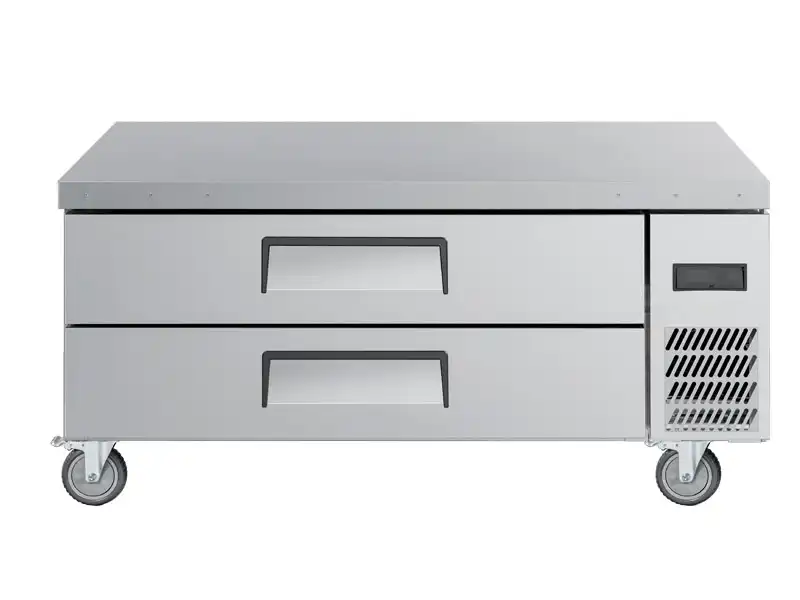
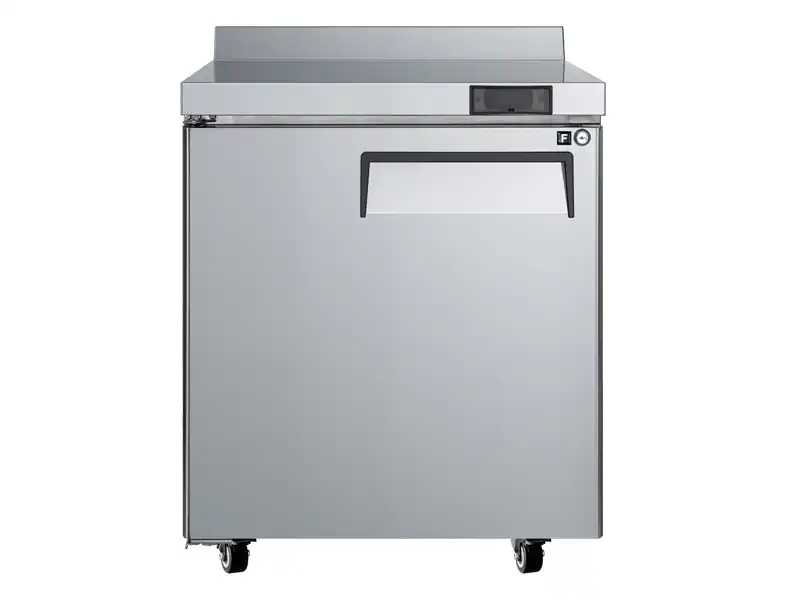
Refrigerated worktops and Chef Base units keep chilled ingredients right where you assemble. That removes trips to a distant reach-in, saves time, and keeps freshness intact. The Camay Commercial Worktop Refrigerator Cooler Fridge (Model MWTF-27-L) is an excellent example, offering durable stainless steel construction and optimal temperature control for various items. The Camay 60” Countertop Refrigerated Chef Base (Model MAR-60A) also serves as a multi-functional prep station with robust construction and precise temperature management.
2. Utilizing undercounter refrigerators and freezers for seamless cold storage
Undercounter refrigerators and freezers integrate cold storage directly into the prep area. This keeps frequently used ingredients within arm’s reach. The Camay Commercial Solid Door Undercounter (Model MTR-72) and Camay Commercial Undercounter Refrigerator (Model MTR-60) offer ample capacity and energy-efficient cooling. For freezer needs, the Camay MTR-48 2-Door Commercial Undercounter Refrigerator provides reliable performance. These units feature eco-friendly refrigerants and smart digital temperature control. If you’re interested, check Optimizing Kitchen Efficiency with Integrated Worktop Refrigeration.
Table: Camay Undercounter Refrigeration Specifications for Prep Counters
| Feature | Camay MWTF-27-L (Worktop Refrigerator) | Camay MAR-60A (Chef Base) | Camay MTR-72 (Solid Door Undercounter) | Camay MTR-48 (Undercounter Refrigerator) |
|---|---|---|---|---|
| Classification | Freezer | Refrigerator | Refrigerator | Refrigerator |
| Capacity | 202 L / 7.13 Cuft | 117 L / 4.13 Cuft | 576 L / 20.34 Cuft | 368 L / 13.00 Cuft |
| Inner Temp Range | -25°C to -15°C | 0.5°C to 5°C | 0.5°C to 5°C | 0.5°C to 5°C |
| Refrigerant | R290 | R290 | R290 | R290 |
| Construction | Stainless Steel | Stainless Steel | Stainless Steel | Stainless Steel |
| Key Features | Self-closing door, optional casters | Integrated worktop, casters | Self-closing doors, optional casters | Self-closing doors, optional casters |
3. Selecting specialized prep tables for specific tasks like pizza or salad making
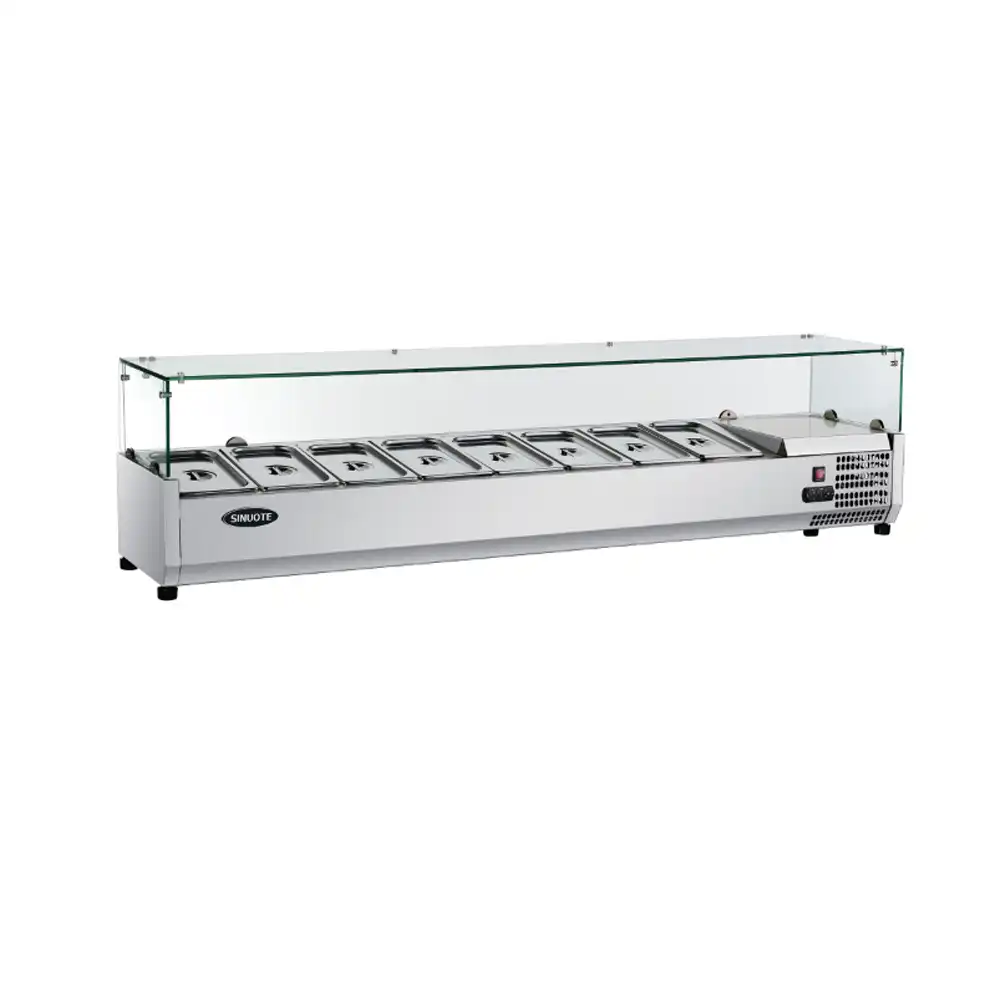
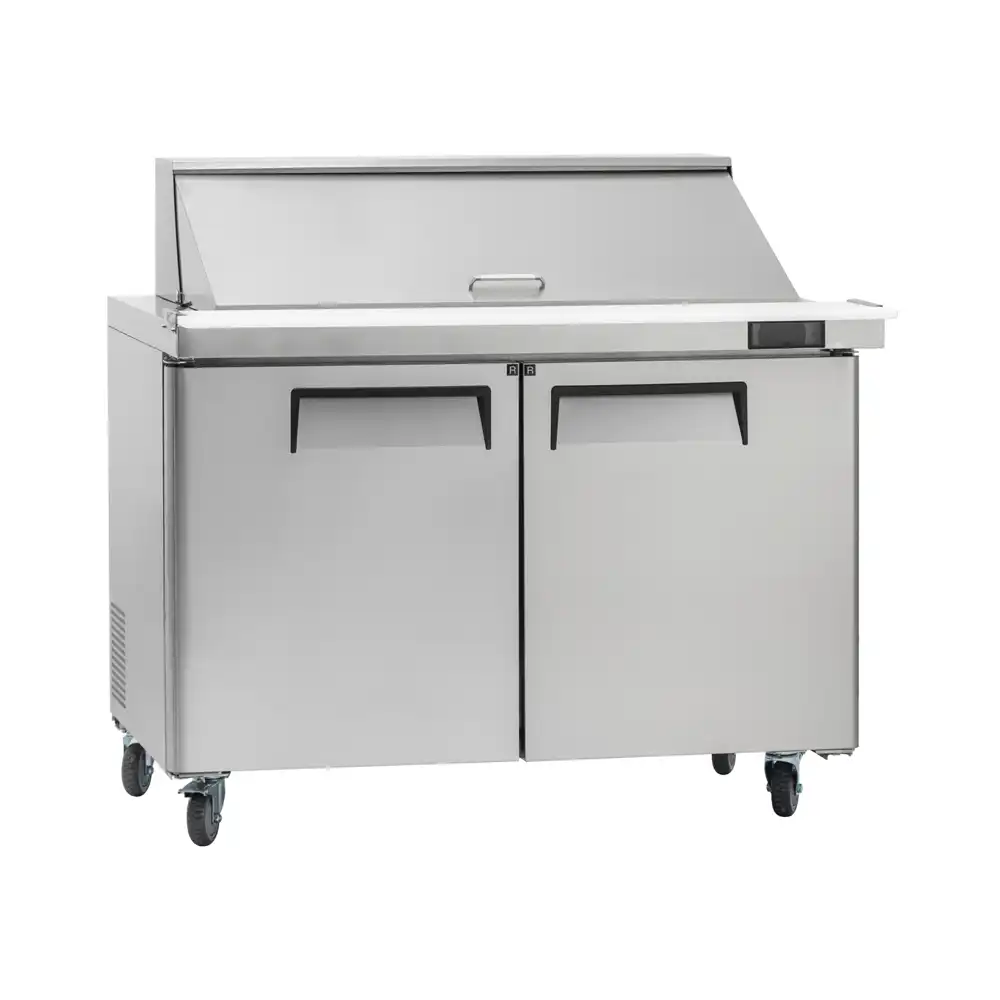
Specialized prep tables speed up targeted menus. A Pizza Table or Salad Prep Table puts ingredient storage into the work surface. The 1.6m Pizza Prep Table Refrigeration (Model VRX395-1600) and 1.5M Pizza Prep Refrigeration Chiller (Model VRX395-1500) feature refrigerated pan rails for toppings. The 13 Cuft Salad Storage Container for Fridge (Model MSR-48M) offers similar benefits for salads. These units keep ingredients fresh and accessible, which shortens assembly time.
Designing Your High-Volume Kitchen Prep Counter Layout
Designing an optimal prep counter layout requires careful planning. We approach this systematically to ensure maximum efficiency.
1. Step-by-step guide to planning your ideal prep station
- Analyze Menu and Volume: Identify peak output targets and the ingredient mix that drives your line.
- Map Workflow: Track the path from delivery to storage, then to prep, cook, and plate.
- Identify Zones: Set aside areas for washing, cutting, assembly, and short-term holding.
- Select Equipment: Match needs to refrigerated worktops, undercounter units, and specialized tables.
- Sketch Layouts: Draft several configurations to compare flow, reach, and access.
- Simulate Operations: Walk a busy service in your head, or on the floor, to surface bottlenecks.
- Refine and Implement: Tweak the plan using those findings and staff feedback, then lock it in.
2. Considerations for equipment placement and utility access
Strategic equipment placement is central. Confirm you have the electrical and plumbing access you need. Set heavy gear on reinforced flooring. Leave space for cleaning and service. Utilities should be easy to reach so maintenance never stalls a rush.
3. Best practices for maintaining cleanliness and organization
Clean kitchens are designed to be easy to clean. Stainless steel surfaces help with fast sanitizing. Build waste disposal into the station flow. Keep cleaning tools in a dedicated spot. Stick to a cleaning schedule and keep supplies within reach.
The Benefits of a Well-Designed Prep Counter Layout
A meticulously planned prep counter layout yields significant operational advantages. These benefits extend from daily operations to overall business profitability.
1. Achieving significant improvements in operational efficiency and output
A smart layout trims every step. Less walking and faster ingredient access turn into more plates per hour. Teams move with purpose, guests get food quicker, and table turns improve.
2. Enhancing food quality and consistency through streamlined processes
Standardized flow supports consistent portions and fewer missteps. Ingredients stay at proper temperatures, so flavor and texture hold. Consistency keeps regulars coming back and strengthens your brand.
3. Boosting profitability by minimizing waste and maximizing throughput
Efficiency pays. Better storage and faster prep cut waste, which protects food cost. Higher throughput widens your revenue window during peaks. Put together, these gains lift profitability. If you’re interested, check Boost Kitchen Efficiency Workflow Optimization with Chef Base Fridges.
Optimize Your Kitchen with Camay Refrigeration
Enhance your kitchen’s efficiency and productivity with Camay’s advanced refrigeration solutions. We offer a full range of commercial refrigeration equipment, including worktop refrigerators, chef bases, and undercounter units, designed for high-volume demands. Our products feature durable stainless steel construction, eco-friendly refrigerants, and smart temperature controls to ensure optimal performance and food safety. Contact us today to discuss how our expert team can help you design and implement the perfect prep counter layout for your operation.
Email: Sales@hzcamay.com
Phone: +86 181 5720 2219
FAQs
1. What is the ideal height for a prep counter in a high-volume kitchen?
The ideal height for a prep counter ranges from 34 to 36 inches (86-91 cm). This height accommodates most chefs comfortably, reducing strain from prolonged standing or bending. Ergonomic design is important for preventing fatigue and repetitive strain injuries in busy environments.
2. How can I prevent cross-contamination in a busy prep area?
Prevent cross-contamination by designating separate prep zones for raw and cooked foods. Use color-coded cutting boards and utensils. Ensure easy access to handwashing stations and sanitizers. Regularly clean and sanitize all surfaces, especially between tasks, to maintain hygiene.
3. What are the key considerations when choosing refrigerated prep equipment?
Key considerations include capacity, temperature range, energy efficiency, durability (stainless steel is preferred), and mobility (casters are beneficial). Also, evaluate features like self-closing doors, digital temperature control, and certifications (ETL, ENERGY STAR) for compliance and performance.
4. How often should a prep counter layout be reviewed or updated?
Review your prep counter layout annually or whenever significant menu changes occur. Regular evaluations help identify new bottlenecks or inefficiencies. Staff feedback is invaluable for pinpointing areas that require improvement or adjustment to maintain optimal workflow.
5. Can a small kitchen still achieve high-volume prep efficiency?
Yes, small kitchens can achieve high-volume efficiency through smart design and multi-functional equipment. Utilize vertical space, compact refrigerated worktops, and undercounter units. Optimize workflow by minimizing steps and ensuring all key tools are within arm’s reach.