
Getting ice production right in hotels and banquet facilities comes down to a simple reality: run short during a packed Saturday night wedding reception, and you’ll hear about it. Oversize your equipment, and you’re paying for capacity that sits idle most of the year. The balance isn’t always obvious, especially when your property handles everything from quiet Tuesday breakfasts to 500-person galas. What follows draws on practical experience with commercial refrigeration systems across different hospitality settings—the kind of knowledge that comes from watching what actually works when the pressure is on.
Sizing Your Ice Machine to Match Real Demand Patterns
Accurate ice machine sizing prevents both costly shortages and inefficient overproduction. The process starts with analyzing average daily ice consumption per guest, room, and event size. Peak occupancy rates matter, but so do the specific service requirements across your property—dining rooms, bars, and guest room amenities all pull from the same supply in different ways.
A hotel bar typically burns through cubed ice faster than most operators expect, while a buffet setup might rely heavily on flaked ice for food displays. These consumption patterns vary enough that a single daily production number rarely tells the whole story.
| Hotel Type / Event Size | Ice Demand per Guest/Room (kg/day) |
|---|---|
| Economy Hotel (per room) | 1.0 – 1.5 |
| Full-Service Hotel (per room) | 2.0 – 3.0 |
| Luxury Hotel (per room) | 3.0 – 4.0 |
| Banquet Event (per person) | 0.5 – 1.0 |
| Bar Service (per seat) | 1.5 – 2.0 |
What is the ideal ice production capacity for a 200-room hotel?
For a 200-room full-service hotel, the calculation works like this: assume 2.5 kg per room per day at 80% occupancy. That gives you 200 rooms × 0.80 × 2.5 kg = 400 kg of daily ice yield as your baseline. The commercial ice maker you select should exceed this number to handle peak periods and unexpected demand spikes—a sold-out weekend with multiple events running simultaneously will test any system sized too close to average consumption.
How Different Ice Types Serve Different Hospitality Functions
The hospitality sector uses several ice types, each suited to specific applications. Cubed ice machines, like the FB210A model, work best for beverages because the larger cubes melt slowly and look clean in a glass. Flaked ice machines handle food displays and some medical applications well—the ice conforms to surfaces without bruising delicate items.
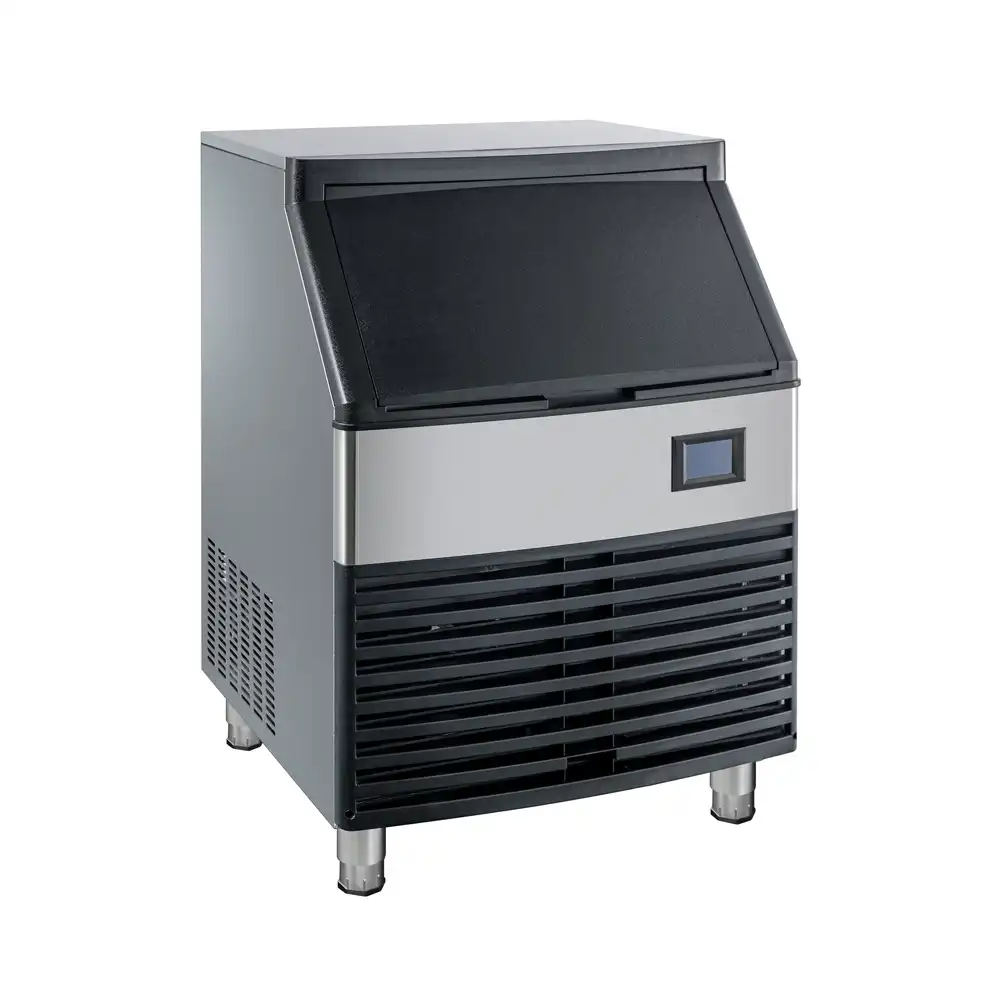
Nugget ice has gained popularity for soft drinks because guests can chew it, though it melts faster than cubed ice. Modular ice machines offer flexibility when your capacity needs might change, while undercounter ice makers fit smaller service stations where space is tight.
How do different ice types impact beverage service and food presentation?
The ice type you choose affects both function and perception. Cubed ice maintains drink integrity longer because of its slower melt rate—this matters for premium cocktails where dilution timing is part of the experience. Flaked ice provides superior chilling for food displays and molds around items without leaving gaps or pressure points. Nugget ice works well in blended drinks and certain medical applications where a softer texture is preferred. Guests notice these details more than most operators realize.
Energy Efficiency and Long-Term Operational Costs
Modern commercial ice machines include features that reduce operational costs over time. Energy-efficient models using eco-friendly R290 refrigerant draw significantly less electricity than older designs. Advanced water filtration systems extend machine lifespan by preventing scale buildup—hard water areas see this benefit most clearly.
Remote condenser ice machines improve heat dissipation, which reduces ambient kitchen temperatures and eases compressor strain. The choice between air-cooled and water-cooled ice makers depends on local conditions: water-cooled units run more efficiently in hot environments but increase water consumption, while air-cooled models work better where water costs are high or supply is limited.
Calculating the return on investment means looking beyond the purchase price to include these ongoing operational factors.
For further insights into optimizing kitchen efficiency, consider reading 《Boost Kitchen Efficiency Workflow Optimization with Chef Base Fridges》.
Maintenance Practices That Actually Extend Equipment Life
Proper maintenance determines whether a large commercial ice machine lasts five years or fifteen. Regular cleaning prevents bacterial growth and mineral buildup—both of which affect ice quality and can trigger health code issues. The routine that works involves daily wipe-downs of accessible surfaces, weekly sanitization of ice contact areas, and monthly deep cleaning of the entire system.
Filter changes and descaling follow a schedule based on water quality and production volume. Harder water requires more frequent descaling. Staff should have access to a troubleshooting guide for common issues—catching problems early prevents most major repairs.
What are the key maintenance considerations for large commercial ice machines to ensure longevity?
Condenser coil cleaning ranks highest for maintaining efficient heat exchange. Dirty coils force the compressor to work harder, increasing energy consumption and shortening component life. Regular descaling prevents mineral deposits from restricting water flow and damaging internal surfaces. Water filter replacement on schedule protects both ice quality and machine health. Following these routines consistently—not just when problems appear—makes the difference between equipment that performs reliably and equipment that fails during your busiest weekend.
Making the Purchase Decision Beyond Initial Price
The purchase process involves more than comparing price tags. Daily ice yield, storage capacity, and the specific ice types your operation needs all factor into the decision. Installation requirements deserve attention early—plumbing and electrical specifications vary between models, and discovering incompatibilities after delivery creates delays and additional costs.
Brand comparison should focus on reliability records, energy efficiency ratings, and the availability of service support in your area. Warranty terms matter, but so does whether qualified technicians can actually reach your property when something breaks. Financing options exist for operations that prefer to spread costs over time rather than making a large upfront investment.
For those looking to optimize their refrigeration setup, exploring options like Under Counter units can provide versatile solutions.
Working Together on Your Ice Production Requirements
Choosing the right ice production equipment is a strategic decision for your hospitality business. We offer expert guidance, high-quality Ice Maker solutions, and comprehensive support to ensure your operations run smoothly. Our team is ready to assist you in selecting the ideal machine, optimizing its performance, and maintaining its longevity. Contact us today to discuss your specific requirements.
Email: Sales@hzcamay.com
Phone: +8618157202219