
Modular ice machines separate the ice-making head from the storage bin, a design that simplifies service and allows capacity upgrades without replacing the whole unit. Self-contained units integrate both in one cabinet, trading some long-term reliability for a simpler initial install. After 26 years in commercial refrigeration manufacturing, I have seen how this choice shapes operating costs and equipment lifespan far beyond the purchase price. Picking the wrong configuration can add hours of avoidable labor each month and shorten the machine’s useful life. The right decision hinges on your daily ice volume, kitchen layout, and how much you are willing to invest in dependability versus upfront convenience.
How Modular and Self-Contained Ice Machines Differ
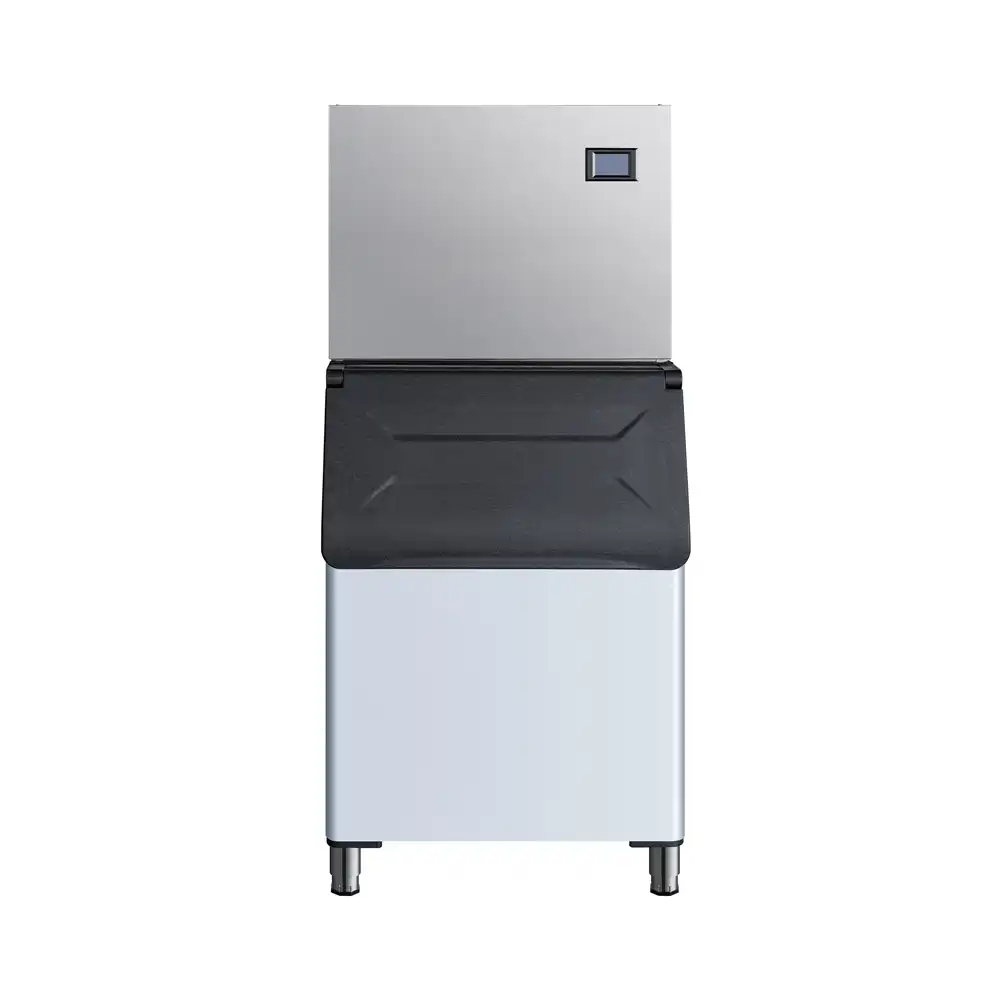
A modular ice machine consists of two separate components: an ice-making head that sits on top of a dedicated ice storage bin. The head produces ice and drops it into the bin below, while the compressor unit is often located remotely, either on a roof or in a mechanical room. This separation keeps heat and noise away from the kitchen. Self-contained units house the compressor, condenser, ice-making mechanism, and storage bin in one cabinet. That all-in-one design simplifies installation because you only need power and a water line, but it also means all the heat generated during ice production stays inside the kitchen.
What Defines a Modular System
The key structural advantage is the decoupling of ice production from ice storage. You can match different head capacities with bin sizes to meet specific demand, and you can replace or service one component without disturbing the other. In our factory, we see far fewer full-system replacements on modular setups because a failing head or bin can be swapped independently.
What Makes a Self-Contained Unit Different
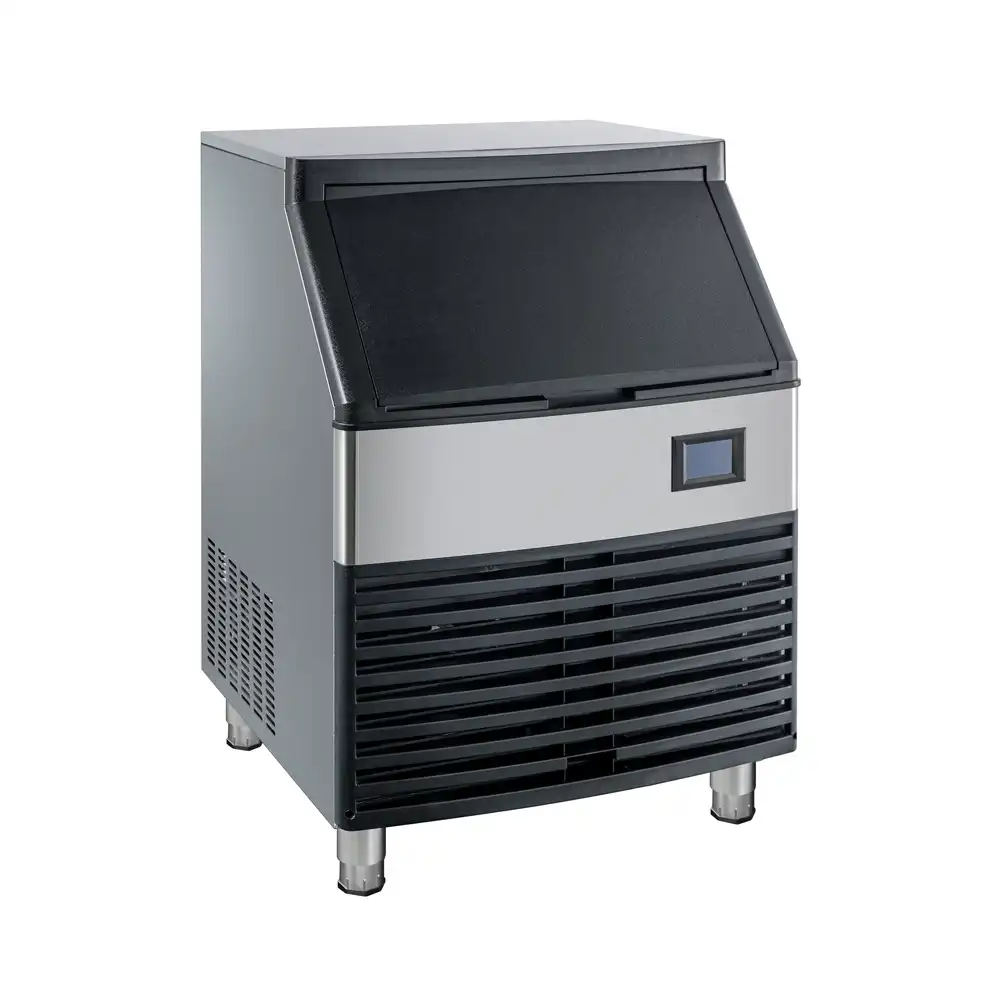
Everything lives in one chassis. This makes self-contained machines popular for small cafés, bars, and convenience stores where space is tight and there is no room for a remote condenser. The downside is that the compressor’s heat rejection happens inside the unit’s footprint, which can raise the ambient temperature of the surrounding area and force the machine to work harder, especially in already-warm kitchens.
Core Design Trade-offs
The trade-off is essentially install simplicity versus service longevity. A self-contained unit can be up and running in an afternoon. A modular system needs a technician to run refrigerant lines to the remote condenser, set up drainage, and ensure proper ventilation. That upfront investment pays off in quieter operation, cooler kitchens, and much easier access for cleaning and repairs.
| Feature | Modular Ice Machine | Self-Contained Ice Machine |
|---|---|---|
| Components | Separate head and bin; optional remote condenser | All-in-one cabinet |
| Installation effort | Higher (refrigerant lines, condenser placement) | Low (plug and play) |
| Serviceability | Easy access to individual components | Limited; cabinet must be opened |
| Heat rejection | Remote possible; less kitchen heat load | Heat stays in unit and kitchen |
| Capacity flexibility | Swap bin size or head independently | Fixed capacity; replace entire unit to upgrade |
Matching Ice Production Capacity to Your Business Needs
Undersizing an ice machine creates constant panic during lunch or dinner rushes. Oversizing wastes capital and can lead to short cycling that accelerates wear. To choose correctly, you need a realistic daily ice usage estimate.
How to Calculate Your Daily Ice Requirement
Start with your menu: each served drink typically uses 4 to 6 ounces of ice. A restaurant serving 300 drinks a day needs roughly 90 to 120 pounds of ice, but that is only the glassful. Add ice for cold plates, salad bars, and ice baths for seafood or beverages. Also account for peak hour demand: your machine must produce ice faster than you consume it during those bursts, not just over 24 hours. I have seen kitchens order a machine rated for 200 pounds a day only to run out by 7 p.m. because the peak production rate did not keep pace.
Ice Cube Type and Its Effect on Effective Capacity
Cube size and shape influence how much ice you can store and how fast it melts. Full cube ice is dense and melts slowly, ideal for bars and fine dining. Nugget or flake ice is chewable and works well for blended drinks and food displays but occupies more storage volume and melts faster, so you need higher production capacity for the same number of servings. A machine rated at 100 kg per day of full cube may only deliver 70 kg of nugget ice because of increased evaporation loss.
Installation Requirements and Site Considerations
Even the best ice machine underperforms if installed without attention to airflow, water quality, and drainage. I have handled service calls where a brand-new unit failed within weeks because these basics were ignored.
Ventilation and Heat Rejection
Self-contained units need at least 6 inches of clearance on all sides for air intake and discharge. Modular systems with remote condensers must have the condenser located where ambient temperatures stay within the manufacturer’s range and where airflow is unrestricted. A rooftop condenser in direct sun or a poorly ventilated closet will kill the compressor early. I have seen condenser coil temperatures spike by 30°F when exhaust air recirculated, slashing ice production by 40 percent and tripping high-pressure safety switches repeatedly.
Water Quality and Filtration
Ice is food, and water quality directly affects machine reliability and safety. Hard water causes scale buildup on evaporator plates, insulates the freezing surface, and forces the compressor to run longer. Over time, scale cracks the nickel coating on copper evaporators, leading to leaks. We recommend a combination sediment and carbon filter, and in hard-water areas, a water softener or polyphosphate feeder. Many OEMs will void the warranty if water quality is not maintained. Our factory testing shows that a machine with proper filtration can produce ice for 30 percent more cycles before needing a descaling service.
Electrical and Drainage Setup
Self-contained models usually run on a standard 115V outlet, but larger modular heads often need 208-230V, and a remote condenser may require its own circuit. Confirm power availability before ordering. Drainage must handle not just meltwater but also cleaning solutions; a gravity drain with an air gap prevents backflow. In many kitchens, floor drains are located far away, so plan for a condensate pump if necessary.
Total Cost of Ownership Beyond the Purchase Price
The invoice price is the smallest part of the total cost. A $3,000 machine that racks up $1,200 a year in service calls costs far more over a decade than a $5,000 unit with negligible maintenance.
Service and Maintenance Time and Expense
Modular machines allow a technician to pull the head for bench service without emptying the bin or shutting down the kitchen. Self-contained units often require the entire cabinet to be moved, which means disconnecting water and power and possibly removing adjacent equipment. This adds 1 to 2 hours of labor per service visit. I have tracked service logs across restaurant chains and found that modular ice machines average 40 percent less technician time annually.
Component Quality and Expected Lifespan
The compressor and evaporator are the heart of the machine. In manufacturing, we use Cubigel compressors and copper-nickel evaporators because the nickel layer resists corrosion and the copper core conducts heat efficiently. Lower-cost machines sometimes use aluminum evaporators that degrade faster in hard water. A quality modular head with a separate condenser can operate for 10 to 15 years with regular cleaning, while a low-end self-contained unit may fail after 5 to 7 years, especially in high-heat, high-humidity environments.
| Cost Factor | Modular System (10-year estimate) | Self-Contained (10-year estimate) |
|---|---|---|
| Equipment purchase | $4,000 – $8,000 | $2,500 – $5,000 |
| Installation (first time) | $800 – $1,500 | $200 – $400 |
| Annual service and maintenance | $300 – $500 | $500 – $1,000 |
| Energy cost (annual) | $400 – $600 | $500 – $800 |
| Replacement cycle | 10–15 years | 5–8 years |
Energy Efficiency and Operating Costs
Modular systems with remote condensers move heat outside, so the kitchen air conditioner does not have to fight that load. For a machine producing 400 pounds of ice a day, that can save 10 to 15 percent on the kitchen’s cooling bill. Look for ENERGY STAR ratings and features like automatic pump-down during harvest, which reduces compressor hot-starts. Proper sizing alone can cut energy use by 20 percent because the machine is not constantly cycling on and off.
Choosing the Right Ice Machine for Your Operation
Nobody needs a complex modular setup for a small coffee shop, and no busy hotel kitchen should rely on a self-contained unit to feed a banquet of 300. The answer is always a function of scale and infrastructure.
Scenarios Where a Modular System Wins
- High-volume restaurants, hotels, and event facilities needing 400 pounds or more of ice daily.
- Kitchens where heat and noise are already problems, and moving the condenser to a remote location is feasible.
- Operations that anticipate growth and want to swap a 500-pound bin for an 800-pound bin without replacing the head.
- Central kitchens that can standardize ice production across multiple outlets, simplifying spare parts and technician training.
When a Self-Contained Unit Makes Practical Sense
- Small bars, cafés, and convenience stores with limited space and daily ice needs under 200 pounds.
- Temporary setups like pop-up events or seasonal beach concessions where portability matters.
- Locations where running refrigerant lines to a remote condenser is impossible or cost-prohibitive, such as in leased spaces or historic buildings with restrictions.
Questions to Ask Your Equipment Supplier
Before signing a purchase order, ask for the rated production at your expected incoming water temperature, not just at 70°F. Request a list of standard replacement parts and their typical lead times. Verify that the warranty covers the evaporator and compressor separately. And ask for referrals of similar operations using the same model. Working with a manufacturer who designs and builds their own equipment often means you get direct access to application engineers who can size the system based on your specific menu and layout.
Sizing Your Ice System with a Manufacturing Partner
If your project involves a high-capacity kitchen, a chain rollout, or a custom ice production requirement, getting the system right the first time prevents months of headaches. At Camay, we manufacture commercial ice machines with copper-nickel evaporators, Cubigel compressors, and self-cleaning cycles designed for the daily demands of a busy kitchen. We can help you specify the correct modular head, bin, and condenser combination for your production target, or configure a self-contained unit that fits a tight footprint without compromising on component quality. Send your daily ice usage estimate and electrical details to Sales@hzcamay.com and our engineering team will respond with a recommended configuration. You can also call +8618157202219 to speak directly with an applications specialist.
Common Questions About Commercial Ice Machines
How often should an ice machine be professionally cleaned and serviced
Every six months at a minimum, and in hard-water areas or high-volume kitchens, quarterly. This includes descaling the evaporator, sanitizing the bin, checking water filters, and inspecting the condenser coil for dust. Skipping this routine is the most common cause of premature compressor failure I observe.
Can I install a modular ice machine outdoors or in a shed
Only if the condenser and head are rated for the ambient temperature range and protected from rain and direct sun. Most standard units are not weatherproof. You need an outdoor-rated remote condenser and a well-ventilated but enclosed space. Even then, extreme cold can freeze water lines. Consult the manufacturer before attempting this.
What is the most overlooked specification when buying an ice machine
The recovery rate: how quickly the machine resumes ice production after the bin is emptied. A machine that takes two hours to restart production after harvest will fail during a dinner rush even if its 24-hour capacity seems adequate. I always check the harvest cycle duration and bin thermostat response time.
Is it worth paying more for a water-cooled condenser
For most commercial kitchens, air-cooled is the practical choice because it does not waste potable water. Water-cooled can be more efficient in extremely hot or dusty environments, but it adds a continuous water expense and requires ongoing treatment. Unless you have a cooling tower or a cheap, non-potable water source, stick with air-cooled.
Does Camay offer OEM ice machine production for our brand
Yes. We produce ice machines for partner brands globally, with options for custom front panels, brand logos, and configuration adjustments. If you are building a line of ice equipment under your own label, share your rough specifications and target price point, and our OEM team can provide a proposal. Reach us at Sales@hzcamay.com.
If you’re interested, check out these related articles:
Boost Efficiency Energy Efficient Chef Base Units for Commercial Kitchens
Choosing the Best Commercial Reach In Fridge for Your Restaurant