
Mobile refrigeration for outdoor events succeeds or fails on power, ambient temperature, and mobility. After more than 26 years specifying commercial refrigeration for global kitchens, I treat the electrical supply as the first design input, not the cabinet capacity. A unit that holds 0.5°C to 5°C in a brick kitchen can struggle in a sunlit tent if the generator sags or the condenser cannot reject heat. For caterers, festival operators, and food truck teams, the practical path starts with load planning, voltage stability, cabinet selection, and post-event maintenance.
Why Do Outdoor Events Demand a Different Refrigeration Setup?
Outdoor service does not change food safety rules, but it changes the heat load around the cabinet. Commercial cabinets are tested at conditions such as 38°C ambient and 53% relative humidity, often in a climate class designated ST~T. A shaded event site may stay close to that. A blacktop parking area or an unventilated trailer can exceed it. When the condenser cannot move heat away, the compressor runs longer, cabinet temperature drifts upward, and the door gasket becomes less forgiving of frequent opening.
I look at three site conditions before selecting a cabinet for an outdoor event: direct sun, generator quality, and airflow. Direct sun raises radiant temperature on stainless steel surfaces. Generator quality affects voltage and frequency. Airflow affects condenser performance. The cabinet itself is rarely the weakest point in the installation. A unit with a ventilated refrigeration system, automatic defrost, and polyurethane or cyclopentane insulation handles heat better, but it still needs air space behind and above.
One mistake I see in festival work is treating a standard commercial cabinet as weatherproof. Stainless steel resists corrosion, but it is not an outdoor enclosure. Rain on a powered condenser fan, mud under casters, or dust coating the coil turns a reliable cabinet into a service call. Keep the unit under a vented canopy, place it on a level board or platform, and protect the electrical connections from moisture even when the cabinet is not running.
How Should You Size Mobile Refrigeration for a Crowd Without Overloading Power?
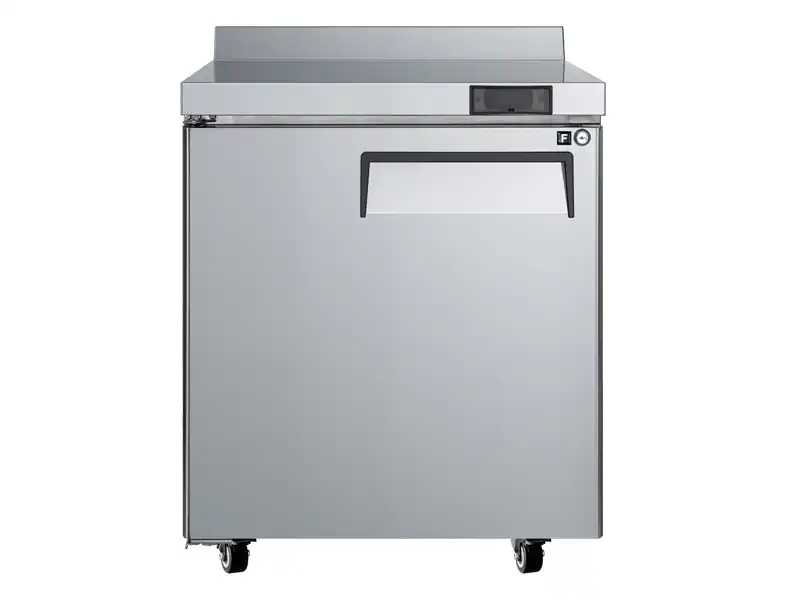
Sizing should follow the menu and the replenishment cycle, not a guest count alone. I start with the number of hotel pans or GN containers that must stay at safe temperature during the busiest two hours, then add one reserve position for a delayed restock. A salad prep table with two doors and a rail can hold more than a wheeled undercounter with the same footprint, but the rail pan zone warms faster when staff leave the lid open. Keep the temperature target between 0.5°C and 5°C for cold ready to eat products, or between -25°C and -15°C for frozen items if the cabinet is a freezer.
How Do You Size by Pan Load Instead of Guest Count?
Pan load planning works better at outdoor events because service comes in waves. Map the number of GN 1/1 or hotel pans the menu requires for the peak hour, then check the cabinet’s interior dimensions rather than its listed capacity. A 476 L undercounter such as the Camay MTR-60 gives room for plenty of product, but the useful space depends on shelf spacing and container size. If the menu mixes covered proteins and open salad pans, separate them by shelf to avoid cross-contact and lid condensation.
How Should Staff Restock Without Losing Cabinet Temperature?
Set a restock window before the rush, keep cabinet doors closed for no more than a few seconds, and stage replacement pans on an ambient cart only if the holding time stays short. In hot tent conditions, staff should pull from the cabinet by sequence rather than browse. Every additional door opening pulls humid air into the cabinet, and automatic defrost plus polyurethane insulation cannot reverse heat gain if the door cycle is constant. For long service blocks, split loads across two cabinets so one unit is not opened repeatedly.
For events where refrigeration doubles as a prep station, <Boost Efficiency Energy Efficient [Chef Base](https://zjcamay.com/category/service/product-catalogue/chef-base/) Units for Commercial Kitchens> covers why pan staging near the cook line reduces compressor run time when the event service pace changes.
What Electrical Plan Keeps Mobile Refrigeration Stable Through an Event Day?
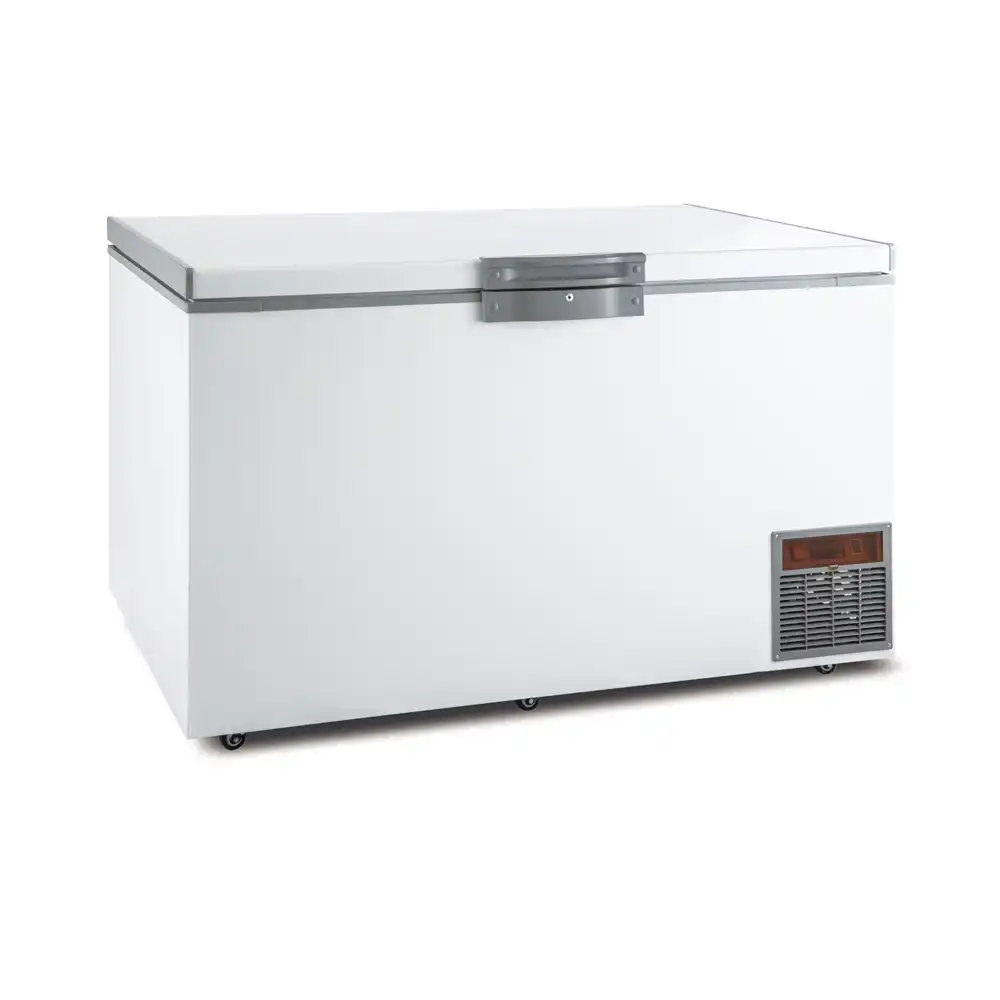
Generator sizing is where outdoor refrigeration plans fail most often. A small cabinet may run from a 115 V, 1.9 A supply, but the starting current of the compressor can be several times higher for a few seconds. If the generator is sized only to running load, voltage sag stalls the compressor or trips protection. I ask for the cabinet’s running amperage, refrigerant, and compressor type, then add starting headroom to the total site load. R290 cabinets use hydrocarbon refrigerant with different service and ventilation requirements from older systems, so the electrical plan must be treated as part of the refrigeration plan.
Can a Standard Commercial Fridge Run on a Portable Generator?
Yes if the generator output is stable and the line voltage stays within the cabinet’s rated range. Inverter generators hold frequency and voltage better than open-frame generators under changing load. For a 115 V cabinet, I prefer an inverter unit with enough continuous capacity for the cabinet plus the coffee machine or display lights on the same circuit. Do not rely on the generator’s peak rating; peak power covers only short starting surges and may not be available continuously.
What Happens When Voltage Drops or the Circuit Shares Load?
When a cabinet shares a circuit with a blender, water heater, or display cooler, the voltage drop may be gradual until the compressor starts. A start surge on a long extension cord can drop voltage below the controller’s tolerance. Use the shortest heavy-gauge cord that fits the site plan, and check the plug for heat. If the controller resets during service, check voltage first, not refrigerant charge.
Before finalizing an event layout, confirm the compressor’s rated starting current and the generator’s continuous output. If you are placing ten cabinets across two generator circuits, a supplier review saves more time than a site repair. Send your generator capacity and cabinet list to Sales@hzcamay.com or call +8618157202219 and we will check it against the equipment data.
Which Refrigeration Configurations Fit Different Outdoor Event Formats?
Outdoor event formats create different demands. A plated banquet requires a different configuration than a pizza tent or a beverage bar. I usually group mobile refrigeration into five patterns: undercounter for beverage and ingredient staging, worktop freezer for storage with a prep surface, chef base for cook line support, salad prep for cold service, and pizza prep for high-turn baked-to-order stalls. Each brings different voltage, pan capacity, door count, and mobility.
| Configuration | Camay model reference | Temperature range | Mobility detail | Best outdoor fit |
|---|---|---|---|---|
| Undercounter refrigerator | MTR-60 | 0.5°C to 5°C | 2 doors, optional 2-inch casters | Beverage staging and prep in a shaded tent |
| Worktop freezer | MWTF-27-L | -25°C to -15°C | 1 door, optional casters | Frozen product with a compact prep surface |
| Chef base | MAR-60A | 0.5°C to 5°C | 4-inch casters | Grill line support with pan storage below |
| Salad prep table | MSR-48M | 0.5°C to 5°C | 2 doors, optional casters or legs | Buffet and banquet cold preparation |
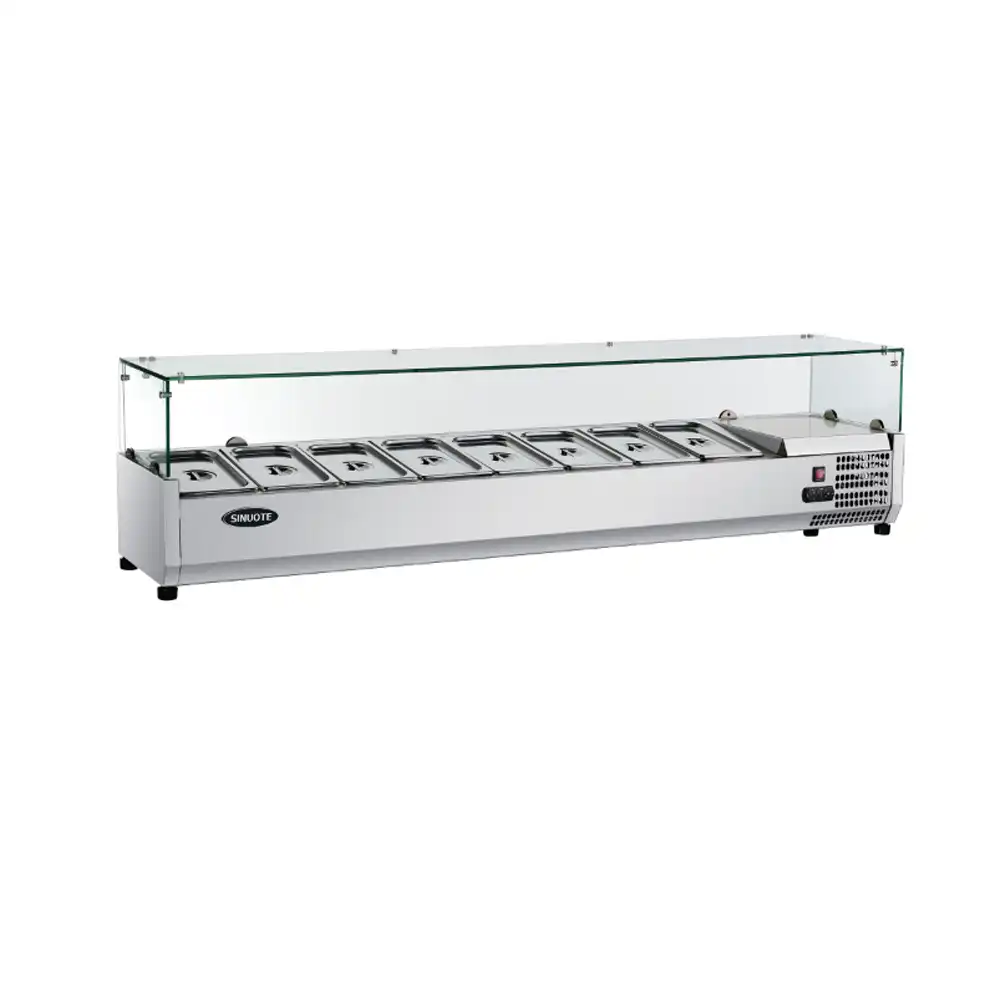
| Pizza prep table | VRX395-1600 | +2°C to +8°C | Rail top with GN 1/3 pan capacity | Pass-through pizza tent service |
A prep station that combines refrigeration with a solid work surface changes the event layout more than a separate cooler. <Optimizing Kitchen Efficiency with Integrated Worktop Refrigeration> covers why integrating pan storage with the work surface shortens the restock path during fixed-layout events.
For outdoor bars, I look at glass door displays differently. A back-bar cooler can hold beverage stock at safe temperature, but direct sun on glass raises condensation and forces the compressor to run harder. Solid door undercounter units are easier to manage in open tents because they block solar gain and hide stock when the light changes. Reserve glass door cabinets for covered service areas or evening events.
How Do You Specify Mobile Refrigeration for Repeat Outdoor Use?
Repeat outdoor use changes the purchase decision. Equipment moves, gets wiped down, and sits in a transport trailer. I specify casters or legs early because a cabinet that needs to roll into a van cannot be retrofitted cleanly after production. Casters add height and can shift on uneven ground, so confirm wheel locks and check the under-counter clearance before ordering. For fixed festival sites, legs with leveling feet often make sanitation easier.
After each event, shut down in a dry area and let the cabinet reach room temperature before wiping the gasket. Remove debris from the condenser coil and inspect the cord. R290 cabinets have sealed systems; do not attempt to top off refrigerant on site. The controller should be checked against a reference thermometer at the start of each season. A unit that shows 1°C in the controller may still have a warm zone near the door if the gasket is cracked or the door spring is weak.
For catering fleets and festival concession teams, the decision should be built around the event electrical plan, the hot-weather ambient, and the transport cycle. If you are preparing a purchase list for a new outdoor program, send the menu, run time, and available generator capacity to Sales@hzcamay.com or call +8618157202219. We will confirm cabinet configuration, voltage, and caster setup before you commit to a shipment.
Common Questions About Mobile Refrigeration for Outdoor Events
Can mobile refrigeration be left in direct sunlight?
Direct sunlight is the fastest way to raise a cabinet’s heat load, so it is not recommended unless the unit sits under a vented canopy. Stainless steel reflects some light, but the cabinet still absorbs heat through the top and door. The compressor responds by running longer, and the door gasket can soften above its service temperature. Shade the cabinet from midday sun, keep the condenser area clear, and add a white canopy or side screen where possible without blocking airflow. Even ten degrees of shade can make a measurable difference in runtime.
What size generator should be used for a mobile refrigeration cabinet?
It depends on the compressor’s starting current and the total circuit load. Running amperage is only part of the picture. A generator sized to running load may sag when the compressor starts, and that sag can reset the digital controller. Use an inverter generator with continuous output above the cabinet’s running current, plus headroom for start surge and any other equipment on the circuit. If the cabinet is 115 V, keep the cord short and heavy-gauge. Send the model and generator rating to the manufacturer for a circuit check before the event.
How long will a cabinet hold temperature if power drops?
Keep the cabinet closed and measure the air temperature before moving food. A well-insulated cabinet with polyurethane foam can hold several hours if the doors stay shut, but the exact time depends on ambient temperature, product load, and door use. If the air temperature rises above 5°C for ready to eat food, move it to working refrigeration or cool it down again. Do not keep food on display after the safe time expires just because the cabinet still feels cool. Power failure practice should be written into the event plan, not improvised at the tent.
Are glass door units suitable for an outdoor bar?
The common assumption is that glass door cabinets cannot hold temperature outdoors. They can, but solar gain and condensation are the real issues. In covered or evening service areas, a glass door cooler gives visibility and merchandising value. In open midday sun, the condensing unit works harder and water droplets can form on the door. If the bar is fully shaded and the door gasket is intact, a glass door unit can work. For exposed sites, specify a solid door unit or a ventilated display cabinet. If your beverage menu mixes temperature zones, share your load requirements at Sales@hzcamay.com and we will confirm which cabinet layout fits.
If you’re interested, check out these related articles:
Boost Kitchen Efficiency Workflow Optimization with Chef Base Fridges
Optimizing Kitchen Efficiency with Integrated Worktop Refrigeration
Chef Base Fridge vs Undercounter Fridge Which Is Best for Your Kitchen
Choosing the Best Commercial Reach In Fridge for Your Restaurant
Essential Maintenance Tips for Commercial Reach In Refrigerators