

Choosing a meat storage refrigerator without checking how the unit recovers temperature during a busy prep cycle can leave a kitchen with spoiled inventory and a failed inspection. Meat storage refrigerators need more than a cold box; they need stable temperature recovery, cleanable sealed surfaces, and airflow that does not dry out or pool moisture. In this guide, I focus on the specifications I have learned to verify first after more than 26 years in commercial refrigeration manufacturing, from compressor duty and coil protection to export certifications and serviceability.
Why Does Temperature Recovery Matter for Meat Storage?
Most buyers check the display temperature before purchase. That reading only shows the set point, not what happens when staff load a full pan of raw beef and leave the door open during prep. A meat storage refrigerator with slow temperature recovery may sit above 5°C for several hours, which invites bacterial growth and drives moisture loss. HACCP-based cold holding for fresh meat commonly requires 5°C or below, so a unit that only approaches 5°C at the sensor is already too close to the limit. I look first at compressor duty, evaporator coil sizing, and control logic. A unit that reaches 0.5°C is useful only if it returns to that range quickly after a hot kitchen rush. In our OEM and ODM work, the units with simple controls but undersized compressors are the ones that fail long term in meat-heavy operations.
What Should Buyers Set for Different Meat Types?
Fresh whole muscle beef, ground meat, poultry, and vacuum packed cuts all behave differently under refrigeration. In most meat storage refrigerators, 0.5°C to 5°C (33°F to 41°F) is the operating band for fresh meat, but ground meat and poultry should sit closer to the lower end. I recommend setting the controller for the most sensitive product rather than for the average. If the unit cannot hold 5°C during peak loading, adding a lower set point will not correct poor recovery.
Which Materials and Sealed Surfaces Hold Up in a Meat Storage Refrigerator?
Raw meat storage creates moisture, blood, and frequent cleaning. The interior should be food-grade stainless steel with rounded corners and a removable gasket. Avoid plastic liners or open seams where meat residue collects. I have seen imported units where a low quality door gasket became brittle after repeated sanitation cycles; the result was temperature leakage and hygiene failure. For meat storage refrigerators, I also check whether the door frame and hinges can handle wet, gloved hands and whether the corners are sealed well enough to prevent water pooling. A CFC-free polyurethane insulation body holds temperature but still needs a cleanable, sealed inner box to be safe long term.
Is a Solid Door Always the Right Choice for Raw Meat?
Solid doors hold temperature better and block light, which matters for raw meat. Glass doors can work in display focused settings, but only if the unit is placed in a climate controlled front of house or closed case. In back of house meat storage, I would not spec a glass door unless there is a strong merchandising reason and the operator accepts higher compressor run time.
What Should Buyers Verify on the Refrigeration System Before Ordering?
The compressor, defrost system, and coil protection decide whether the unit can run continuously in a high moisture meat environment. I ask buyers to verify not just the brand name of the compressor but its duty class and the type of defrost. Automatic defrost needs to be paired with coil drainage and a pan or evaporator strategy that does not reintroduce water into the cabinet. In hotter export markets, the condensing unit must handle ambient temperatures up to 38°C and 53% relative humidity. I also check whether the refrigerant is R290 or another approved option for the destination market; some countries have restrictions on charge size and service access. On the control side, the digital temperature readout should be accurate enough to spot a failing probe before product spoils.
The refrigeration system decision is closely tied to whether you are holding fresh product above freezing or frozen product below 0°C. <Upright Freezer vs Refrigerator Key Differences Explained> covers why coil design, defrost behavior, and temperature set points differ between refrigerated and frozen storage, which matters when the same meat program spans both categories.
How Do Capacity and Airflow Work Together for Meat Storage?
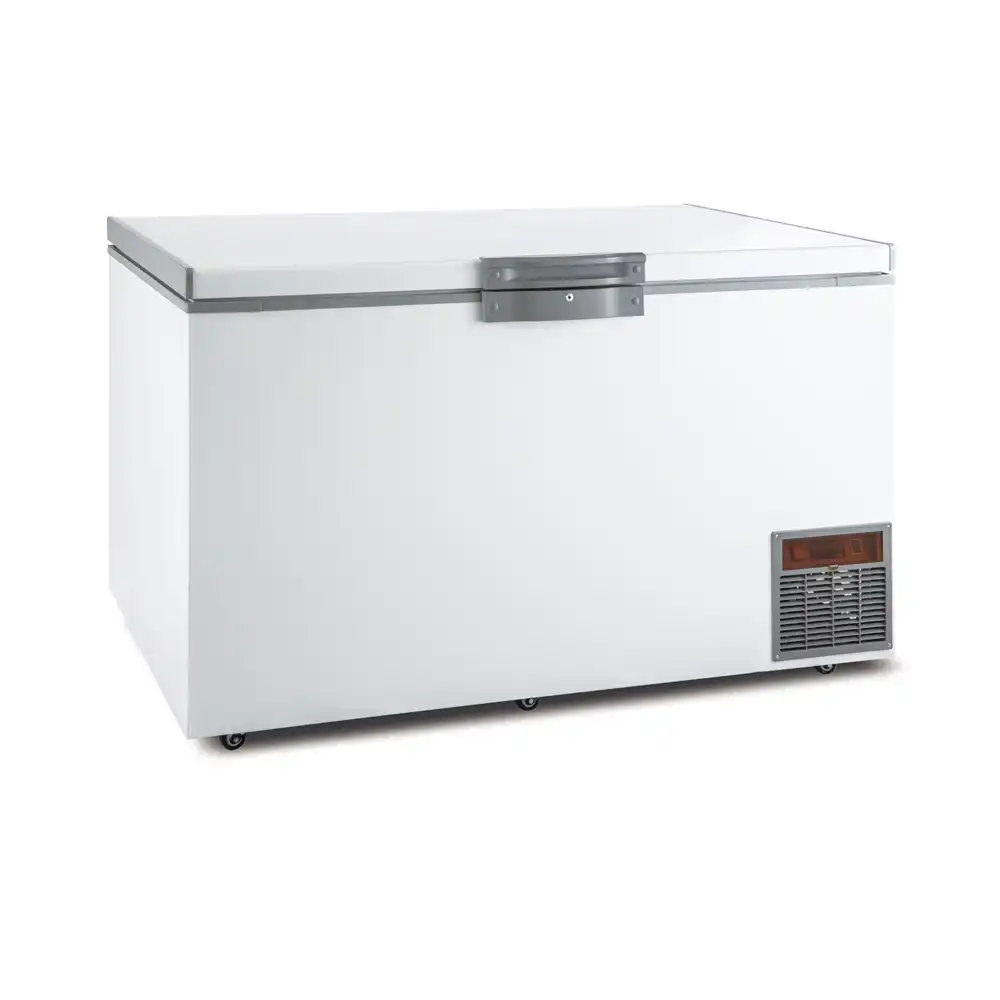
Capacity without airflow control creates dead zones at the back of the cabinet. A meat storage refrigerator should have a ventilated or air cooling system that moves cold air across all shelf levels without blasting directly onto exposed meat. Direct high-velocity air can dry cut surfaces and reduce the visual quality of fresh product. The internal layout matters too: full size sheet pans or hotel pans need enough clearance for air to circulate around them. Buyers sometimes choose a larger cabinet because it holds more volume, then find that the coil cannot transfer heat from a fully loaded box. When comparing models, match capacity to the intended pan size, daily loading volume, and door opening pattern rather than to the price per liter alone.
| Model | Classification | Capacity | Internal Temperature | Cooling System |
|---|---|---|---|---|
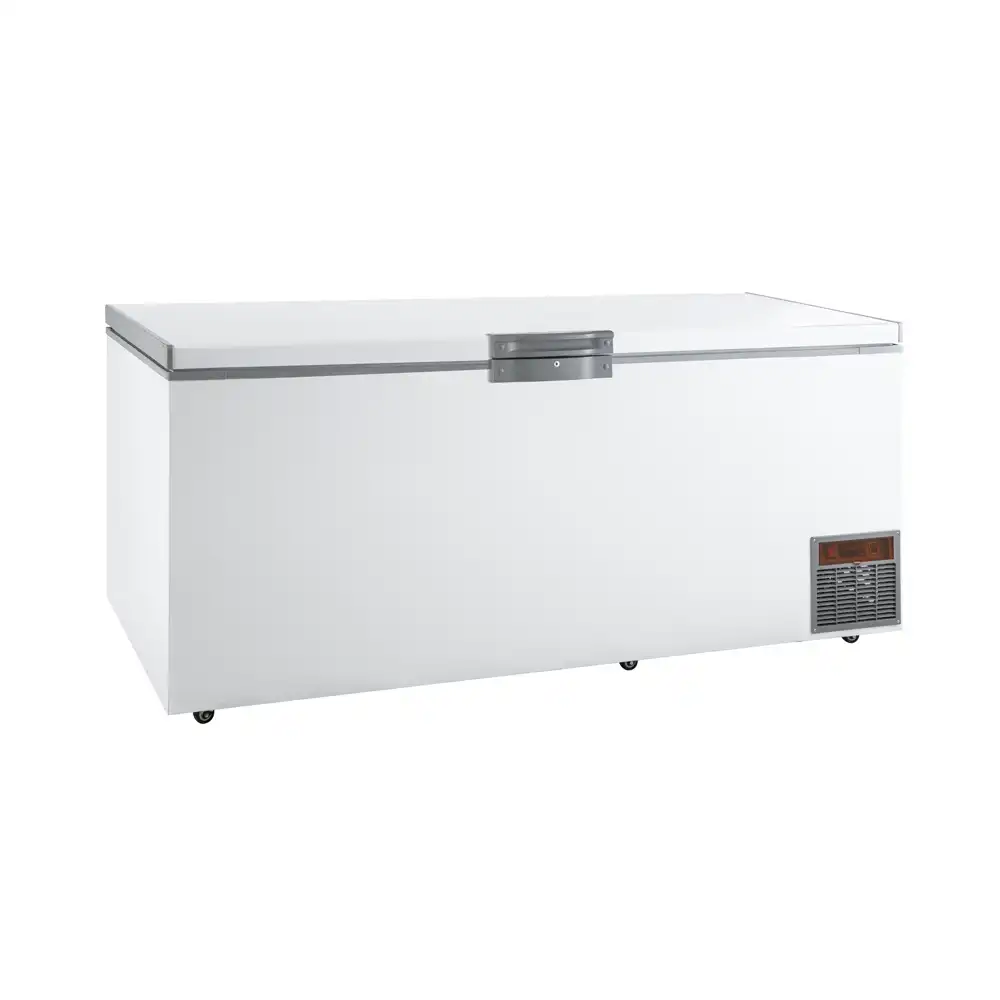
| MR-49 | Refrigerator | 1252 L / 44.21 cuft | 0.5°C to 5°C / 33°F to 41°F | Air Cooling |
| MTR-72 | Refrigerator | 576 L / 20.34 cuft | 0.5°C to 5°C / 33°F to 41°F | Ventilated |
| MF-23 | Freezer | 547 L / 19.32 cuft | -25°C to -15°C / -13°F to 5°F | Ventilated |
| MTR-48 | Refrigerator | 368 L / 13.00 cuft | 0.5°C to 5°C / 33°F to 41°F | Ventilated |
Camay platforms show how one manufacturer maps different meat storage roles to refrigeration or freezer hardware before a buyer commits to a door count.
For buyers still comparing reach-in configurations across brands, <Ultimate Buyers Guide for Commercial Reach In Refrigerators> walks through the specification model and door count decisions before price comparison, which keeps meat storage capacity from becoming the weak point of the kitchen.
Before finalizing a meat storage refrigerator specification, verify whether the coil finish and defrost sequence fit the actual meat mix and humidity in your kitchen. If your operation stores marinated cuts or vacuum packed fresh meat, send your target temperature range, door count, and daily loading pattern to Sales@hzcamay.com and we will check which platform matches your load profile.
What Certifications and Service Details Protect the Purchase?
Certifications are where I see buyers lose time after sampling. A unit may perform well in a showroom but fail at the destination if the voltage, frequency, or sanitation certification does not match local requirements. For meat storage refrigerators, I ask buyers to request the full certification package before deposit: ETL safety, ETL sanitation, DOE, CE, IEC-CB, and any mark required by the destination country. Factory audit documents such as ISO 9001:2015 also show whether production quality is stable enough to repeat the sample at scale. Serviceability is the second part. Confirm that the compressor, controller, door gasket, and coil can be obtained as spare parts, and that the supplier has a permanent online technical response channel. A low price that disappears when a gasket fails is not a good meat storage decision.
Once a unit is installed, maintenance quality decides how long the temperature stays stable under daily kitchen loading. <Essential Maintenance Tips for Commercial Reach In Refrigerators> covers coil cleaning intervals, gasket inspection, and airflow checks that directly apply to meat storage refrigerators.
How Should Buyers Move From Specification to Supplier Confirmation?
After checking temperature recovery, materials, refrigeration, capacity, and certifications, the next step is to turn those points into a written specification. This is where meat storage buyers lose time: they compare prices without first fixing the technical parameters. A clear written specification makes supplier confirmation faster and removes the risk of a low price substitution. If raw meat storage is part of your kitchen or distribution project, send your target capacity, temperature band, voltage, and destination certification list to Sales@hzcamay.com or call +8618157202219. We will check the model platform and documentation against your requirements and confirm stock or production timing.
What Do Buyers Ask About Meat Storage Refrigerators?
Does a meat storage refrigerator need a dedicated compressor for high door traffic?
A dedicated compressor matters less than the compressor duty and the control logic that match the load. In high door traffic, the coil sees repeated warm air entry and must pull temperature down fast. A unit with an undersized compressor may hold temperature when closed but fail during the lunch rush. Ask for duty class and expected recovery time under a defined load, not just the compressor brand. In our projects, we check refrigeration system capacity against door count and daily loading pattern because that is where most meat storage failures begin.
Is a solid door or glass door better for raw meat storage?
Glass doors are not automatically wrong for meat, but raw meat storage usually favors solid doors. Solid doors block light, reduce compressor run time, and hold a more uniform temperature in back of house conditions. Glass doors make sense in a closed display case where staff monitor stock from outside and the ambient climate is controlled. If you need glass, verify the door has low-E or heated glass to limit condensation. For general raw meat holding, I would not add glass merely for appearance because the long term energy and temperature burden is higher.
What defrost mode is safer for fresh meat?
It depends on the meat mix and how often the door opens. Off-cycle defrost is usually enough for fresh meat held at 0.5°C to 5°C because the cabinet is above freezing. Electric defrost may be needed if the unit also stores frozen product or operates in high humidity conditions. The key is that defrost water drains fully and does not pool near door seals or fan covers. If a unit cycles above 5°C for long during defrost, that is a design weakness, not a normal condition.
How do I confirm the unit will pass local sanitation and electrical certification?
In export projects, the fastest path to confirmation is to compare the full certification list against the destination market before sampling. Electrical approvals such as ETL, CE, or IEC-CB and sanitation approvals such as ETL sanitation each cover different risks. Ask for the certificate numbers and the production model, not a similar unit. Then check whether factory audit documents such as ISO 9001:2015 are current. This step prevents a sample that passes evaluation but cannot be imported or cleared for food contact. Share your target meat storage volume, ambient conditions, and local certification requirements with Sales@hzcamay.com, and we will confirm the matching model and documentation.
If you’re interested, check out these related articles:
Ultimate Buyers Guide for Commercial Reach In Refrigerators
Essential Commercial Chef Base Fridge Installation Tips