

You know, after 28 years in the refrigeration game, I’ve seen a lot of things come and go. But one challenge that just keeps popping up, for folks at home and small businesses alike, is the sheer lack of kitchen space. When every single square inch counts, figuring out how to store your food efficiently isn’t just a good idea; it’s absolutely critical. That’s where upright freezers really shine, turning those cramped corners into surprisingly functional storage hubs. We’re going to dive into how these compact units can seriously boost your kitchen’s potential, making sure everything’s organized just right and your food stays perfectly preserved.
Understanding the Challenges of Small Kitchens for Food Storage
Small kitchens, whether you’re talking about a cozy little home setup or a bustling cafe, always throw up some unique hurdles when it comes to food storage. These kinds of environments really demand creative solutions to keep things running smoothly and organized. Believe me, we recognize these constraints, and that’s precisely why we develop products specifically to tackle them head-on.
1. Identifying common space constraints in compact culinary environments
You know the drill: limited counter space, narrow aisles, walls that just don’t seem to have enough room. These are pretty typical in compact kitchens. And these limitations often mean you have to compromise on the size of your appliances and how much you can actually store. A lot of traditional appliances are just too darn bulky, eating up valuable floor space. What often happens is you end up with a cluttered mess, which just makes it harder to work and generally messes with your kitchen’s flow.
2. The impact of limited space on food storage and organization
Not having enough space directly messes with your food storage, leading to overcrowding and, sadly, more spoilage. When you cram things in, air can’t circulate properly, which compromises food quality and even makes your freezer work harder, using more energy. And let’s not forget the time wasted! Staff or homeowners end up rummaging around, trying to find that one ingredient. That kind of inefficiency really hits your operational costs and can even affect food safety.
3. Why traditional freezers are often unsuitable for small kitchens
Traditional chest freezers? They take up a ton of floor space, and you have to load them from the top, which is just a nightmare in tight spots. Their wide footprint and lids that swing open outwards just don’t work in compact layouts. And even large upright models, while they do offer vertical storage, often just don’t fit the dimensions you have in smaller kitchens. This really means we need a more thoughtful, tailored approach to how we design freezers.
Key Features to Look for in Space-Saving Upright Freezers
When you’re picking out an upright freezer for a small kitchen, certain features suddenly become super important. These are the characteristics that ensure the unit not only fits but actually works perfectly in a tight spot. We really focus on baking these elements right into our designs.
1. Optimal dimensions and footprint for compact areas
The first thing, really, is the freezer’s actual physical size. You want to look for slim designs and a minimal footprint. Undercounter and worktop models? They’re fantastic choices, sliding right under existing counters or even doubling as a handy prep surface. Take, for instance, our Camay Commercial Worktop Refrigerator Cooler Fridge (Model MWTF-27-L). It measures 698×787×938 mm, giving you a solid 202 L of freezer capacity while still offering a usable worktop. And our Camay Countertop Refrigerated Display Case (Model MWTF-27) has pretty similar dimensions and freezing power.
2. Capacity considerations for efficient food storage
Even though they’re compact, these space-saving freezers can still offer a surprising amount of storage. Really dig into the internal layout – look for adjustable shelves and door bins that truly maximize the usable space. A 202 L capacity, like you’d find in the MWTF-27-L, is often more than enough for small commercial needs or even bigger residential requirements. Just think about what you typically keep on hand to figure out how much cubic footage you really need.
3. Energy efficiency and environmental impact of modern freezers
Modern freezers are all about energy efficiency these days, which means lower running costs for you and less impact on the environment. Keep an eye out for models that use eco-friendly refrigerants like R290 and high-performance insulation, stuff like polyurethane/cyclopentane foam. These materials are great at minimizing heat transfer, keeping temperatures stable with less energy. Many of our units, including the MTF-48, are ETL, DOE, and ENERGY-STAR certified, which is a good sign of high efficiency. If you’re curious, you might want to check out 《Boost Savings with Energy Efficient Commercial Upright Freezers》.
4. Smart features and organizational options for convenience
Advanced features can really step up the usability and organization game. Digital temperature controls let you set things precisely, and if you get into IoT and WiFi connectivity, you can even monitor things remotely. Adjustable shelves, reversible doors, and self-closing mechanisms just make everything more accessible and convenient. These little thoughtful additions really streamline daily operations in any small kitchen.
Exploring Different Types of Upright Freezers for Small Kitchens
The market’s got quite a variety of upright freezer configurations, each one pretty much tailored for specific small kitchen needs. Understanding these different types will really help you make a smart choice. We, for our part, design a whole range of solutions to meet all sorts of requirements.
1. Compact upright freezers designed for residential use
Residential compact upright freezers are usually smaller, made to just blend right into home kitchens. They often have a nicer aesthetic, like integrated handles, and run super quietly. While our main focus is commercial, the principles of compact design definitely apply here. These units give you vertical storage without the massive footprint of a chest freezer.
2. Undercounter and worktop freezers as versatile space-saving solutions
Undercounter and worktop freezers are just brilliant for making the most of limited space. They tuck neatly under existing counters, giving you frozen storage without eating up precious floor area. Plus, many models come with durable work surfaces, effectively doubling as prep stations. Our Camay Commercial Worktop Refrigerator Cooler Fridge (Model MWTF-27-L) is a perfect example of this versatility, offering both freezing capacity and a sturdy Work Top for all your food prep needs. And the 48 Undercounter Refrigerator Freezer (Model MTF-48) gives you a generous 368 L of freezer capacity in a compact undercounter design.
| Model | Classification | Cabinet Dimension (WxDxH) | Capacity | Inner Temperature | Refrigerant |
|---|---|---|---|---|---|
| MWTF-27-L | Freezer | 698×787×938 mm | 202 L / 7.13 Cuft | -25°C to -15°C | R290 |
| MWTF-27 | Freezer | 698×787×938 mm | 202 L / 7.13 Cuft | -25°C to -15°C | R290 |
| MTF-48 | Freezer | 1225×787×872 mm | 368 L / 13 Cuft | -25°C to -15°C | R290 |
3. Single-door commercial freezers for small business efficiency
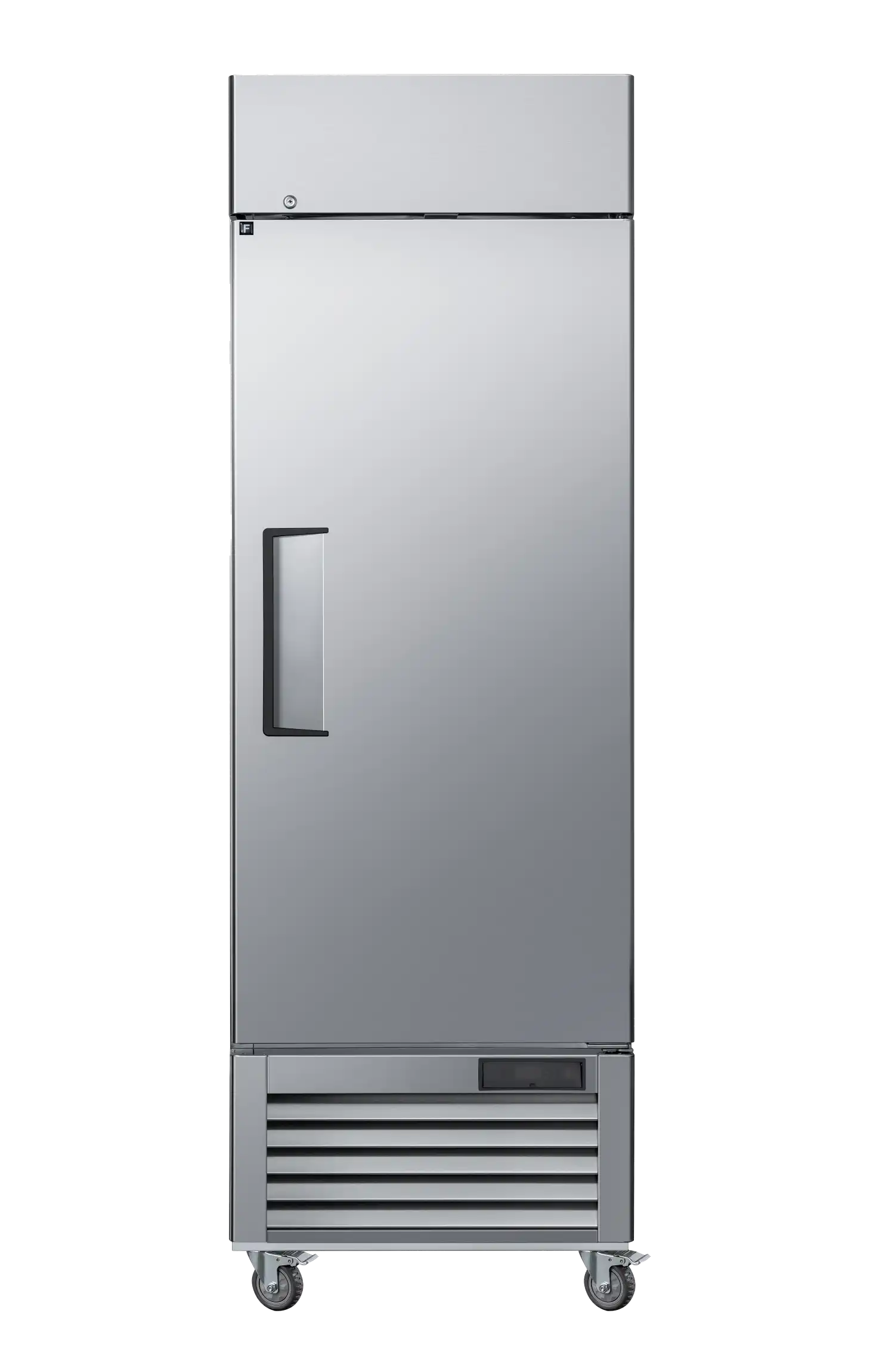
For small commercial kitchens, single-door upright freezers offer a significant amount of storage in a vertical format. These units are built to last, designed for durability and performance, often featuring stainless steel construction and really robust cooling systems. Our 1-Door Commercial Solid Door Freezer (Model MF-23) provides 547 L of freezing capacity with dimensions of 685×800×2115 mm, making it a solid choice for businesses that need substantial frozen storage in a relatively narrow footprint. These freezers are truly made for continuous operation and easy maintenance.
How to Measure and Plan for Your Space-Saving Freezer Installation
Look, proper planning is absolutely critical if you want to successfully integrate a freezer into a small kitchen. Getting your measurements right and thinking about environmental factors beforehand can save you a ton of headaches during installation and ensure the thing runs perfectly. We’re here to walk you through this process, making sure you get a perfect fit.
1. Step-by-step guide to accurately measure available kitchen space
- First things first: measure the width, depth, and height of the spot where you plan to put it.
- Don’t forget about any little obstacles – baseboards, moldings, or even an uneven floor can throw you off.
- Measure your doorways and hallways too. You need to make sure the freezer can actually get into position.
- Think about the clearances you’ll need for ventilation and for the door to swing open properly.
- And for goodness sake, double-check all your measurements. It can save you from some really costly mistakes.
2. Considerations for ventilation, door swing, and accessibility
Good ventilation is a must for your freezer to run efficiently and last a long time. Make sure there’s enough space around the unit for heat to escape. Figure out which way the door will swing and confirm it won’t block pathways or other appliances. Recessed handles and reversible doors offer a lot of flexibility in tight spaces. And always plan for easy access when it comes to cleaning and maintenance.
3. Tips for integrating your new freezer seamlessly into your kitchen design
Try to pick a freezer finish that really complements your kitchen’s existing look, something like stainless steel, for example. Use undercounter models to keep that sleek, streamlined look and maximize your counter space. Consider units with optional casters; they’re great for easy repositioning and cleaning. Strategic placement really ensures both functionality and a good visual appeal.
Maintaining Your Upright Freezer for Long-Term Performance and Efficiency
Regular maintenance isn’t just a chore; it’s how you make sure your upright freezer lasts a good long time and runs as efficiently as possible. Neglect these practices, and you’re looking at decreased performance and higher energy bills. We really can’t stress enough how important consistent care is.
1. Best practices for cleaning and defrosting your compact freezer
- Always unplug the freezer before you start cleaning, just to be safe.
- Take everything out and stash it in a cooler while you’re defrosting.
- Wipe down the inside surfaces with a mild detergent and some warm water.
- Regularly clean the outside surfaces, including those door seals.
- If you see ice buildup more than a quarter-inch thick, you’ll need to defrost it manually, unless you’ve got one of those fancy automatic defrost systems.
2. Troubleshooting common issues to extend appliance lifespan
Deal with common problems quickly to stop them from turning into major breakdowns. If you notice condensation or frost, check the door seal to make sure it’s closing tightly. Keep those condenser coils clean and free of debris for efficient cooling. Double-check that your temperature settings are correct and consistent. If you’re interested, you might want to check out 《Essential Maintenance Tips for Commercial Reach In Refrigerators》.
3. Understanding warranty and service options for your investment
Get familiar with the manufacturer’s warranty terms and conditions. Understand what’s covered and for how long. Keep all your purchase and maintenance records handy for any warranty claims. Having access to reliable service and spare parts is absolutely crucial for long-term support. We, for our part, offer comprehensive after-sales service and technical support for all our products.
Partner with ZHEJIANG KAIMEI CATERING EQUIPMENT CO., LTD
Let us help you get the most out of your kitchen with our range of space-saving upright freezers. We’ve got durable, energy-efficient solutions designed specifically for your needs. Give us a call today to chat about what you’re looking for and let’s find you the perfect refrigeration equipment.
Phone: +8618157202219
Email: Sales@hzcamay.com
About the Author
David Qian has a background in refrigeration equipment and 28 years of experience in the refrigeration industry.
FAQs
1. What is the average lifespan of a space-saving upright freezer?
Well, generally speaking, a well-maintained space-saving upright freezer will usually last you anywhere from 10 to 15 years. Things like how often you use it, how well you maintain it, and even the ambient conditions can all play a role in how long it sticks around. Honestly, investing in a quality unit with solid components often means it’ll just keep going longer.
2. Can I place a compact upright freezer in a garage or unheated area?
Putting a compact upright freezer in a garage or an unheated area really depends on its climate rating. A lot of residential freezers aren’t actually built for those wild temperature swings, so they might struggle to keep things properly frozen in very cold or very hot environments. Always, always check the manufacturer’s specs for the recommended operating temperatures. It’ll save you a headache.
3. How much electricity does a small upright freezer typically consume?
The amount of electricity a small upright freezer uses can vary quite a bit, depending on its size, its energy efficiency rating, and, of course, how much you’re actually using it. Modern, ENERGY STAR-certified models are way more efficient, often using somewhere between 200 to 400 kWh per year. That translates to pretty low operating costs compared to those older units.
4. Are there any specific maintenance tips for maximizing the efficiency of a space-saving freezer?
To really get the most efficiency out of it, you should regularly clean the condenser coils – that ensures proper heat dissipation. Check those door gaskets to make sure they’re sealing tightly, preventing any cold air from sneaking out. Try not to overfill the freezer, because that can restrict airflow. And make sure to defrost the unit when needed to prevent too much ice buildup, which can definitely reduce efficiency.
5. What is the difference between an upright freezer and a chest freezer for small spaces?
An upright freezer, you know, looks a lot like a refrigerator. It gives you vertical storage with shelves and a door that opens from the front, making everything super easy to get to. A chest freezer, on the other hand, opens from the top. They’re usually more energy-efficient and better for really long-term storage of bigger, bulkier items, but they take up more floor space and can be a real pain to organize. For more details, you can check out 《Upright Freezer vs Refrigerator Key Differences Explained》.