
Large-scale restaurant salad tables built for high-volume service demand more than a standard off-the-shelf unit can deliver. In my 26 years engineering commercial refrigeration equipment, I have seen kitchens lose workable square footage and waste labor hours trying to adapt a generic prep table to a specific menu. The real need is a custom solution aligned with capacity, layout, and food safety requirements from day one. That is the difference between a cold well that keeps greens crisp through a 300‑cover lunch and one that fails the afternoon inspection. This article lays out how to specify a custom salad table system that matches the exact workflow of a large restaurant, from capacity planning to manufacturer selection.
Why Off-the-Shelf Salad Tables Often Fall Short in Large-Scale Kitchens
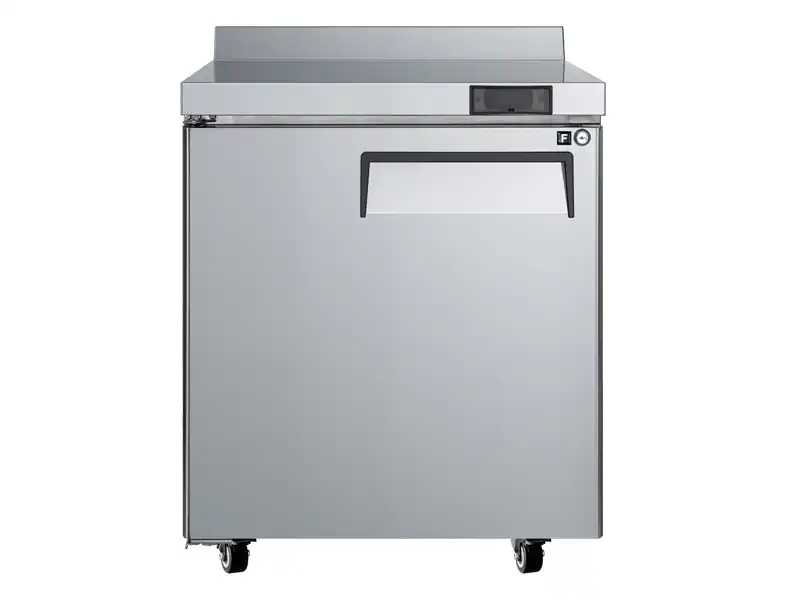
A high-output restaurant kitchen has a rhythm that standard equipment rarely fits. Off-the-shelf salad tables are typically sized for a single operator and a fixed menu, with pan wells spaced for the most common GN 1/3 inserts. Put that same unit into a kitchen serving 600 salads a shift and the gaps become obvious. You run out of cold holding for prepped greens, the dressing rail is the wrong depth, and the undercounter storage cannot keep up with replenishment speed.
I have walked through kitchens where staff were stacking sheet pans on top of the cold rail because the built-in pan capacity did not match the salad mix they actually sold. That kind of improvisation kills throughput and compromises food safety. Large-scale operations need a table where every well, shelf, and compartment is sized for the exact workflow, and that rarely comes from a catalog.
Factors for Defining the Right Salad Table Capacity and Layout
The first specification step is not picking a model, it is quantifying demand. How many salad covers do you plate during the peak two-hour window, and what is the mix across greens, proteins, and dressings? That determines the number of chilled wells you need and the depth of each. A setup serving twelve toppings plus a mixed-greens base will require a different pan arrangement than a simple Caesar station.
Once the well count is settled, the layout must follow how staff actually move. A straight-line configuration works for pass-through service, while an island table suits self-serve buffets. I have seen kitchens reclaim a surprising amount of floor space by combining a salad table with undercounter refrigeration, eliminating the walk to a distant cooler for backup stock. The GN pan format gives you flexibility, but the real gain is when you can specify the exact cutouts for 1/4, 1/6, or even 1/9 pans depending on the topping volumes you see every day.
Here is a reference specification for one of the salad tables our factory produces, which can serve as a building block in a larger custom configuration:
| Specification | Detail |
|---|---|
| Model | MSR-48M |
| Nominal Capacity | 368 L / 13 cuft |
| Internal Temperature | 0.5 to 5 °C (33 to 41 °F) |
| Compressor | Cubigel |
| Refrigerant | R290 |
| Doors | 2 self-closing with lock |
| Certification | ETL Safety, ETL Sanitation (NSF Standard) |
| Pan Format | GN compatible, custom cutouts available |
Starting from a proven platform like this shortens lead time while still allowing you to tailor door configuration, pan layout, and finish to the site.
Key Custom Features That Improve Workflow and Food Safety
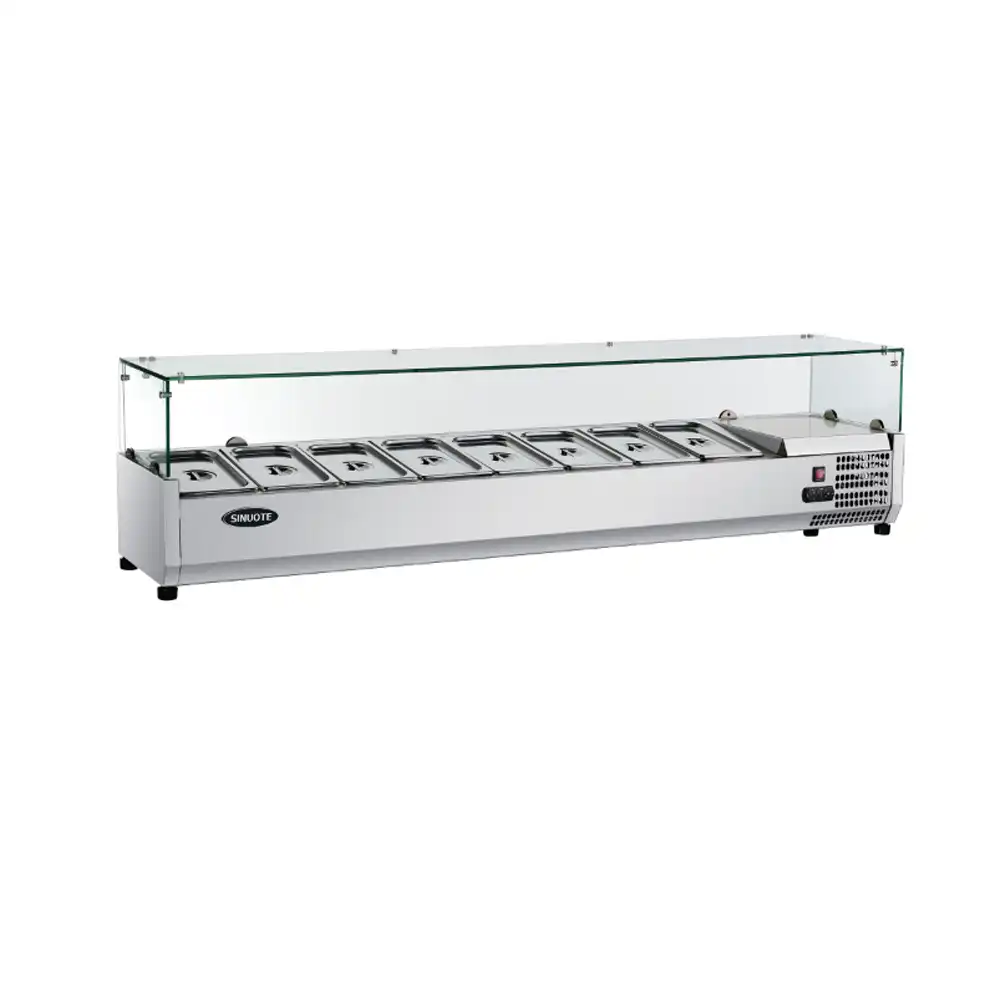
Temperature control on a salad table is not just about keeping the rail cold. In a large kitchen, you often need two or even three temperature zones inside the same unit so that dressings or protein toppings stay at a lower temperature than the greens. We regularly engineer units with split evaporator circuits that hold one compartment at 0.5 °C while another operates at a colder range for high-risk items. This single feature can remove the need for a separate reach-in cooler, which simplifies the cook’s path and reduces door openings.
The work surface itself deserves as much attention as the cooling. A heavy-gauge stainless steel top with a small drip‑resistant edge prevents liquid from spilling onto the floor, and the same surface needs to withstand pans being dropped onto it forty times a shift. For easy nightly cleaning, I always recommend removable gaskets and rounded interior corners. These details do not show on a specification sheet, but they determine whether the hygiene standard holds three months after installation.
If your program involves a mix of self-service and back-of-house prep, it is worth confirming the pan depth mix and temperature zoning before finalizing your BOM. A small oversight here, such as ordering standard-depth pans for a deep-well rail, creates daily frustration that no amount of staff training can fix. Reach out at Sales@hzcamay.com and we can help you map the correct configuration.
What to Look for in a Salad Table Manufacturer
Custom salad tables are an investment that lives or dies by the manufacturer’s ability to engineer, certify, and support what they promise. I approach this from both the engineering and the procurement side. First, check whether the factory holds quality management and environmental certifications. Our own facility is certified to ISO 9001:2015, ISO 14001:2015, and ISO 45001:2018, which gives partners an audited baseline for process control and workplace safety. Without those, you are relying on luck that the unit that arrives matches the one you approved on paper.
Second, confirm that the manufacturer has genuine OEM and ODM experience. Building a one-off salad table is a different discipline from running a standard production line. The engineering team needs to review thermal loads, condenser placement, and airflow patterns for a unit that might be two metres wide and exposed to a hot‑side hood just a metre away. During a recent project for a hotel buffet that was wrapping new equipment around a structural column, our design team ran several airflow simulations before settling on a split‑coil layout that eliminated a cold spot that would have been invisible in a generic design. That depth of analysis only comes from factories that have done it many times before.
From Specification to Installation: Ensuring a Smooth Deployment
Once the specification is signed off, the timeline moves from engineering to the factory floor. Custom tables typically require four to six weeks of manufacturing, plus freight. I recommend that buyers request a detailed dimensional drawing with electrical load information early in the process so their kitchen contractor can finalize the floor preparation and wiring. The table should roll into the site ready to plug in, with the compressor charged and the refrigerant circuit sealed, so commissioning is a matter of temperature verification, not field repairs.
After installation, invest an hour training the kitchen team on proper pan loading and cleaning routines. The best-designed cold rail will underperform if staff load it above the fill line or block the return air grille with a cutting board. A well-documented operating guide from the manufacturer, including torque settings for casters and gasket cleaning intervals, pays for itself in the first year of service.
Common Questions About Custom Salad Table Projects
Can I order a salad table with mixed refrigeration and freezer sections?
No, salad tables are engineered for chilled storage only, but a single unit can be partitioned into multiple temperature zones within the chilled range. If you need frozen holding, the better approach is to pair the salad table with a separate undercounter freezer that sits directly alongside. This keeps the two systems mechanically independent while maintaining the same work flow.
How long does a custom salad table take to manufacture?
A standard custom build, which adjusts pan layout, door configuration, and dimensions on an existing chassis platform, typically takes four to six weeks from order confirmation. A fully bespoke design requiring new tooling may add another two to four weeks. The schedule depends most on the electrical certification path for your target country, so mention that early.
What if my kitchen layout changes after I place the order?
Small adjustments, such as relocating a door hinge or adding a shelf, can often be accommodated if the change request arrives before the fabrication stage starts. Moving a main structural column or altering the overall footprint is usually a redesign. The surest way to protect the schedule is to lock the kitchen floor plan before releasing the purchase order.
How do I ensure the salad table passes the local health inspection?
Every table we ship for the North American market carries ETL Sanitation certification, which is accepted as proof of NSF compliance. For other regions, we supply the relevant CE, PSE, or SAA documentation. The unit itself must be installed with sufficient clearance for airflow and cleaning access, and your pre-inspection checklist should verify that all cold-rail temperatures hold at or below 5 °C under peak customer load. Share your requirements and we will confirm the compliance documentation available for your region.
Designing a custom salad table system that fits a large restaurant’s exact workflow is an engineering exercise, not a catalog purchase. Without clear communication between the kitchen team and the manufacturer, you risk specifying a unit that looks right on paper but underperforms on the line. Send your preliminary kitchen layout and target peak-hour salad volume to Sales@hzcamay.com or call +8618157202219, and our engineering group will provide a free specification review that confirms capacity, temperature zoning, and installation requirements before any commitment.
If you’re interested, check out these related articles:
Boost Efficiency Energy Efficient Chef Base Units for Commercial Kitchens
Essential Commercial Chef Base Fridge Installation Tips
Essential Maintenance Tips for Commercial Reach In Refrigerators
Ultimate Buyers Guide for Commercial Reach In Refrigerators
Chef Base Fridge vs Undercounter Fridge Which Is Best for Your Kitchen