
Hotel and banquet kitchens operate under a kind of pressure that’s hard to appreciate until you’ve watched a team push through a 400-cover service while prepping for the next day’s wedding. The margin for error is thin. Food needs to move fast, stay safe, and taste like it was just made—even when it wasn’t. Large-capacity blast chillers have become the quiet backbone of this workflow, solving problems that traditional cooling methods simply can’t address at scale.
The Real Pressure Behind High-Volume Food Production
When a kitchen handles hundreds of covers per service, the math gets unforgiving. Every batch of soup, every tray of proteins, every sauce base needs to cool safely before it can be stored. The temperature danger zone—that 5°C to 60°C range where bacteria multiply rapidly—isn’t a theoretical concern. It’s the gap between a successful service and a food safety incident.
Traditional cooling relies on leaving hot food at room temperature, then transferring it to refrigeration. This approach consumes counter space, ties up containers, and keeps food in the danger zone far longer than any health inspector would approve. A large-capacity blast chiller changes the sequence entirely. Hot food goes directly from the stove or oven into rapid cooling, passing through the critical temperature range in under 90 minutes instead of hours.
This isn’t just about compliance. It’s about workflow. When cooling happens fast, prep can happen earlier. Kitchens gain the flexibility to cook in larger batches during slower periods, then hold inventory safely for peak service. The result is a production rhythm that actually matches how hospitality businesses operate—with demand that spikes unpredictably and menus that change constantly.
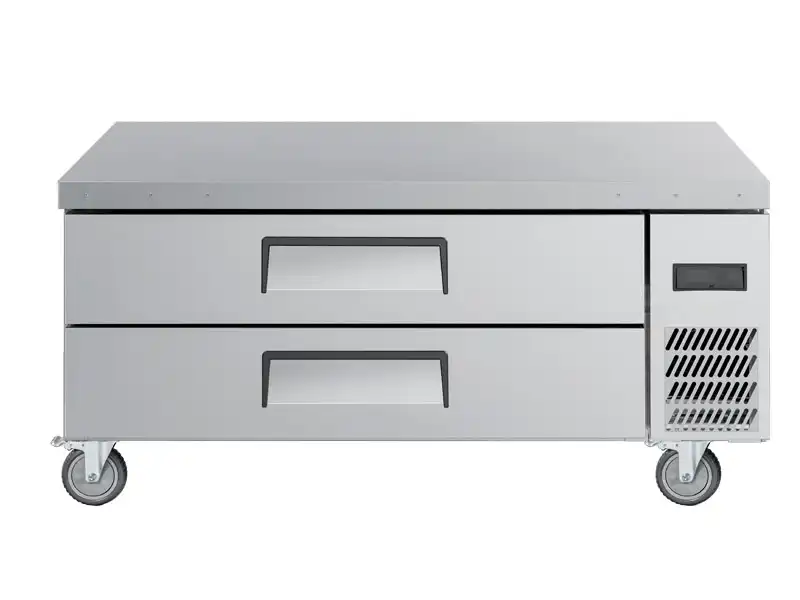
!Countertop cooking cooler 60 refrigeration chef base
 ## Food Safety Protocols That Actually Work Under Pressure
HACCP standards exist because foodborne illness isn’t an abstract risk—it’s a liability that can close a restaurant and damage a hotel’s reputation overnight. Blast chillers function as critical control points in this system, providing documented, measurable intervention against bacterial growth.
The process is straightforward in principle: reduce food temperature from above 60°C to below 5°C within a defined window. In practice, achieving this consistently across different food types requires equipment that can handle thermal mass variations. A dense beef roast behaves differently than a thin sauce. A properly designed blast chiller accounts for these differences through airflow patterns and temperature probe systems that track actual food temperatures, not just cabinet air.
| Food Type | Initial Temp | Target Temp | Time Limit |
|---|---|---|---|
| Cooked Meats | >60°C | <5°C | 90 min |
| Soups/Sauces | >60°C | <5°C | 90 min |
| Rice/Pasta | >60°C | <5°C | 90 min |
| Fish | >60°C | <5°C | 90 min |
| Vegetables | >60°C | <5°C | 90 min |
Cold chain management depends on this reliability. Cross-contamination risks drop when hot and cold items aren’t competing for the same refrigeration space. Documentation becomes automatic when probes log temperature curves for each batch.
How long can food be stored after blast chilling?
Properly blast-chilled food maintains safety for up to 5 days when held below 5°C. This extended window compared to conventional cooling comes from the rapid passage through the danger zone, which limits initial bacterial populations. Accurate labeling and dating remain essential—shelf life depends on starting conditions, not just the chilling process itself.
What are the HACCP requirements for blast chilling in commercial kitchens?
HACCP protocols require cooling food from 60°C to 10°C within 2 hours, then from 10°C to 5°C within an additional 4 hours. Temperature monitoring must use calibrated probes inserted into the food’s thermal center, not ambient readings. Each batch requires documentation showing time, temperature, and operator verification. Equipment calibration records and staff training logs complete the compliance picture.
Batch Cooking and the Economics of Prep Time
Kitchen labor costs rarely get cheaper. The question becomes how to extract more productive output from the same staffing levels. Blast chillers enable a shift from reactive cooking—preparing dishes as orders arrive—to strategic batch production.
A banquet kitchen preparing for a Saturday wedding doesn’t need to cook everything Saturday morning. Proteins can be seared and chilled Thursday. Sauces can be finished Wednesday. Vegetables can be blanched and shocked Tuesday. Each component holds safely, ready for final assembly and plating when service begins.
This approach reduces the chaos of peak periods. Instead of every station working at maximum intensity simultaneously, the workload spreads across the week. Staff can focus on execution rather than scrambling to catch up. Inventory management improves because chilled components have predictable shelf lives, reducing the last-minute supplier calls that disrupt budgets.
For catering operations handling multiple events, the flexibility becomes even more valuable. A single production day can supply several smaller functions, with each menu customized through final finishing rather than complete preparation.
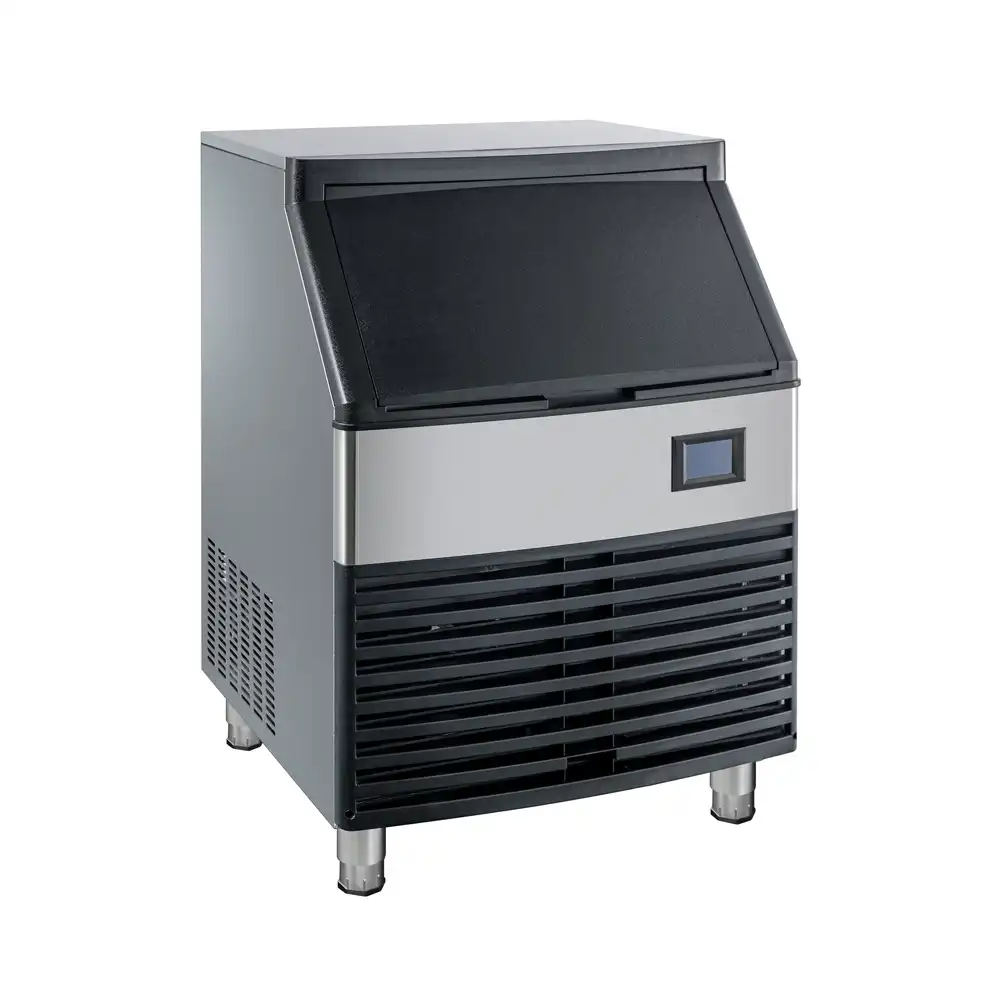
!FB210A-1
 ## Quality Retention Beyond Food Safety
The food safety argument for blast chillers is compelling, but it undersells what rapid cooling does for culinary quality. Slow cooling damages food in ways that aren’t immediately obvious. Moisture migrates out of proteins. Starches retrograde unevenly. Emulsions break. The result is food that’s technically safe but noticeably inferior.
Rapid cooling minimizes these quality losses. Ice crystals that form during slow chilling are large and disruptive to cell structures. Fast cooling produces smaller crystals that cause less damage. Proteins retain their moisture. Sauces hold their consistency. Vegetables keep their color and texture.
| Feature | Traditional Chilling | Blast Chilling |
|---|---|---|
| Bacterial Growth | High | Minimized |
| Moisture Loss | Significant | Minimal |
| Texture | Compromised | Preserved |
| Flavor | Degrades | Retained |
| Shelf Life | Short | Extended (3-5 days) |
| Nutrient Retention | Moderate | High |
This quality retention opens menu possibilities that wouldn’t otherwise exist. Cook-chill systems allow kitchens to prepare complex components—braised items, terrines, custards—in controlled conditions, then hold them at peak quality until service. Portion control becomes more precise when items are chilled and portioned in advance rather than divided during the rush of service.
The Financial Case for Rapid Cooling Equipment
Food waste in commercial kitchens runs higher than most operators want to admit. Spoilage, over-preparation, and quality degradation all contribute. Blast chillers address each of these directly.
Extended shelf life means fewer items reach expiration before use. Batch cooking reduces over-preparation because production can be scaled more precisely to anticipated demand. Quality retention ensures that prepared items remain usable rather than being discarded for texture or appearance issues.
Labor savings compound these benefits. Fewer cooking cycles mean less time spent on repetitive tasks. Prep staff can work during regular hours rather than arriving before dawn to prepare for lunch service. The reduction in peak-period pressure often improves retention—kitchen work is demanding enough without unnecessary chaos.
Energy consumption is a legitimate consideration. Blast chillers draw significant power during active cooling cycles. However, modern units with improved insulation and efficient compressor systems have narrowed this gap. The energy cost of running a blast chiller typically represents a fraction of the savings from reduced waste and labor optimization.
How does a blast chiller compare to a standard commercial refrigerator for food safety?
Standard commercial refrigerators are designed to hold cold food at safe temperatures, not to cool hot food rapidly. Placing hot items directly into a reach-in refrigerator raises the cabinet temperature, potentially compromising other stored products and extending the time everything spends in the danger zone. Blast chillers provide active cooling with high-velocity airflow specifically engineered to extract heat quickly. The distinction matters for compliance and for protecting inventory already in cold storage.
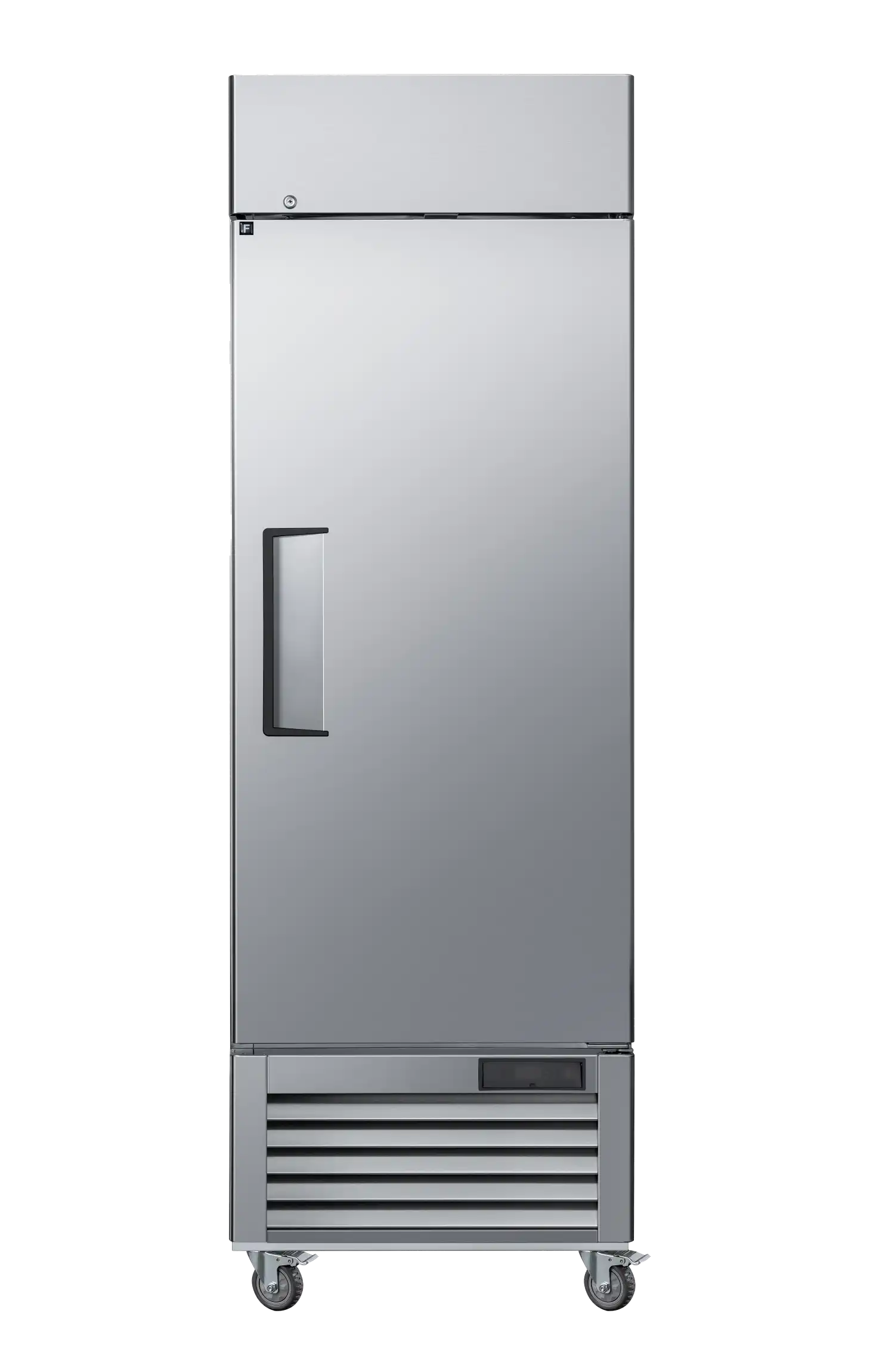
!1 Door Commercial solid door freezer fridge with locking doors
 ## Partner with ZHEJIANG KAIMEI CATERING EQUIPMENT CO., LTD.
ZHEJIANG KAIMEI CATERING EQUIPMENT CO., LTD. manufactures large-capacity blast chillers engineered for the specific demands of hotel and banquet kitchens. Our equipment supports the production volumes, safety requirements, and quality standards that high-volume operations depend on. Contact us for a consultation tailored to your kitchen’s workflow. Phone: +8618157202219, Email: Sales@hzcamay.com
Frequently Asked Questions About Blast Chillers
What capacity blast chiller is suitable for a 500-guest banquet hall?
Capacity requirements depend on menu complexity and production scheduling. A useful starting point is equipment that can chill 20-30% of daily food volume per cycle, but actual needs vary. A kitchen that preps heavily in advance needs different capacity than one that cooks closer to service. We recommend a detailed assessment of your specific production patterns before sizing equipment.
Are large-capacity blast chillers difficult to clean and maintain?
Current designs prioritize sanitation access. Stainless steel interiors with rounded corners eliminate crevices where residue accumulates. Removable gaskets and accessible drain systems simplify daily cleaning. Routine maintenance involves condenser cleaning and gasket inspection—tasks that fit into standard kitchen maintenance schedules without specialized training.
What are the energy consumption implications of using a large-capacity blast chiller?
Power draw during active cooling cycles is substantial, but operating costs should be evaluated against the savings they enable. Reduced food waste, lower labor requirements, and extended ingredient shelf life typically offset energy expenses. Units with eco-friendly refrigerants and high-efficiency compressors further improve the long-term cost picture.
If you’re interested, check out these related articles:
Essential Maintenance Tips for Commercial Reach In Refrigerators
Ultimate Buyers Guide for Commercial Reach In Refrigerators