
Industrial refrigeration for food processing plants is not a single equipment category. We see buyers treat compressor capacity as the only decision point, then wonder why temperature drift appears at the sanitation door or in the packaging hall. The harder question is whether the refrigeration system matches the actual process load, the cleaning schedule, and the temperature band each production step must hold. That mismatch is where energy waste, product loss, and audit findings begin. The specification process should move from load calculation to after-sales documentation, so you can order equipment that holds setpoint without buying more capacity than the plant requires.
How Do You Match Industrial Refrigeration Capacity to the Real Process Load?
Industrial refrigeration for food processing plants starts with heat load, not catalog capacity. Nameplate capacity is a design point at a fixed ambient temperature. A plant with three receiving windows, a sanitation shift, and a packaging line running at 28°C is not operating at that design point. We begin with the actual heat sources: product pull-down, air infiltration, fan motors, lighting, personnel, and washdown. The two numbers that matter are holding load and pull-down load. Holding load is the steady-state requirement once the product is at temperature. Pull-down load is the short-duration requirement when hot product enters the space. Many specifications use one large compressor for both, which causes short cycling during holding. We prefer sizing the evaporator for pull-down and the compressor for the holding load plus a controlled recovery factor.
Why does pull-down load differ from holding load?
Pull-down load pushes far more energy into the room in the first hours. A cooked product entering a blast chill or a pallet of packaged food entering a freezer carries heat that the refrigeration system must remove before the room can return to setpoint. If the compressor cannot modulate or cycle cleanly at the lower holding load, the coil runs too cold and accumulated frost has to be cleared more often. In production lines we have set up, we separate the recovery requirement from the steady-state requirement and use a demand-based defrost schedule where the controller records the time since the last hot load. That prevents a 4-degree swing in a frozen room when the loading dock opens.
Why Should You Separate Storage, Processing, and Packaging Zone Loads?
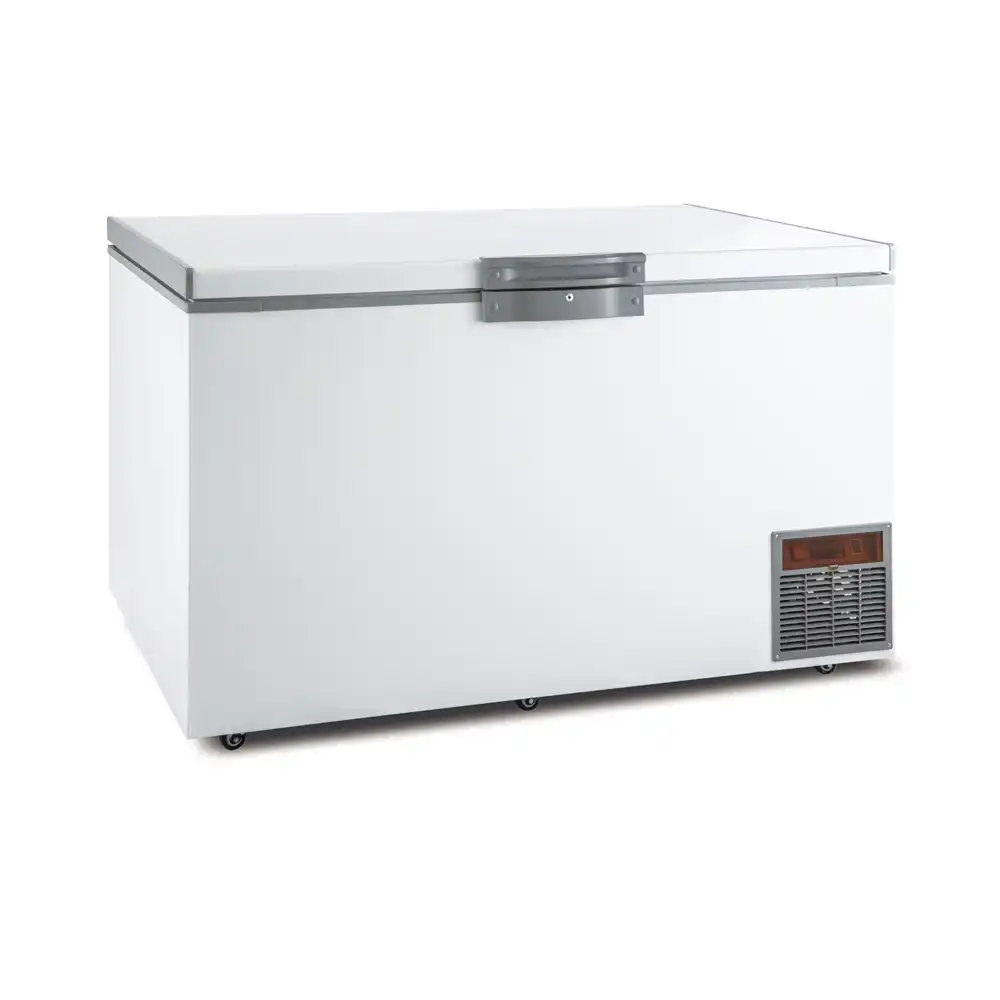
A food processing plant is not one cold room repeated three times. Storage rooms hold steady load once product is down to temperature. Processing zones see intermittent load from doors, operators, and equipment. Packaging halls generate high latent load from humidity and washdown. If these zones share a single evaporator circuit without separate controls, the compressor responds to an average suction pressure instead of the zone that is actually in trouble. We specify zone-level evaporator selection and separate defrost scheduling, even when a central condensing unit feeds several rooms. That keeps a packaging hall washdown from driving a frozen storage room above its setpoint.
| Zone | Typical load characteristic | Specification priority |
| Frozen storage | Stable after pull-down | Defrost recovery, insulation, door seals |
| Chilled storage | Stable with door openings | Ventilated cooling, airflow distribution |
| Processing line | Intermittent, operator-driven | Temperature recovery, cleaning access |
| Packaging hall | High latent load | Drainage, humidity control, corrosion-resistant surfaces |
| Loading dock | High infiltration | Door management, buffer capacity |
Chilled work zones and storage zones should not be combined into one load block just because they sit in the same plant. <Optimizing Kitchen Efficiency with Integrated Worktop Refrigeration> covers how placing worktop refrigeration close to production changes airflow and movement patterns, which reduces temperature recovery time in processing areas.
What Temperature Stability and Defrost Behavior Should Industrial Refrigeration Systems Hold?
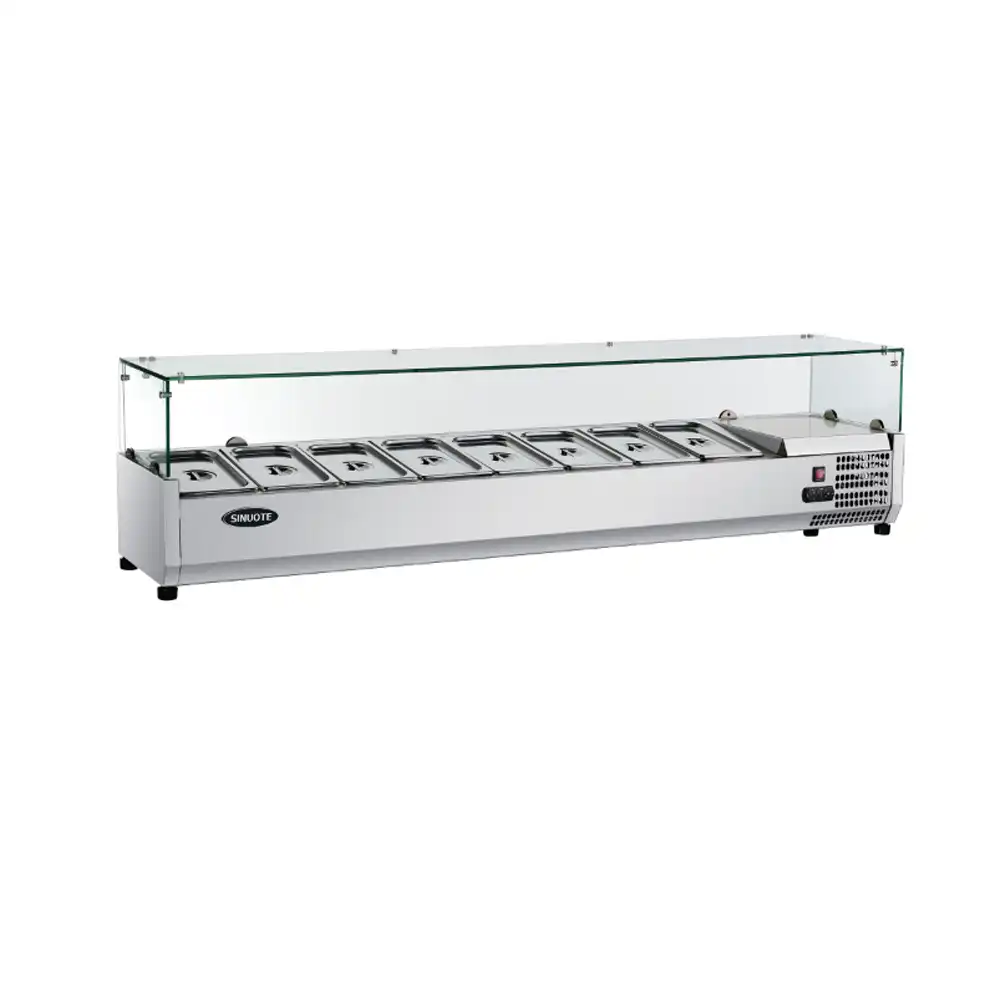
Temperature stability matters more than the lowest nameplate temperature. A frozen storage room that dips to -30°C but climbs to -12°C during defrost is less useful than one that holds -18°C with a controlled excursion. We specify the allowed excursion and recovery time for every production step. For freezer blocks, the product library range of -22°C to -18°C, or -25°C to -15°C in some cabinets, is only part of the picture. The defrost type and fan delay after defrost determine whether the product sees a brief rise or a sustained one. In our equipment, automatic defrost with a ventilated system keeps the evaporator clear, and the fan delay stops warm air from moving over the product after defrost.
Which certifications should you request?
Certification should be part of the purchase order, not a separate discussion after delivery. For export projects, the voltage, frequency, refrigerant, and sanitation approvals all have to match the destination market. Our units are built with R290 refrigerant and carry ETL, DOE, ENERGY STAR, CE, IEC-CB, PSE, SAA, KC, NOM, and EAC where applicable, with factory management systems certified to ISO 9001:2015, ISO 14001:2015, and ISO 45001:2018. The certification file is part of the BOM, and the temperature controller log should be readable by the plant’s food safety team.
When a process line includes blast chilling or frozen holding, the compressor operating envelope at the plant’s maximum ambient temperature deserves a check before the BOM is fixed. Send your throughput, target temperature, and voltage frequency to Sales@hzcamay.com and we will confirm the matching compressor, evaporator, and insulation configuration.
The stability problem is not only defrost timing; freezer and cooler rooms also behave differently under the same compressor. <Upright Freezer vs Refrigerator Key Differences Explained> covers how door style, airflow, and defrost design differ between these platforms, which should inform a zone-separated specification.
How Should You Compare Modular and Custom Refrigeration Platforms?
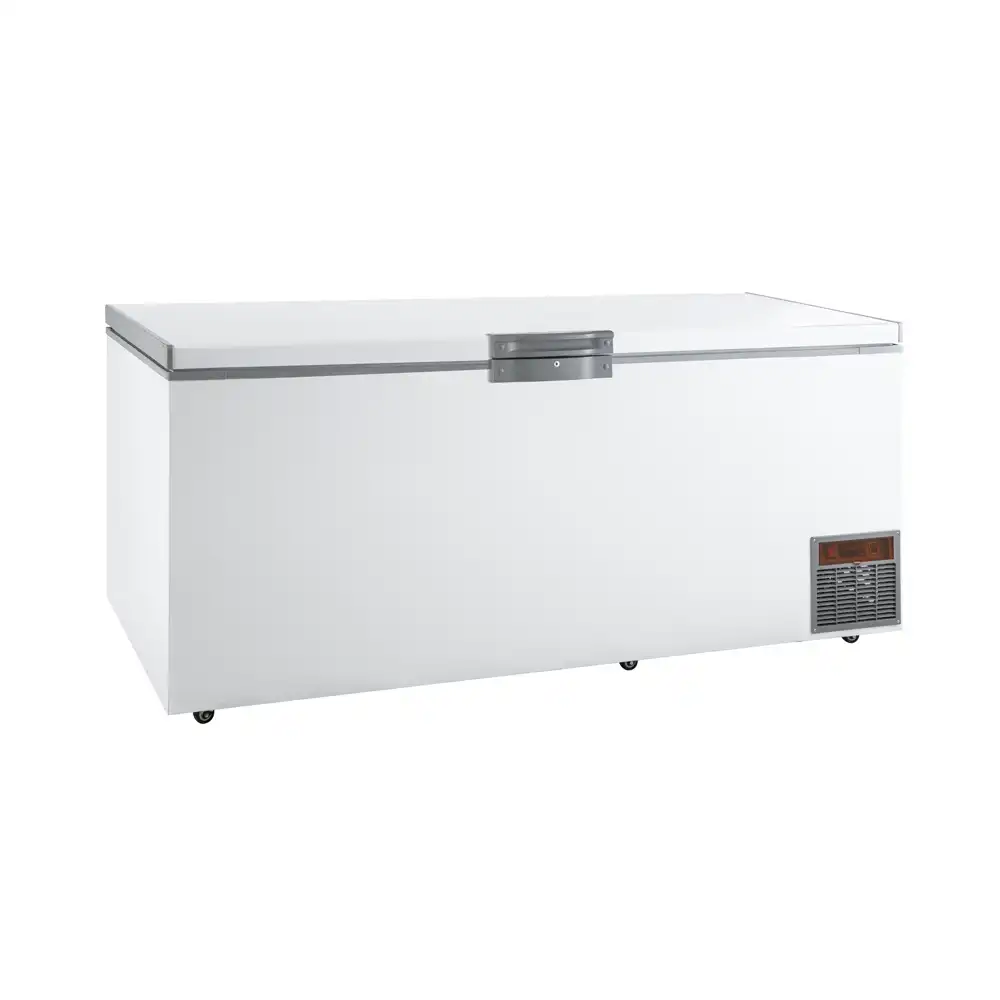
For food processing plants, the choice is not always between a large built-up system and a single cabinet. Modular platforms can cover receiving, staging, processing, and holding without forcing every zone into one engineered system. The real comparison is how much configuration work the plant can manage. Catalog units save time when the required temperature band, capacity, and dimensions match. OEM or ODM work pays when the customer needs a specific cabinet width, door arrangement, drawer set, voltage, or controller protocol. We build both paths from the same platform: standard models such as the MTR-72 at 576 L or the MAR-60A at 117 L, and custom configurations with drawer models, black inner boxes, casters, or IoT controller options.
| Platform | Temperature range | Capacity or size | Common configuration choice |
| MTR-72 | 0.5°C to 5°C | 576 L | Three-door undercounter |
| MAR-60A | 0.5°C to 5°C | 117 L | Countertop chef base |
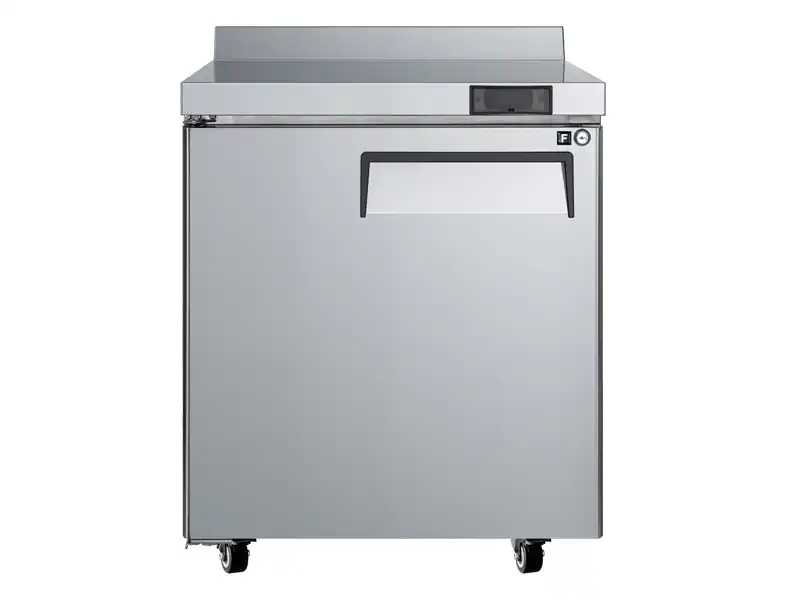
| MWTF-27-L | -25°C to -15°C | 202 L | Single-door worktop freezer |
| DW45W788 | -15°C to -45°C | 768 L | Single-door ULT freezer |
When frozen storage is part of the modular plan, upright freezer choices change operating cost more than many plants expect. <Boost Savings with Energy Efficient Commercial Upright Freezers> covers how fan placement, defrost frequency, and door management affect measured energy use, which belongs in the modular versus custom comparison.
What Should You Send to Confirm the Right Refrigeration Specification?
When refrigeration specifications miss process variability, the cost appears as lost shelf life, delayed sanitation, or repeated service calls. We work with plants and distributors to turn equipment selection into a documented configuration, from load calculation to final certification. The next step is concrete: send your plant layout, throughput data, target temperatures, and destination voltage to Sales@hzcamay.com or call +8618157202219. We will confirm the model or OEM configuration, insulation, controller, and certification path before you commit.
What Else Should Procurement Teams Check Before Ordering?
Is R290 refrigerant safe for food processing rooms?
R290 is safe when the equipment is designed and certified for it, but the room needs enough ventilation for the refrigerant charge and the condenser must have proper airflow. Hydrocarbon refrigerant carries strict charge limits, so it is not a simple drop-in replacement for older gases. The practical check is whether the manufacturer supplies a complete certification file with the unit. For food processing applications, that file matters more than a refrigerant label on a specification sheet.
Should I choose air-cooled or water-cooled condensing?
It depends on the plant’s water availability and ambient conditions. Air-cooled condensing works when the mechanical space has stable airflow and a manageable ambient temperature. Water-cooled condensing can handle high ambient heat, but it adds water treatment, scaling risk, and maintenance work. If the plant already runs a chilled water loop or cooling tower, water-cooled may fit. If not, air-cooled is usually simpler to maintain. The decision should come from the plant’s operating cost and service capability, not from a default specification.
Can one condensing unit serve both freezer and cooler rooms?
Many plants assume a single condensing unit can manage both rooms, and the assumption creates setpoint drift. A freezer and cooler operate at different saturated suction temperatures, so combining them without separate evaporator pressure controls forces one room to run away from its design condition. The safer arrangement uses separate circuits for different temperature bands or a rack with dedicated controls for each zone. If a combined system is being proposed, ask for the control strategy and the expected temperature excursion in each room before approving it.
What should food processors ask about after-sales before ordering?
In OEM programs we set up, the after-sales questions matter as much as the initial specification. Ask who holds spare parts inventory, whether replacement gaskets and controllers ship from the manufacturer or a local warehouse, and what documentation arrives with the unit. That avoids commissioning delays when the plant is already scheduled for production. Send your required spare parts list and the site’s peak ambient temperature to Sales@hzcamay.com and we will confirm the recommended service interval and available stock position.
If you’re interested, check out these related articles:
Choosing the Best Commercial Reach In Fridge for Your Restaurant
Boost Efficiency Energy Efficient Chef Base Units for Commercial Kitchens
Optimizing Kitchen Efficiency with Integrated Worktop Refrigeration
Chef Base Fridge vs Undercounter Fridge Which Is Best for Your Kitchen
Essential Commercial Chef Base Fridge Installation Tips