
Getting ice production right shapes everything downstream in a beverage operation. I’ve watched businesses struggle with machines that couldn’t keep pace during Friday rushes, and I’ve seen others hemorrhage money running oversized units at half capacity. The calculation isn’t complicated, but it demands honest assessment of actual usage patterns rather than optimistic projections. What follows draws on years of manufacturing and export work across dozens of markets, distilling the practical considerations that separate equipment investments that pay off from those that drain resources for years.
Matching Production Capacity to Real Demand Patterns
Capacity planning for commercial ice production starts with arithmetic, but the numbers only matter if they reflect how your operation actually runs. Underestimate and you’re apologizing to customers during peak hours. Overestimate and you’re paying utility bills for ice nobody uses.
The calculation begins with consumption per customer or drink. A busy restaurant typically burns through 1.5 to 2 pounds per seated guest when you account for beverages, water service, and kitchen applications like salad bars. Bars run closer to half a pound per drink, sometimes more for craft cocktails with large-format ice. Cafes land lower still, around a quarter to half pound per beverage.
Storage capacity matters as much as production rate. The bin should hold enough ice to cover 12 to 24 hours of peak demand without the machine running constantly. This buffer absorbs unexpected surges—a tour bus arriving unannounced, a heat wave driving beverage sales up 40 percent, a catering order that wasn’t on the schedule.
Modular ice systems offer flexibility that single-unit machines cannot match. Adding another ice maker head to an existing bin costs less than replacing an undersized machine entirely. For operations expecting growth, this architecture makes financial sense even if the second head isn’t needed immediately.
Production rates published by manufacturers assume specific ambient temperatures and water conditions. A machine rated for 500 pounds daily in a 70°F room with 50°F inlet water produces considerably less in a 90°F kitchen with 80°F water. Adjusting expectations by 10 to 15 percent for real-world conditions prevents unpleasant surprises.
| Customer Type / Application | Estimated Ice Demand (per day) |
|---|---|
| Restaurant (per seat) | 1.5 – 2 lbs |
| Bar (per drink) | 0.5 – 1 lb |
| Cafe (per drink) | 0.25 – 0.5 lb |
| Catering (per person) | 1 – 1.5 lbs |
| Hotel (per room) | 5 – 7 lbs |
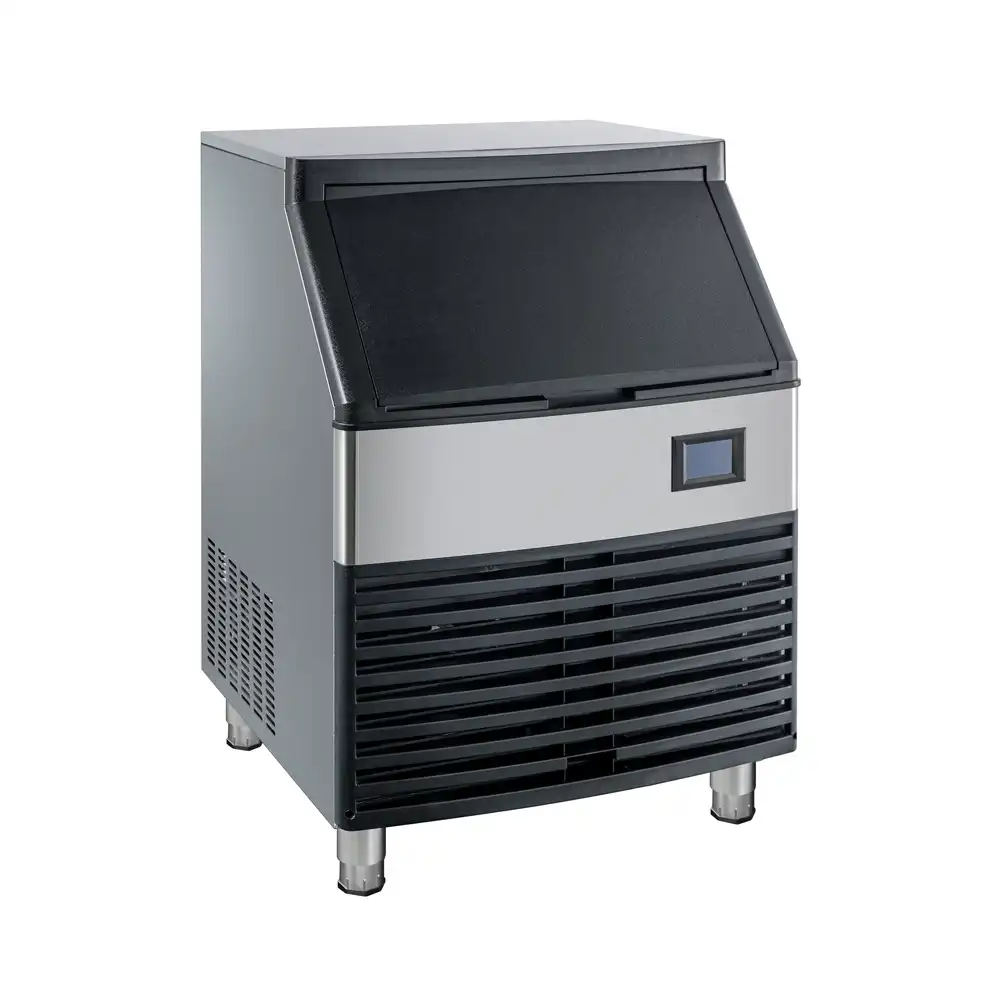
OEM and ODM cooperation allows production solutions tailored to these exact specifications, ensuring optimal performance across diverse commercial settings.
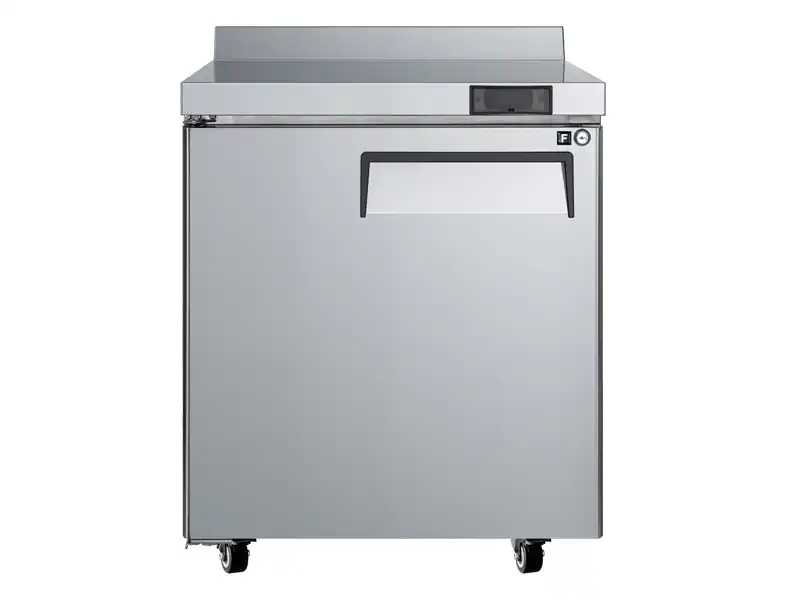
If you’re interested, check 《Boost Kitchen Efficiency Workflow Optimization with Chef Base Fridges》.
Energy Efficiency Drives Long-Term Cost Control
Energy consumption represents the largest ongoing expense for commercial ice production equipment. The compressor and condenser account for most electricity draw, and the refrigerant type significantly influences efficiency. R290, a natural propane-based refrigerant, delivers measurably better energy performance than older synthetic alternatives while carrying a fraction of the global warming potential.
Water usage adds another layer to operating costs. Machines vary considerably in how much water they consume per pound of ice produced. Some older designs waste substantial volumes through inefficient cycling. Modern water-flow systems can increase production capacity by 10 percent or more while actually reducing consumption per pound.
The Cube Ice Making Machine (Model FB210A) demonstrates what current technology achieves. Its copper-nickel evaporator accelerates freeze cycles, and the self-cleaning function reduces maintenance labor while maintaining hygienic operation. Advanced noise-reduction engineering makes placement in customer-facing areas feasible without acoustic intrusion.
Remote monitoring capabilities, increasingly available through IoT and WiFi integration, allow operators to track performance metrics and catch efficiency degradation before it becomes costly. Temperature drift, extended cycle times, and unusual energy consumption patterns all signal problems that worsen if ignored.
Insulation quality determines how hard the system works to maintain temperature. CFC-free polyurethane with cyclopentane blowing agents provides excellent thermal resistance without environmental compromise. Robust insulation means the compressor cycles less frequently, extending component life while reducing electricity consumption.
Ice Type Selection Affects Both Operations and Customer Experience
Different ice forms serve distinct purposes, and matching the right type to your applications improves both workflow efficiency and drink quality. The choice isn’t purely aesthetic—it affects dilution rates, presentation, and even the physical demands on your equipment.
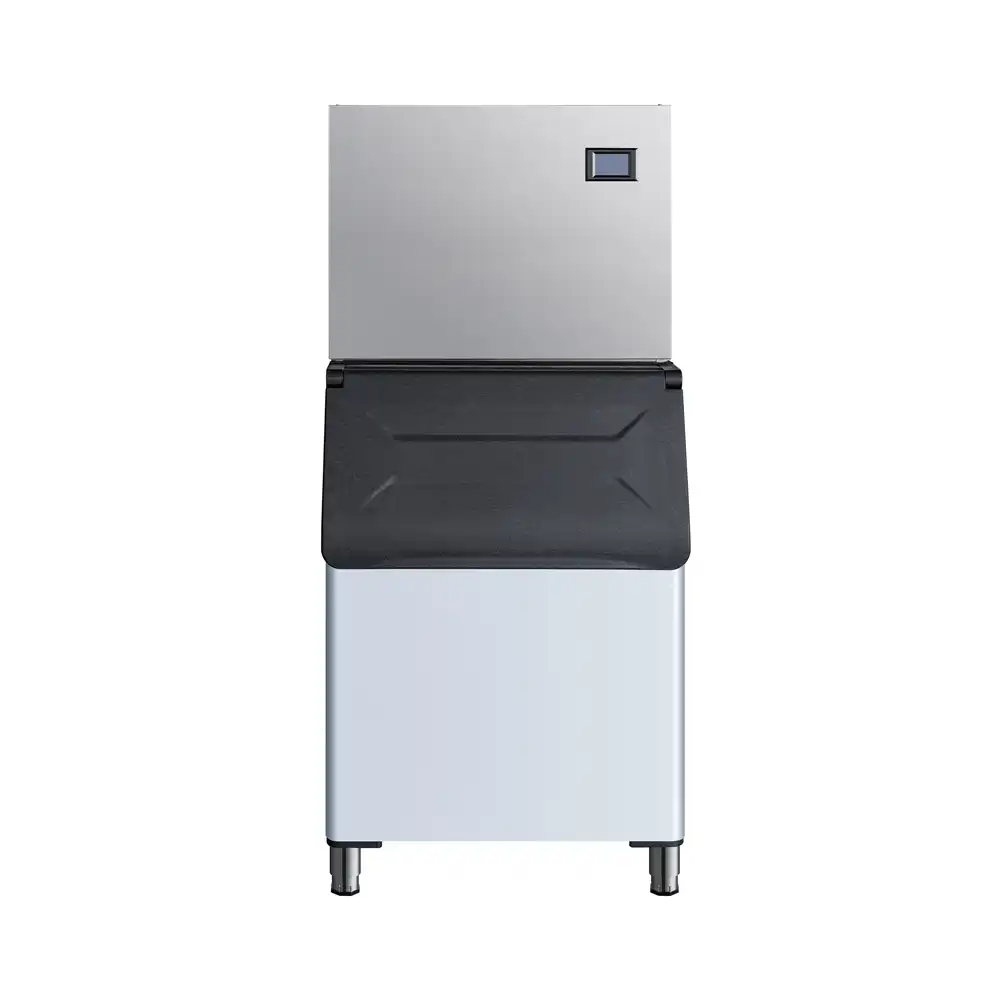
Cube ice remains the standard for most beverage applications. Its density and regular shape produce predictable melt rates, keeping drinks cold without rapid dilution. The 22x22x22 mm cubes from the Model FB210A work well across cocktails, soft drinks, and water service. Clear, consistently shaped cubes also photograph better, which matters more than it used to given social media’s role in restaurant marketing.
Flaked ice melts quickly, making it unsuitable for drinks where dilution matters but ideal for blended beverages and food displays. Seafood presentations, salad bars, and smoothie stations benefit from its moldable texture and rapid cooling properties.
Nugget ice occupies middle ground. Its porous structure makes it chewable and popular with customers who enjoy eating ice. Soft drink applications and specialty beverages work well with nugget ice, though it melts faster than cubes.
Under-counter ice makers fit spaces where floor area is limited and convenience matters. Positioning ice production directly at the service point eliminates trips to a remote machine, saving labor during busy periods. The tradeoff is typically lower production capacity compared to modular systems.
| Ice Type | Characteristics | Best Application |
|---|---|---|
| Cube | Slow-melting, clear, hard | Cocktails, soft drinks, general |
| Flaked | Soft, fast-melting, moldable | Blended drinks, food displays |
| Nugget | Soft, chewable, porous | Soft drinks, specialty drinks |
NSF certification standards govern food safety requirements for commercial ice production equipment. Meeting these standards isn’t optional for legitimate foodservice operations, and certification provides assurance that materials and design meet hygiene requirements.
Maintenance Practices Determine Equipment Longevity
Commercial ice machines fail prematurely when maintenance gets neglected. The same equipment that lasts a decade under proper care might need replacement in three years without it. The difference comes down to consistent attention to a few critical areas.
Cleaning schedules should follow manufacturer recommendations, but most operations benefit from more frequent attention than the minimum specified. Scale buildup from hard water reduces efficiency and eventually damages components. Biofilm can develop in water systems, creating food safety risks and off-flavors in ice.
Water filtration prevents most mineral-related problems. The investment in proper filtration pays for itself many times over through reduced maintenance costs and extended equipment life. Filter replacement intervals depend on water quality and usage volume—following manufacturer guidelines provides a starting point, but monitoring actual filter condition gives better results.
Condenser coils collect dust and grease, especially in kitchen environments. Dirty coils force the compressor to work harder, increasing energy consumption and accelerating wear. Monthly cleaning takes minutes and prevents expensive repairs.
Drainage systems require attention because stagnant water breeds bacteria. Proper slope and clear drain lines prevent backups that create hygiene problems and potential water damage.
The Cube Ice Making Machine (Model FB210A) incorporates features that simplify maintenance. Its self-cleaning function handles routine hygiene automatically. Food-grade 304 stainless steel construction resists corrosion and cleans easily. The removable anti-dust mesh allows quick access for condenser cleaning. Cubigel compressors provide reliable performance over extended service life.
Financial Analysis Beyond Purchase Price
The purchase price of a commercial ice maker represents only a fraction of its total cost over a typical service life. Energy consumption, water usage, maintenance, and repairs accumulate into figures that often exceed the initial investment. Evaluating equipment on total cost of ownership rather than sticker price leads to better decisions.
Energy-efficient models using R290 refrigerant can reduce electricity costs by 15 to 25 percent compared to older designs. Over a 10-year service life, these savings compound into substantial amounts. The Cube Ice Making Machine (Model FB210A) exemplifies this efficiency-focused design approach.
Financing options spread initial costs across time, making higher-quality equipment accessible to operations that might otherwise choose cheaper alternatives with higher long-term costs. Leasing arrangements can include maintenance coverage, further simplifying budgeting.
Return on investment calculations should include intangible benefits alongside direct cost comparisons. Consistent ice availability during peak periods protects revenue that would otherwise be lost to customer dissatisfaction. Reduced labor from convenient equipment placement and reliable operation frees staff for revenue-generating activities.
Depreciation schedules affect tax treatment and financial planning. Commercial kitchen equipment typically depreciates over 5 to 7 years for accounting purposes, though well-maintained machines often remain productive considerably longer.
A 13-month after-sales service period with free spare parts and permanent online technical support enhances the value proposition by reducing early ownership costs and providing ongoing assistance throughout the equipment’s service life.
Frequently Asked Questions About Commercial Ice Makers
What is the ideal ice production capacity for a high-volume restaurant?
High-volume restaurants should calculate based on 1.5 to 2 pounds of ice per customer, then add capacity for kitchen applications like salad bars and cold prep stations. Peak dining hours determine the critical constraint—a 200-seat restaurant might need 400 pounds during a three-hour dinner rush even if daily total consumption is lower. Storage bin capacity should cover 12 to 24 hours of peak demand to absorb unexpected surges without running short.
How can I reduce the operating costs of my commercial ice machine?
Operating cost reduction starts with equipment selection—Energy Star certified models with efficient refrigerants like R290 consume measurably less electricity. Preventive maintenance prevents expensive repairs and maintains efficiency. Clean condenser coils monthly, replace water filters on schedule, and address minor issues before they escalate. Proper water filtration prevents scale buildup that degrades performance. These practices collectively extend equipment life while keeping daily operating costs minimal.
Why is ice quality important for beverage businesses?
Ice quality affects taste, appearance, and food safety simultaneously. Poor quality ice can carry off-flavors from mineral deposits or bacterial contamination, dilute drinks unpredictably due to inconsistent density, and detract from presentation. Clear, consistently shaped ice signals attention to detail that customers notice even if they can’t articulate why. Health code compliance requires ice production equipment that meets sanitation standards, making quality a regulatory concern as well as a customer experience issue.
Partner with ZHEJIANG KAIMEI for Superior Refrigeration Solutions
Elevate your beverage operations with reliable, efficient, and cost-effective ice makers. As a professional one-stop-shop refrigeration equipment manufacturer, ZHEJIANG KAIMEI CATERING EQUIPMENT CO., LTD offers unparalleled expertise and a comprehensive range of solutions tailored to your specific needs. Contact us today for a consultation to optimize your ice production and control costs. Phone: +8618157202219, Email: Sales@hzcamay.com.