

A pizza table earns its footprint in a small kitchen only when it holds temperature through a dinner rush without crowding the cook who has to work around it. I have seen compact kitchens where a well chosen refrigerated pizza prep table became the backbone of the line, and others where a poorly insulated unit forced cooks to keep reaching into a remote walk-in just to stay ahead of food safety timers. Choosing the right pizza table for a small commercial kitchen means looking past the pan count on the spec sheet and understanding what the manufacturer put into the insulation, the compressor, and the steel. These decisions determine whether the unit works with your space or works against it.
What a Pizza Table Does That a Standard Worktop Fridge Cannot
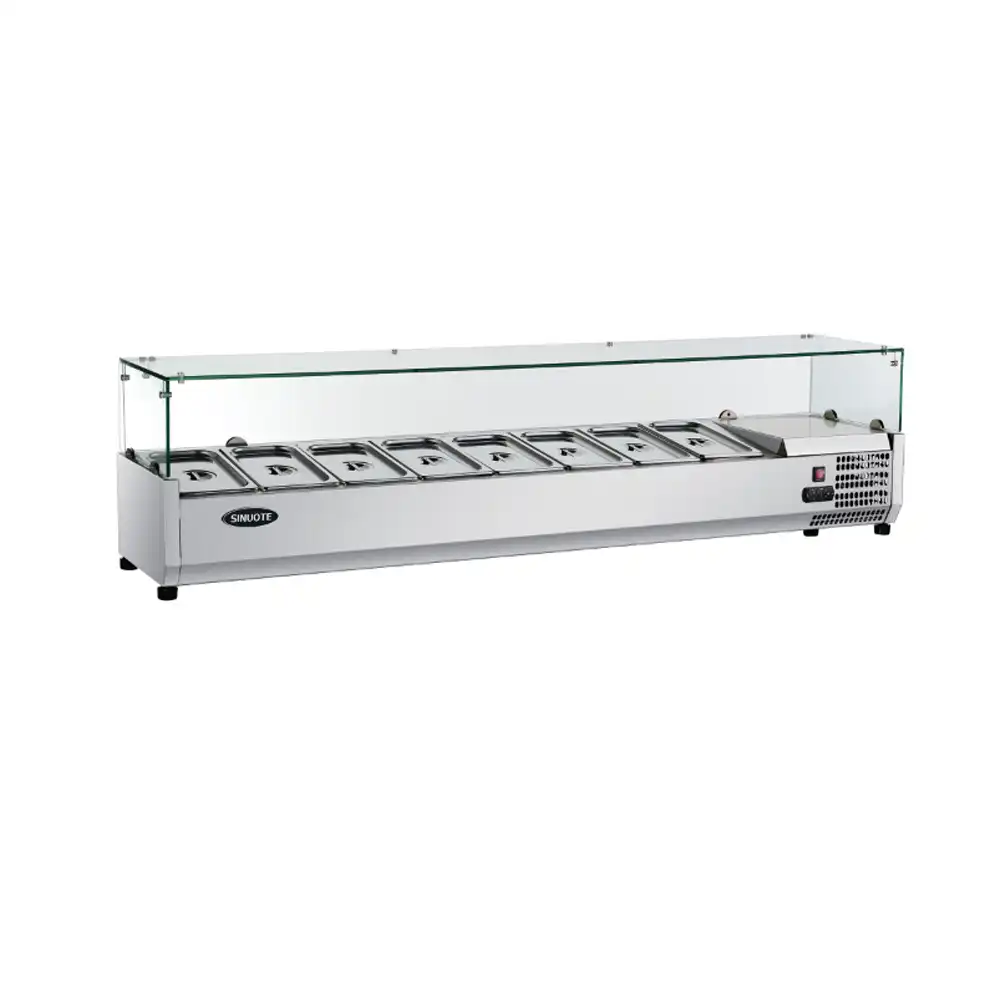
A standard refrigerated worktop keeps ingredients cold under a flat stainless steel surface. A pizza table does that too, but the top is designed around a specific workflow. The rail holds gastronorm pans, typically GN 1/3 size, positioned so the cook can reach toppings without stepping away from the dough station. The refrigerated base stores backup ingredients and dough balls at 2°C to 8°C, keeping everything within arm’s reach through peak service.
The distinction matters more in a small kitchen. When every square foot counts, a general purpose worktop fridge forces the pizza cook to make extra trips to a walk-in or to stack ingredient containers on the lid where they block access. A dedicated pizza table integrates storage and access into a single station. The raised rail design means the cook faces the toppings directly rather than bending down repeatedly, a detail that shows up in faster ticket times after the first week of use.
Fitting a Pizza Station Into a Tight Kitchen Footprint
Understanding the Real Dimensions You Need
Pizza tables come in lengths ranging from about 1,200 mm to 2,000 mm, but the dimension that matters in a small kitchen is not just the cabinet width. The cook needs clearance to open base doors fully, space to stand and stretch dough, and enough walkway behind them for other staff to pass. A 1,500 mm pizza table with swing doors that open 600 mm into a walkway creates a bottleneck the spec sheet alone will not reveal.
Before measuring for a unit, map out the full work zone, not just the footprint. The table itself may be 1,500 mm wide and 700 mm deep, but the functional station needs roughly 1,800 mm of width including door swing clearance and at least 900 mm of working depth for the cook. In kitchens where even that is tight, look for models with sliding doors or drawers instead of swing doors. Drawer configurations let the cook access refrigerated storage without blocking the aisle, and several manufacturers offer them as an option on compact units.
Workflow Integration in Constrained Spaces
The pizza station should sit between the dough preparation area and the oven. In a small kitchen, that often means the table doubles as the dividing line between prep and cooking zones. Position it so the cook can turn from the table to the oven in one motion without crossing another station’s workflow. If your kitchen runs on a linear flow from prep to oven to pass, the pizza table becomes the midpoint where toppings meet dough. Getting that placement right saves more labor hours than adding another foot of counter space.
Manufacturing Quality Markers That Determine Long-Term Reliability
This is where most buying guides go thin. They list dimensions and pan counts, then stop. In 26 years of manufacturing commercial refrigeration, I have watched compact kitchen equipment fail more often from what was left out during production than from what the spec sheet advertised. Three manufacturing decisions separate a pizza table that holds temperature through August dinner service from one that drifts above 8°C by the second hour.
Insulation and What Separates a Refrigerator From a Cold Box
The foam insulation injected between the inner and outer walls of a pizza table does the real work. Polyurethane foam with cyclopentane as the blowing agent, foamed in place under pressure, creates a thermal barrier that keeps cold air in and kitchen heat out. The thickness of this insulation layer directly determines how hard the compressor has to run to maintain temperature. In a compact unit where the walls are thinner by design, insulation quality is the difference between stable 2°C to 8°C storage and a unit that cycles on every time the kitchen door opens.
Cheaper units use lower density foam or skip the cyclopentane process entirely. The result is a table that costs less upfront but cannot hold temperature consistently in a hot kitchen. When evaluating a pizza table, ask the manufacturer for the insulation type and density, not just the temperature range. A table rated for 38°C ambient temperature with 53% humidity, using CFC free polyurethane and cyclopentane insulation, will perform differently from one rated only for 25°C.
Compressor Selection and Why Brand Matters
The compressor is the heart of the unit, and in a compact pizza table, it sits close to the work surface. A noisy or vibrating compressor will annoy the cook within the first hour. More importantly, compressor reliability determines whether the table still runs five years from now. Brands like Cubigel and Embraco build compressors for continuous commercial use, with duty cycles matched to kitchen environments where doors open dozens of times per shift.
Small kitchens compound the compressor’s workload. Every time the base door opens, warm air enters, and the compressor must pull the temperature back down. A correctly matched compressor with a properly sized condenser coil handles this without short cycling. Undersized compressors on compact units often run continuously during peak hours, wearing out prematurely. Ask what compressor the table uses and whether the manufacturer matches the compressor capacity to the internal volume rather than to a target price point.
Stainless Steel Grades and What They Actually Mean
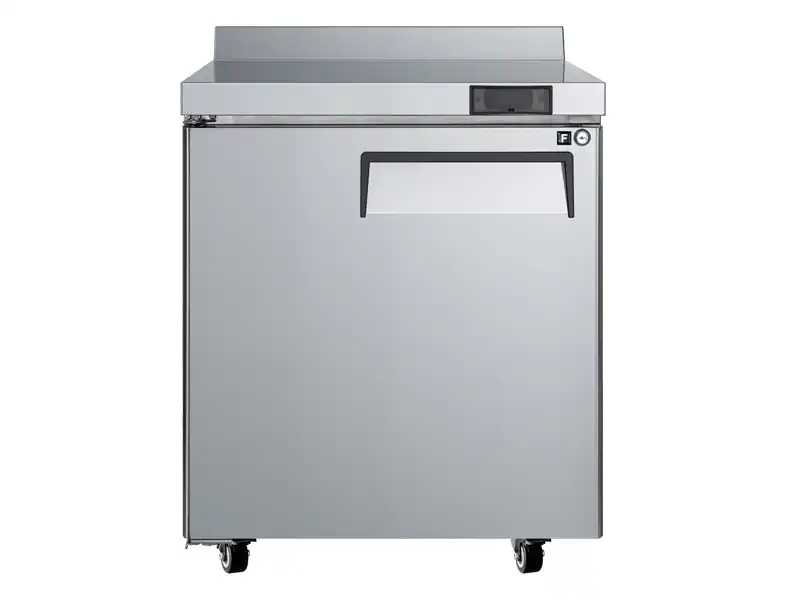
Stainless steel is not one material. The grade matters for corrosion resistance, cleanability, and how the table looks after two years of daily scrubbing. Grade 304 stainless steel offers the best balance of corrosion resistance and durability for food contact surfaces. Grade 201 or 430 stainless steel costs less but will show surface rust in humid kitchen environments much sooner.
The sheet metal craftsmanship matters just as much as the grade. Smooth welds, rounded internal corners, and properly finished edges prevent food debris from collecting where it breeds bacteria. In a small kitchen where the pizza table may also serve as a visual divider between the dining area and the cooking line, the fit and finish of the stainless steel becomes part of the customer experience.
Comparing Pan Capacity, Temperature Control, and Daily Output
A compact pizza table in the 1,500 mm to 1,800 mm range typically accommodates six to eight GN 1/3 pans in the rail, with a refrigerated base capacity of 50 to 70 liters. That is enough to hold prepped toppings, sauces, and cheeses for 80 to 120 pizzas per shift, depending on topping variety and portion sizes. If your kitchen averages 60 pizzas on a busy night, a six pan rail with backup ingredients in the base covers the volume with one mid shift restock.
What the spec sheet does not tell you is how quickly the rail recovers temperature after pans are swapped out. A well insulated rail with dedicated airflow keeps the top pans at safe holding temperature even when the base doors are open. Temperature control should be digital and precise, with a display the cook can check at a glance. Units with automatic defrost prevent ice buildup that reduces cooling efficiency, a common problem in humid kitchen environments.
If your program involves topping combinations that require separate temperature zones for different ingredient types, it is worth confirming the rail airflow design before finalizing your equipment list. Some compact tables use a single cooling circuit for both rail and base, which means the rail warms slightly during base defrost cycles. Reach out at Sales@hzcamay.com to discuss your specific menu requirements and we can confirm which configuration matches your workflow.
| Feature | Compact Pizza Table (1,500 mm) | Standard Pizza Table (1,800 mm+) |
|---|---|---|
| Rail Pan Capacity | 6 × GN 1/3 | 8 × GN 1/3 or larger |
| Base Storage | ~52 L | ~65 L or more |
| Typical Width | 1,500 mm | 1,800 mm+ |
| Best For | 40–80 pizzas per shift | 80+ pizzas per shift |
| Door Configuration | Solid or drawer options | Solid doors typical |
What to Ask a Manufacturer Before Ordering a Compact Pizza Table
The difference between a supplier who ships boxes and a manufacturer who builds refrigeration equipment shows up in how they answer specific questions. After 26 years on the production side, I can tell you that the answers to these questions reveal more about long term reliability than any brochure.
First, ask for the full spec sheet, not just the marketing summary. Look for insulation type and thickness, compressor brand and model, refrigerant type, and the climate class rating. A table rated for ST to T climate class, suitable for ambient temperatures up to 38°C to 43°C, will handle a hot kitchen line better than one rated only for N class that tops out at 32°C.
Second, ask about certification. ETL, CE, and ENERGY STAR certifications mean the unit has been tested to meet safety and efficiency standards. ISO 9001, ISO 14001, and ISO 45001 certifications at the factory level indicate the manufacturer follows consistent quality, environmental, and safety management systems. These are evidence that the production line builds every unit to the same standard, not just the sample that gets tested.
Third, ask about custom configuration options. A compact kitchen may need drawer doors instead of swing doors, or a specific pan layout that matches your menu. Manufacturers who offer OEM and ODM services can adjust the configuration during production. Resellers who only stock finished goods cannot.
Common Questions About Compact Pizza Tables
Can I use a regular refrigerated worktop instead of a dedicated pizza table?
You can, but you will sacrifice speed and ergonomics. A standard worktop fridge stores ingredients below a flat surface. The cook must bend down, open doors, and retrieve containers for every pizza. A pizza table with a raised rail keeps toppings at hand height in GN pans, cutting prep time per pizza by 30 to 45 seconds. Over a hundred pizzas, that is nearly an hour of labor saved. In a small kitchen where every motion matters, the rail design pays for itself quickly.
How many pizzas per hour can a compact pizza table support?
In programs we have supported, a six pan pizza table in the 1,500 mm range comfortably handles 40 to 60 pizzas during a dinner rush when toppings are prepped and backup pans are staged in the refrigerated base. An eight pan table at 1,800 mm manages 60 to 80 pizzas in the same window. The limiting factor is usually not the pan count but how often the cook needs to restock the rail from the base. If your volume regularly exceeds 80 pizzas in a two hour rush, consider stepping up to the larger unit or adding a second prep station.
What is the minimum clearance needed around a pizza prep table?
Allow at least 750 mm of working space in front of the table for the cook to stand and work comfortably. If the unit has swing doors, add the door width to the clearance requirement on the hinge side. For a 1,500 mm table with 600 mm deep swing doors, that means roughly 1,350 mm of total depth clearance. Drawer configurations reduce this to about 1,050 mm because nothing swings outward. Behind the cook, maintain at least 900 mm of walkway for other staff to pass without disrupting the pizza station.
How long should a commercial pizza table last before needing replacement?
A well built pizza table using a Cubigel or Embraco compressor, polyurethane insulation, and 304 stainless steel should operate reliably for 8 to 12 years with routine condenser cleaning and gasket replacement. Units built with lower grade materials and smaller compressors typically show declining temperature control after 3 to 5 years, especially in hot kitchens. The upfront price difference between these two tiers is usually recovered within the first two years through avoided service calls and consistent food safety compliance. If you are evaluating units and want to compare the manufacturing specifications that drive this longevity, send your requirements and target budget to Sales@hzcamay.com or call +8618157202219. We will confirm which configuration fits your kitchen and your service volume.
If you’re interested, check out these related articles:
Essential Maintenance Tips for Your Commercial Chef Base Refrigerator
Choosing the Best Commercial Reach In Fridge for Your Restaurant
Essential Maintenance Tips for Commercial Reach In Refrigerators
Essential Commercial Chef Base Fridge Installation Tips
Chef Base Fridge vs Undercounter Fridge Which Is Best for Your Kitchen