
Most restaurant ice calculations stop at a rough pound-per-guest figure, and that is why so many kitchens fall short on Saturday night. A practical daily ice usage estimate has three moving parts: front-of-house beverage ice, back-of-house cooling ice, and peak-hour recovery from the ice maker itself. When I work with restaurant groups on first-time equipment lists, I start with covers and menu mix, then pressure-test the result against the machine’s 24-hour harvest rate and bin capacity. The method below fits a 40-seat cafe or a 250-cover dining room.
How Many Guests Will You Serve on a Busy Day?
Do not start with the size of the ice bin. Start with the busiest day you expect to run at full capacity in normal conditions, then add any holiday or event spike later. For most restaurants, the busiest day is Friday or Saturday dinner, but a hotel breakfast or a weekend brunch service can shift that pattern. Record the number of covers, not the number of seats, because turnover determines how many cups and glasses actually move across the counter.
Next, separate dine-in, takeout, and delivery. A delivery order that includes two iced drinks still uses ice, even though no guest sits in the building. If your POS data separates beverage units by channel, use that number. If not, count cup sleeves or cups sold, or sample a normal week and average the busiest three days. The number to carry forward is the highest realistic daily cover and drink count, not the annual average.
How Much Daily Ice Usage Does Each Service Style Create?
A service style changes the ice allowance more than the menu does. A quick-service restaurant filling 32 oz soft drinks with refills uses more ice per guest than a fine-dining room where water glasses are small and cocktails are measured. My planning numbers below are working ranges for commercial equipment selection, not exact laboratory figures.
| Service style | Ice per guest | What drives the total |
|---|---|---|
| Quick-service with soft drinks | 0.5 to 0.8 lb (0.23 to 0.36 kg) | Cup size, refill rate, drive-thru volume |
| Full-service dining | 0.3 to 0.5 lb (0.14 to 0.23 kg) per cover | Water service plus one or two bar drinks |
| Bar and lounge | 1.0 to 1.8 lb (0.45 to 0.82 kg) per guest | Cocktails, mixers, wine buckets |
| Cafe or juice bar | 0.4 to 0.8 lb (0.18 to 0.36 kg) per drink | Blended drinks, smoothies, cold foam |
| Hotel banquet | 0.5 to 1.0 lb (0.23 to 0.45 kg) per attendee | Cocktail hour plus water service |
Multiply the drink count by the range that matches the service style. If the restaurant operates more than one style, break the day into service periods and calculate each one separately. A lunch counter and a dinner bar in the same building rarely have the same cup mix.
Why Does Peak Demand Change the Daily Ice Usage Calculation?
Daily total only gets you to the size of the bin. It does not tell you whether the machine can rebuild ice fast enough during the dinner rush. Ice makers are rated by 24-hour harvest rate, but that production does not arrive evenly. In a warm kitchen or a hot climate, you may need most of the day’s ice between 6 p.m. and 9 p.m.
Use a simple peak test. Take the estimated front-of-house total and multiply it by the share of drinks served in the busiest two-hour window. For a 200-cover restaurant running 0.6 lb per cover, the front-of-house total is 120 lb. If 45 percent of that ice moves during a two-hour peak, the machine and bin need to absorb a 54 lb burst before the kitchen can fall behind. Then add back-of-house demand to that peak number because it may spike at the same time.
If your peak window is under two hours, it is worth confirming recovery rate rather than relying on bin capacity alone. Send your peak covers and cup mix to Sales@hzcamay.com and we will check the harvest curve for the model you are comparing.
How Much Daily Ice Usage Happens Behind the Line?
Back-of-house ice is easy to underestimate because it is not served in a cup. It cools cooked product, holds seafood or produce on display, feeds ice baths for rapid chilling, and sometimes fills water pans for catered service. For most restaurants, I add 10 to 25 percent of the front-of-house total for back-of-house. A seafood-focused kitchen or a high-volume cold prep program should use the higher end, while a dry kitchen with a blast chiller may use less.
The reason this matters is that front-of-house and back-of-house peak at the same time. A cook chilling blanched vegetables during dinner service is drawing from the same bin as the bar. If the ice maker only covers beverage demand on paper, the line will run short when both stations pull at once.
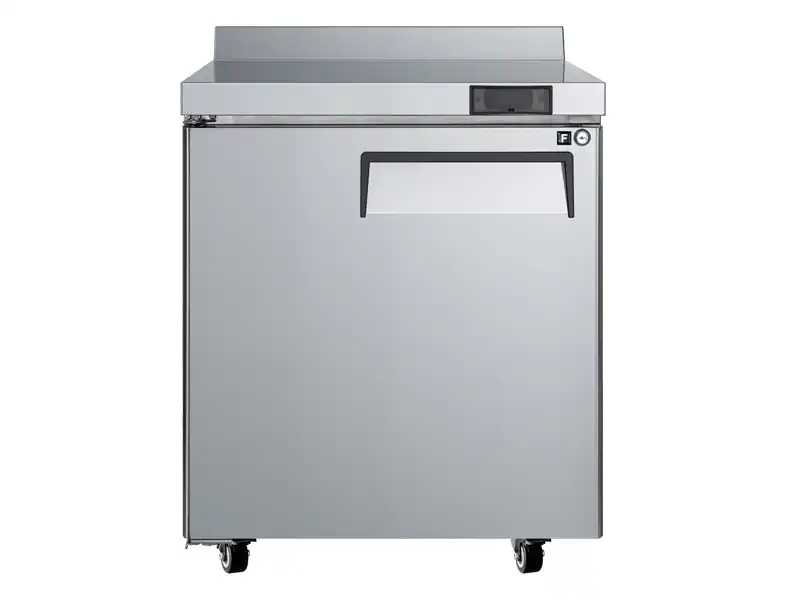
Back-of-house ice is not a separate problem from refrigerated prep. <Boost Kitchen Efficiency Workflow Optimization with [Chef Base](https://zjcamay.com/category/service/product-catalogue/chef-base/) Fridges> covers how chef base refrigeration removes steps at the line, which changes both labor and cooling loads during peak service.
How Do You Turn the Calculation Into an Ice Maker Specification?
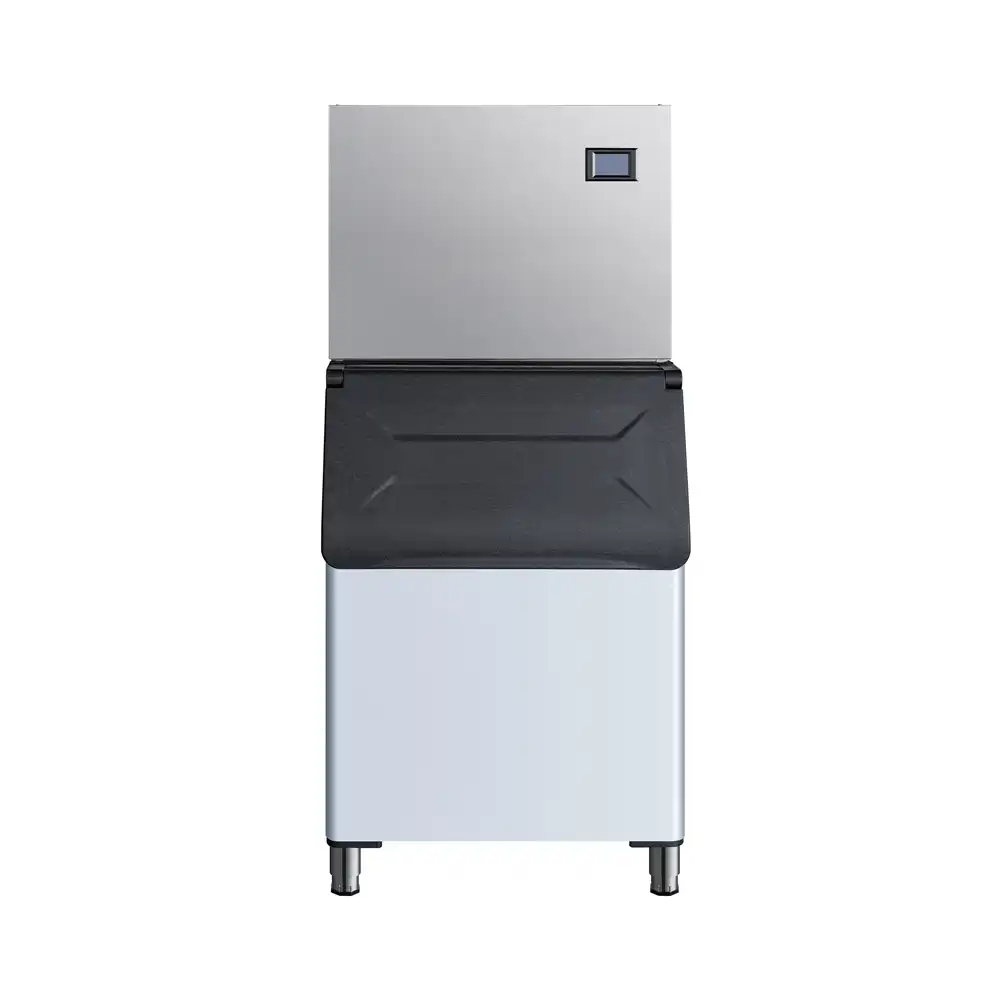
The final number should be a peak-hour ice requirement, not just a daily total. Compare that number with the ice maker’s 24-hour harvest rate and the bin capacity. If the peak-hour demand is 80 lb and the bin holds 40 lb, the machine must produce at least 40 lb during the same window after the bin is drawn down. A machine with a large daily rating but a small bin can still fail.
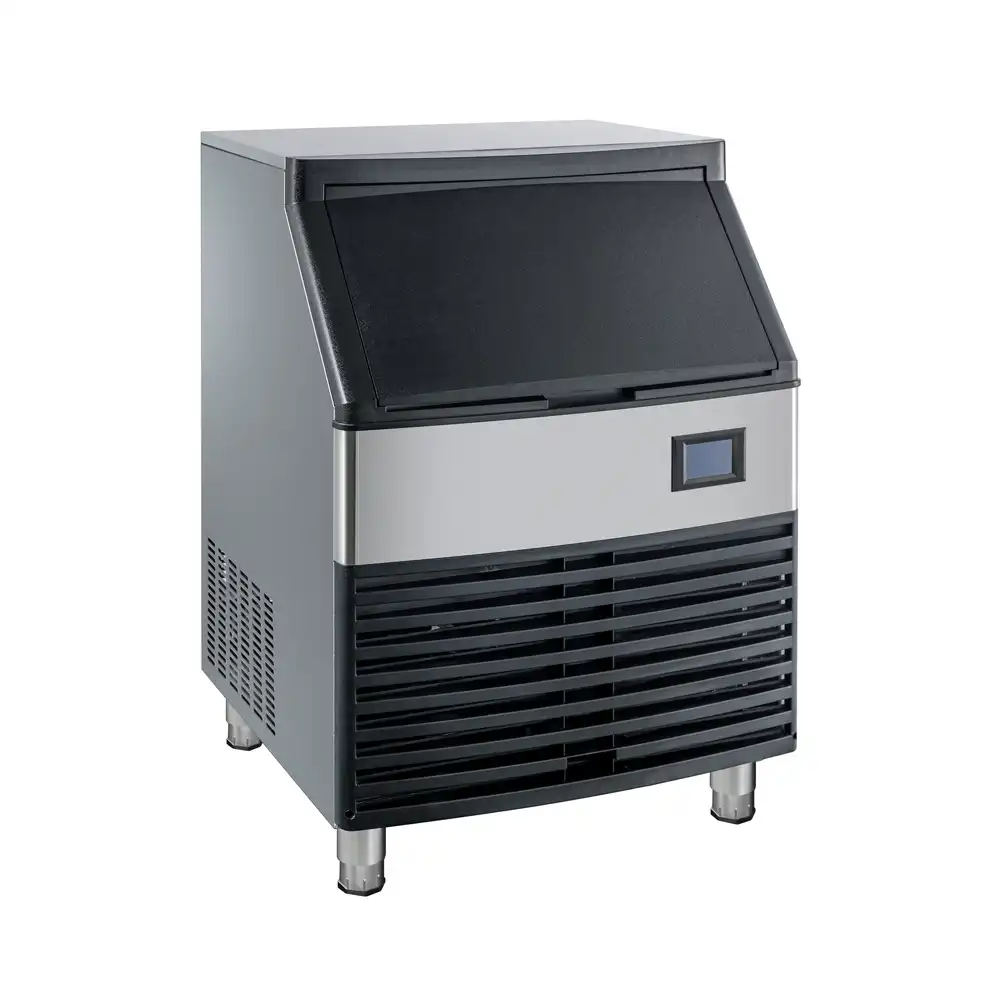
Camay builds commercial cube ice machines with the harvest rate, bin size, and electrical load specified together, so the calculation does not get lost between sales sheet and installation. If you have already worked through your covers and cup mix, send the peak covers, cup size, and back-of-house cooling tasks to Sales@hzcamay.com or call +8618157202219, and we will confirm a recommended model against your busiest service window.
What Should Restaurant Owners Ask About Daily Ice Usage Calculations?
Does ice type change the daily usage calculation?
Yes. Cube ice, nugget ice, flake ice, and gourmet ice pack differently in the same cup, so the beverage weight and melt rate change. A 12 oz cup filled with large cubes contains less actual ice than the same cup filled with nugget ice, which means the ice maker must produce more weight to fill the same number of drinks. I calculate cube ice by weight, but for nugget and flake applications I also check the bin recovery rate because these machines often deliver lower density product and can consume more water per finished cup.
Should I size for the busiest day or a normal day?
It depends on how long the peak lasts and how much recovery time the machine has. If the busiest day is only 20 percent above the normal weekend and the rush spreads over three hours, a machine sized for a strong Saturday may cover it without waste. If the spike is 40 percent above normal and lands inside 90 minutes, size for the spike or add bin capacity. For hotels and event kitchens, the calculation should use the largest single booking, not the average daily cover count.
What if my restaurant fills cups differently at lunch and dinner?
A common mistake is to assume lunch and dinner use the same cup mix. Lunch may be mostly 16 oz soft drinks and iced tea, while dinner shifts to bar cocktails and wine service. Rather than average the two, calculate lunch and dinner as separate service blocks, then add the peak block to the back-of-house estimate. The final ice maker selection should be based on the heavier block, not the combined daily average, because the bin must recover during the actual rush.
How much buffer should I add before buying an ice maker?
Experienced operators think in recovery margin, not just total pounds. After calculating the peak-hour requirement, I add a buffer of 15 to 25 percent for hot months, menu changes, and slow production in high ambient temperatures. This buffer belongs to the machine capacity, not to the bin alone. If your menu depends on iced tea and cocktails in hot weather, share your peak covers and cup sizes with Sales@hzcamay.com or call +8618157202219, and we will confirm whether the unit you are comparing retains enough buffer for your busiest service.
If you’re interested, check out these related articles:
Upright Freezer vs Refrigerator Key Differences Explained
Boost Savings with Energy Efficient Commercial Upright Freezers
Essential Maintenance Tips for Your Commercial Chef Base Refrigerator
How to Choose the Best Chef Base Refrigerator for Your Kitchen