
Most operators set prep table temperature to 34°F and assume ingredients are protected. The real freshness boundary is prep table airflow. In a ventilated cabinet, cold air must move across the pan cavity and return to the evaporator coil without short-circuiting. When pans block return air or fans are undersized, surface temperatures can run 8 to 12°F warmer than the controller reading. That gap causes lettuce to wilt and dairy to spoil while the display reads safe. I have seen identical cabinets hold the same set point and produce an 8°F surface spread depending on how the load blocked the return path. Airflow distribution is a more reliable predictor of prep table freshness than temperature setting alone.
Ventilated Airflow Removes the Heat Load That Spoils Ingredients
A ventilated prep table moves cold air across the evaporator coil and pushes it through the pan cavity before pulling it back through a return opening near the bottom or rear. That loop removes heat and moisture from ingredient surfaces. Without steady air movement, the heat released by leafy greens and dairy products sits near the food surface and shortens shelf life. The controller temperature tells only part of the story; the air returning to the coil shows whether the cabinet is actually pulling heat away.
Camay builds the MSR-48M salad prep table around ventilated air cooling rather than a cold-wall plate. The unit holds 368 L (13 cuft) at 0.5°C to 5°C (33°F to 41°F), uses R290 refrigerant, automatic defrost, a Cubigel compressor, and polyurethane/cyclopentane CFC-free insulation. A fan-driven cabinet keeps the temperature spread across the pan row tighter than a static system can. 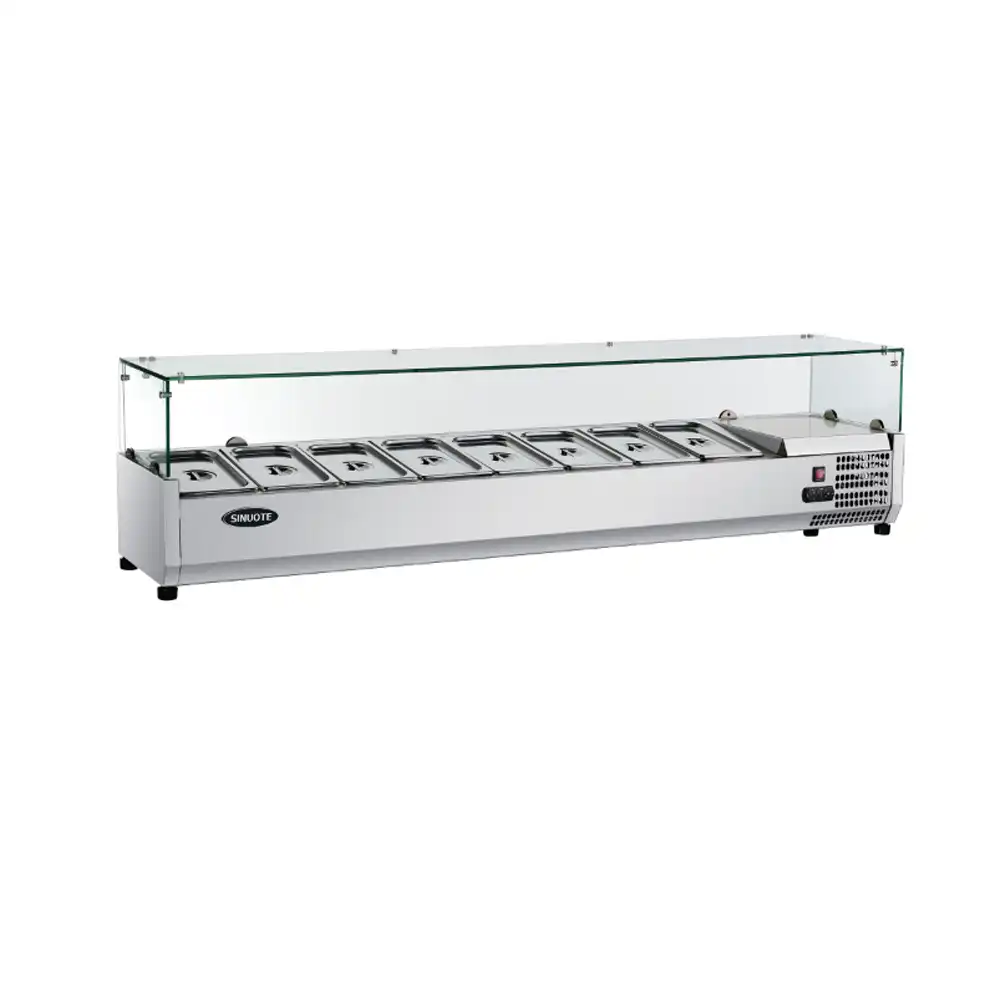
Airflow Failures That Create Warm Spots in Prep Tables
Blocked return air causes the most common warm spot. Operators push sheet trays or tall inserts against the back wall, which covers the return grille. The fan then pulls air from the nearest free opening instead of across the full cabinet. The result is a cold front rail and a warm rear row, even when the digital display reads 2°C. A second failure is fan run time. Some budget prep tables cycle the evaporator fan with the compressor. When the compressor stops, air movement stops, and temperature stratifies. In a warm kitchen, pan surfaces can rise before the next compressor start.
In production temperature mapping, I have loaded a salad table with six GN 1/3 pans against the rear wall and watched the rear pan settle 5°F warmer than the front pan within two hours. Moving the pans forward by two inches restored the return path and brought both rows within one degree. The cabinet was not faulty; the airflow path changed. 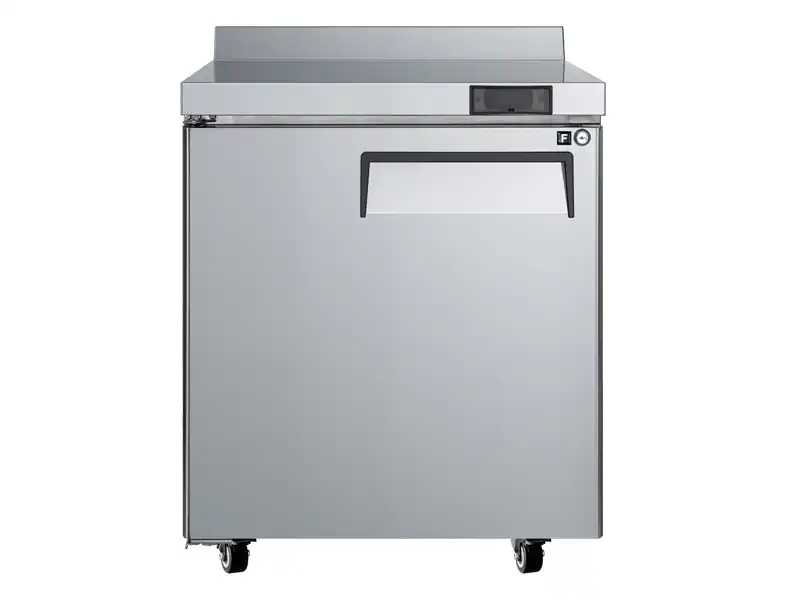
Spec Checks That Separate Reliable Prep Table Airflow From Guesswork
When comparing prep tables, four airflow details matter more than cabinet volume: the cooling system type, the return air opening, the defrost method, and the fan control logic.
| Design element | Strong specification | Risk sign | Freshness impact |
|---|---|---|---|
| Cooling system | Ventilated air cooling | Static cold-wall plate | Uneven pan temperatures |
| Return air path | Dedicated grille below or behind pans | No visible return path or easy to block | Warm rear row or bottom pans |
| Fan control | Continuous or long-run fan cycle | Fan stops with compressor | Temperature stratification during off cycles |
| Defrost | Automatic with positive drain | Manual defrost or standing condensate | Humidity spikes and wilted leafy greens |
| Insulation | CFC-free polyurethane/cyclopentane | Thin foam or visible gaps | Condensation and exterior sweating |
Camay ventilated prep tables combine R290 refrigerant, CFC-free polyurethane/cyclopentane insulation, and automatic defrost, and the MSR-48M carries ETL Safety and ETL Sanitation (NSF Standard) certification. If your prep station uses odd pan sizes or sits in a high-humidity line, airflow path and fan static pressure merit confirmation before you finalize the equipment list. Send your cabinet width and pan layout to Sales@hzcamay.com, and we can verify the return-air arrangement for your setup.
How Pan Placement and Load Limits Change Cold Air Distribution
The simple rule from our production floor: leave a two-inch air gap behind the back row. That gap returns cold air to the coil. Fill pans no higher than the rim. Overfilled pans interrupt the supply air stream across the surface and trap heat in the product. Distribute heavier loads across lower shelves instead of stacking everything on one shelf. Keep the return grille uncovered even during rush hours.
How the prep table sits in the line also changes airflow and operator flow. <Optimizing Kitchen Efficiency with Integrated Worktop Refrigeration> covers how worktop refrigeration units fit under counters and reduce steps without restricting service access.
Maintaining Prep Table Airflow Without Extra Energy Cost
Clean the evaporator coil, fan guard, and return grille every month. Dust and grease on the coil reduce heat transfer and make the fan work against a tighter static pressure. Check the door or drawer gaskets for gaps, because outside air leaks create a competing moisture load. Keep the condensate drain clear so water does not pool and raise cabinet humidity. Verify the fan spins freely and the blades are clean. The same fan-driven design philosophy runs across adjacent Camay platforms, including ice production. 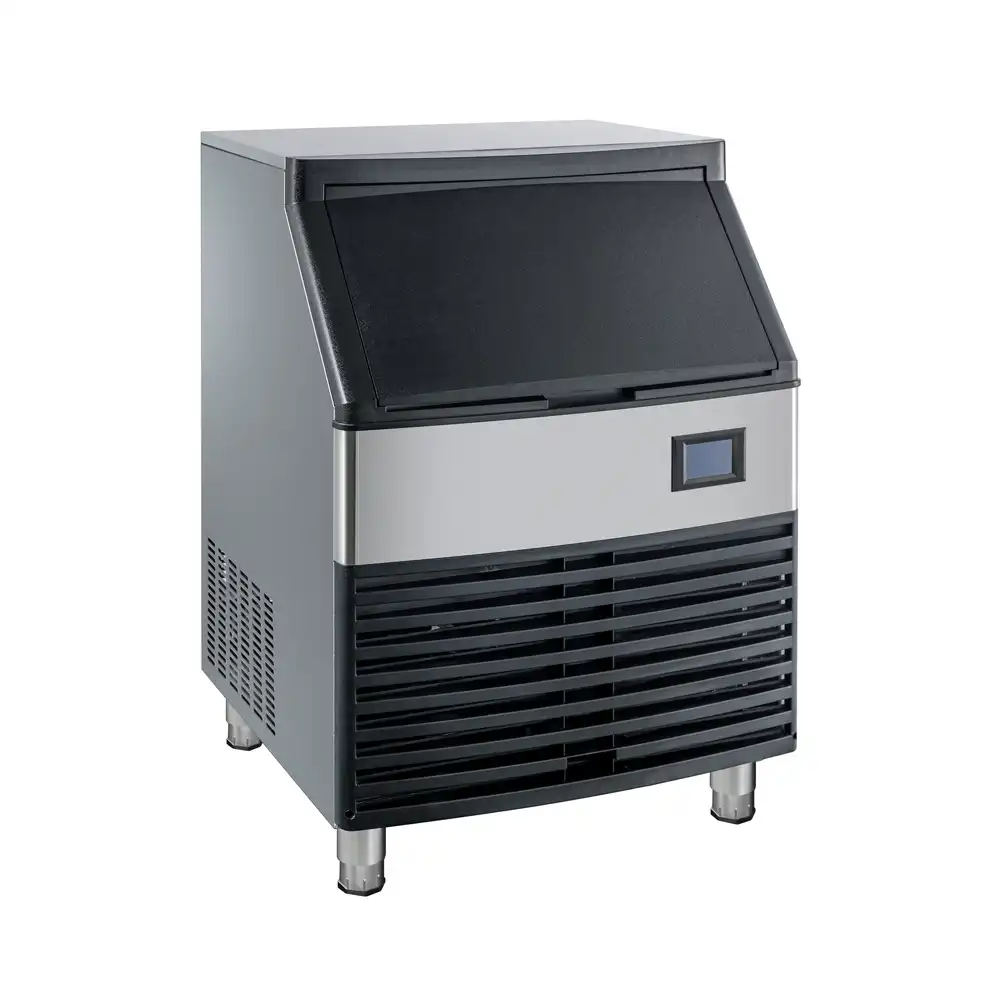
Airflow and coil cleaning have a direct effect on long-term cooling performance. <Essential Maintenance Tips for Your Commercial [Chef Base](https://zjcamay.com/category/service/product-catalogue/chef-base/) Refrigerator> covers practical coil and gasket maintenance steps that also apply to fan-driven prep tables.
An airflow problem often looks like a temperature problem, and replacing the thermostat will not fix a blocked return path. If your prep tables show warm spots, color changes, or wilted greens within one shift, share your cabinet model and a photo of the loaded pan layout with our engineering team. Send details to Sales@hzcamay.com or call +8618157202219, and we will review the airflow configuration before you replace the unit.
Common Questions About Prep Table Airflow and Ingredient Freshness
Does a prep table need ventilated airflow, or is cold-wall cooling acceptable?
Ventilated airflow works better for high-volume prep stations. Cold-wall cooling chills the liner by contact, which suits small sealed cabinets but leaves a wider temperature spread across exposed pans. A fan-driven cabinet moves air across ingredient surfaces and carries heat to the coil. The MSR-48M salad table uses air cooling for that reason. Cold-wall units often struggle after the lid opens repeatedly because there is no forced mixing. For rows of open pans, choose a ventilated system with a visible return path.
How can I tell if blocked airflow is causing my prep table warm spots?
It depends on where the warm spot appears. Warmth at the rear row usually points to a blocked return grille or pans pressed against the back wall. Warmth near the front rail points to a damaged front gasket or weak supply air. Warmth across the entire top row often points to an undersized fan or an airflow short-circuit. Pull the back row forward two inches and check the return opening. If temperatures stabilize, the cabinet is not faulty; the loading pattern restricted airflow.
Does the controller display reflect actual pan temperature?
Many operators assume the controller reading matches ingredient temperature. That assumption fails in cabinets with weak airflow. The probe sits in the return air stream or near the coil, so it reports the air after it has already passed across the pans. Pan surfaces can run several degrees warmer. The display is useful for set point and fault codes, but it is not a substitute for a periodic pan-level reading with a thermocouple or infrared thermometer.
Do prep table fans cost much to run continuously?
In the units we build, continuous fan operation adds very little energy cost compared with a cycling fan. A typical evaporator fan draws tens of watts, while the compressor and defrost heater dominate consumption. The larger benefit is stable pan temperature. When the fan cycles off with the compressor, air movement stops and heat stratifies. With continuous airflow, the cabinet recovers faster after the lid opens. Keep coils clean and the energy penalty stays small; the real cost is spoiled product from uneven cooling. If your operation sees large pan temperature swings at peak service, share your cabinet model and loading pattern with our team, and we will confirm whether a fan control adjustment is the right fix.
If you’re interested, check out these related articles:
Optimizing Kitchen Efficiency with Integrated Worktop Refrigeration
Essential Maintenance Tips for Commercial Reach In Refrigerators
Boost Kitchen Efficiency Workflow Optimization with Chef Base Fridges
Ultimate Buyers Guide for Commercial Reach In Refrigerators
Chef Base Fridge vs Undercounter Fridge Which Is Best for Your Kitchen