
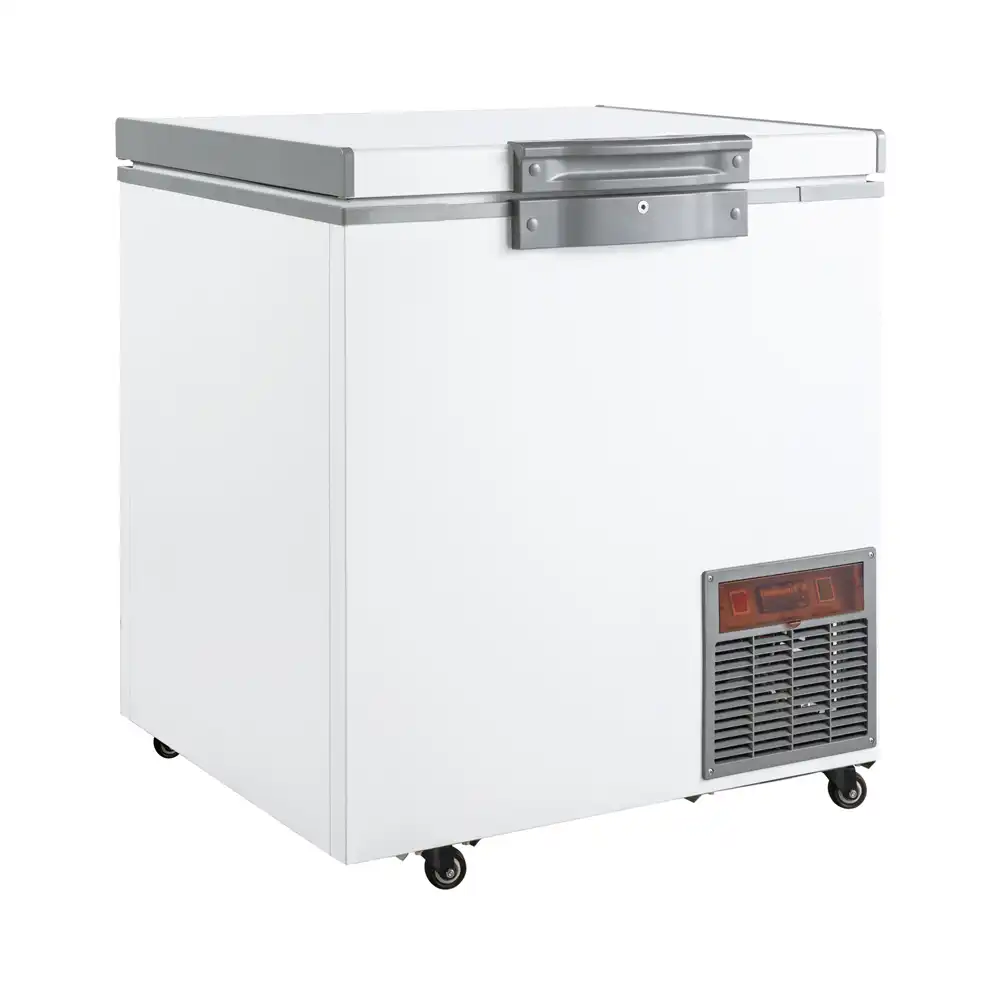
High-performance ultra freezers are changing the way restaurants handle expensive and temperature-sensitive ingredients. These units go far beyond standard kitchen freezers, reaching temperatures as low as -45°C to -86°C to lock in freshness, texture, and nutritional value that conventional equipment lets slip away. For a restaurant, that means less spoilage, better plate presentation, and the ability to confidently store high-margin items like sushi-grade tuna, dry-aged beef, specialty ice creams, or prepared pastry components. From a manufacturer’s perspective with more than 26 years in commercial refrigeration, I have seen a single well-chosen ultra freezer pay for itself within a year when placed in the right kitchen.
What Defines a High-Performance Ultra Freezer
An ultra freezer is not simply a colder version of a reach-in unit. The core difference lies in the refrigeration system and insulation design. Where a standard commercial freezer cycles around -18°C to -22°C, a high-performance ultra freezer operates continuously below -40°C, often using a cascade or auto-cascade compressor system and a hydrogen-carbon mixed refrigerant to reach those extremes. The insulation is thicker—typically 100mm to 150mm of polyurethane foam—to maintain gradient stability. This matters because it is the rapid transition through the “danger zone” of ice crystallization that preserves food structure. A slow freeze creates large crystals that rupture cell walls; an ultra freezer pulls product through that zone fast enough to minimize damage.
How Ultra Freezers Differ From Blast Chillers
A common confusion is between ultra freezers and blast chillers. A blast chiller is designed for speed: it pulls hot food from cooking temperature down to safe cold-holding in 90 minutes or less, meeting HACCP requirements. An ultra freezer is designed for depth and duration—holding product at extreme cold for weeks or months with minimal quality loss. In a well-planned kitchen, they complement each other. The blast chiller handles cook-chill production, while the ultra freezer stores the output and protects high-value raw materials that arrive frozen.
Why Restaurants Invest in Ultra-Low Temperature Storage
There are three practical reasons a restaurant commits to ultra freezer capacity: ingredient protection, production smoothing, and supplier independence. On ingredient protection, the difference is measurable. A high-grade tuna loin stored at -60°C retains its color and fatty acid profile far longer than one held at -18°C. The same holds for foie gras, wagyu, and certain cheeses. Production smoothing means a kitchen can batch-prep components like stocks, sauces, and doughs, freeze them at ultra-low temperatures, and pull them as needed without detectable quality drift. Supplier independence is more of a business advantage: when a good price appears on a seasonal item, you can buy deep and store it securely.
Which Ingredients Justify the Investment
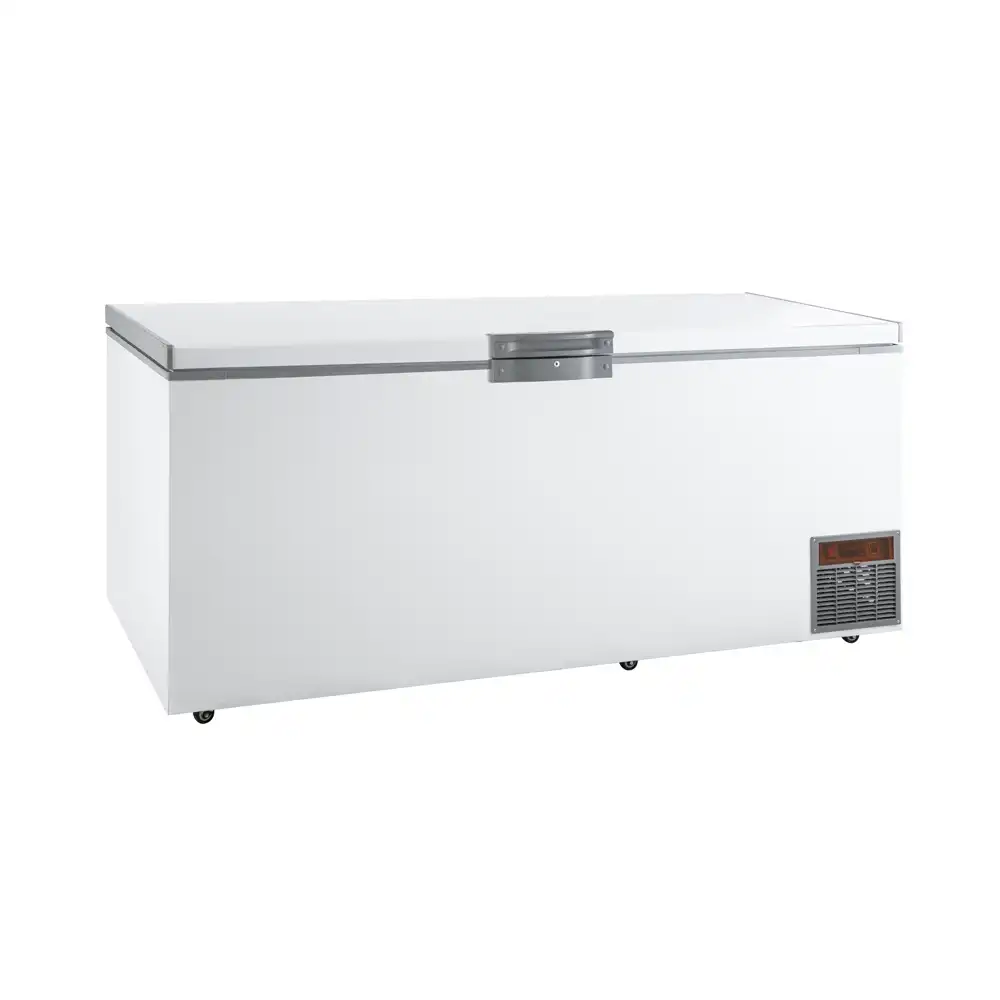
Not everything in a kitchen belongs in an ultra freezer. The ingredient categories that most commonly drive the decision are premium proteins, value-added pastry items, and specialty ice creams. In practice, a fine-dining restaurant might dedicate half its ultra freezer capacity to seafood and the rest to meat aging, stocks, and custom frozen desserts. A high-volume patisserie or bakery might use it entirely for frozen dough products and mousse inserts. If your menu features only standard proteins and everyday vegetables, a well-managed standard freezer is usually sufficient. The investment becomes logical when at least 15 to 20 percent of your food cost sits in items that degrade noticeably at conventional freezer temperatures.
Key Factors for Selecting the Right Ultra Freezer for Your Kitchen
Size, power, and refrigeration type are the three selection variables that determine whether an ultra freezer earns its footprint. Most restaurant kitchens allocate space in the cold storage area, but ultra freezers require additional clearance for ventilation—typically 150mm on all sides if using an air-cooled condenser. Voltage and phase are another early filter: while some compact restaurant-grade units run on 115V single-phase, larger cabinets often need 208V or 240V. If your kitchen does not have three-phase power available near the planned location, your feasible model range narrows quickly.
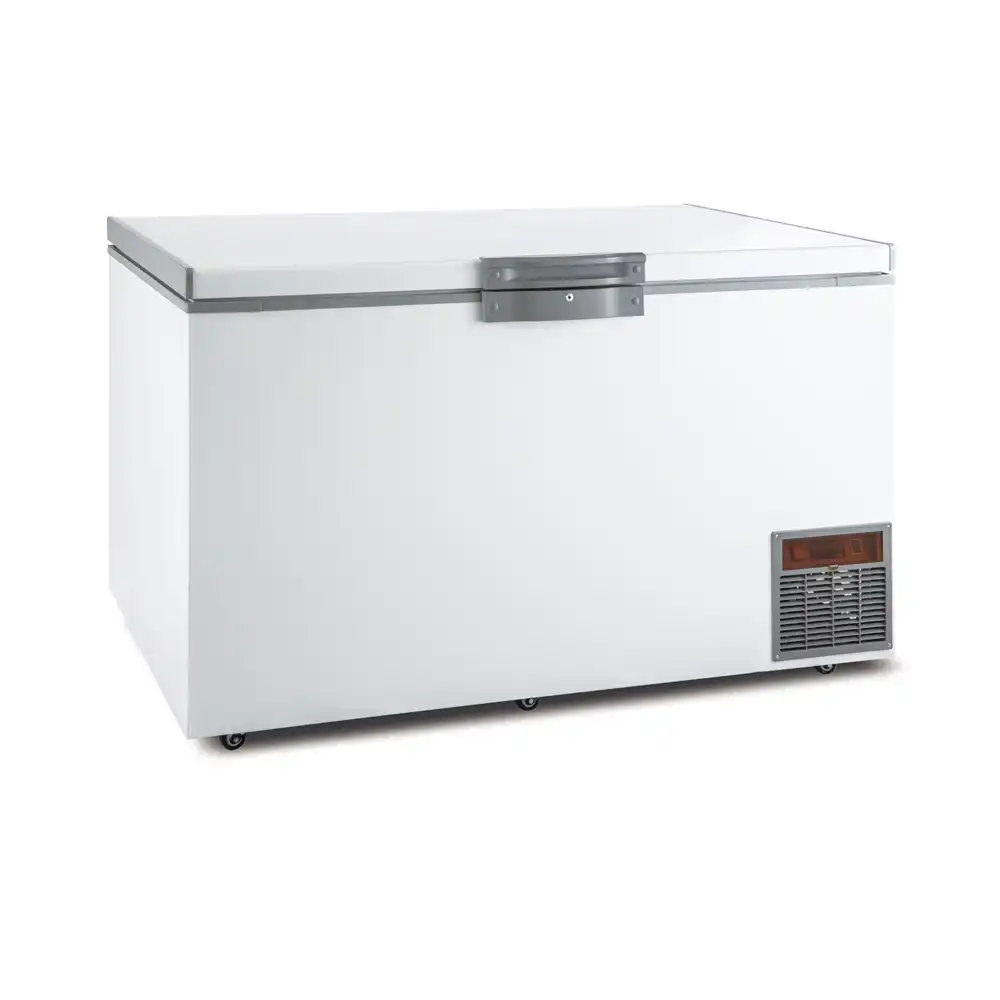
A critical but often overlooked factor is pull-down time—how long the unit takes to recover after a door opening. In a busy restaurant during prep hours, the freezer door may open twenty times in a shift. A system with a compressor matched to the cabinet volume and sufficient refrigerant charge will hold temperature within a tight band. Undersized compressors let the core temperature drift upward, causing micro-thaw cycles that defeat the point of ultra-low storage.
| Selection Factor | What to Verify |
|---|---|
| Temperature range | Confirm the unit maintains its rated low temperature under maximum ambient conditions (often 38°C) |
| Power supply | Match voltage and phase to available electrical infrastructure |
| Insulation thickness | 100mm minimum for consistent -45°C holding; thicker for -86°C units |
| Door sealing and hinges | Gaskets must be heated or multi-layered to prevent ice lock at ultra-low temperatures |
| Defrost method | Manual, hot-gas, or electric; each has maintenance implications |
Our Camay engineering team draws on decades of OEM and ODM manufacturing when evaluating these specifications. In units like the DW45W788 and DW45W685 series, we use hydrogen-carbon mixed refrigerants paired with SECOP compressors to deliver reliable pull-down and stable holding across a wide ambient, which is what a busy kitchen environment demands.
If your program involves storing high-volume seafood or custom frozen components with tight daily access, it is worth confirming both the rated pull-down time and recovery performance under load—reach out at Sales@hzcamay.com to discuss capacity and compressor sizing for your specific menu.
Operational Integration: Placement, Workflow, and Energy Management
Where you put the ultra freezer matters as much as which model you choose. Kitchens that treat it as another box in the corner often see two problems: workflow disruption and inflated energy bills. The ideal location is adjacent to the prep area that actually handles the stored ingredients—close enough that staff do not walk across the kitchen with valuable product, but not so close to cooking lines that ambient heat forces the compressor to run continuously. A distance of two to three meters from major heat sources is a practical minimum.
Energy consumption numbers can surprise operators. A mid-sized restaurant ultra freezer in the -45°C class typically draws between 600 and 900 watts during steady-state operation, but door openings and warm product loads push it higher. Annual energy costs can exceed $1,500 depending on local rates. Good practices reduce this: grouping door openings during prep cycles, pre-chilling product in a standard freezer before transferring to the ultra unit, and quarterly condenser cleaning all make a measurable difference.
Avoiding Common Placement Mistakes
A frequent misstep I have seen in restaurant projects is installing an ultra freezer on the same circuit as heat-producing equipment. Voltage drops from a combi oven or fryer cycling on can cause compressor protection to trip. Another is placing the unit against a wall without the manufacturer-specified clearance. At -60°C, a starved condenser raises head pressure and shortens compressor life significantly. Spending an extra hour on the layout diagram avoids years of service calls.
Maintaining Long-Term Reliability in Ultra Freezers
Ultra freezers are low-maintenance compared to their complexity, but neglect carries higher consequences than with a standard unit. The two highest-payoff maintenance tasks are condenser coil cleaning and door gasket inspection. A dirty condenser raises energy draw by 15 to 25 percent and accelerates compressor wear. Gasket leaks at ultra-low temperatures quickly form ice buildup that prevents the door from sealing completely, starting a destructive cycle. We recommend a visual gasket check every two weeks and a full coil cleaning every three months in a typical kitchen environment.
What Maintenance Schedule Works in a Busy Kitchen
A practical routine we suggest to our partners is this: assign the closing chef or kitchen manager a five-minute end-of-day check to wipe down gaskets and confirm the digital display reading. Once a month, the maintenance staff or an external technician should pull the unit away from the wall, vacuum the condenser fins, and inspect the drain line if the unit uses auto-defrost. For ultra freezers with manual defrost, define a defrost day based on frost thickness reaching 5mm. Letting frost build beyond 10mm insulates the evaporator and forces the compressor into near-continuous operation.
Common Questions About Restaurant Ultra Freezers
Can an ultra freezer replace a blast chiller for HACCP compliance?
No, these serve different roles. An ultra freezer is a deep storage unit, not a rapid-cooling device. HACCP regulations require cooked food to pass through the danger zone of 60°C to 4°C within a defined time window, which only a blast chiller can achieve reliably. Using an ultra freezer to cool hot food compromises the food safety timeline and overloads the compressor. The correct setup uses a blast chiller for cook-chill and an ultra freezer for long-term storage.
Is the energy cost of running an ultra freezer justified for a small restaurant?
It depends on the food cost savings and the value of the stored inventory. If a small restaurant stocks a modest amount of expensive proteins—say, a month’s supply of ahi tuna and dry-aged ribeye—the avoided spoilage alone can offset the extra $1,200 to $1,800 in annual electricity. Without that kind of inventory density, a standard freezer with careful stock rotation is often the more sensible operational choice.
How long can food really stay in an ultra freezer without quality loss?
At -60°C, well-packaged fatty fish, premium meats, and pastry products can hold for 12 to 18 months with negligible change in texture or flavor. At -45°C, a practical guideline is 6 to 9 months for the most sensitive items. The biggest variable after temperature is packaging—vacuum sealing and wrapping with a moisture barrier prevent freezer burn that degrades surface quality over time.
What should I look for in an ultra freezer manufacturer?
Verify that the manufacturer builds to recognized international standards and can provide full specifications for compressor type, insulation density, and refrigerant charge. Look for certifications like ETL, CE, and ISO 9001 manufacturing management. A factory with in-house R&D and testing capability can also confirm performance at the ambient temperatures your kitchen actually reaches. If your kitchen environment is unusually hot or humid, sharing your specific site conditions with a technical contact before purchase helps avoid an installation mismatch—send your kitchen layout and temperature range to Sales@hzcamay.com and we will confirm the appropriate model and condenser sizing.
If you’re interested, check out these related articles:
Essential Maintenance Tips for Your Commercial Chef Base Refrigerator
Heavy Duty Chef Base Refrigeration for Efficient Commercial Kitchens
Essential Commercial Chef Base Fridge Installation Tips
Upright Freezer vs Refrigerator Key Differences Explained
Boost Efficiency Energy Efficient Chef Base Units for Commercial Kitchens