
Central kitchens often buy blast chillers for food safety compliance, but the larger payoff shows up in batch rhythm. When cooked product drops from 70 °C to 3 °C in roughly 90 minutes instead of sitting in a walk-in cooler for hours, the prep line stops waiting and starts moving. I look at this as a production timing problem first and a temperature rule second. A properly sized blast chiller changes how many batches a central kitchen can process in a shift without adding staff. The sections below cover the workflow logic, capacity decisions, and layout choices that determine whether the equipment actually speeds up production.
Why Does Cooling Time Control Central Kitchen Throughput?
Most central kitchen slowdowns happen at the handoff between cooking and cold holding. Cooked food can spend four to six hours passing through the temperature danger zone if it is wheeled into a walk-in cooler. That waiting time blocks racks, occupies staff, and pushes later batches out of sequence. A blast chiller pulls the same product through the danger zone in about 90 minutes, which means the same rack space can turn two or three times in one production window. The workflow gain is not colder food. It is freed-up floor space and a faster return of usable trays and racks to the line.
How Do Blast Chillers Pull Food Through the Temperature Danger Zone?
Food safety regulations in many markets set a staged cooling standard. The US Food Code asks operators to cool cooked product from 57 °C to 21 °C within two hours, then from 21 °C to 5 °C within another four hours. Blast chillers make this path predictable. A central kitchen can schedule a batch, know when the rack will be ready, and send staff to the next task instead of checking walk-in temperatures through the afternoon. The speed comes from forced air and low evaporator temperatures working directly on the product, not from setting a thermostat lower in a standard cooler.
Matching Cooling Mode to the Next Production Step
Soft chill works for delicate items that will be plated soon. Hard chill suits dense cooked product that needs fast pull-down without freezing the surface. Blast freeze goes further and is intended for products moving into frozen storage. The wrong mode creates its own bottleneck. Dense rice cooled on a soft chill setting can miss the time target, while leafy items in blast freeze can develop ice crystals and texture damage.
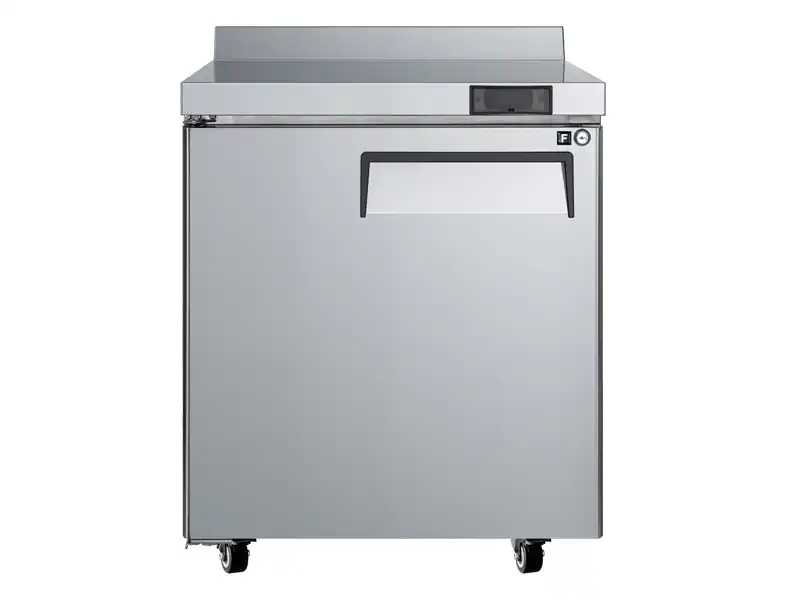
After blast chilling, product usually moves into a reach-in or walk-in holding unit. <Essential Maintenance Tips for Commercial Reach In Refrigerators> covers the cleaning and condenser checks that keep that downstream cold chain from undoing the blast chiller’s work.
How Should Central Kitchens Size a Blast Chiller Capacity?
Buyers often start with cabinet volume, which is the wrong first number. The correct first number is the peak batch weight the kitchen must chill in one cycle and the time it must reach safe holding temperature. Manufacturer capacity charts assume a specific tray depth, product density, and rack spacing. Mixed loads change everything. Cutting dense product into shallow layers or increasing tray spacing can cut pull-down time more than buying a larger cabinet.
| Load Type | Typical Tray or Pan Load | Main Cooling Constraint |
|---|---|---|
| Dense rice or mashed potato | 50 to 60 mm deep hotel pan | Air cannot move through the center, so pull-down slows sharply |
| Sauces and soups | 20 L stock pot or lidded pan | High thermal mass needs a probe placed in the liquid core |
| Roasted meats | 5 to 8 kg whole cuts | Surface can freeze before the center cools if air speed is too high |
| Portioned meals | 300 to 500 g trays | Fast cycle, but rack spacing matters more than total weight |
| Bakery items | Sheet pans | Steam and humidity control affect texture during cooling |
I have reviewed central kitchens where a partially loaded blast chiller cooled more slowly than a fully loaded one because air traveled around shallow racks instead of through the product. The fix was standardizing batch sizes so the cabinet could be loaded to its designed airflow pattern, not buying a larger unit.
Where Should a Blast Chiller Sit in the Production Flow?
The unit should sit close enough to the cooking station that cooked product can be loaded within minutes, but far enough that hot exhaust does not fight with the kitchen’s air conditioning. Air-cooled condensers reject heat into the room; water-cooled models move that heat to a water loop. In a central kitchen, this distinction can shift room temperatures by several degrees during a heavy production run.
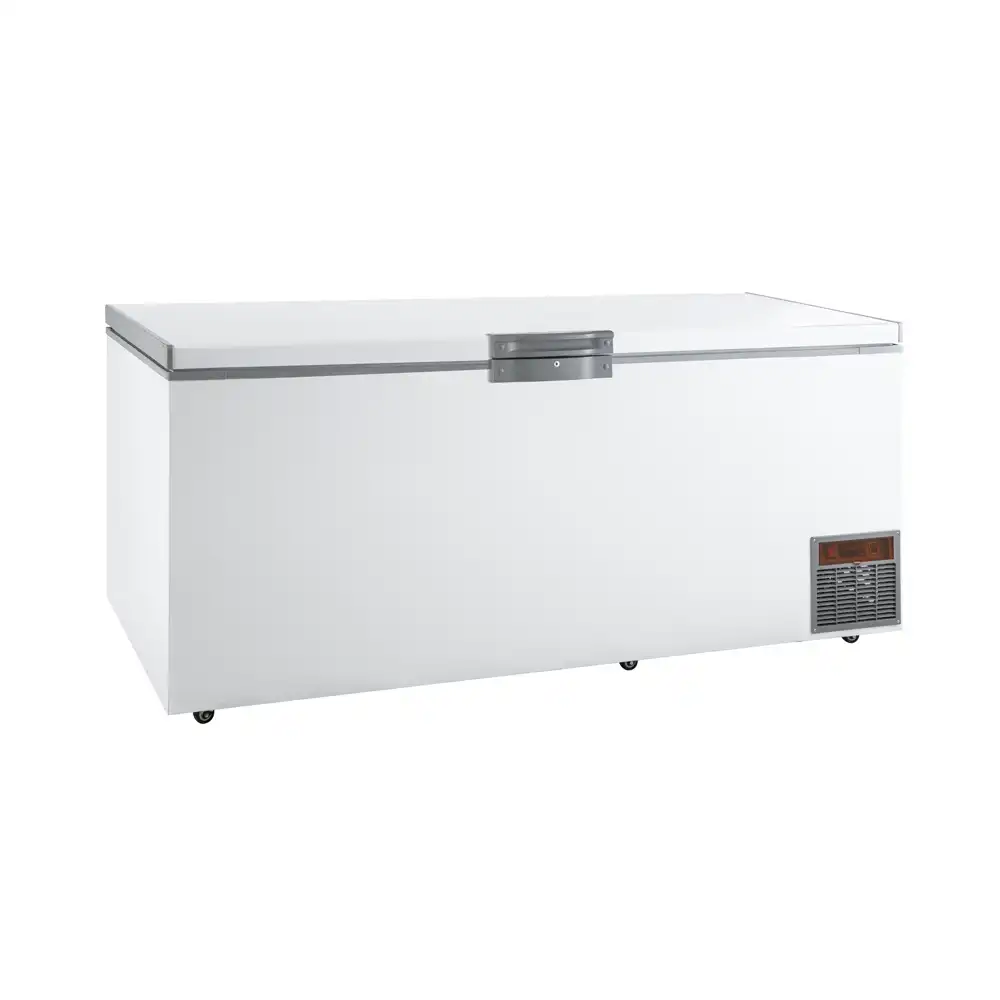
Blast chilling works best when it sits next to prep and worktop refrigeration, not across the kitchen. <Optimizing Kitchen Efficiency with Integrated Worktop Refrigeration> covers how integrated worktop units shorten the distance between cold storage and prep, which matters more when blast-chilled product has to move quickly.
If your production runs include dense rice, sauces, and roasted meat in the same batch, it is worth confirming the chiller’s airflow and probe placement before you finalize a model. Send your batch profile and daily cycle count to Sales@hzcamay.com.
What Is the Fastest Way to Confirm Blast Chiller Specifications?
Many central kitchens find out too late that a standard blast chiller cannot hold temperature on their heaviest batch. Before you finalize a model, send your tray size, batch weight, and daily cycles to Sales@hzcamay.com. That one specification check is the fastest way to avoid buying capacity you do not need or missing capacity you do. You can also call +8618157202219 to confirm airflow requirements and compressor match with our engineering team.
What Do Central Kitchen Operators Ask About Blast Chiller Workflow?
What pull-down time do central kitchens actually need?
Most central kitchens should target passing the US Food Code staged cooling standard, not a single manufacturer number. In practice, that means cooling cooked product from 57 °C to 21 °C within two hours, then to 5 °C within another four hours. Blast chillers usually beat this comfortably when loaded correctly, but the real benefit is repeatability. A kitchen can schedule the next batch because the unit finishes on time. If your menu includes dense or high-moisture items, ask the supplier to quote pull-down based on your actual tray load, not an empty cabinet.
Can a blast chiller replace a walk-in freezer for overnight storage?
No. A blast chiller is a processing tool, not a storage unit. It pulls temperature down quickly, but it is not designed for long-term holding at frozen temperature. After the cycle, product still moves to a reach-in or walk-in unit for storage. Using a blast chiller as overnight storage wastes capacity and makes the next day’s batches wait. The two pieces of equipment solve different parts of the cold chain.
Should I choose soft chill or hard chill for central kitchen use?
It depends on what you are cooling. Soft chill suits delicate proteins and items that will be plated or held short term. Hard chill fits dense cooked product, sauces, and rice where you need fast pull-down without surface freezing. Blast freeze is for product moving into frozen storage. If your central kitchen runs mixed menus, a unit with selectable modes and a core-temperature probe gives you more control over batch results.
Where should the blast chiller sit in a central kitchen layout?
In the central kitchens we review, the best position is between the hot line and cold holding because that is where the rack stream naturally moves. Placing the unit on a back wall adds walking time and creates a crossing pattern. The chiller also needs clearance for condenser air and enough space to open doors fully. If your corridor is narrow, a pass-through configuration can separate clean and dirty sides and keep staff from doubling back. Share your layout and daily batch count, and we can confirm which configuration fits the space.
If you’re interested, check out these related articles:
Boost Savings with Energy Efficient Commercial Upright Freezers
Essential Commercial Chef Base Fridge Installation Tips
Essential Maintenance Tips for Your Commercial Chef Base Refrigerator