
Getting food from 90°C down to 3°C in under 90 minutes changes everything about how a kitchen runs. I’ve watched restaurants struggle with the timing of prep work, trying to cool batches in walk-in coolers that simply cannot pull heat fast enough. A high-efficiency blast chiller solves that problem directly. It gives you control over when food gets prepared, how long it stays safe, and how quickly plates reach tables. For any restaurant serious about food safety, waste reduction, and faster service, this piece of equipment earns its place.
Rapid Cooling Protects Food and Builds Operational Flexibility
Rapid cooling does more than satisfy health inspectors. A high-efficiency blast chiller pulls temperatures down fast enough to halt bacterial multiplication in that critical danger zone between 60°C and 5°C. This matters because pathogens like Salmonella and Listeria thrive when food lingers at warm temperatures. HACCP compliance depends on documented temperature control, and blast chillers provide exactly that.
Beyond safety, these units reshape how kitchens operate. Chefs can prepare sauces, proteins, and components hours or even days before service. Cook-chill systems become practical rather than theoretical. Food quality preservation improves because rapid cooling locks in moisture, texture, and flavor that slow cooling degrades. The result is consistent output, reduced last-minute scrambling, and fewer instances of foodborne illness prevention failures.
 ## Technical Specifications That Determine Real-World Performance
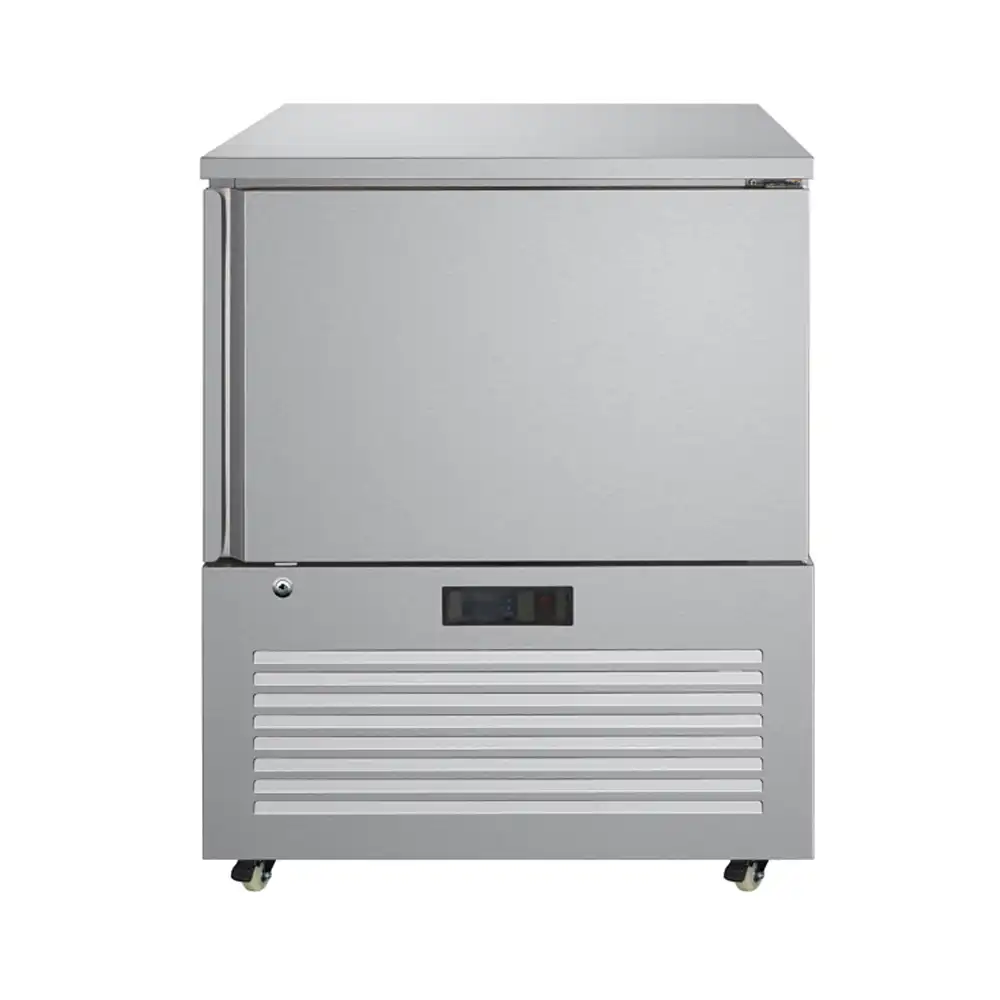
Choosing a high-efficiency blast chiller requires looking past marketing claims to actual specifications. Refrigeration capacity must match your production volume during peak periods. A unit rated for 20kg batches will bottleneck a kitchen that needs to chill 40kg at once. Temperature control accuracy matters because even small deviations affect both safety and texture.
Modern blast chillers offer multiple chilling cycles. Soft chilling works for delicate items like custards and mousses that would crack under aggressive cooling. Hard chilling handles dense proteins and large batches. Shock freezing takes products to -18°C rapidly, preserving cell structure better than slow freezing. Digital controls and probe temperature monitoring let operators track core temperatures precisely rather than guessing.
Energy efficiency ratings affect operating costs directly. Equipment footprint determines whether a unit fits your existing layout or requires renovation.
Matching Capacity to Production Demands
Chilling capacity sets the ceiling on what your kitchen can accomplish. A restaurant preparing 200 covers nightly needs different throughput than a central production facility serving multiple locations. Peak demand management becomes critical during busy periods when multiple batches require cooling simultaneously.
Different blast chiller types address different needs. Reach-in models suit smaller operations. Roll-in units handle sheet pans and larger batches without manual transfer. The specific chilling programs available determine versatility. A unit with only hard chill cannot handle delicate pastry work properly.
Energy Consumption and Long-Term Cost Implications
Energy efficiency ratings translate directly to monthly utility bills. High-efficiency models use advanced insulation, variable-speed compressors, and eco-friendly refrigerants like R290 to reduce power consumption. The utility cost reduction compounds over years of operation.
Calculating ROI requires comparing energy costs against conventional refrigeration methods. Sustainable refrigeration practices also matter for restaurants pursuing environmental certifications or marketing sustainability to customers. Our 26 years manufacturing refrigeration equipment confirms that energy-efficient designs consistently deliver lower total ownership costs.
| Feature | Performance Impact | Restaurant Benefit |
|---|---|---|
| Refrigeration Capacity | Determines batch size and cooling speed | Handles high volume, reduces wait times |
| Temperature Control | Ensures precise cooling, prevents spoilage | Guarantees food safety, consistent quality |
| Chilling Cycles | Adapts to different food types (soft, hard, shock freezing) | Versatile food preparation, optimal texture |
| Energy Efficiency | Lowers power consumption during operation | Reduces utility bills, improves profit margins |
| Digital Controls | Provides precise programming and monitoring | Simplifies operation, minimizes human error |
Workflow Integration That Actually Improves Daily Operations
A high-efficiency blast chiller only delivers value when it fits into existing workflows. Strategic placement within the kitchen layout minimizes steps between cooking stations and the chiller. Staff training ensures operators understand cycle selection, probe placement, and documentation requirements. Without proper training, even excellent equipment gets misused.
The operational workflow benefits extend throughout service. Batch cooking becomes practical because components can be prepared during slow periods and chilled for later use. Menu flexibility increases when chefs can develop dishes requiring precise temperature control. Mise en place improves because prepped ingredients stay safe longer. The serving speed improvement shows up in faster ticket times and happier customers.
For further insights into optimizing kitchen efficiency, consider reading 《Boost Kitchen Efficiency Workflow Optimization with Chef Base Fridges》.
Pre-Purchase Evaluation Prevents Costly Mistakes
Buying a high-efficiency blast chiller without proper evaluation leads to problems. Installation considerations include electrical requirements, ventilation needs, and drainage access. Maintenance requirements vary by model and affect long-term reliability. Supplier reputation matters because equipment problems require responsive technical support.
Comprehensive warranty options protect against manufacturing defects. After-sales support determines how quickly issues get resolved. Regulatory compliance and hygiene standards must be verified for your specific jurisdiction. Our OEM and ODM cooperation experience ensures units meet diverse international standards.
Space Planning and Installation Realities
The equipment footprint must fit available space without disrupting traffic flow. Blast chillers generate heat during operation, requiring adequate ventilation to prevent overheating and maintain efficiency. Electrical specifications must match available power supply. Some units require three-phase power unavailable in older buildings.
Drainage requirements exist for units with defrost cycles. Planning utility access before purchase prevents expensive modifications after delivery. Measure doorways and pathways to confirm the unit can actually reach its intended location.
Supplier Reliability and Service Commitments
A reputable supplier provides more than equipment. Technical support availability matters when problems occur during busy service periods. Spare parts availability determines repair timelines. Comprehensive warranty options should cover compressors, controls, and structural components.
After-sales support reflects supplier reputation and commitment to customer success. Our 26 years in commercial refrigeration demonstrates dedication to reliable service throughout equipment lifespan.
Financial Returns That Justify the Investment
A high-efficiency blast chiller delivers measurable financial returns. Food waste reduction occurs because extended shelf life means fewer discarded ingredients. Products that would spoil in conventional refrigeration remain usable for days longer. Purchasing frequency decreases when inventory lasts.
Labor cost savings come from batch cooking during off-peak hours rather than preparing everything during service. Staff schedules optimize around production rather than constant cooking. Operational efficiency gains compound across every service period. The profitability improvement from reduced waste, lower labor costs, and faster service typically recovers the initial investment within 18 to 24 months.
Upgrade Your Kitchen with ZHEJIANG KAIMEI Equipment
Elevate your restaurant’s efficiency and food safety standards with ZHEJIANG KAIMEI CATERING EQUIPMENT CO., LTD. As a professional one-stop-shop manufacturer of refrigeration equipment, we offer high-efficiency blast chillers tailored to your specific needs. Contact our experts today at Phone:+8618157202219 or Email:Sales@hzcamay.com for a personalized consultation and discover how our solutions can boost your serving speed and profitability.
Frequently Asked Questions About Blast Chillers
How quickly can a blast chiller cool food to safe temperatures?
High-efficiency blast chillers cool hot foods from +90°C to +3°C in 90 minutes or less. Shock freezing reaches -18°C for long-term storage. This speed matters because conventional refrigeration cannot pull heat fast enough to prevent bacterial growth during the critical temperature danger zone. HACCP compliance requires documented rapid cooling, and blast chillers provide the performance and records needed.
What are the long-term benefits of investing in a high-efficiency blast chiller?
The benefits accumulate across multiple areas. Extended food shelf life reduces waste and purchasing costs. Consistent rapid cooling improves food safety and quality. Menu flexibility increases because chefs can prepare components in advance. Labor costs decrease through batch production during off-peak hours. Serving speed improves when prep work happens before service rather than during it. These factors combine to increase restaurant profitability measurably.
Are there specific blast chiller models recommended for small vs. large restaurants?
Capacity and footprint vary significantly across models. Small restaurants and cafes typically need compact under-counter or reach-in units that handle 10-20kg batches. Larger establishments, central kitchens, and catering operations require high-capacity roll-in or walk-in units for bulk production. ZHEJIANG KAIMEI offers solutions across this range, matching equipment scale to operational requirements.