
Pizza shops live and die by speed during the rush. When orders pile up, every second the pizza chef spends reaching for a topping, walking to a distant cooler, or waiting for an ingredient pan to return to temperature adds up. A high capacity pizza prep table keeps more toppings within arm’s reach, but capacity alone does not make a station efficient. The refrigeration system must hold temperature under constant opening, the pan layout must match your menu’s most-used items, and the build quality has to withstand years of flour, moisture, and impact. In my twenty-six years as a commercial refrigeration engineer, I have worked with pizzerias that doubled their peak-hour output by replacing an undersized table with a properly engineered high-capacity unit, and I have seen others waste money on oversized tables with weak cooling that delayed service.
What Your Shop Actually Needs From a Pizza Prep Table
Before evaluating models, start with your shop’s actual throughput, not a catalog number. How many large pizzas do you make during the dinner peak? Which toppings run out fastest? How much counter space do you realistically have after accounting for the oven, makeline, and pickup area? Answering these questions sets the baseline for capacity, rail length, and whether you need a compact 1500-mm unit or a full 1800-mm workhorse.
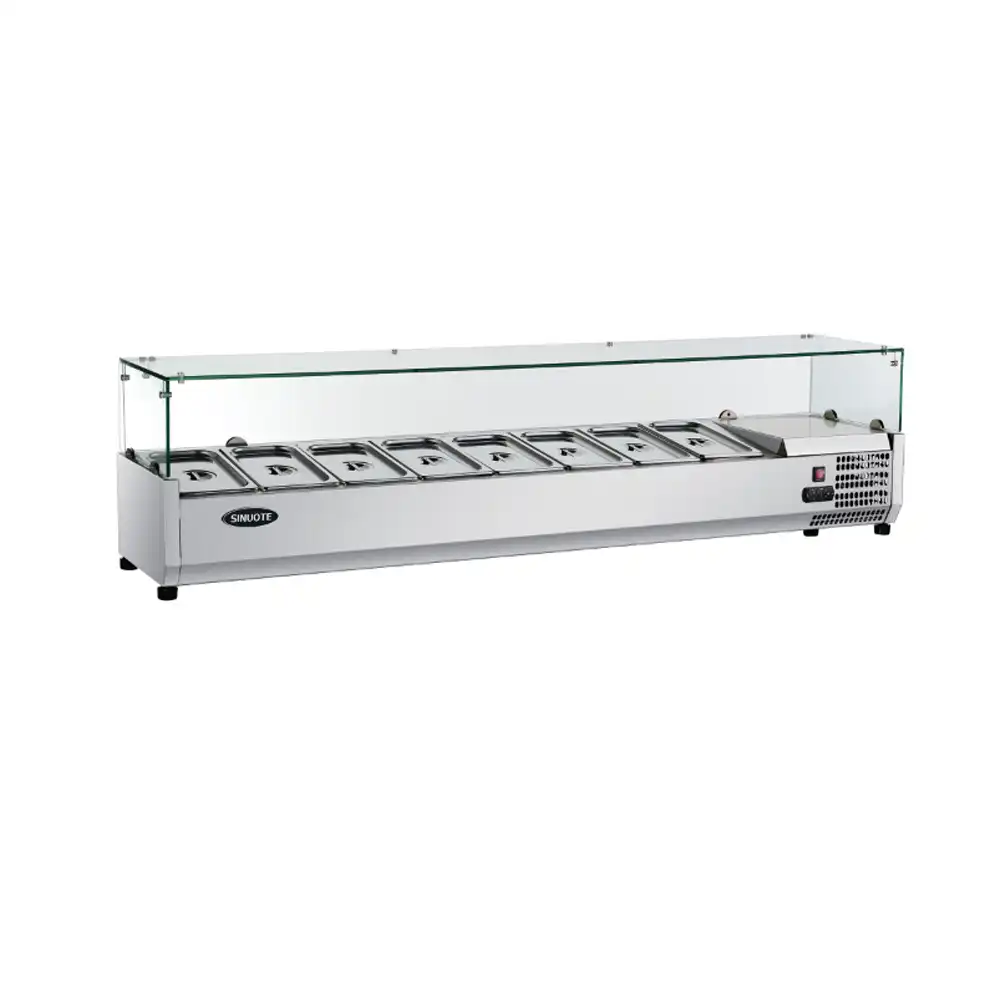
For quick reference, the table below compares three common high-capacity pizza prep table configurations from our Camay product line. These dimensions and pan capacities offer a starting point for matching hardware to your volume.
| Model | Width | Capacity (Litres) | GN 1/3 Pan Capacity | Temperature Range | Compressor |
|---|---|---|---|---|---|
| VRX395-1500 | 1500 mm | 52 L | 6 pans | +2 to +8°C | Cubigel / Embraco |
| VRX395-1600 | 1600 mm | 58 L | 6 pans | +2 to +8°C | Cubigel / Embraco |
| VRX395-1800 | 1800 mm | 65 L | 8 pans | +2 to +8°C | Cubigel / Embraco |
A shop producing 80 to 100 pizzas per peak evening typically finds the 1600-mm width a good balance of capacity and footprint. If your menu has more than a dozen standard toppings, the 1800-mm unit with 8 pan positions reduces mid-service refills. The critical point is that the table’s refrigerated rail must hold all your high-use ingredients for at least the duration of the rush so no one leaves the line.
Design and Refrigeration Features That Keep the Station Productive
The reality of a busy pizza station is that the lid opens constantly, far more than on a salad or sandwich prep line. That puts extraordinary demand on the refrigeration system. Forced-air cooling with a ventilated design, as used in our Camay pizza tables, distributes cold air evenly across the rail and the cabinet below. The refrigerant choice matters too: R290, a natural refrigerant with low global warming potential, meets DOE and CE requirements and delivers reliable cooling under continuous commercial use. A heavy-duty Cubigel or Embraco compressor rated for commercial duty, not intermittent light duty, keeps the rail at a precise 2 to 5°C. Digital controllers with 0.5°C accuracy let you hold cheese and fresh toppings at exactly the right temperature, and an automatic defrost prevents ice buildup on the evaporator without manual intervention.
Just as critical is the design of the pan rail and work surface. A smart layout puts your top three toppings directly in front of the chef, with secondary items to the sides. The junction between the rail and the cutting board must be seamless, with no gaps where flour or moisture can collect and breed bacteria. The cutting board itself should be thick and removable for cleaning. Mobility matters too: heavy tables on locking casters let you pull the unit away from the wall for deep cleaning and condenser access. A recessed door handle and self-closing door with a lock add safety and convenience. If your existing table struggles to hold temperature during peak hours, it is worth confirming the compressor sizing and airflow design with your supplier before assuming you need more pan capacity. Reach out to us at Sales@hzcamay.com. We can review your current load and pinpoint whether a refrigeration issue or a capacity shortfall is the real cause.
Pan Layouts That Match Your Menu, Not A Catalog
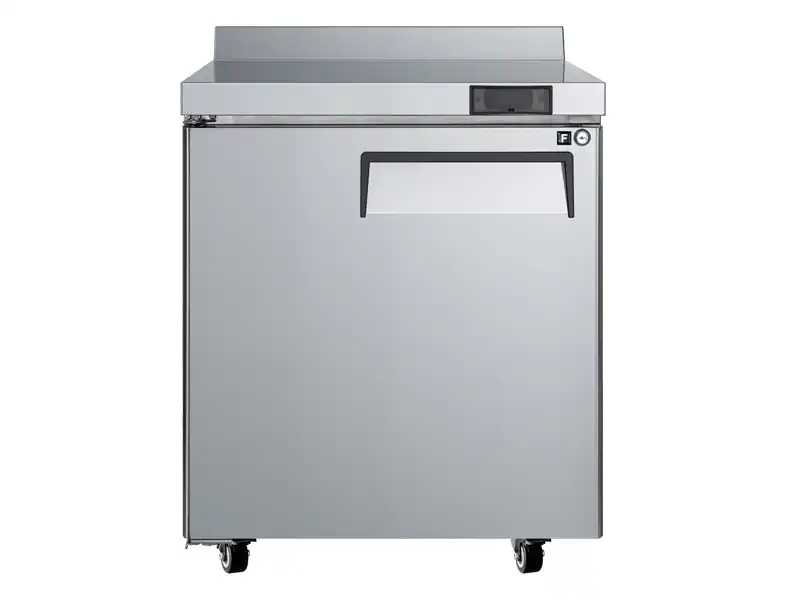
The standard pan format for pizza prep tables is GN 1/3, measuring 325 x 176 mm and deep enough to hold 5 to 8 litres of toppings. In our VRX395-1800 model, the rail holds eight GN 1/3 pans across the width, giving you room for mozzarella, pepperoni, mushrooms, peppers, onions, sausage, olives, and a specialty topping all in one line. The key is mapping the pan arrangement to your menu’s sales data. If fifty percent of your pizzas include pepperoni, that pan needs to be the largest you can fit or the one closest to the chef’s dominant hand. Less-used toppings can share a divided insert or occupy smaller pans on the far side.
Many shops also use the refrigerated cabinet space below for frequently restocked pans. Placing extra inserts directly in the cabinet shortens the refill time to a few seconds. This works best when the cabinet shelves are arranged for easy access and the door opens fully without obstructing the aisle. A two-door configuration allows one door for toppings and the other for dough or cheese storage, but only if your kitchen layout supports simultaneous access without interfering with the pizza station. These decisions are exactly where a supplier’s engineering support can save you from a costly misconfiguration.
Installing And Maintaining For Years Of Reliable Service
Positioning the table relative to the oven, makeup air, and traffic flow determines whether the line runs smoothly. Keep the table out of the direct path of the pizza oven’s radiant heat and away from dishwashing steam; both can force the compressor to work harder and accelerate wear. The table should sit close enough to the oven that the chef can build and transfer a pizza in three steps or fewer. Placing the prep table perpendicular to the oven mouth, with the cutting board facing the oven, often works best because the chef can swivel rather than walk.
Maintenance is what keeps that positioning productive for years. The condenser coil is the single most neglected component, and in a flour-heavy environment it collects a paste of dust and grease within weeks. Clean the coil every two weeks with a soft brush or a vacuum with a brush attachment, never a pressure washer that can bend the fins. Inspect the door gasket monthly for cracks or deformation because a torn gasket wastes energy and lets humidity into the cabinet, causing frost buildup. Once a month, place a separate thermometer in a rail pan and compare the reading to the digital display to catch calibration drift. Keep the casters locked, the drain line clear, and the cabinet interior dry. A well-built high-capacity pizza table that receives this level of care will hold its temperature and structural integrity through multiple lease cycles.
Matching Your Operation to the Right Equipment
If your shop’s volume has outgrown a standard undercounter fridge or you are opening a new location and designing the line from scratch, the pizza prep table becomes the central investment that shapes kitchen flow, ingredient freshness, and staff efficiency. A unit that looks big enough on a spec sheet but cannot recover temperature quickly or puts the wrong toppings under the chef’s hand will slow down your team during the hours that matter most.
We manufacture pizza prep tables in multiple widths and capacities at our ISO-certified facility in Zhejiang, and we work with distributors and chain operators worldwide to customize rails, pan configurations, and door arrangements to fit specific menus. To discuss your pizza shop’s throughput requirements and get a recommendation that fits your kitchen footprint, contact us directly at Sales@hzcamay.com or call +86 181 5720 2219.
Common Questions About High Capacity Pizza Prep Tables
What is the correct rail temperature during service?
The rail should hold between 2 and 5°C (35 to 41°F). This range keeps cheese, cut vegetables, and cured meats safe without freezing delicate toppings. If the digital controller shows a rise above 5°C during the busiest hour, the refrigeration system is undersized for your usage pattern. Achieving a stable 2°C rail temperature even during rushes comes down to matching compressor capacity and airflow to the lid-opening frequency your shop actually generates.
How many pizzas can one table support per hour?
With a well-designed rail holding eight GN 1/3 pans and a chef who works with both hands, a single high-capacity table can support 60 to 80 large pizzas per hour. The actual number depends on pizza size, topping complexity, and how quickly the chef moves between the table, oven, and cutting station. The bottleneck is rarely the number of pans but the chef’s travel distance. Optimizing that flow matters more than adding a fourth row of pans.
Can I use different pan sizes in the same rail?
Most high-capacity pizza tables accept GN 1/3 pans as standard, but you can insert dividers or smaller pans with adapter bars. Avoid mixing pan depths that create uneven cold distribution. Deeper pans can block airflow to shallower ones. If a topping like mozzarella runs out fast, use a deeper GN 1/3 pan that still fits the same footprint, or keep a backup pan in the cabinet below and swap it mid-shift.
What is the most common maintenance mistake?
Failing to clean the condenser coil is by far the most common. Flour and grease combine into a paste that insulates the coil and forces the compressor to run hotter and longer, leading to premature failure. Clean the coil every two weeks. The second mistake is ignoring a door gasket that no longer seals, which drives up energy consumption and introduces moisture that causes ice buildup inside the cabinet.
Is a longer warranty worth the cost?
Yes, especially on the compressor and the refrigeration system. A commercial pizza prep table that sees twelve hours of daily use in a hot kitchen places significant load on the compressor. Look for at least a two-year compressor warranty and a parts warranty on the cabinet, together with lifetime technical support and spare parts availability. If your program involves custom pan layouts or non-standard voltage, share your requirements early so we can confirm the available options and delivery lead time.
If you’re interested, check out these related articles:
Essential Maintenance Tips for Your Commercial Chef Base Refrigerator
Choosing the Best Commercial Reach In Fridge for Your Restaurant