

Picking worktops for a commercial kitchen sounds straightforward until you realize how much rides on getting it right. These surfaces take a beating every single day, and the wrong choice shows up fast in hygiene issues, premature wear, or staff frustration. After years of watching kitchens succeed and fail based on their surface choices, the patterns become clear. Here’s what actually matters when you’re making this decision.
Material Science That Holds Up Under Pressure
The material you choose determines everything else about your worktop’s performance. Stainless steel dominates commercial kitchens for good reasons. Grades 304 and 316 resist corrosion, handle temperature swings without complaint, and clean up without harboring bacteria in microscopic pores. That non-porous surface makes all the difference when health inspectors come around.
Quartz looks great and holds up reasonably well. Solid surface materials give you seamless joints that simplify cleaning. But when the kitchen gets slammed during a Friday dinner rush, stainless steel proves why it became the standard. The Camay Commercial Worktop Refrigerator Cooler Fridge uses stainless steel inside and out because anything less would compromise performance in real working conditions.
| Material | Corrosion Resistance | Heat Resistance | Porosity | Impact Resistance |
|---|---|---|---|---|
| Stainless Steel | Excellent | High | None | High |
| Quartz | Good | Moderate | Low | Moderate |
| Solid Surface | Good | Low | None | Moderate |
Meeting Hygiene Standards Without the Headaches
Food safety regulations exist because contamination happens fast on the wrong surfaces. Your worktops need to be non-porous and cleanable without special procedures or expensive chemicals. NSF International certification tells you a material meets public health requirements, which saves arguments during inspections.
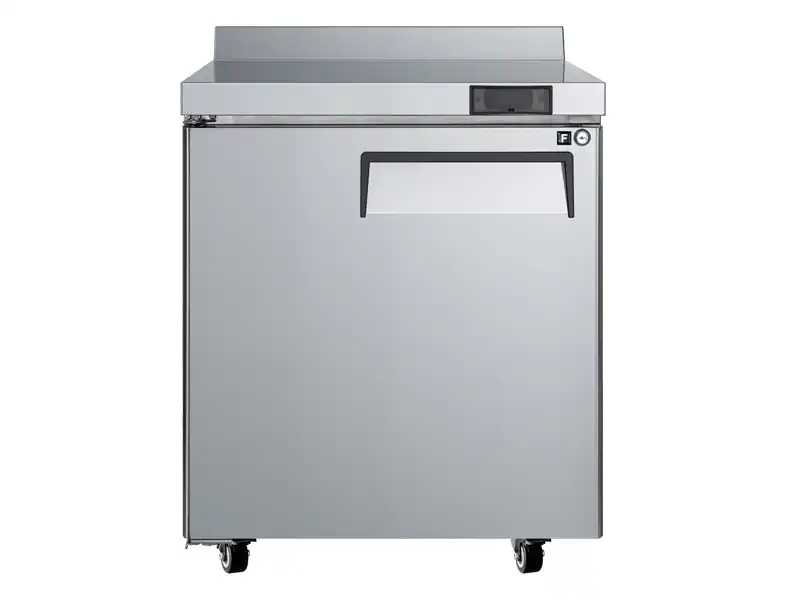
Seams and crevices create problems. Bacteria find their way into tiny gaps and resist standard cleaning. The Camay Commercial Solid Door Undercounter addresses this with removable gaskets and rounded interior corners. These details seem minor until you’re trying to maintain HACCP compliance during a busy week. Smooth, continuous surfaces eliminate hiding spots for contaminants and make daily sanitation realistic rather than theoretical.
How Layout Affects Daily Operations
Material selection matters, but so does how worktops fit into your kitchen’s flow. Staff move constantly during service, and poorly positioned surfaces create bottlenecks and fatigue. Custom worktop configurations let you match surfaces to your specific equipment arrangement and cooking processes.
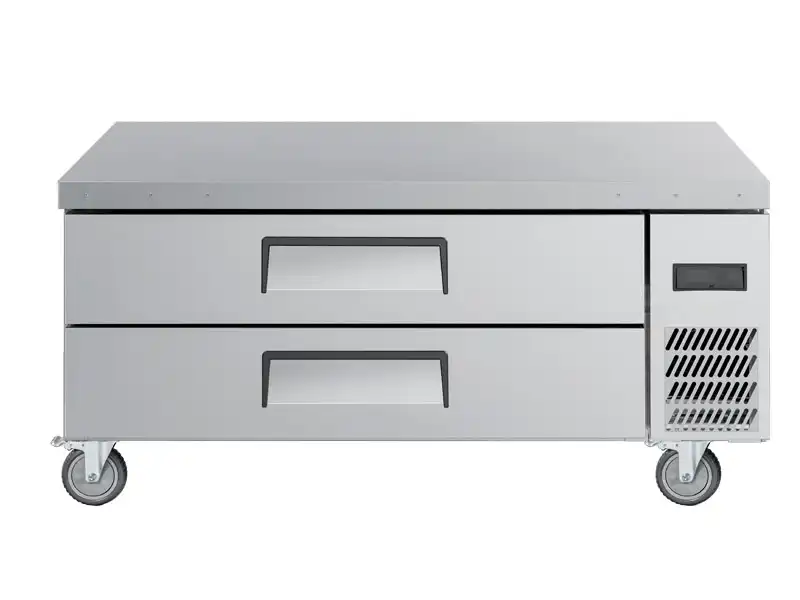
Combining functions makes sense in tight spaces. A refrigerated chef base built into your prep surface keeps cold ingredients within reach without extra steps. The Camay 60″ Countertop Refrigerated Chef Base provides a solid work surface with storage directly underneath. That integration eliminates trips across the kitchen and keeps prep moving. Height and depth also affect comfort during long shifts, though the right dimensions depend on your team and your menu.
Article Recommendation: If you are looking to boost your kitchen’s efficiency, consider reading “Boost Kitchen Efficiency Workflow Optimization with Chef Base Fridges”.
What Makes a Worktop Last
Heavy-duty means something specific in commercial settings. These surfaces face knives, hot pans, dropped equipment, and aggressive cleaning chemicals day after day. Stainless steel grades 304 and 316 resist scratches and heat damage better than alternatives. They maintain their appearance and function despite constant abuse.
A quality stainless steel worktop can serve 15 to 20 years when maintained properly. That longevity changes the economics significantly. Foamed-in polyurethane insulation in worktop refrigerators adds structural strength while improving energy efficiency. Robust construction pays off over time through reduced replacement cycles and consistent performance.
| Material | Expected Lifespan (Years) | Maintenance Level | Scratch Resistance | Heat Resistance |
|---|---|---|---|---|
| Stainless Steel | 15-20+ | Low | High | Very High |
| Quartz | 10-15 | Moderate | Moderate | Moderate |
| Solid Surface | 8-12 | Moderate | Low | Low |
Getting Installation and Maintenance Right
How a worktop gets installed affects its performance for years. Gaps between surfaces and walls collect debris. Loose fittings shift under heavy use. Professional installation ensures compliance with codes and eliminates problems that show up months later. The extra cost upfront prevents expensive corrections down the road.
Daily cleaning requires the right approach for your material. Non-abrasive cleaners protect surface integrity while eliminating pathogens. Products like the Camay Commercial Worktop Refrigerator Cooler Fridge feature removable gaskets specifically to make thorough cleaning practical. A preventative maintenance schedule catches small issues before they become operational problems.
Understanding the Real Cost Picture
Purchase price tells only part of the story. The complete financial picture includes maintenance costs, expected lifespan, energy consumption, and potential downtime. Stainless steel costs more initially but requires less maintenance and lasts longer than alternatives. Those factors shift the calculation toward higher-quality materials.
Total ownership cost includes cleaning supplies, labor for upkeep, and what happens when equipment fails during service. Materials that clean easily and resist damage reduce ongoing expenses. Budget decisions should weigh long-term value against immediate savings. Equipment designed for durability and efficiency, like our refrigeration units, delivers better returns over a typical service life.
Elevate Your Commercial Kitchen with ZHEJIANG KAIMEI’s Refrigeration Solutions
As a professional one-stop-shop refrigeration equipment manufacturer, ZHEJIANG KAIMEI CATERING EQUIPMENT CO., LTD. understands the rigorous demands of commercial kitchens. While you meticulously select your heavy-duty worktops for optimal performance, ensure your refrigeration infrastructure meets the same exacting standards. Explore our comprehensive range of high-performance, energy-efficient refrigeration units designed to complement your state-of-the-art kitchen. Contact us today for a consultation tailored to your specific operational needs. Phone: +8618157202219, Email: Sales@hzcamay.com
What are the best materials for heavy duty commercial kitchen worktops?
For heavy duty commercial kitchen worktops, stainless steel (grades 304 and 316) is paramount due to its hygiene, durability, and resistance to corrosion and heat. Other viable options include quartz for aesthetics and solid surface materials for seamless integration, though stainless steel remains the industry benchmark for true heavy-duty applications. Our work-top refrigeration units often feature stainless steel surfaces for this reason.
How do I choose a worktop that meets food safety regulations?
To choose a worktop meeting food safety regulations, prioritize non-porous, easily cleanable materials like stainless steel. Look for certifications such as NSF International, which ensures materials and designs meet strict public health standards. Ensure seamless construction or minimal seams to prevent bacterial harborage, critical for commercial kitchen hygiene standards. Many of our food prep table specification sheet products are designed with these regulations in mind.
What is the expected lifespan of a commercial kitchen worktop?
The expected lifespan of a commercial kitchen worktop, particularly heavy-duty options like stainless steel, can exceed 15-20 years with proper installation and maintenance. Factors like material quality, frequency of use, exposure to harsh chemicals, and adherence to cleaning protocols significantly influence its durability and longevity. Our chef base units are built to offer extended service life.
Are custom worktop designs beneficial for commercial kitchens?
Yes, custom worktop designs are highly beneficial for commercial kitchens. They allow for precise integration with existing equipment, optimize workflow, and enhance ergonomic efficiency. Tailored solutions ensure every inch of space is utilized effectively, contributing to a more productive and compliant kitchen environment, especially for heavy-duty operations. This is particularly true for specialized setups like pizza table configurations.