

Food safety in commercial kitchens isn’t something you can afford to get wrong. One slip-up and you’re looking at sick customers, damaged reputation, and potentially a closed business. The stakes are real, and that’s exactly why having solid systems in place matters so much. This piece walks through HACCP principles, how to actually implement them in a working kitchen, and why your refrigeration equipment is doing more heavy lifting than you might realize.
Understanding HACCP Principles for Kitchen Operations
The Hazard Analysis and Critical Control Points system gives you a structured way to think about food safety. It works by identifying where things can go wrong and putting controls in place at those specific points. The approach covers everything from when raw ingredients arrive to when food reaches the customer’s plate. Applied properly, it keeps operations running smoothly while protecting the people eating your food.
What are the seven principles of HACCP for commercial kitchens?
The seven principles form the backbone of any solid food safety plan. Start with a hazard analysis to spot biological, chemical, or physical risks in your operation. Then identify your critical control points, the specific moments where you can actually prevent or reduce hazards. Each CCP needs critical limits, things like temperature ranges that can’t be crossed. You’ll need monitoring procedures to make sure those limits are being met consistently. When something goes wrong, corrective actions tell your team exactly what to do. Verification procedures confirm the whole system is actually working. And record-keeping ties it all together, documenting every step so you can prove compliance and spot patterns over time.
Implementing Effective HACCP Plans in Your Kitchen
Getting a HACCP plan off the ground takes real planning and follow-through. Building a dedicated team with varied expertise makes a difference here. That team handles the hazard analysis and figures out which control points matter most for your specific setup. Documentation is non-negotiable. Flow diagrams, hazard logs, monitoring records, all of it needs to be thorough and accessible. Training staff regularly keeps everyone aligned with the plan rather than just going through the motions.
How often should HACCP plans be reviewed in a catering business?
Plans need regular review to stay effective and compliant. Annual reviews work as a baseline, but any significant change triggers an immediate look. New menu items, different equipment, altered prep processes, any of these can shift where your risks sit. Regulatory changes require fast updates too. Letting reviews slide creates gaps that compromise safety and invite compliance problems.
The Role of Refrigeration in HACCP Compliance
Refrigeration and freezing equipment are doing more than keeping things cold. They’re actively maintaining your critical control points. Bacterial growth stops when temperatures stay in the right range, and food quality holds up longer. Precise temperature control is the foundation of cold chain management, and the right equipment makes HACCP compliance far more achievable.
What is the role of refrigeration equipment in HACCP compliance?
Temperature control is one of the primary CCPs in any kitchen, and refrigeration equipment is what makes that control possible. Commercial units like the Camay Commercial Worktop Refrigerator Cooler Fridge (Model MWTF-27-L) or the Camay 60″ Countertop Refrigerated Chef Base (Model MAR-60A) hold internal temperatures between 0.5°C and 5°C (33°F and 41°F). Many come with smart digital temperature systems, some offering IoT and WiFi connectivity. Regular monitoring and maintenance keep these units performing as expected. The Camay MTR-48 2-Door Commercial Undercounter Refrigerator is another example of equipment designed to maintain the temperatures food safety depends on.
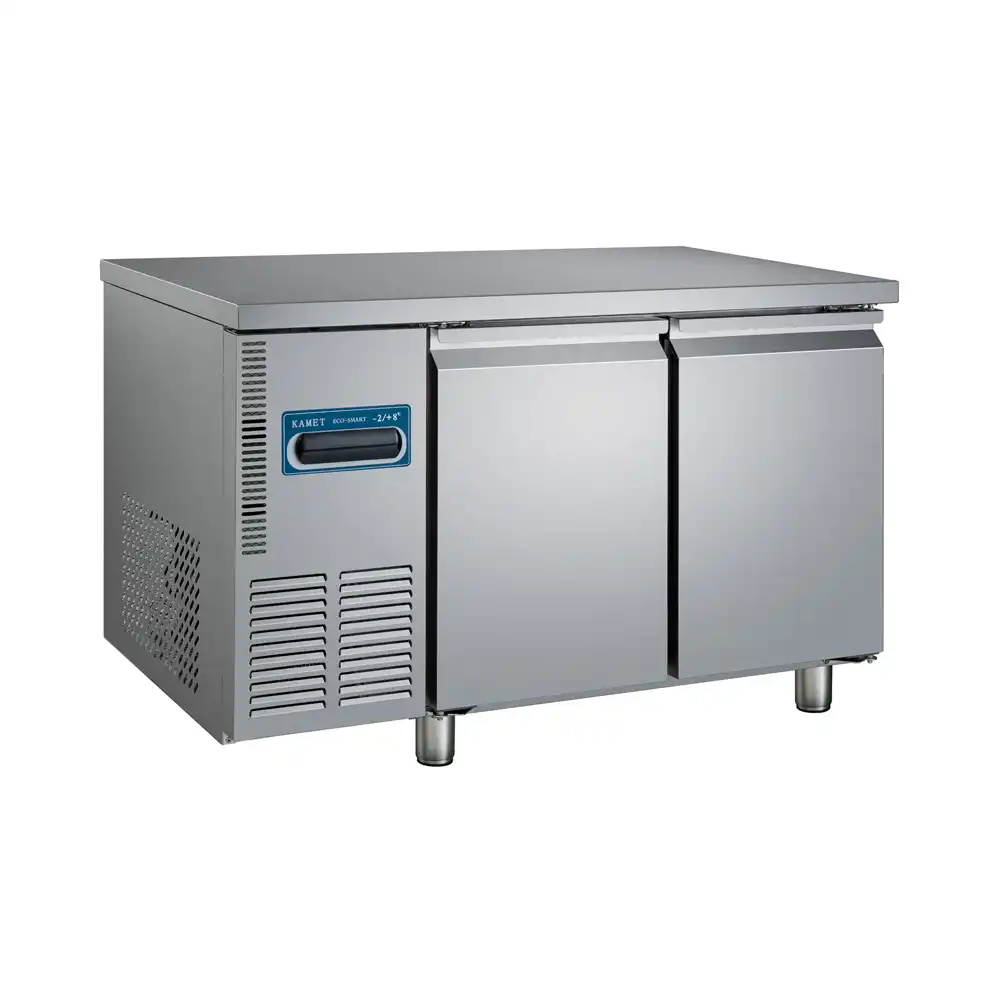
A range of refrigeration solutions exists specifically for HACCP adherence.
| Product Model | Classification | Internal Temperature Range | Key Features for HACCP |
|---|---|---|---|
| Camay MWTF-27-L | Worktop Refrigerator | 0.5°C to 5°C (33°F to 41°F) | Smart digital temperature system, optional IoT/WiFi |
| Camay MAR-60A | Countertop Refrigerated Chef Base | 0.5°C to 5°C (33°F to 41°F) | Precise temperature control, commercial grade |
| Camay MTR-48 | 2-Door Undercounter Refrigerator | 0.5°C to 5°C (33°F to 41°F) | Optimal temperature maintenance for food safety |
Key Features of the HACCP System
The HACCP system rests on seven principles, each one playing a specific role in preventing foodborne hazards.
- Principle 1: Conduct a Hazard Analysis. Identify biological, chemical, and physical hazards. Assess their likelihood and severity.
- Principle 2: Determine Critical Control Points (CCPs). Identify points in the process where control can be applied to prevent or eliminate a food safety hazard or reduce it to an acceptable level.
- Principle 3: Establish Critical Limits. Set maximum and minimum values that must be met at a CCP to prevent a hazard.
- Principle 4: Establish Monitoring Procedures. Implement a planned sequence of observations or measurements to assess whether a CCP is under control.
- Principle 5: Establish Corrective Actions. Develop procedures to follow when monitoring indicates a deviation from a critical limit.
- Principle 6: Establish Verification Procedures. Implement methods, tests, or procedures to confirm that the HACCP system is working effectively.
- Principle 7: Establish Record-Keeping and Documentation Procedures. Maintain records of all aspects of the HACCP plan, including monitoring, deviations, and corrective actions.