

Ghost kitchen refrigeration demands a different approach than traditional restaurant cooling. A delivery-only kitchen running three or four virtual brands from a single compact space pushes every square foot to its limit, and the refrigeration equipment you choose either multiplies your throughput or creates bottlenecks. In my twenty-six years of commercial refrigeration manufacturing, I’ve seen too many ghost kitchen operators piece together mismatched residential or standard commercial units that fail under heavy delivery volumes. Purpose-built commercial equipment with the right footprint, load capacity, and integration turns a tight floorplan into a high-output production line. This article breaks down the configurations that actually work for ghost kitchens, drawn from real production experience rather than generic equipment checklists.
Why Ghost Kitchen Layouts Demand Specialized Refrigeration
A delivery-only kitchen operates differently from a dine-in restaurant. There is no front of house, no customer seating, and often no walk-in traffic. The entire floorplan exists to produce, pack, and expedite food at a rate that makes third‑party delivery timelines profitable. That changes what refrigeration equipment needs to do.
First, multiple virtual brands running from the same kitchen multiply the variety of ingredients stored. You might have one brand focused on burgers and another on poke bowls, each with distinct temperature requirements and stock volumes. Standard reach-in coolers with fixed shelving quickly become disorganized and slow down line cooks reaching for the wrong container.
Second, ghost kitchens are almost always under severe square‑footage pressure. Equipment that a traditional restaurant would spread across a prep area, a cookline, and a walk‑in must be compressed into a much smaller footprint without sacrificing storage capacity. This is where commercial refrigeration specifically designed for under‑counter and integrated worktop use becomes essential instead of optional.
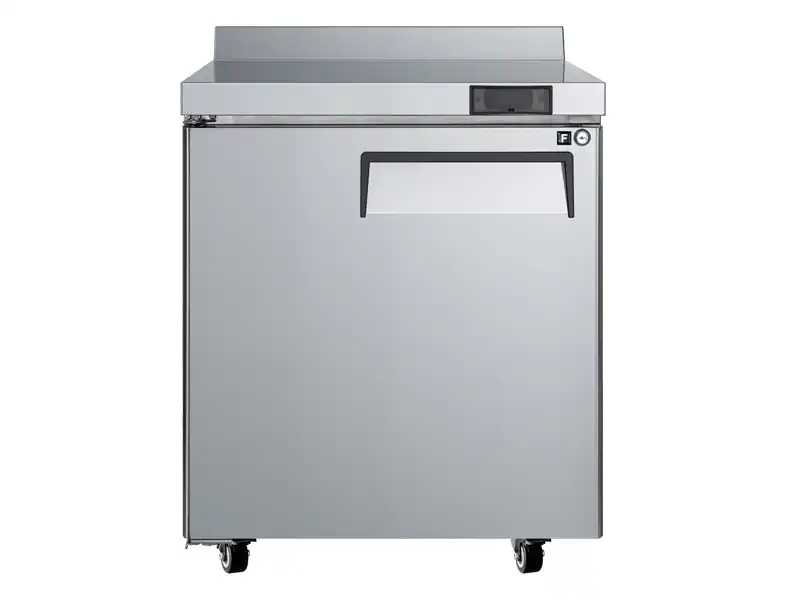
Third, durability expectations shift. A compact kitchen that runs sixteen to eighteen hours a day, with continuous door openings during peak periods, subjects every unit to far more thermal cycling than a typical back‑of‑house cooler. Residential or light‑commercial units with cycle‑rated compressors simply cannot maintain safe temperatures under that load. From our manufacturing data, units built with ventilated cooling systems and polyurethane/cyclopentane insulation, like the Camay MWTF‑27‑L worktop refrigerator, keep recovery times short enough that even during a lunch rush the internal temperature holds at 0.5°C to 5°C. Those specifications are not marketing numbers; they are what separates a kitchen that stays within HACCP limits from one that risks a delivery order going out with compromised ingredients.
Matching Refrigeration Types to Your Ghost Kitchen Workflow
Mapping the right refrigeration type to each station is the highest‑impact decision in a ghost kitchen layout. Below is a comparison of common equipment categories and how they serve a delivery‑only operation.
| Equipment Type | Primary Use Case in Ghost Kitchens | Space Efficiency Notes |
|---|---|---|
| Chef Base | Cold storage directly under the cookline for proteins, sauces, and prepped pans | Eliminates steps between refrigeration and cooking; one unit serves 2–3 stations |
| Undercounter Refrigerator | Beverage storage, vegetable prep, or staging for packing stations | Fits under standard counters; can double as a work surface |
| Worktop Refrigerator | Combined prep surface and cold storage for salad, sandwich, or poke bowl assembly | Replaces the need for a separate prep table and cooler |
| Reach‑In Solid Door Freezer | Bulk frozen ingredient storage for multiple brands | Vertical footprint; split‑door models allow separate temperature zones |
Chef bases are a practical choice for ghost kitchens where cooks need immediate access to pans of prepped ingredients at the cookline. <Heavy Duty Chef Base Refrigeration for Efficient Commercial Kitchens> covers how integrating a refrigerated base under your cooking equipment eliminates steps between the walk‑in and the grill, directly increasing the number of orders a single station can push in a delivery‑heavy shift.
A layout we often see in successful ghost kitchens places a chef base at the hot line, undercounter refrigerators at the packing and staging area, and a worktop refrigerator at the salad or cold‑prep station. The Camay 60‑inch Countertop Refrigerated Chef Base (MAR‑60A) is designed for exactly this multi‑function role: its one‑piece worktop with a drip‑resistant V‑edge handles heavy prep tasks, while the ventilated R290 system keeps the cabinet at 0.5°C to 5°C even when the compressor runs continuously during peak hours. Because the unit sits on four‑inch casters, the clean‑down crew can pull it away from the wall after a shift without calling for a pallet jack.
Undercounter Refrigerators for Staging and Packing
Packing stations are often overlooked in ghost kitchen design, yet they are where temperature abuse happens most frequently. An order can sit bagged and waiting for a driver while the surrounding air warms it. Keeping a dedicated undercounter refrigerator at the packing bench lets line staff stage chilled items until the moment the bag is sealed. The Camay MTR‑48 two‑door undercounter refrigerator, with 368 liters of capacity in a 1225‑mm‑wide footprint, fits neatly under most packing counters and offers lock‑and‑key doors, which matters if your kitchen shares space with another operator.
Size and Footprint Decisions for Compact Delivery‑Only Kitchens
Every centimeter counts in a ghost kitchen, and equipment dimensions must be treated as fixed constraints before lease signing or racking installation. I have seen operators order refrigeration units that fit on paper but then discover they cannot open doors fully against adjacent equipment or cannot access the condenser coil for cleaning without moving heavy appliances.
Start with the maximum depth of your available floorplan. Many undercounter and worktop refrigerators from Camay are designed with a cabinet depth of approximately 787 mm, which allows a standard 600‑mm‑deep worktop overhang for comfortable standing. That depth also aligns with common stainless steel tables, creating a continuous prep surface. For example, the Camay Commercial Solid Door Undercounter (MTR‑72) measures 1846 mm wide by 787 mm deep by 872 mm high. A three‑door unit like this gives 576 liters of storage while leaving enough counter space above for a packing or plating station.
Height is another fixed parameter. If your ceiling clearance is tight, taller reach‑in freezers become problematic. Camay’s worktop refrigerator line, such as the MWTF‑27‑L, sits at 938 mm high, which is standard for under‑counter applications and fits comfortably under most extraction hoods or overhead shelving. In contrast, upright solid door freezers like the MF‑23 at 2115 mm tall work better against an open wall away from low‑hanging ductwork.
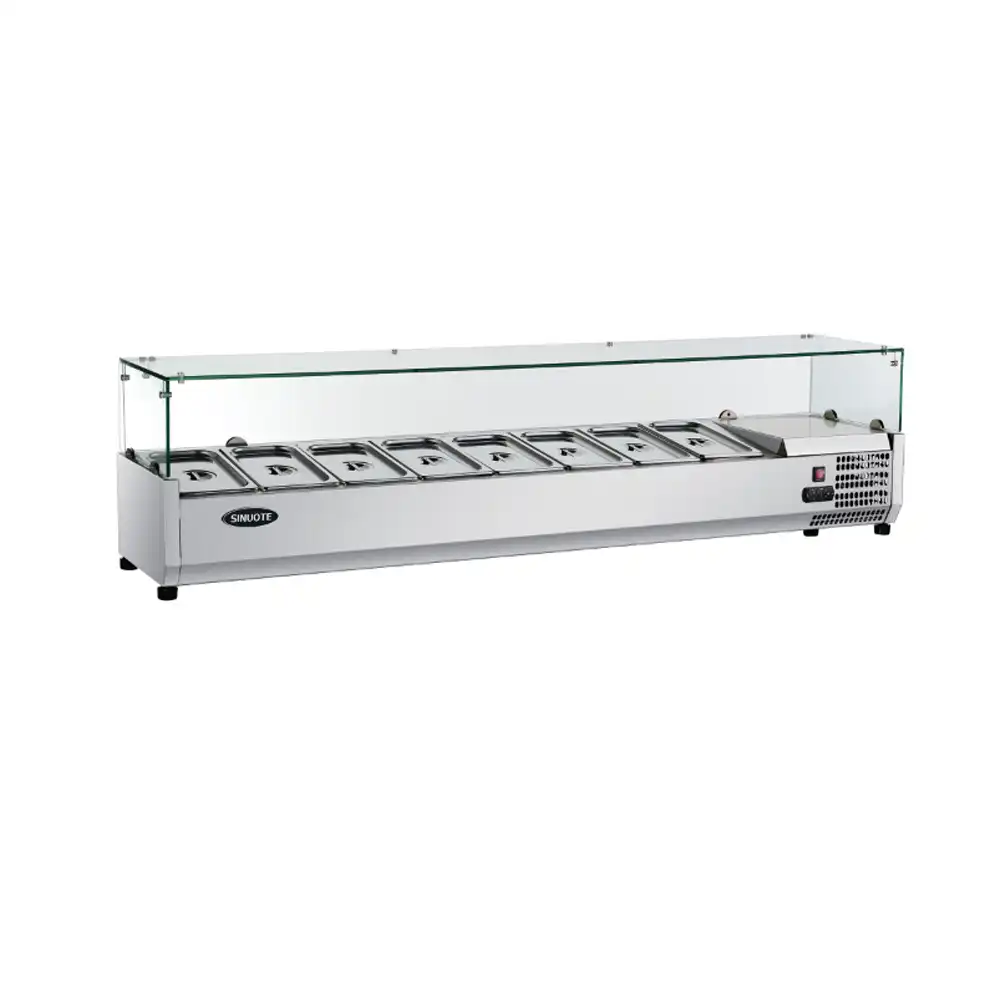
Consider mobility. Ghost kitchens that operate in shared commissary spaces or pop‑up models benefit enormously from units on casters. The Camay undercounter series offers two‑inch or four‑inch casters as standard options, which lets operators reconfigure the kitchen for different day‑part menus or deep‑cleaning cycles without using a moving crew. This flexibility reduces the risk of becoming locked into a layout that made sense six months ago but no longer fits the delivery mix.
Building a Reliable Refrigeration Stack: Installation, Maintenance, and Energy Costs
Ghost kitchens that run 24/7 or close to it cannot afford a day of downtime when a refrigerator fails. Reliability starts at installation and is maintained through simple but disciplined practices.
Clearances for ventilated cooling systems must be respected. Camay units use a ventilated design that pulls air from the front and exhausts to the rear or sides, depending on the model. The installation manual for the MAR‑60A chef base, for instance, calls for at least 150 mm of rear clearance to let the compressor reject heat efficiently. Pushing a unit flush against a wall chokes the condenser, increasing head pressure, shortening compressor life, and raising energy consumption.
Proper installation is critical to prevent compressor strain and maintain cooling consistency, especially in kitchens that run continuously. <Essential Commercial Chef Base Fridge Installation Tips> walks through clearances, ventilation, and initial power setup that can be the difference between a trouble‑free first year and a mid‑service breakdown.
Maintenance must be designed into the work culture, not added as an afterthought. The most common reason I see early compressor failure in ghost kitchens is a clogged condenser coil. Dust, grease aerosol, and flour dust settle on the coil fins over the course of weeks, insulating the refrigerant and forcing the compressor to run hotter. A monthly brush‑and‑vacuum routine on the condenser keeps unit temperatures steady and energy bills predictable. Camay designs its worktop and undercounter models with removable gaskets and round‑corner inner shelves, which not only meet sanitation inspection requirements but also cut the time staff spend on cleaning by half.
Energy cost is a close second to reliability in multi‑unit operations. One ghost kitchen with five or six refrigeration units running R290 refrigerant and polyurethane/cyclopentane insulation can see a noticeable difference in utility bills compared to older R134a units with lower‑density insulation. R290 is a natural refrigerant with a global warming potential of only 3, and it operates at lower discharge pressures, which directly reduces electrical consumption. In a 115‑volt, 60‑hertz application, a Camay MAR‑60A chef base draws approximately 1.6 amps and achieves ENERGY STAR certification. Over a three‑year period, that incremental savings across a fleet of ten ghost kitchens can fund an entire additional unit.
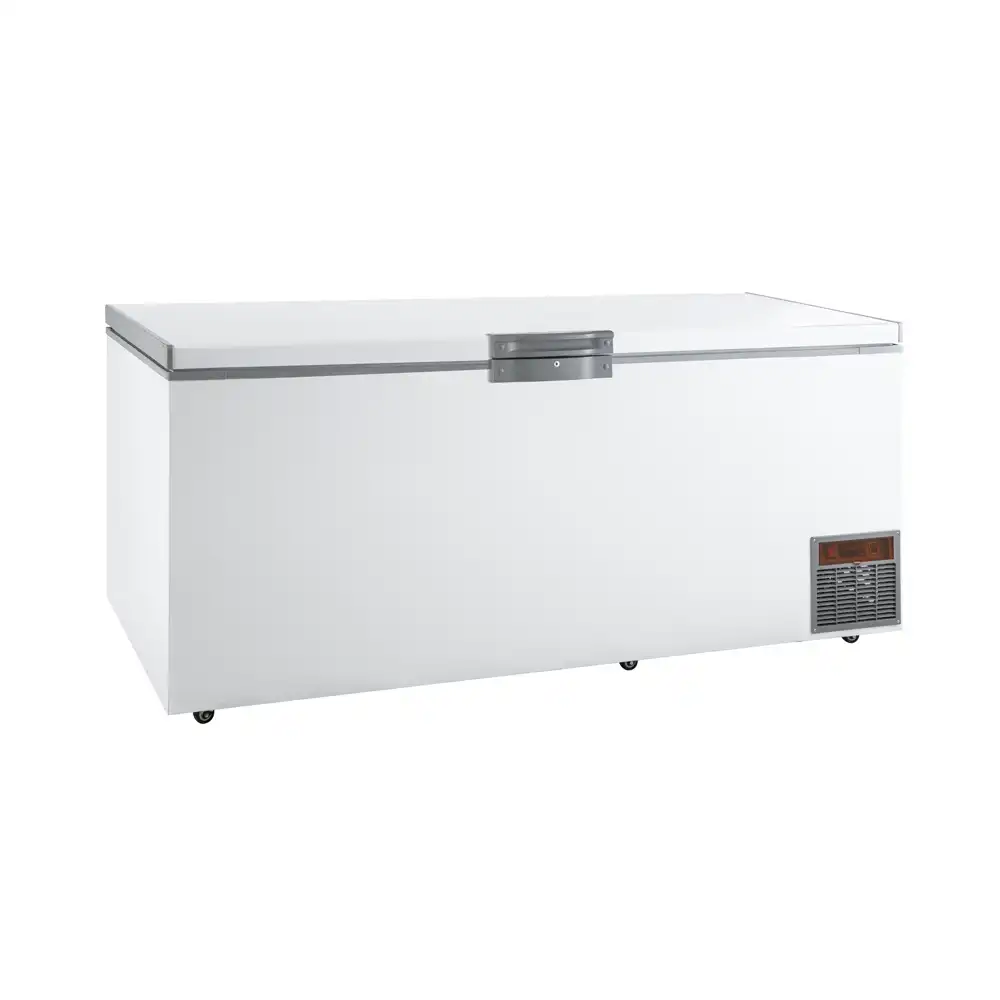
For frozen storage, the choice between reach‑in solid door freezers and ultra‑low temperature freezers depends on the menu. Standard commercial freezers holding ‑18°C to ‑22°C are sufficient for frozen fries, burger patties, and ice cream. But ghost kitchens that handle high‑value seafood or speciality doughs requiring ‑30°C or colder will need an ultra freezer. Camay’s DW45W788, for instance, reaches ‑45°C with a hydrocarbon mixed refrigerant system, and its double‑door seal and safety lock make it suitable for operations where ingredient integrity is non‑negotiable.
Sourcing Commercial Refrigeration for Multi‑Location Ghost Kitchen Operations
Scaling a ghost kitchen brand from two locations to twenty forces procurement to think like a manufacturer, not a restaurant manager. Inconsistent equipment across sites creates a training nightmare and multiplies spare parts inventories. Standardizing on a single equipment supplier that can deliver consistent quality and documentation across all units saves more money than chasing the lowest unit price on each purchase order.
This is where working directly with an OEM like Camay changes the equation. As a manufacturer with twenty‑six years of production history, Camay can supply the same model line, with the same electrical specs and performance curves, whether you are outfitting a kitchen in Los Angeles, London, or Sydney. The company’s factory holds ISO 9001:2015, ISO 14001:2015, and ISO 45001:2018 certifications, and products carry ETL, CE, ENERGY STAR, and other regional marks required for local code compliance. For a ghost kitchen operator, that means one set of submittal documents for all locations instead of chasing individual certificates per site.
Customization also becomes practical at scale. If your menu boxes require a specific pan configuration, black inner boxes for brand aesthetics, or drawer models for high‑volume line use, an OEM can build to that specification without the lead times associated with third‑party modification. I have seen ghost kitchen chains improve their throughput by switching to drawer‑style chef bases that let cooks pull one pan without disturbing the temperature of adjacent pans. That may sound like a small detail, but over a thousand orders a day, shaving seconds off a station’s motion pays for the equipment many times over.
Whether you’re outfitting a single ghost kitchen or rolling out a multi‑location delivery brand, matching your refrigeration to the real workflow, not just the equipment checklist, avoids costly rework. I’ve seen operators save months of trial‑and‑error by specifying equipment that fits the kitchen’s exact routing from the start. To discuss your layout, share your part numbers and quantity, and we’ll confirm the right configurations for your operation. Reach me at Sales@hzcamay.com or call +8618157202219.
Common Questions About Refrigeration for Delivery‑Only Kitchens
How much refrigeration capacity does a ghost kitchen need per virtual brand?
It depends on the brand’s menu complexity and order volume. A single chicken‑wing concept requires far less refrigerated storage than a Mediterranean concept with fresh salads, marinated proteins, and multiple sauces. As a rough starting point, one undercounter refrigerator of 350–400 liters per two virtual brands, plus a chef base at the cookline, is a baseline we see in operations doing 150–200 orders per day. Once you exceed that volume, adding a reach‑in refrigerator or splitting frozen and chilled storage into separate units prevents stock‑out chaos during peak dinner hours.
Can I use residential refrigerators in a ghost kitchen?
In most jurisdictions, health codes require commercial refrigeration that holds temperatures between 0°C and 5°C under heavy use. Residential units are not designed for the constant door openings, high‑ambient heat, and recovery‑speed demands of a commercial kitchen. They also typically lack the stainless‑steel interiors, reinforced shelves, and easy‑clean gaskets that pass health inspections. I have seen kitchens fail pre‑opening inspections because of a single residential fridge in the prep area. The short‑term savings disappear the first time a cooler fails during a Friday dinner rush.
What is the most space‑efficient refrigeration layout for a compact kitchen?
A linear arrangement with a chef base at the cookline, an undercounter refrigerator at the packing station, and a worktop refrigerator at the prep station creates a continuous flow from raw storage to finished plate to sealed bag. Whenever possible, choose units that can be placed directly under work tables or serve as prep surfaces themselves, so no square meter exists solely for refrigeration. Planning the layout around the actual hand‑off points between cooks and packers yields the highest throughput with the smallest equipment footprint.
Should I buy separate freezers and refrigerators, or combination units?
For ghost kitchens, separate units almost always perform better. Combination refrigerator‑freezer units share a single compressor and insulation envelope, which compromises the temperature stability of both compartments, particularly in hot kitchens. Dedicated freezers like the Camay MF‑23 reach‑in solid door freezer hold a tighter temperature band and are built with thicker insulation. If your frozen inventory is small, a compact undercounter freezer is a more reliable choice than a combo unit. We typically recommend splitting refrigeration and freezing entirely so that a single compressor failure does not take out both categories of stock.
How do I verify a manufacturer’s quality before ordering for multiple sites?
Request copies of the factory’s ISO certifications and the specific product certifications for the models you are considering. For example, Camay products carry ETL Safety, ETL Sanitation (NSF standard), DOE, CE, and other certs, and the factory is certified to ISO 9001, 14001, and 45001. These documents are not marketing collateral; they are audited by third parties and give you a paper trail for your own compliance. If your project involves sensitive ingredients, send your specifications to Sales@hzcamay.com and we’ll confirm which models meet your documentation requirements.
If you’re interested, check out these related articles:
Essential Maintenance Tips for Commercial Reach In Refrigerators
Optimizing Kitchen Efficiency with Integrated Worktop Refrigeration
Boost Kitchen Efficiency Workflow Optimization with Chef Base Fridges
Essential Maintenance Tips for Your Commercial Chef Base Refrigerator