

Getting food safety right in commercial display refrigeration comes down to a few non-negotiables: temperature control that never wavers, cleaning routines that actually get followed, and staying on the right side of health regulations. Miss any of these and you’re looking at potential foodborne illness outbreaks and serious damage to your business. The equipment matters, but so does understanding how all the pieces fit together.
Why Temperature Control Makes or Breaks Food Safety
Temperature is everything when it comes to keeping displayed food safe. Bacteria multiply rapidly in the danger zone, so perishable items need to stay at 40°F (4°C) or below, or 140°F (60°C) or above. That’s the baseline. Dairy, meat, and seafood push those requirements even tighter, often needing temperatures hovering around 32°F (0°C) to stay truly safe.
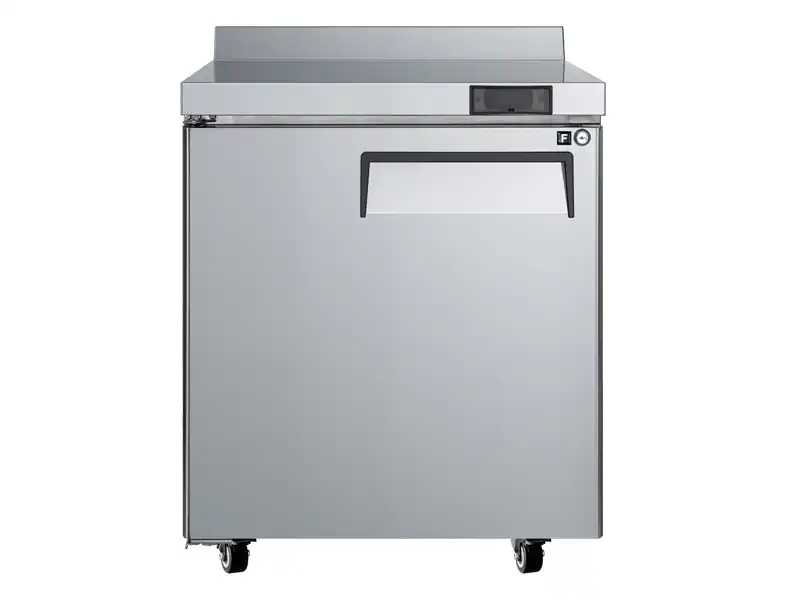
Modern refrigeration monitoring systems take the guesswork out of this. The Camay Commercial Worktop Refrigerator Cooler Fridge, for example, holds refrigeration units between 0.5°C to 5°C (33°F to 41°F) and freezer units at -22°C to -18°C (-8°F to 1°F). Smart digital temperature systems with optional IoT and WiFi connectivity mean you can track conditions in real time rather than hoping everything stayed cold overnight.
Recommended Temperature Ranges by Food Type
| Food Type | Recommended Temperature Range |
|---|---|
| Dairy Products | 0°C to 4°C (32°F to 39°F) |
| Raw Meats | -2°C to 2°C (28°F to 36°F) |
| Cooked Foods | Below 4°C (39°F) or above 60°C (140°F) |
| Produce | 0°C to 7°C (32°F to 45°F) |
| Seafood | -1°C to 2°C (30°F to 36°F) |
HACCP Principles and Meeting Regulatory Requirements
HACCP (Hazard Analysis and Critical Control Points) isn’t just bureaucratic box-checking. It’s a systematic way to identify where things can go wrong and put controls in place before they do. Regular compliance audits verify that these processes actually work in practice, not just on paper.
The regulatory landscape varies depending on where you operate. FDA guidelines apply in the United States, EFSA standards govern European operations, and local health codes add another layer. These regulations specify critical control points, equipment requirements, and documentation standards. Equipment designed with HACCP implementation in mind makes compliance significantly easier to maintain.
What regulations govern food safety in retail display refrigeration?
Retail display refrigeration falls under multiple overlapping regulatory frameworks. HACCP principles form the foundation, while local health codes and international standards from the FDA or EFSA fill in the specifics. These rules cover temperature control standards, equipment design specifications, sanitation procedures, and staff training requirements. Staying compliant requires ongoing attention rather than a one-time setup.
How Modern Refrigeration Technology Supports Food Preservation
Refrigeration technology has come a long way. Energy-efficient systems using R290 refrigerant cut both environmental impact and operating costs. Smart display cases equipped with IoT and WiFi capabilities provide intelligent monitoring of temperature and humidity levels. Real-time data means you can catch problems before they become food safety incidents.
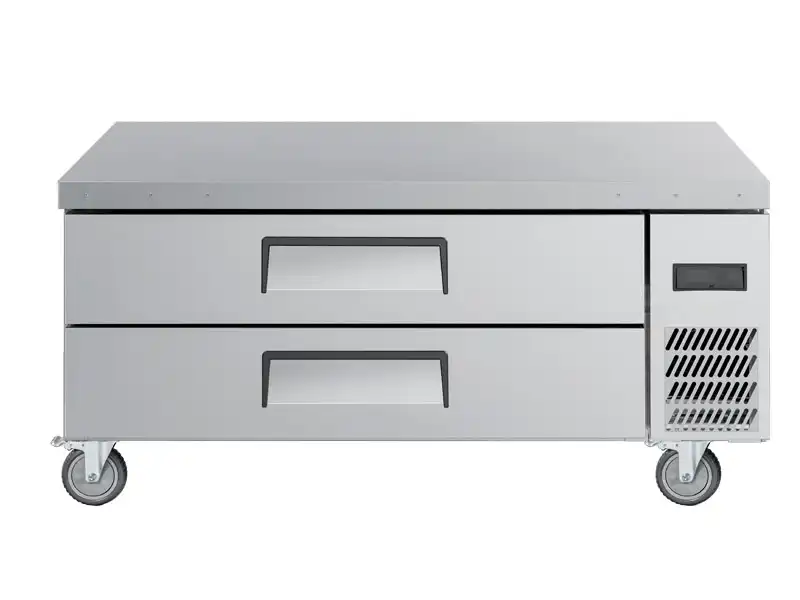
The Camay 60″ Countertop Refrigerated Chef Base demonstrates what this looks like in practice. It uses eco-friendly R290 refrigerant and offers smart digital temperature control with optional IoT and WiFi functions. These aren’t luxury features anymore. They’re becoming standard expectations for operations that take food safety seriously.
Stopping Cross-Contamination Through Proper Hygiene Practices
Cross-contamination prevention and sanitation go hand in hand. Cleaning protocols need to be specific, documented, and actually followed. This means regular surface cleaning, proper food handling techniques, and consistent equipment maintenance. Vague instructions like “keep it clean” don’t cut it.
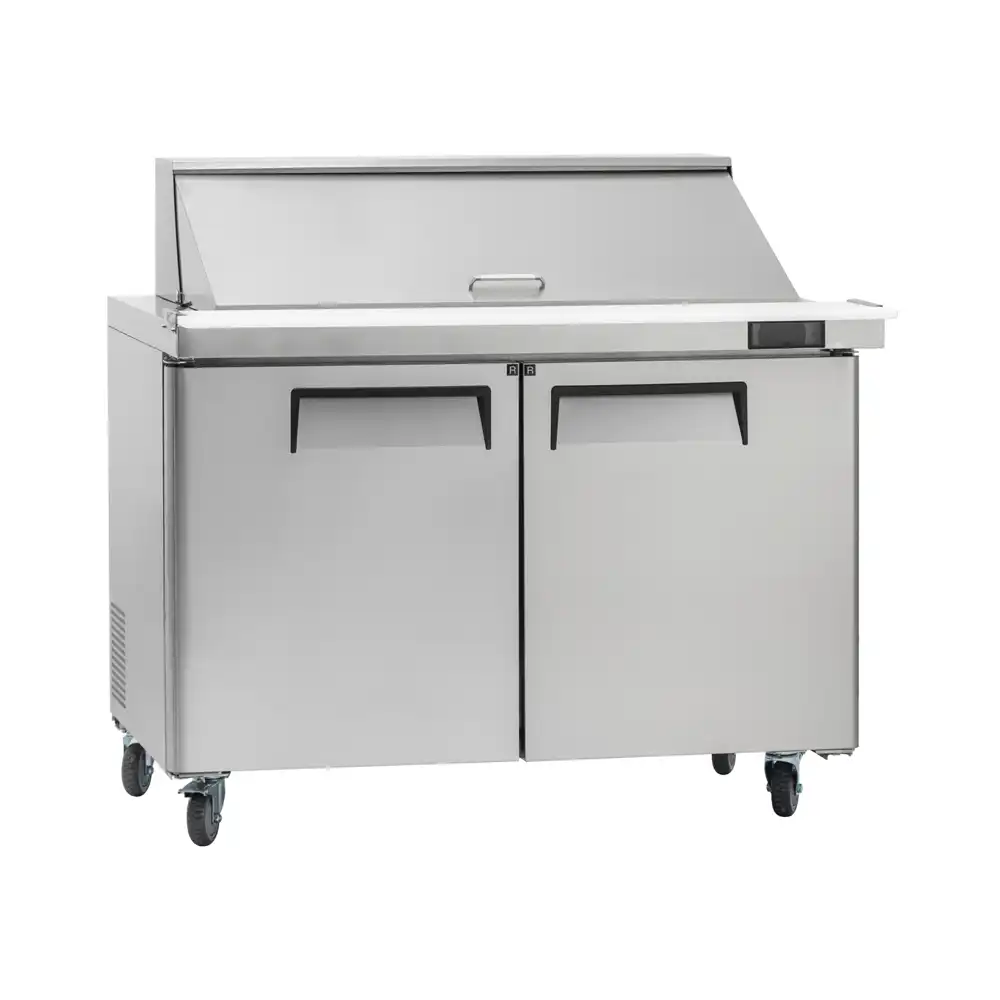
Equipment design affects how practical cleaning actually is. The Camay Commercial Undercounter Refrigerator features removable gaskets and rounded inner shelves specifically to make thorough cleaning easier. When cleaning is difficult, it tends to get skipped or done poorly.
How often should commercial display refrigerators be cleaned and maintained?
The cleaning schedule breaks down into three tiers. Daily spot cleaning handles visible spills and debris. Weekly deep cleaning covers all surfaces, seals, and accessible components. Professional maintenance should happen at least quarterly, covering refrigerant levels, seal integrity, and overall system efficiency. This routine prevents problems from compounding and extends equipment life. For more detailed guidance, consider reading our article: 《Essential Maintenance Tips for Commercial Reach In Refrigerators》.
Training Staff to Maintain Food Safety Standards
Equipment only works as well as the people operating it. Staff training needs to cover proper operation, monitoring procedures, and maintenance basics. Everyone handling display refrigeration should understand cold storage protocols and know how to respond when something seems off.
Training content should include daily temperature checks, correct loading procedures that maintain airflow, and immediate reporting protocols for equipment malfunctions. One-time training isn’t enough. Regular refreshers keep food safety practices sharp and account for staff turnover.
Matching Display Refrigeration to Your Specific Needs
Selecting commercial display refrigeration requires thinking through several factors. Capacity needs, energy efficiency targets, and the specific temperature requirements of your products all matter. Construction quality, refrigerant type, and control systems affect both food safety and long-term operating costs.
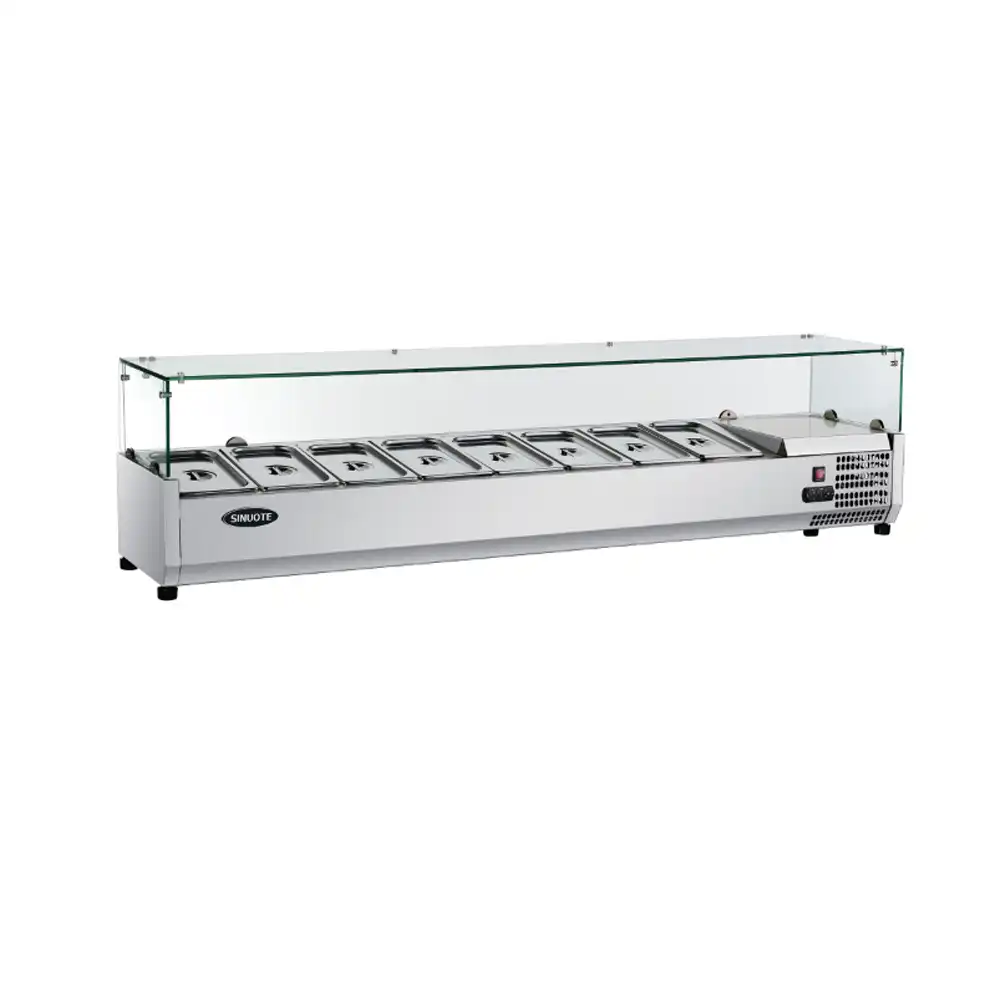
Durable stainless steel construction stands up to commercial use. Eco-friendly refrigerants like R290 meet current environmental standards. Smart digital controls provide the monitoring capabilities that modern food safety demands. Different operations need different solutions. Undercounter units work for some setups while specialized pizza prep tables suit others. The VRX395-1600 and VRX395-1500 pizza table models, for instance, provide stable refrigeration specifically designed for pizza ingredient storage.
Display Refrigerator Features Comparison
| Feature | Camay Commercial Worktop Refrigerator Cooler Fridge (MWTF-27-L) | Camay 60″ Countertop Refrigerated Chef Base (MAR-60A) | Camay Commercial Solid Door Undercounter (MTR-72) |
|---|---|---|---|
| Temperature Range | 0.5°C to 5°C (33°F to 41°F) | 0.5°C to 5°C (33°F to 41°F) | 0.5°C to 5°C (33°F to 41°F) |
| Refrigerant | R290 | R290 | R290 |
| Insulation | Polyurethane/Cyclopentane, CFC-free | Polyurethane/Cyclopentane, CFC-free | Polyurethane/Cyclopentane, CFC-free |
| Smart Control | Optional IoT and WiFi | Optional IoT and WiFi | Optional IoT and WiFi |
| Construction Material | Stainless Steel | Stainless Steel | Stainless Steel |
| Certifications | ETL, DOE, ENERGY-STAR, CE | ETL, DOE, ENERGY-STAR, CE | ETL, DOE, ENERGY-STAR, CE |
Frequently Asked Questions
What are the critical temperature ranges for safe food display?
Perishable foods need to stay at 40°F (4°C) or below, or 140°F (60°C) or above. That’s where bacterial growth slows enough to keep food safe. Dairy, meat, and seafood require even tighter control, often needing temperatures near 32°F (0°C). Advanced refrigeration systems with continuous monitoring help maintain these standards consistently.
How often should commercial display refrigerators be cleaned and maintained?
Daily spot cleaning, weekly deep cleaning, and quarterly professional maintenance form the standard schedule. Professional maintenance should include checking refrigerant types seals, and overall system efficiency. This routine prevents cross-contamination, maintains food safety compliance, and keeps equipment running longer.
What regulations govern food safety in retail display refrigeration?
Multiple regulatory frameworks apply. HACCP principles provide the systematic approach to hazard control. Local health codes set specific requirements for your jurisdiction. International standards from the FDA or EFSA establish broader guidelines. These regulations cover temperature control, equipment specifications, sanitation procedures, and training requirements. Compliance requires ongoing attention to all of these areas.
Partner with ZHEJIANG KAIMEI for Superior Refrigeration Solutions
Ensure your catering business meets the highest food safety standards with ZHEJIANG KAIMEI’s professional refrigeration solutions. As a leading One-Stop-Shop Refrigeration Equipments Manufacturer, we offer unparalleled expertise and cutting-edge technology. Contact us today for a consultation tailored to your specific needs. Phone: +8618157202219 | Email: Sales@hzcamay.com