

Proper installation of a commercial chef base fridge is paramount for its optimal operation and longevity within a busy kitchen environment. Incorrect setup can lead to myriad issues, from inefficient cooling to premature equipment failure. We emphasize that a meticulous approach during installation safeguards your investment and ensures seamless food preparation processes. This guide provides comprehensive steps and expert advice for a successful installation.
Understanding the Importance of Proper Installation for Your Commercial Chef Base Fridge
1. Why correct installation is crucial for performance and longevity
Correct installation directly impacts the performance and lifespan of your commercial chef base fridge. When installed properly, the unit operates at peak efficiency, maintaining consistent temperatures essential for food safety. This also minimizes energy consumption and reduces operational costs over time. Conversely, improper installation can lead to increased wear and tear, diminished cooling capacity, and frequent breakdowns.
2. Common pitfalls of improper chef base fridge setup
Improper installation often leads to several critical issues. These include inadequate ventilation, which causes the compressor to overwork and eventually fail. Unlevel placement can strain internal components and lead to uneven cooling. Incorrect electrical connections pose significant safety hazards and can damage the unit’s electronics. Ignoring manufacturer guidelines during installation often voids warranties, leaving businesses vulnerable to costly repairs.
For more insights into maintaining commercial refrigeration, consider reading Troubleshooting steps for a commercial refrigerator that is not cooling can be carried out as follows:
Pre-Installation Checklist for Your Commercial Chef Base Refrigerator
Before beginning the physical installation, thorough preparation is essential. This pre-installation phase minimizes potential problems and ensures a smooth setup process. Adhering to this checklist will save time and resources in the long run.
1. Site selection and preparation: Space, flooring, and clearances
Selecting the right location is the first critical step.
1. Choose a level, sturdy surface capable of supporting the unit’s weight when fully loaded.
2. Ensure adequate clearance around the unit for proper ventilation and maintenance access.
3. Consult the manufacturer’s specifications for minimum clearance requirements, typically 4-6 inches from walls.
4. Avoid placing the chef base near heat sources like ovens or fryers, as this can compromise cooling efficiency.
5. Verify that the flooring material can withstand potential spills and heavy equipment.
2. Electrical requirements and considerations for commercial chef bases
Proper electrical setup is vital for safe and efficient operation.
1. Identify the specific voltage and amperage requirements listed on the unit’s data plate.
2. Ensure a dedicated electrical circuit is available for the chef base to prevent overloading.
3. Confirm that the outlet type matches the unit’s plug configuration.
4. Consult a licensed electrician if the existing electrical infrastructure does not meet the requirements.
5. Avoid using extension cords, as they can cause power fluctuations and fire hazards.
3. Unpacking and inspecting your Camay Chef Base Fridge
Careful unpacking and inspection prevent damage and ensure all components are present.
1. Unpack the unit carefully, retaining all packaging materials until installation is complete.
2. Inspect the chef base for any visible shipping damage, documenting any issues immediately.
3. Verify that all accessories, such as shelves and casters, are included.
4. Allow the unit to sit upright for several hours (typically 2-4 hours) before plugging it in, allowing refrigerants and oils to settle.
Step-by-Step Guide to Installing Your Commercial Chef Base Fridge
Following a systematic installation process ensures optimal functionality and adherence to safety standards. These steps streamline the setup and minimize potential operational issues.
1. Positioning and leveling the chef base unit
Accurate positioning and leveling are fundamental for efficient operation.
1. Move the chef base to its designated location, using a dolly or assistance if necessary.
2. Install the casters or legs, ensuring they are securely fastened.
3. Use a spirit level to check the unit’s levelness from front to back and side to side.
4. Adjust the leveling feet or casters as needed until the unit is perfectly level.
5. A level unit prevents door misalignment and ensures proper drainage.
2. Connecting to power and ensuring proper ventilation
Connecting power and ensuring ventilation are crucial for performance and safety.
1. Plug the unit into the dedicated electrical outlet, ensuring a secure connection.
2. Verify that there is ample space around the unit for air circulation, as specified by the manufacturer.
3. Confirm that no obstructions block the condenser coil or air vents.
4. Proper ventilation dissipates heat, preventing compressor strain and energy waste.
5. This step is critical for the longevity of the refrigeration system.
We also recommend exploring Why Air-Cooled Commercial Refrigerators Outperform Traditional Direct Cooling Models in Commercial Settings for further reading on cooling systems.
3. Initial startup procedures and temperature calibration
The initial startup and calibration ensure the unit operates within safe temperature ranges.
1. Turn on the chef base and allow it to run for several hours without product.
2. Monitor the internal temperature using a reliable thermometer to ensure it reaches the desired range.
3. Adjust the thermostat settings if necessary to achieve the optimal temperature, typically 0.5°C to 5°C (33°F to 41°F) for refrigeration units.
4. Listen for any unusual noises or vibrations, which may indicate a problem.
5. Once stable, the unit is ready for use.
Optimizing Performance and Maintenance After Chef Base Fridge Installation
Post-installation care and regular maintenance are vital for maximizing the efficiency and lifespan of your commercial chef base fridge. These practices prevent common issues and ensure consistent performance.
1. Regular cleaning and maintenance tips for your commercial chef base
Consistent cleaning and maintenance prevent breakdowns and maintain hygiene.
1. Clean the interior and exterior surfaces regularly with a mild, food-safe cleaner.
2. Wipe down door gaskets to ensure a tight seal, which prevents cold air loss.
3. Clean the condenser coil every 1-3 months to remove dust and debris.
4. Use a brush or vacuum cleaner for coil cleaning, ensuring the unit is unplugged first.
5. Regular cleaning prevents compressor overwork and maintains energy efficiency.
2. Troubleshooting common issues post-installation
Addressing minor issues promptly prevents them from escalating.
1. If the unit is not cooling, check the power supply and thermostat settings.
2. Ensure doors close properly and gaskets are sealing tightly.
3. Verify that the condenser coil is clean and unobstructed.
4. Consult the owner’s manual for specific troubleshooting steps or contact customer support.
5. Early detection and resolution of problems minimize downtime and repair costs.
3. Maximizing energy efficiency of your chef base refrigerator
Energy efficiency reduces operational costs and environmental impact.
1. Maintain proper temperature settings; avoid setting it colder than necessary.
2. Ensure doors remain closed as much as possible to prevent cold air escape.
3. Keep the condenser coil clean to allow the unit to run efficiently.
4. Store food properly to facilitate air circulation within the unit.
5. Consider IoT-Enabled Refrigeration Equipment for smart monitoring and energy management.
Camay Commercial Chef Bases: Designed for Easy Installation and Durability
At ZHEJIANG KAIMEI CATERING EQUIPMENT CO., LTD., we design our commercial chef bases with ease of installation and long-term durability in mind. Our products integrate advanced features that simplify setup and reduce maintenance efforts for busy commercial kitchens.
1. Key features of Camay’s 60-inch countertop refrigerated chef base
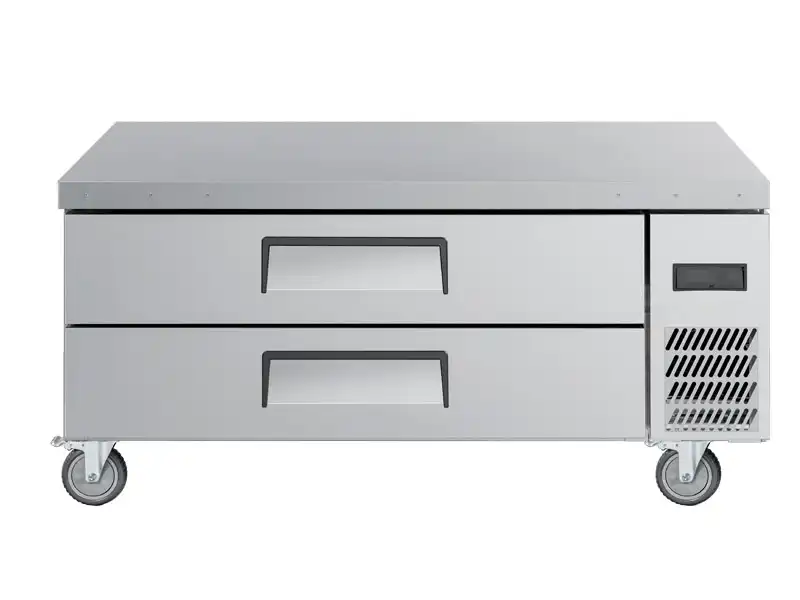
The Camay 60” Countertop Refrigerated Chef Base (Model MAR-60A) exemplifies our commitment to quality. It features durable stainless steel construction for both exterior and interior, ensuring long-term reliability in demanding kitchen environments. The unit uses eco-friendly R290 refrigerant and a heavy-duty compressor to maintain optimal internal temperatures of 0.5°C to 5°C (33°F to 41°F). The sturdy one-piece worktop with a drip-resistant V edge supports heavy-duty prep tasks and prevents spills. Rounded corners and an accessible condenser coil simplify cleaning, while 4-inch casters allow flexible positioning. Optional IoT and WiFi functions provide smart digital temperature control and management.
2. How Camay’s design simplifies installation and maintenance
Our chef bases are engineered to streamline the installation process. The inclusion of pre-installed casters (4-inch) means less assembly time. The robust design and high-quality components reduce the likelihood of issues during setup. For maintenance, features like rounded internal corners and easily accessible condenser coils make routine cleaning straightforward. This thoughtful design minimizes labor and ensures the unit remains operational with minimal effort.
Elevate Your Kitchen with Camay Refrigeration Solutions
Ensure your commercial kitchen operates at peak efficiency with a properly installed Camay chef base fridge. Our commitment to quality and thoughtful design provides reliable, long-lasting refrigeration solutions. Contact us today to learn more about our products and how we can support your business.
Phone: +86 181 5720 2219
Email: Sales@hzcamay.com
FAQs
1. How much space is needed around a commercial chef base fridge for proper ventilation?
Most commercial chef bases require at least 4-6 inches of clearance on the sides and rear, and often more at the top, for optimal ventilation. This space allows heat to dissipate effectively from the condenser coil, preventing the compressor from overheating and ensuring efficient cooling. Always consult your specific unit’s manual for exact recommendations.
2. What kind of electrical outlet is required for a commercial chef base?
A commercial chef base typically requires a dedicated electrical circuit with a specific voltage and amperage, often 115V or 208-230V, and a corresponding NEMA plug type. It is crucial to match the unit’s electrical requirements to the available outlet. Using an undersized circuit or an extension cord can lead to performance issues or safety hazards.
3. Can I install a commercial chef base fridge on uneven flooring?
No, you should not install a commercial chef base fridge on uneven flooring. Uneven surfaces can cause the unit to wobble, strain internal components, and lead to door misalignment, compromising the seal. This can result in inefficient cooling and increased energy consumption. Always ensure the unit is perfectly level using adjustable feet or shims.
4. How often should I clean the condenser coil on my chef base refrigerator?
We recommend cleaning the condenser coil on your chef base refrigerator every 1 to 3 months, depending on the kitchen environment’s dust and grease levels. A dirty coil restricts airflow, making the compressor work harder, which increases energy consumption and can lead to premature failure. Regular cleaning maintains efficiency and extends the unit’s lifespan.
5. What temperature range should a commercial chef base fridge maintain?
A commercial chef base fridge should maintain an internal temperature range of 0.5°C to 5°C (33°F to 41°F). This range is crucial for food safety, preventing bacterial growth, and preserving the freshness of ingredients. Regular monitoring with an accurate thermometer ensures the unit operates within these critical parameters.
About the Author
Miss Min is an expert specializing in commercial freezers, kitchen refrigerators, ice makers, and display cases, with 12 years of experience in the industry. She provides authoritative insights and practical advice on commercial refrigeration equipment.