
Commercial kitchens live and die by their workbenches. Not just as surfaces, but as the backbone of everything that happens during service. When the design works, staff move faster, hurt less, and stick around longer. When it doesn’t, you feel it in every rushed ticket and every worker who quits after six months. The connection between thoughtful workspace planning and actual profit isn’t abstract—it shows up in output numbers, injury claims, and retention rates. What follows covers the practical design decisions that make workbenches work harder for everyone using them.
Workflow Starts at the Workbench
Getting workflow right means building ergonomic thinking into every workbench decision from the start. The goal is eliminating wasted motion—those extra steps, awkward reaches, and unnecessary pivots that add up across a twelve-hour shift. A kitchen that flows well lets cooks execute tasks in sequence without fighting their environment. That fluidity translates directly into faster service and less physical wear on the people doing the work.
Matching Workstations to Actual Tasks
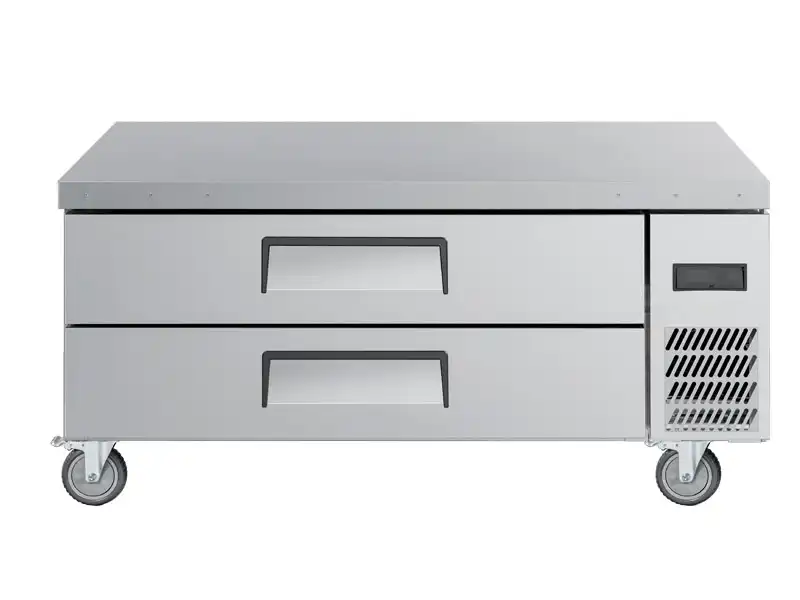
Not every prep task needs the same setup. Vegetable prep demands different surface heights and materials than plating does. A station built for butchery won’t serve a pastry cook well. Breaking down kitchen roles—prep, line cooking, plating—and identifying what each position actually requires prevents the common mistake of treating all workbenches as interchangeable. The Camay 60″ Countertop Refrigerated Chef Base (Model MAR-60A) works well here because its integrated worktop handles multiple prep functions without forcing awkward compromises.
For more on streamlining operations around your equipment, 《Boost Kitchen Efficiency Workflow Optimization with Chef Base Fridges》 covers the specifics.
Materials That Survive Professional Kitchens
Material choices affect hygiene, lifespan, and how much time gets spent on maintenance. Professional environments punish cheap materials quickly—surfaces see constant abuse from knives, heat, chemicals, and heavy equipment. Non-porous materials that clean easily and resist bacterial growth aren’t optional; they’re baseline requirements for any serious operation.
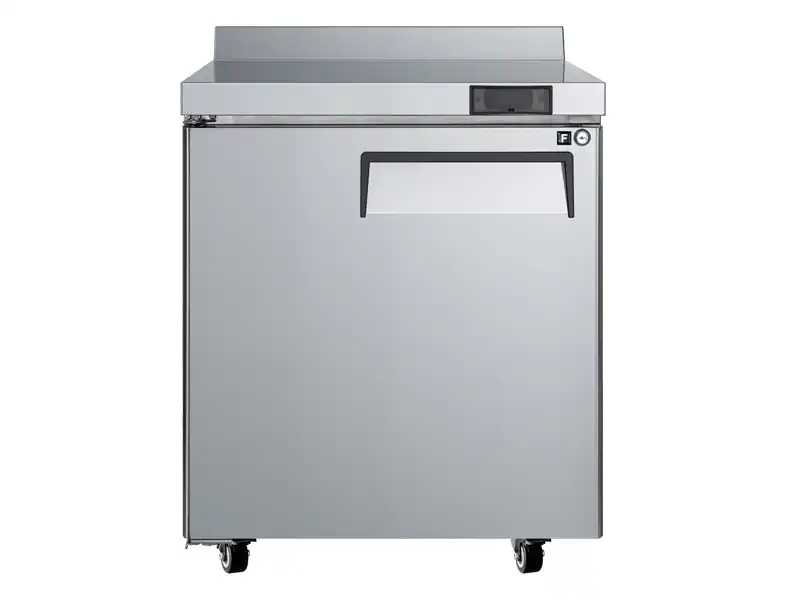
Stainless steel remains the standard for good reason. The Camay Commercial Worktop Refrigerator Cooler Fridge (Model MWTF-27-L) uses stainless steel inside and out, which means reliable performance and straightforward sanitation over years of hard use. The Camay Commercial Solid Door Undercounter (Model MTR-72) follows the same construction philosophy.
| Feature | Stainless Steel (e.g., SS304) | High-Density Polyethylene (HDPE) | Wood (Sealed Hardwood) |
|---|---|---|---|
| Durability | Excellent | Good | Moderate |
| Hygiene | Superior (non-porous) | Very Good | Moderate (requires sealing) |
| Maintenance | Low | Low | High (re-sealing, oiling) |
| Cost | High | Moderate | Moderate to High |
| Heat Resist. | Excellent | Poor | Good |
Adjustability Keeps Staff Working Longer
Kitchen staff come in different heights and work different stations throughout their shifts. Fixed-height surfaces force bodies to adapt to the equipment rather than the reverse. Adjustable features—height mechanisms, modular components, repositionable storage—reduce the physical compromises that lead to chronic strain and eventual departure.
How Does Ergonomic Design Improve Kitchen Productivity?
Discomfort slows people down. Fatigue compounds errors. When workstations fit the people using them, tasks complete faster and mistakes drop. Properly positioned tools and ingredients cut down on reaching and bending, which sounds minor until you multiply those movements across hundreds of repetitions per shift.
What Are Key Considerations for a Height-Adjustable Workbench?
The adjustment range needs to accommodate your actual staff, not some theoretical average. Stability matters—a wobbly surface at any height creates problems. The mechanism should operate smoothly and quickly since frequent adjustments are the point. Durability becomes critical because adjustment mechanisms see constant use and bear significant loads. Undercounter units like the Camay MTR-48 2-Door Commercial Undercounter Refrigerator pair well with adjustable surfaces for flexible configurations.
More on refrigeration integration at 《Optimizing Kitchen Efficiency with Integrated Worktop Refrigeration》.
Modular Systems Adapt to Changing Needs
Kitchens change. Menus evolve, staff sizes shift, new equipment arrives. Modular workbench systems let you reconfigure layouts without starting from scratch. The upfront investment pays off when expansion or reorganization doesn’t require replacing everything. Components that work together in different arrangements keep the workspace relevant as operations grow or pivot.
Compliance Protects Everyone
Regulatory requirements exist because commercial kitchens present real hazards. Meeting safety standards isn’t just about avoiding fines—it’s about preventing injuries and creating defensible practices. Workbench design touches multiple compliance areas, from surface materials to electrical integration to structural stability. Products like the Camay Commercial Worktop Refrigerator Cooler Fridge carry ETL, DOE, and ENERGY-STAR certifications, which simplifies the compliance picture considerably.
Elevate Your Commercial Kitchen with ZHEJIANG KAIMEI CATERING EQUIPMENT
ZHEJIANG KAIMEI CATERING EQUIPMENT CO., LTD. is your expert solution provider for high-quality, ergonomically designed refrigeration and catering equipment. We offer a one-stop-shop advantage, delivering innovative products that enhance efficiency and comfort in your commercial kitchen. Contact us today to discuss your specific needs.
Email: Sales@hzcamay.com
Phone: +86 181 5720 2219
Frequently Asked Questions About Ergonomic Kitchen Workbenches
How can kitchen layout impact staff well-being?
Layout determines how much unnecessary physical work happens every shift. Good spacing, logical flow between stations, and tools within easy reach reduce both physical strain and mental load. Poor layouts force constant adaptation, which wears people down over time. The difference shows up in injury rates and turnover numbers.
What are the long-term benefits of investing in ergonomic kitchen equipment?
The returns compound over time. Lower turnover means less training cost and more experienced staff. Fewer injuries mean lower insurance premiums and less disruption. Higher productivity means more output from the same labor hours. These benefits accumulate year over year, making the initial investment look increasingly reasonable.
Is customization available for specific ergonomic kitchen workbench needs?
ZHEJIANG KAIMEI CATERING EQUIPMENT CO., LTD. builds solutions around specific requirements—kitchen dimensions, task demands, staff needs. Standard configurations work for many situations, but custom approaches handle the cases where off-the-shelf options fall short.