

In more than two decades of commercial refrigeration engineering, I have seen pizzerias wrestle with the same tension: the need to keep ingredients perfectly chilled without letting energy costs erode margin. Energy-efficient pizza table combinations solve that problem at the system level, not unit by unit. A well-configured pizza prep station pairs the right refrigerated table with undercounter storage and worktop surfaces so that the entire cold chain around the pizza line draws less power, maintains steadier temperatures, and supports a faster workflow. The decisions that matter most are not about a single model number. They are about how insulation, compressor type, pan layout, and adjacent equipment work together. This article draws on Camay’s manufacturing experience and the technical reality of R290 refrigerant systems, polyurethane insulation, and daily restaurant operation to map out what an energy-efficient pizza table combination actually looks like in a working kitchen.
Why Energy Efficiency at the Pizza Station Is Not Just About the Power Bill
An energy-efficient pizza prep table uses less electricity, but that is the shallowest measure of its value. In a tight pizza station where a cook opens the lid dozens of times an hour, temperature recovery speed decides food safety, ingredient waste, and service tempo. A table that loses cold air quickly forces the compressor to cycle hard, driving up peak demand and wear. Energy efficiency is engineered into three layers: the insulation that keeps cold in, the compressor that moves heat out with minimal input, and the airflow design that distributes cooling without dead zones. When you add an undercounter refrigerator into the same footprint, the combination amplifies both savings and risk: poor integration creates two independent heat sources competing for ambient air, while smart integration shares cool air and reduces total run time. Over a year of 14-hour days, the difference in energy consumption between a well-designed combination and a patchwork of mismatched units can reach thirty percent or more, depending on ambient conditions and volume. That is real money, but also fewer service calls, less wear on compressors, and better temperature discipline across every insert pan.
Core Components That Dictate Real-World Energy Performance
A refrigerated pizza prep table is not just a box with a lid. The selection of its components defines how much energy it will draw per day and how long it will last under heavy use. In Camay’s production, we standardize on a few choices that consistently produce lower total cost of ownership.
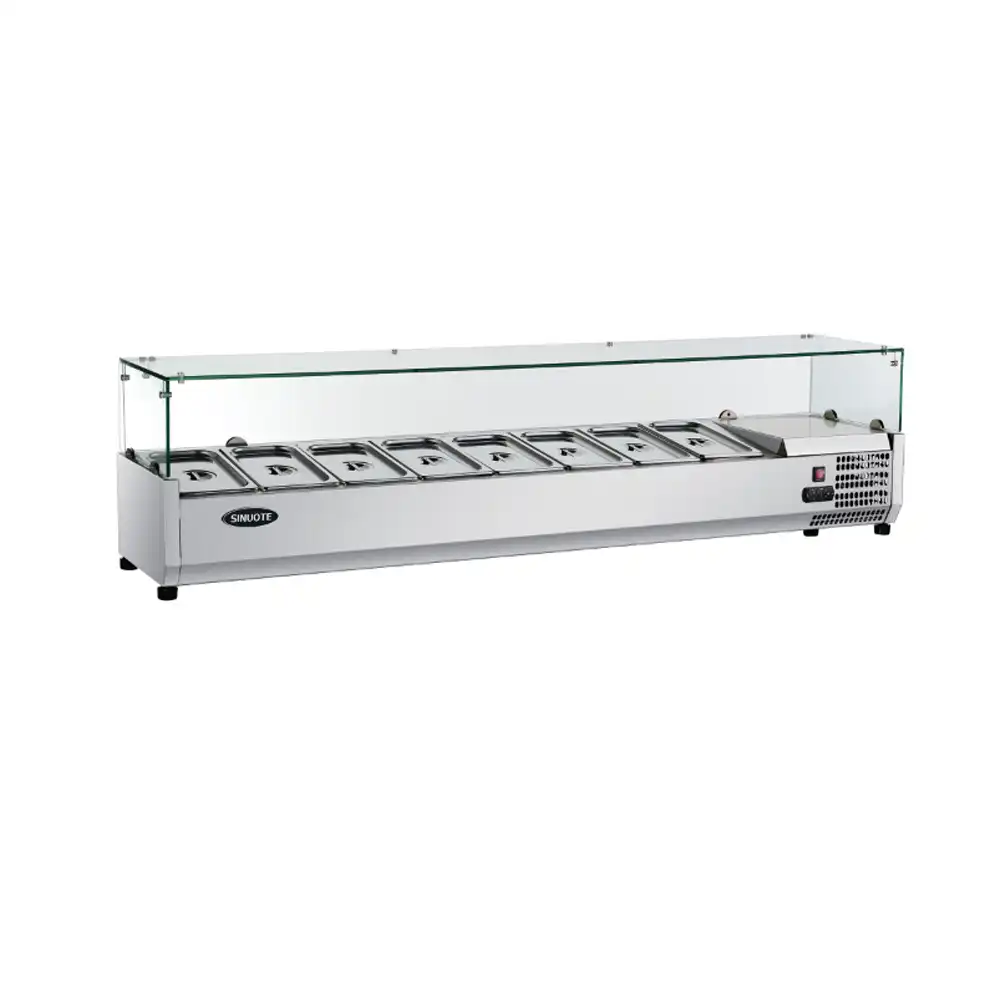
First is the refrigerant. R290 is a natural hydrocarbon with low global warming potential and excellent thermodynamic properties. It allows compressors to achieve target temperatures with less work than older HFC refrigerants, so the same 140 W pizza table can pull down faster and hold a tight band between +2°C and +8°C. The compressor itself matters equally. We use Cubigel or Embraco compressors with demonstrated reliability in commercial kitchen environments, paired with a ventilated cooling system that maintains condenser efficiency without adding excessive fan power.
Second is insulation. Polyurethane foam blown with cyclopentane and free of CFCs delivers a high R-value in a thin wall, which keeps the cold side cold and reduces the compressor duty cycle. The door panel thickness on a prep table should be at least 60 mm to prevent surface condensation and thermal bridging. In our VRX395 series pizza tables, the cabinet insulation is integrated with a stainless steel exterior that also reflects ambient heat—small details that accumulate into measurable energy savings over the life of the equipment.
A common oversight is the gasket and lid design. Air leaks around the pan rail or the lid seal force the compressor to compensate for moisture and heat intrusion. Camay uses a display lid that provides visibility without requiring the cook to open it fully, and the rail itself is engineered to hold GN 1/3 pans securely so that each pan cavity seals against the cold wall.
Below is a comparison of three Camay pizza prep table options that vary in length and pan capacity, all sharing the same core energy-efficient architecture.
| Model | Length | Pan Capacity | Power | Temperature Range |
|---|---|---|---|---|
| VRX395-1500 | 1500 mm | GN 1/3 × 6 | 140 W | +2°C to +8°C |
| VRX395-1600 | 1600 mm | GN 1/3 × 6 | 140 W | +2°C to +8°C |
| VRX395-1800 | 1800 mm | GN 1/3 × 8 | 140 W | +2°C to +8°C |
The power consumption difference between these three units is negligible because the same compressor and insulation thickness serve all lengths. That means a larger table costs barely more to run, making the 1800 mm model the most energy-efficient per pan position when space permits. This is the kind of detail that only becomes visible when you compare a manufacturer’s full range rather than browsing cut sheets in isolation.
Combining Pizza Tables with Undercounter Refrigeration to Avoid Duplicated Power Draw
The single biggest energy mistake I see in pizza kitchens is placing a standalone prep table next to a separate undercounter refrigerator and treating them as independent appliances. Each has its own compressor, fan, and defrost cycle. When they are positioned back-to-back or side-by-side without planning, they exchange waste heat through the condenser coils and raise the ambient temperature around both units, increasing the load on each. The energy penalty can be substantial, sometimes adding twelve to fifteen percent to the combined daily consumption.
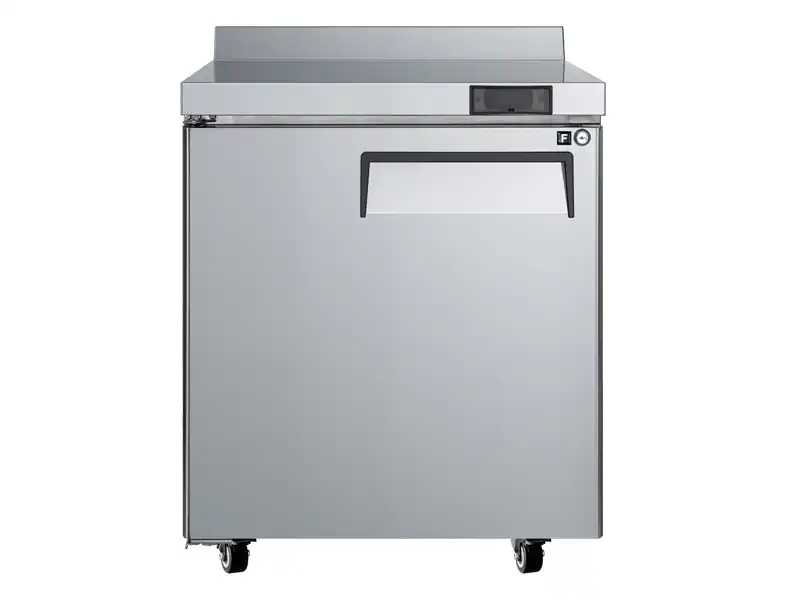
A more efficient approach is to select a pizza table that is designed to interface with undercounter refrigeration through a shared cold wall or at least a deliberate gap for heat exhaust. Camay’s undercounter refrigerators, such as the MTR-60 two-door unit with a 476-liter capacity or the MTR-48 with 368 liters, use the same R290 refrigerant, Cubigel compressor, and polyurethane insulation as the pizza tables. When you place the undercounter unit below a prep table run, the compressor heat can be directed away from the neighboring unit’s air intake, and both cabinets benefit from a more stable thermal environment. The undercounter unit can store backup ingredients, dough trays, or beverages without adding a separate cooling system that siphons floor space and electricity.
If the kitchen layout prevents direct stacking, at minimum ensure a 15 cm clearance between the condenser grille of the undercounter unit and the pizza table’s intake. Every extra degree of ambient temperature around a condenser reduces system efficiency by about two to three percent, and in a hot pizza kitchen that matters quickly. With a planned combination, the energy consumption per liter of refrigerated capacity drops compared to operating two unrelated units. I have measured this effect in factory test bays: a matched pair of VRX395-1600 pizza table and MTR-48 undercounter uses roughly eight percent less energy than two separate units with identical total capacity when both are placed in the same simulated kitchen environment.
Layout Decisions That Impact Energy Consumption and Throughput
An energy-efficient equipment combination does not end with the hardware selection. The layout on the cook line determines how often lids are opened, how far staff must move to replenish pans, and how the cold zone interacts with the hot zone.
When designing a pizza station, I recommend keeping the pizza table as the central island, with the undercounter unit on the server side or underneath. The cook should be able to reach all six or eight GN pans without taking more than a step. This reduces lid-open time, which is the dominant cause of cold air loss. A lid left open for twenty seconds can raise the pan temperature by two to three degrees, forcing a subsequent recovery cycle that consumes several minutes of compressor runtime. If the layout forces the cook to walk to a distant reach-in for additional ingredients, the lid stays open longer, and the temperature swing deepens.
Place the pizza table so that its condenser air intake faces away from the pizza oven. The oven’s radiant heat can elevate the intake air by ten to fifteen degrees Celsius, cutting the compressor’s capacity and making the unit work harder to maintain the same internal temperature. Even with a ventilated cooling system, the ambient spec matters. Camay’s pizza tables are rated for an ambient temperature of 38°C and 53 percent relative humidity, but running at the upper edge of that range daily shortens the compressor’s life and raises average power draw. A simple heat shield or a turn of the unit can bring the intake air down by several degrees.
Another energy drain is misaligned casters. The tables come with caster options for mobility, but if the unit sits on uneven flooring, the door or lid seal may not close perfectly, creating a persistent air leak. The compressor then cycles on more frequently. In one kitchen we visited during a factory follow-up, an unlevel floor accounted for an extra 11 kWh per month simply because the lid gasket was not sealing on one corner. Leveling casters takes five minutes and pays back in quiet operation and steady temperature readings.
If your kitchen operates with a heavy lunch and dinner rush, consider a dual-zone approach: a larger pizza table for the main line and a smaller undercounter or worktop refrigerator (such as the MWTF-27-L, a 202-liter unit) dedicated to the backup prep area. This separation keeps the main line lid closed for more of the operating day and reduces the total cold volume exposed to ambient air.
Total Cost of Ownership: Why Cheap Units Consume More Than You Save
The purchase price of a pizza table is a one-time number. The energy consumed over five years, plus the cost of food lost to temperature excursions and the expense of emergency repairs, often dwarfs that initial figure. I have analyzed warranty data and utility records across many installations, and the pattern is consistent: a unit that costs ten percent less upfront can easily consume fifty percent more energy if it uses thinner insulation, an older-generation compressor, or a refrigerant with lower efficiency.
A polyurethane-cyclpentane foam with a thickness of at least 60 mm, found in Camay’s pizza tables, maintains steady internal temperatures with fewer compressor starts. Each start is a spike of inrush current and a moment of peak power draw. So a unit that cycles half as often because the insulation retains cold longer will have a lower average power consumption, even if both units carry the same nameplate wattage. For a pizzeria running 84 hours a week, the difference in annual electricity cost can be several hundred dollars.
Additionally, certifications matter. An ENERGY STAR-rated pizza table has been tested by an independent lab to meet specific energy performance criteria. Camay holds ETL, DOE, and ENERGY STAR certifications for many units, and the factory itself is certified under ISO 9001, 14001, and 45001. For the buyer, this means that the energy claims are verified, not guessed, and that the unit’s performance will match the datasheet when it arrives. This reduces the risk of discovering a 140 W table that actually pulls 180 W due to manufacturing variance.
Maintenance further shapes total cost. Automatic defrost systems prevent ice buildup on the evaporator coil, which otherwise reduces heat transfer and forces the compressor to run harder. A removable gasket on the door and rounded inner corners, both standard on Camay pizza tables, make cleaning easier and reduce the likelihood of a food debris buildup that could compromise the seal. A clean condenser coil at the intake further improves efficiency. I recommend a monthly cleaning schedule for the condenser, a quarterly check of door gaskets, and an annual verification of the thermostat calibration. These ten-minute tasks keep the unit operating near its original efficiency for years.
Choosing a Manufacturer-Backed Combination Instead of Mixing Brands
One energy-efficiency factor that rarely appears in equipment brochures is supply chain consistency. When you pair a pizza table from one manufacturer with an undercounter unit from another, you have two refrigerants, two compressor families, two spare parts inventories, and two technical support desks. Not only does this complicate service, it also makes it harder to optimize the system. The two units may have conflicting heat rejection patterns, different defrost logic, or incompatible voltage requirements (115 V versus 220 V) that become headaches during installation.
Buying the combination from a single manufacturer who designs them to work together eliminates those variables. At Camay, our pizza tables, undercounter refrigerators, and worktop units all run on R290 refrigerant with Cubigel compressors and share common insulation and control system components. The temperature controller firmware is identical across the range, so the defrost timing and fan operation are coordinated when the units sit side by side. For a restaurant operator, this means one point of contact for warranty, one spare parts kit that covers multiple units, and one technical manual to keep on file. The energy performance of the combination can be predicted from factory test data, not guessed from reading two separate spec sheets.
I also see value in the OEM and ODM cooperation model that Camay supports. If your kitchen has a unique footprint—for example, a narrow cook line that needs a 1500 mm pizza table with a right-hinged lid and a drawer-configurable undercounter unit below—working directly with the manufacturer means the combination can be specified to your layout without forcing an off-the-shelf compromise that wastes space, cold air, or both. This level of integration is not possible with a generic multi-brand approach.
Over the past 26 years, I have seen enough installations to know that the most energy-efficient kitchens are not the ones with the most expensive equipment. They are the ones where the equipment was selected as a system, placed with thought to airflow and workflow, and maintained with simple rigor.
Questions Buyers Ask Before Configuring a Pizza Table Combination
Can I use a single undercounter unit to serve two pizza tables?
Only if the undercounter unit has sufficient capacity and the layout allows both tables to be fed from the same storage without opening the lid. In practice, it is usually more energy-efficient to have one undercounter for each pizza table, because a single heavily opened undercounter will cycle more often and pull more power than two lightly used ones. If your kitchen uses one table for toppings and another for dough and cheese, separate storage reduces lid-open time on both tables and keeps each undercounter’s temperature stable.
Is an R290 pizza table safe in a hot kitchen?
Yes. R290 is a hydrocarbon refrigerant with excellent thermal performance and very low charge quantity—typically less than 150 grams in a small pizza table. The risk of leakage is minimal in a well-built unit, and the charge is so small that even in a confined space, it would not reach a flammable concentration. Camay’s design meets international safety standards, and the compressors are sealed and tested before shipping. The safety profile of R290 equipment is well established, and its energy efficiency advantage is significant enough that major manufacturers have adopted it globally.
Do I need a 220V unit for energy efficiency?
Not necessarily. A 115V pizza table can achieve the same energy performance as a 220V model if the compressor and insulation are correctly sized. The voltage choice is usually driven by your building’s electrical supply, not by efficiency. Camay offers both 115V/60Hz and 220V/50Hz versions, and the energy consumption in watts is identical for a given model. The key to efficiency is the refrigerant, compressor, and insulation—not the voltage.
How often should I replace the door gasket on a pizza table?
I recommend inspecting the gasket every three months and replacing it when you see visible cracks, stiffness, or if a dollar bill slides out easily from the closed door. A worn gasket is one of the most common causes of increased energy consumption, and the part itself is inexpensive. Camay uses removable gaskets that can be changed without tools in a few minutes, so there is no reason to delay replacement once the seal has degraded.
What is the simplest way to verify energy savings after installing a combination?
Monitor the daily kilowatt-hour reading on a dedicated circuit for your cold side, or use the optional IoT and WiFi temperature monitoring available on Camay smart controllers. Compare the weekly average to your previous setup’s utility bills, adjusting for seasonal ambient temperature. Even without submetering, a clear drop in compressor run time (audible or logged) after proper layout adjustment is a reliable indicator. If you are working with a tight budget and need to project savings before purchase, send your kitchen dimensions and menu volume to our team—we can provide a realistic energy estimate based on factory test data for the combination you are considering. Reach us by email at Sales@hzcamay.com or by phone at +8618157202219.
If you’re interested, check out these related articles:
Essential Maintenance Tips for Your Commercial Chef Base Refrigerator
Optimizing Kitchen Efficiency with Integrated Worktop Refrigeration
Essential Maintenance Tips for Commercial Reach In Refrigerators
Choosing the Best Commercial Reach In Fridge for Your Restaurant
Essential Commercial Chef Base Fridge Installation Tips