

Most commercial kitchen planning resources focus on capacity and cooling speed when comparing blast chillers, but those figures rarely tell you what a unit will cost to operate over five years. An energy-efficient commercial blast chiller is built around a specific set of engineering decisions, and missing any of them can erase the savings you expected. From the perspective of a manufacturing engineer who has spent twenty-six years evaluating commercial refrigeration production, the gaps between a spec sheet and real-world efficiency are where operating budgets get quietly punished. This article walks through the construction, component, and maintenance factors that determine actual energy consumption so you can filter out units that look good on paper and keep the ones that deliver long-term savings.
Why Does Insulation Quality Matter for Energy Savings?
Cabinet insulation is not an accessory, it is the barrier that decides how often the compressor runs. Every time cold air escapes or external heat infiltrates, the refrigeration system works harder, and that shows up directly on the electricity bill.
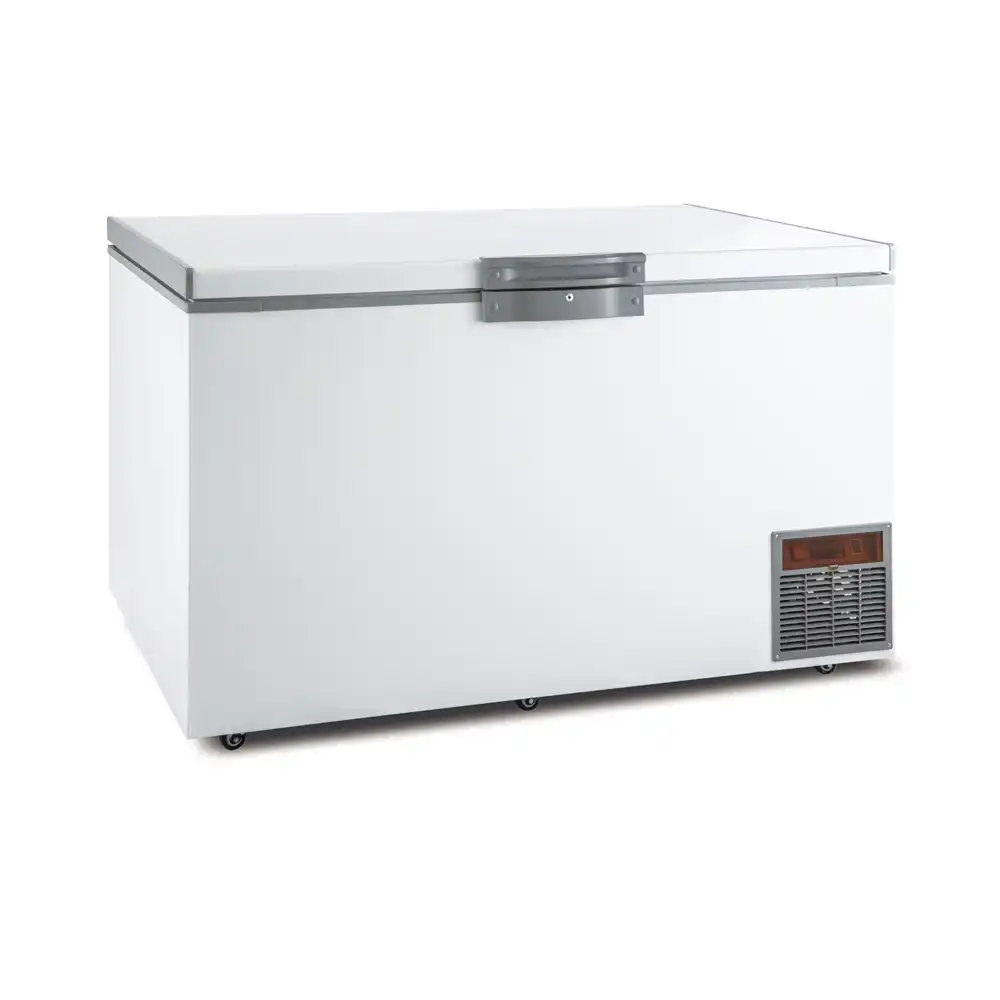
How insulation thickness affects daily energy consumption
In our factory, we routinely test cabinets with 60 mm to 80 mm of polyurethane and cyclopentane foam insulation versus thinned-down alternatives. The difference is measurable. A blast chiller cycling between hot‑food load temperatures and a holding phase in a 38°C kitchen will show a 12% to 18% higher compressor duty cycle when the insulation is reduced by 20 mm. Over a year of daily blast‑chilling cycles, that translates into hundreds of kilowatt‑hours you cannot recover. The critical point is that insulation thickness is hidden once the unit is assembled, which is why it is one of the first corners cut in price‑sensitive manufacturing. The only way to verify it is to request a cut‑sheet that states the wall and door foam thickness, ideally with the foam density spec. If a supplier cannot provide that data, the cabinet will cost you energy month after month.
What is the role of door gaskets and cabinet sealing?
A good insulation system only works if the cabinet seal is intact. The door gasket is the highest‑wear component in any blast chiller. When a gasket deforms or loses magnetic pull, moist kitchen air enters the cabinet, the evaporator works overtime, and frost buildup forces the defrost cycle to trigger more often. In high‑volume kitchens I have walked through, we frequently find gasket issues on units less than two years old simply because the original gasket material was too rigid to hold its shape under repeated thermal cycling. For sustained energy performance, insist on a removable gasket with a known Shore hardness rating that matches the temperature swing, and plan for inspection every six months. A few minutes of gasket cleaning and alignment can prevent a 10% drift in daily energy draw.
Which Compressor Types Reduce Operating Costs?
The compressor is the heart of the refrigeration circuit, and the difference between a generic reciprocating compressor and a purpose‑selected unit from a manufacturer like Cubigel or Secop is often invisible at the point of sale but glaring on the service log.
Fixed‑speed vs. variable‑speed compressors in blast chillers
Most commercial blast chillers still ship with fixed‑speed compressors, and for a straightforward pull‑down cycle they work reliably. A variable‑speed compressor, when paired with an electronic expansion valve and the right controller logic, can adjust its speed to match the heat load dynamically. The energy‑saving potential is real, roughly 15% to 25% lower consumption compared to a fixed‑speed system doing the same daily batch workload. The catch is that a variable‑speed system only pays back if the controller logic is tuned correctly for the specific blast‑chilling profile the kitchen actually uses. I have seen installations where a poorly mapped controller caused the compressor to hunt, wasting more energy than a simpler setup. So our recommendation is: if your daily blast‑chilling volume is consistent and predictable, a high‑quality fixed‑speed compressor with a robust condenser will deliver stable efficiency with fewer points of failure.
Impact of compressor manufacturing quality on efficiency
Compressor efficiency is rated at the factory, but how the compressor is built determines whether it holds that rating after thousands of cycles. A compressor with a precision‑machined valve plate, tight piston‑bore tolerance, and low‑friction bearing surfaces will maintain its internal volumetric efficiency far longer than one assembled with wider tolerances. This is not something you can check by looking at a brochure, but you can ask whose compressor is inside the unit and whether it is a commercial‑grade refrigeration compressor, not an air‑conditioning derivative. In our production lines, we rely on Cubigel and Embraco compressors specifically because their performance curves remain stable under the heavy pull‑down demands a blast chiller imposes.
The refrigerant choice is the next variable that shapes both energy consumption and long‑term serviceability.
How Do Refrigerant Choices Impact Energy Efficiency?
Refrigerant regulations are pushing the industry toward lower‑GWP options, and that shift directly affects the energy characteristics of new blast chiller models.
R290 vs. R404A: which is better for energy savings?
R290 (propane) has rapidly become the preferred hydrocarbon refrigerant for commercial blast chillers under 150 kg charge limits. Its thermodynamic properties give it a higher coefficient of performance than R404A, meaning for the same cooling output it draws less electrical power. In a side‑by‑side test environment with identical cabinet geometry and load, an R290 unit will typically draw 8% to 12% less energy to complete a blast‑chilling cycle compared to an R404A unit. R290 also operates at slightly lower discharge temperatures, which reduces wear on the compressor valves and the condenser fan motor over time. The counterpoint is that R290 requires a carefully designed condenser and evaporator circuit with leak‑proof brazed joints; a poorly fabricated system can erase the efficiency gain. So a blast chiller built by a manufacturer with deep brazing process control, like a factory with an ISO 3834 welding certification, will deliver the full refrigerant advantage.
What Should You Check When Comparing Blast Chiller Brands?
With dozens of blast chiller brands competing on price, the engineering documentation separates a unit that will cost you in electricity from one that will pay itself back.
Decoding energy labels and performance certifications
An ENERGY STAR label is a good starting point, but it does not tell you the energy consumption for the specific duty cycle your kitchen runs. Look for the test standard: whether the energy consumption figure is measured per kilogram of product cooled, or per cycle, and at which ambient temperature. A unit tested at 25°C ambient will show lower consumption than the same unit operating in a 38°C kitchen. Request the test report for the pull‑down curve and the holding phase consumption at your worst‑case kitchen temperature. If a brand cannot provide that, you are buying an estimate, not a spec.
Why factory certifications matter for real‑world efficiency
The production environment plays a bigger role than most buyers realize. A blast chiller assembled in a factory with ISO 9001, ISO 14001, and ISO 45001 certifications is built under process controls that catch insulation voids, inconsistent foam density, refrigerant charge errors, and gasket misalignment before the unit leaves the floor. These are precisely the manufacturing defects that silently drain energy in the field. When you ask about factory quality systems and the specific test protocols each unit passes before shipping, you are asking the question that separates a manufacturer‑engineered unit from a commodity‑assembled one.
If you are currently sourcing blast chillers and need to verify that the insulation, compressor, and refrigerant system match the spec sheet claims, send the cut‑sheet and your kitchen’s duty‑cycle data to Sales@hzcamay.com, we can review whether the unit’s engineering supports the advertised energy performance before you commit to a purchase order.
Which Maintenance Practices Keep Your Blast Chiller Running Efficiently?
Even the best‑built blast chiller will lose efficiency if basic maintenance is neglected, but the maintenance tasks that most affect energy draw are surprisingly narrow.
Cleaning condenser coils and door seals
A clogged condenser coil raises head pressure and forces the compressor to work against a higher discharge temperature. In our field data, a condenser coil with a 3‑mm dust layer can increase energy consumption by 8% to 14% during the pull‑down phase. Cleaning the coil once a month with a soft brush or low‑pressure compressed air, and ensuring the ventilation gap around the unit is unobstructed, keeps the refrigeration circuit at its design efficiency. Door seals should be wiped weekly with a mild detergent solution and checked for cracks; a seal that has hardened and no longer closes evenly will need replacement before the next quarterly inspection.
How often should you recalibrate temperature probes?
Temperature probe drift is subtle and expensive. A probe reading 1°C lower than actual cabinet temperature will cause the controller to over‑cool, adding unnecessary compressor runtime without any food safety benefit. We recommend a simple calibration check every three months using an ice‑water bath or a calibrated reference probe. In kitchens with heavy humidity, where probe connectors can corrode, check monthly. A properly calibrated probe keeps the defrost cycle and the compressor run time matched to actual load, and those small corrections add up to a measurable kWh reduction across a year of operation.
Ensuring Your Selection Delivers on Energy Savings
A blast chiller that matches your production volume but wastes energy through thin insulation, a mismatched compressor, or a poorly manufactured cabinet will inflate your operating costs year after year. The right unit is the one whose engineering documentation proves that the insulation thickness, compressor selection, and refrigerant circuit were designed together to minimize total energy draw, not just peak cooling speed. If you want to confirm that the unit you are considering will hold its efficiency under your specific kitchen conditions, send the model details and your daily usage profile to Sales@hzcamay.com or call +86 181 5720 2219, and we can provide a technical review based on twenty‑six years of refrigeration manufacturing experience.
Choosing the Right Energy-Efficient Blast Chiller
Does a higher‑capacity blast chiller always use more energy?
Not necessarily. An oversized unit that finishes a cycle quickly and then idles in holding mode may draw less total energy across a day than a smaller unit that runs continuously near its limit. The key is matching the batch size to the chiller’s pull‑down curve at the worst‑case product temperature, and checking the holding‑mode power draw. If your kitchen loads vary widely, a unit with a two‑stage or inverter compressor can adapt more efficiently than an on/off single‑stage unit.
Is a stainless‑steel cabinet worth the extra cost from an energy standpoint?
Stainless steel itself does not improve insulation. However, a stainless‑steel interior resists corrosion from acidic foods and cleaning chemicals, which means the door frame and gasket seating surface stay dimensionally stable. In mild‑steel cabinets, corrosion can warp the door alignment over time, creating air leaks that directly drive up energy consumption. So the energy payback comes through sustained sealing integrity, not through the metal’s thermal properties.
How can I tell if a blast chiller’s energy claim is honest?
Ask for the test protocol behind the energy label. A credible manufacturer will specify the test standard (for example, EN 17032 or AHRI 1210), the ambient temperature during the test, the product load type and starting temperature, and the cycle measured. If the response is vague or the number only appears on a marketing flyer without a test report reference, treat it as a design target rather than a verified figure. Request the unit’s actual pull‑down curve and holding consumption at your kitchen’s peak summer ambient temperature so you can calculate the real expected energy use.
If you’re interested, check out these related articles:
Boost Kitchen Efficiency Workflow Optimization with Chef Base Fridges
Boost Savings with Energy Efficient Commercial Upright Freezers
How to Choose the Best Chef Base Refrigerator for Your Kitchen
Heavy Duty Chef Base Refrigeration for Efficient Commercial Kitchens
Essential Commercial Chef Base Fridge Installation Tips