

Most impulse purchases at a front counter are won or lost before the customer reads a price tag. They are won by clear glass, visible product height, and a case that keeps chilled food looking fresh after repeated door openings. Display fridge merchandising rarely fails because operators lack good products. It fails because the refrigeration case is treated as cold storage instead of sales real estate. After twenty-six years engineering display and prep refrigeration for export partners, I would rank the priorities this way: stable temperature, clear glass, deliberate shelf placement, then sign and price messaging. A display fridge that cannot hold its temperature runs against every merchandising tactic placed on it.
Display Fridge Merchandising Starts With Why a Buyer Stops
An impulse sale does not start with the product. It starts with a change in pace. A buyer walking a queue, a lobby, or a counter line is already deciding what to ignore. The display fridge works only when it sits inside that path and interrupts the walk. In a convenience store, that means the case should sit beside the payment queue or at the turn toward checkout, not against a rear wall behind stacked boxes. In a bakery, the cake display should face the entrance so the customer sees color and shape before the counter conversation begins. In a bar, the glass door cooler belongs at the point where the customer waits for the order. If the case sits where no one slows down, the best shelf plan will not create sales.
If the front counter display also serves as the primary chilled backup for busy service, the case needs reach-in capacity and a door that can survive constant cycling. <Choosing the Best Commercial Reach In Fridge for Your Restaurant> covers how to size that capacity around workflow instead of turning the impulse zone into a stockroom.
Product category shapes the display as much as placement does. Impulse buys cluster in three groups: cold beverages consumed immediately, sweet or snack items with strong visual color, and meal components the customer forgot. Operators should not fill a display fridge with routine stock. Fill it with items that are visible, portable, and priced low enough not to trigger a second thought. A bottle of sparkling water can be an impulse item. A 5 kg bag of flour is not.
Sight Lines and Shelf Placement Do More Than Product Choice
Shelf height decides whether a product gets a glance. In a glass door display, the strongest band is roughly between 1.2 m and 1.7 m above the floor. That is where the eye settles without lifting or bending. Put the highest-margin impulse items there. The bottom shelf is not a punishment zone, but it only works for larger colored packaging or products aimed at children. The top shelf is often the warmest in a vertical case, so it should carry stock that moves quickly or packaging that tolerates short-term exposure.
| Shelf zone | What to place | Why it works | Refrigeration note |
|---|---|---|---|
| Top shelf | Fast-moving beverages, small packs | First visual scan | Warmer air; keep stock shallow and rotated |
| Middle shelf | High-margin desserts, pastries | Natural eye line | Best temperature stability |
| Lower shelf | Family packs, colored boxes | Bending required, but high visibility for children and comparison | Colder air; avoid blocking return airflow |
| Front row | Single-serve impulse items | Fastest grab path | Keep two to three rows deep to avoid frost and airflow blockage |
Depth matters more than height in a cold case. If products are stacked six or seven rows deep, the rear packages freeze, the front packages hide the light, and the air curtain loses its path. I have watched operators fix slow sales by removing stock rather than adding it. A display fridge should look full but not stuffed. The gap between the shelf front and the glass should stay clear enough for cold air to wash down the door.
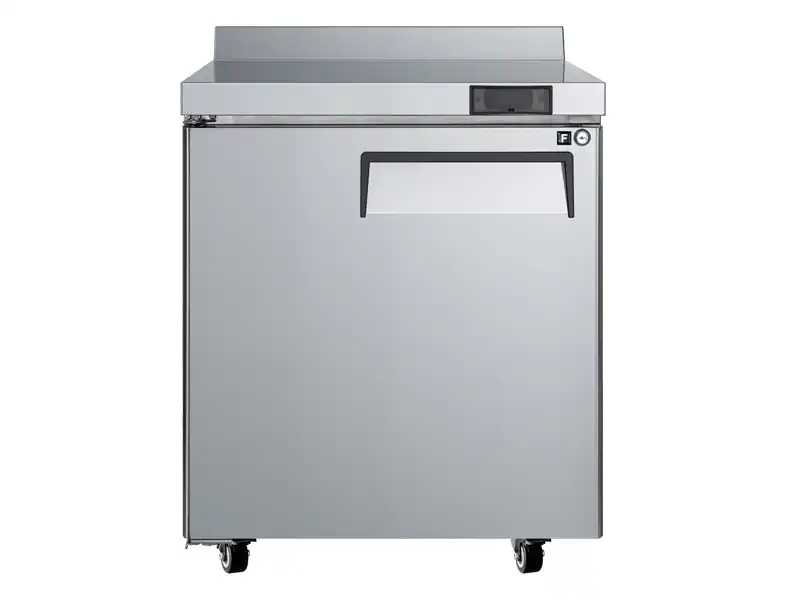
Glass Clarity, Lighting, and Temperature Decide Whether Display Fridges Convert
A fogged door is the fastest way to kill an impulse case. Customers do not open a cloudy door to find out what is inside. Glass fogging is a refrigeration problem, not a cleaning problem. It starts when warm humid room air meets cold glass, usually because the door heater is undersized, the defrost cycle is poorly timed, or the case is placed near a doorway or steamer. In high-humidity bakeries and kitchen-adjacent counters, the right answer is a case with heated glass or an anti-fog film plus a door that closes fully every time.
Lighting is the second conversion lever. Cold white LED light makes labels readable and makes cream, fruit, and packaging color look accurate. If the light sits behind the product, shadows fall across the label. The light should be placed at the front or top front of the cabinet, angled down so the product face is illuminated. Doors with low-iron glass show truer color than standard glass, which matters for cakes, pastries, and fresh sliced fruit.
Temperature display is a trust signal. If the digital readout shows 5°C at the start of lunch and 9°C two hours later, the buyer may not notice, but the product will show it through condensation, wilting, and label curl. A display fridge used for impulse sales needs tight recovery after each door opening. The compressor, door seal, and shelf configuration have to work as one system. When a request comes in for a case that will sit near a sunny window or a busy door, I prefer a larger condenser and a shorter defrost recovery than a narrow temperature range on paper.
If the display case will sit in a humid bakery or beside a coffee machine, the glass and door seal specification matters more than the number of shelves. It is worth confirming the door heating or anti-fog method and the gasket replacement path before finalizing the order. Send the room conditions to Sales@hzcamay.com and we can verify which configuration will not fog at peak service.
Stocking Rhythms and Reset Schedules Keep Display Fridge Impulse Sales Working
Impulse sales run on freshness. A display fridge that is restocked once in the morning looks tired by 3 p.m. The fastest-moving items should be restocked before the peak, not after it. For a coffee shop, that means resetting the cake case at 11:00 before the lunch rush. For a convenience store, the cold beverage door gets a second touch after the school and early evening traffic. The goal is not to refill every product; it is to restore the first impression.
Rotation is where merchandising meets food safety. The oldest date goes to the front, but the face of the package still needs to sit square to the glass. A crooked label or a torn corner reads as poor handling. Staff need a simple reset list: pull expired items, wipe the shelf edge, rotate product, face labels forward, and leave one finger of space between the display and the glass air path. A five-minute reset can outperform a new sign.
Matching a Display Fridge to Impulse Sales Starts With a Clear Specification
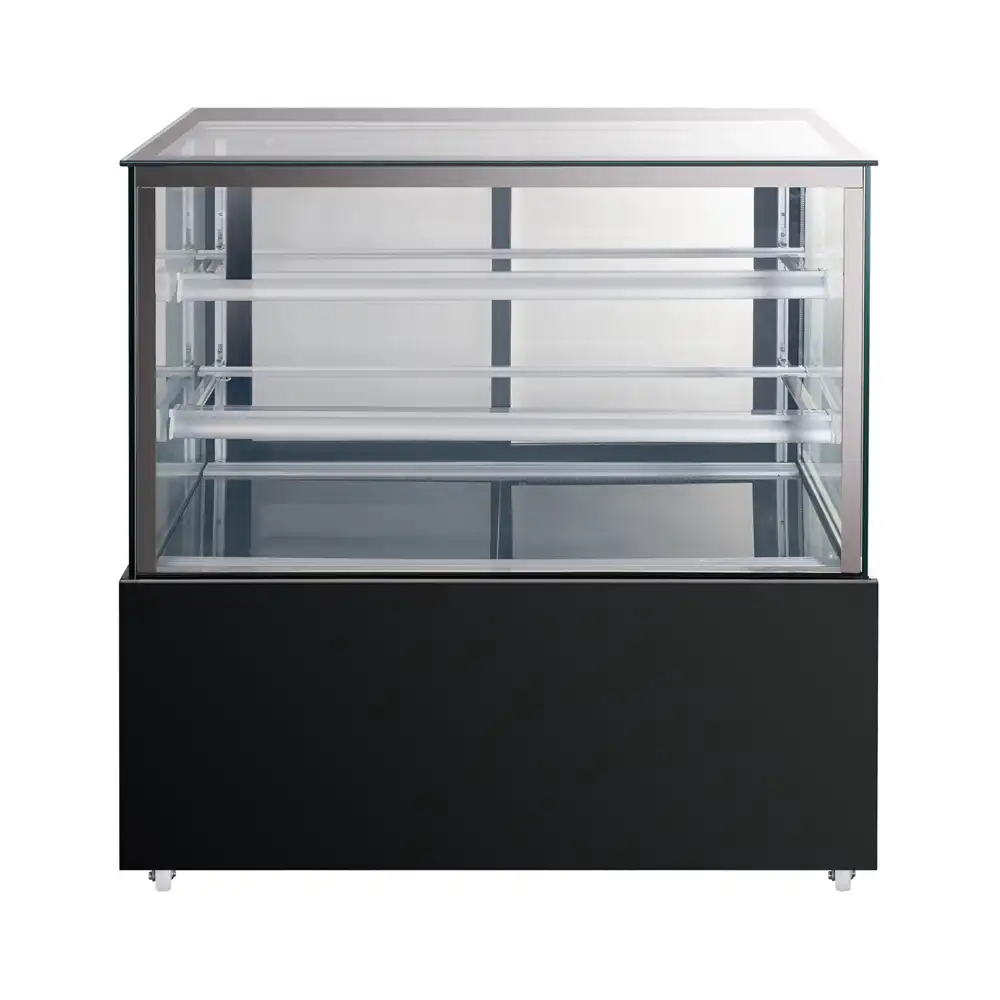
A display case is not a single product. The right specification changes with the price point, the location, and how often the door opens. A bakery needs a curved glass or full-view cake case with stable humidity. A convenience store needs a high-capacity glass door merchandiser that can handle frequent restock and self-service. A cafe can use a countertop display unit, but only if the countertop can carry the weight and the case can discharge heat without warming the customer side.
| Application | Preferred display type | Impulse item example | Specification priority |
|---|---|---|---|
| Bakery and cake counter | Full-view bakery display | Sliced cakes, pastries | Glass clarity, humidity balance |
| Convenience store | Glass door reach-in display | Bottled drinks, snack packs | Capacity, door cycle recovery |
| Cafe or dessert shop | Countertop refrigerated display | Yogurt cups, dessert cups | Footprint, quiet operation |
| Bar or taproom | Glass door back bar cooler | Cans, bottles, ready-to-drink | LED visibility, bottle temperature |
Before we build or recommend a case, I ask operators to write down three numbers: internal width available in millimeters, expected daily unit sales, and the warmest room temperature the unit will see. Those three numbers remove most of the guesswork. A case that is too small forces overstocking. A case that is too large wastes floor space and energy. The door type also changes the specification. Solid doors hide product and work against impulse buying. Glass doors sell, but only when the glass stays clear and the frame does not block the shelf face.
The Camay DWG-1200ZA bakery display is one example of a full-view case built with stainless steel construction and 40 mm insulation. That type of insulation matters in a front-of-house case because the cabinet has to recover quickly after every service peak, not just maintain a number in an empty test room. For a countertop display, the MWTF-27 series uses a ventilated cooling system and R290 refrigerant, which keeps the glass from turning into a condensation trap when the room shifts from dry morning air to a crowded evening rush.
Choosing a display fridge without confirming glass type, humidity behavior, and door cycling duty leaves a visible gap between the brochure and the sales floor. That gap is where impulse sales stall, not because the products are wrong but because the case fights the room. If your project needs a front-of-house display that can hold temperature through peak foot traffic, send the site dimensions, product family, voltage, and restock frequency to Sales@hzcamay.com or call +8618157202219 and we can confirm the right glass, ventilation, and shelf configuration for the location.
Operators Ask These Questions Before Committing to Display Fridge Merchandising
Can a display fridge actually increase impulse sales, or is it just another cold storage unit?
Yes, but only when the case interrupts a natural stopping point and holds the product at a temperature that makes it look fresh. Impulse buying is a visual decision made in seconds. A display fridge earns its place when it is positioned beside the queue, stocked with single-serve items, and kept fog-free. If the unit sits in a back corner with no traffic, the added electricity bill becomes the main result. The sales lift comes from placement and product selection as much as from the cabinet itself.
What temperature should a display fridge hold for grab-and-go food?
A common mistake is to treat every shelf like it shares one temperature. In a vertical glass door case, the top shelf often runs warmer than the bottom. Grab-and-go items that need refrigeration should sit in the zone that stays within the specified range, usually near the middle shelf. Foods with strict safety limits should not be placed on the top shelf unless the case has verified top-to-bottom air balance. The safest approach is to map shelf temperatures with a probe before setting the final planogram.
Glass door or open-air display: which one is better for impulse merchandising?
It depends on traffic speed and room conditions. A glass door case holds temperature better in humid or warm rooms and protects product from dust and hands. An open-air case removes the physical step of opening a door, which works well in controlled grocery environments with low humidity and high turnover. For most front-counter impulse applications, a glass door display is the more practical choice because the door keeps the case on cycle and the glass, when lit correctly, does not reduce visibility.
How often should the display fridge be restocked to maintain impulse sales?
In high-turn bakery and convenience programs we have worked on, the pattern that works is a full reset before each peak period rather than a single morning fill. A second touch before the afternoon rush keeps the front label facing forward and the best sellers visible. The slower items still get rotated, but they move to the sides or lower shelf. If the team only restocks when the shelf is empty, the display spends too much of the day looking picked over, and the impulse decision loses its trigger. Send your typical restock schedule and product mix to Sales@hzcamay.com and we will confirm the shelf depth and door configuration that matches the demand pattern.
If you’re interested, check out these related articles:
Chef Base Fridge vs Undercounter Fridge Which Is Best for Your Kitchen
Heavy Duty Chef Base Refrigeration for Efficient Commercial Kitchens
Boost Kitchen Efficiency Workflow Optimization with Chef Base Fridges
Essential Maintenance Tips for Your Commercial Chef Base Refrigerator