
Ice is the quiet workhorse behind every bar pour. It chills the liquid, balances dilution, fills the glass, and touches the customer’s first sip. The choice among cube, flake, and nugget ice is not only about appearance; it shapes cocktail quality, service speed, equipment maintenance, and ongoing water and energy costs. In a busy bar, the wrong ice type can make a well-mixed drink watery, slow the well during peak service, or reduce the visual appeal of a high-end cocktail.
For a buyer, the decision should begin with the drink menu and service style before the machine. Each ice form has a different surface area, hardness, melt profile, and equipment requirement. Understanding those differences turns machine selection into a practical engineering decision rather than a guess.
Why Ice Type Changes Drink Quality and Workflow
Ice is classified as food under the U.S. FDA Food Code, so it must be produced from potable water and protected from contamination during storage, transport, and handling [1]. That baseline matters in bars because ice touches both the beverage and the customer, and it can carry off-tastes or contamination if equipment and cleaning are not controlled.
The physical difference between ice types comes down to surface area and density. Large solid pieces expose less surface for their volume, so they melt more slowly and chill more gradually. Small or porous pieces expose more surface area, chill quickly, and melt faster. In service terms, cube ice gives bartenders more time and control, while nugget and flake ice provide faster cooling and softer texture but shorter hold time.
Cube Ice: The All-Purpose Workhorse
Cube ice is the default choice for most bars because it is dense, durable, and predictable. Its lower surface-area-to-volume ratio means it melts slowly in cocktails and mixers, helping the bartender manage dilution while still cooling the drink. Large-format cubes suit slow-sipping spirits such as an Old Fashioned, while standard and half-cube formats work well in highballs and well drinks.
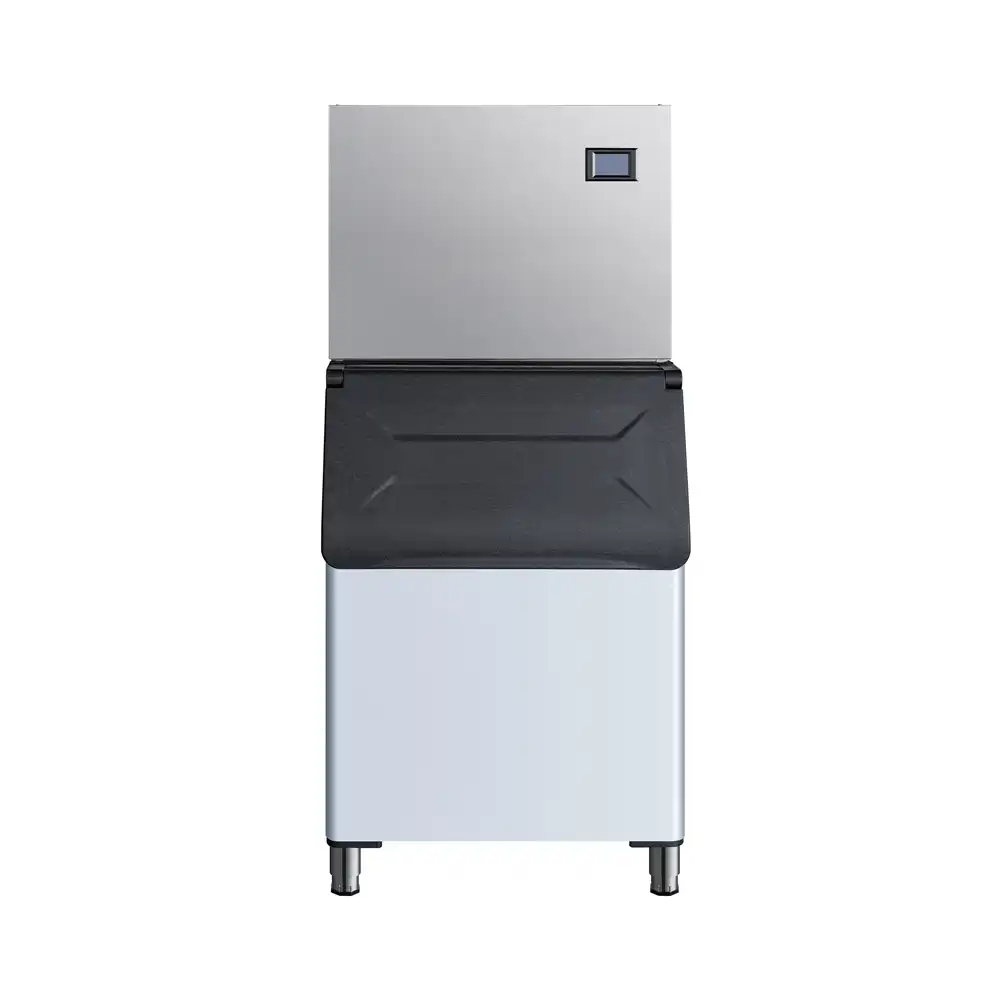
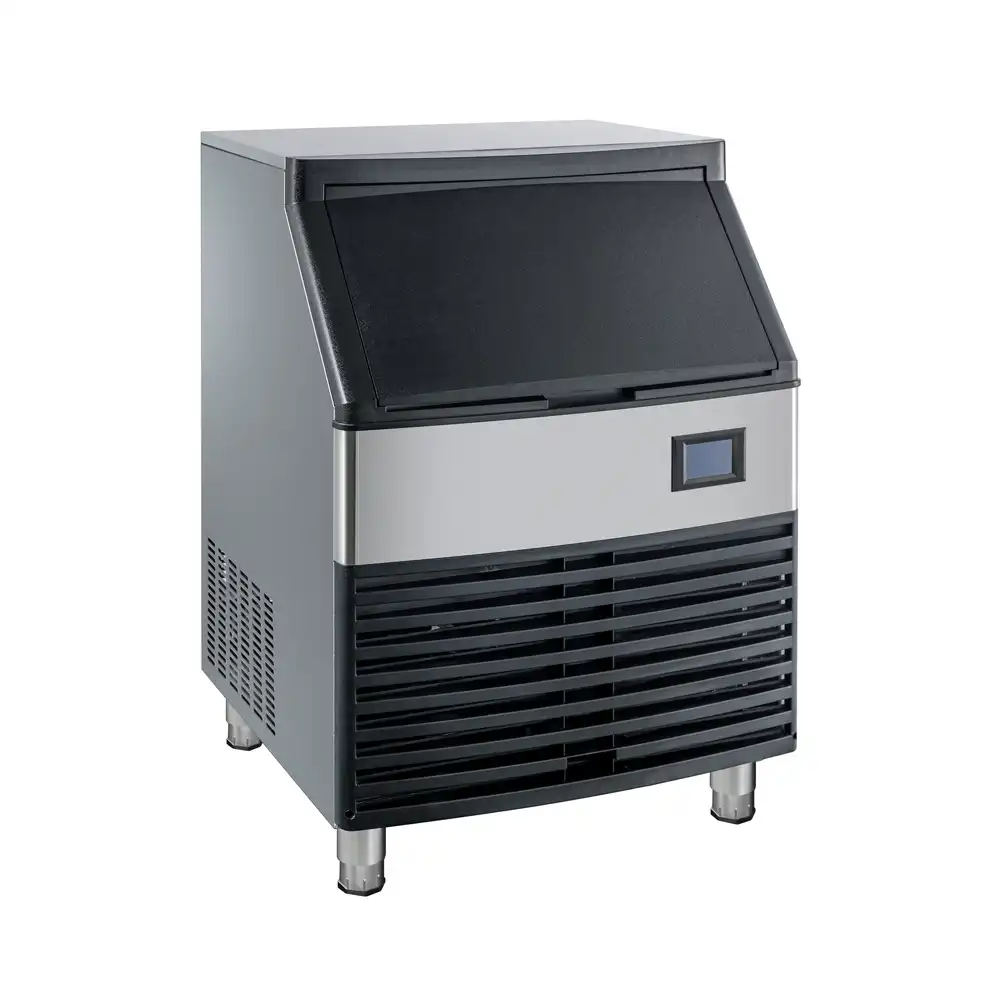
Production also favors cube ice. Cube machines use a defined freeze-and-harvest cycle, and the solid shape is easier to transport, scoop, and store without clumping as heavily as flake or nugget ice. For example, the Camay FB210A cube ice machine is rated for 100 kg of ice per 24 hours, with 22 × 22 × 22 mm cube dimensions and a 45 kg storage capacity. That performance is a practical reference for restaurants, cafés, and bar wells where cube shape matches a broad drink menu.
Nugget Ice: The Soft, Chewable Favorite
Nugget ice, often called pellet or chewable ice, is made by compressing flaked ice into small porous pellets. The texture is soft and chewable, and the pellets absorb the flavor of the beverage around them. Many customers strongly prefer nugget ice in fountain sodas, iced coffee, and non-carbonated drinks because it cools quickly and is pleasant to chew.
For a bar operator, nugget ice creates two main trade-offs: faster melt and more involved maintenance. The porous structure requires consistent water filtration and sanitation to prevent mineral buildup, off-tastes, and microbial risk. Nugget ice machines also tend to have more moving parts around the extruder, so access for cleaning and service should be reviewed before purchase. Nugget ice works well in high-volume soft-drink service, but it is usually less suitable as the primary ice for spirit-forward cocktails where dilution must stay controlled.
Flake Ice: Fast Cooling and Display Flexibility
Flake ice is produced by scraping a thin layer of ice from a chilled cylinder, creating soft irregular flakes that can be shaped and packed around products. In a bar, flake ice is rarely the best choice for the customer-facing glass because it melts quickly and can dilute carbonated or spirit-forward drinks too fast.
Its real advantage is speed and contact. Flake ice cools bottles and cans faster than dense cubes because it covers more surface area. It also works well for frozen drink programs, garnish beds, seafood displays, and cold transfer pans. If a bar operates a raw bar or needs to chill bottles quickly behind the service well, flake ice can be a useful supporting ice type.
Ice Type by Bar Application
The best ice type depends on the specific station and drink style.
| Bar Application | Preferred Ice Type | Why It Works |
|---|---|---|
| Slow-sipping spirits and premium cocktails | Large or standard cube | Slow melt, predictable dilution |
| Highballs and well drinks | Standard or half cube | Controlled chilling without excessive foam |
| Fountain sodas and iced coffee | Nugget | Soft texture, flavor absorption, fast cooling |
| Frozen cocktails and blended drinks | Flake or nugget | Blends quickly and portions easily |
| Rapid bottle and can chilling | Flake | High surface contact speeds cooling |
| Seafood or garnish displays | Flake | Moldable and visually clean |
Matching Ice Type to Peak-Hour Workflow
Service speed is as important as ice shape. A bar should stage cube ice near the well for bartender access and keep a backup bin within reach for peak periods. If the menu is soft-drink heavy, nugget ice should be placed in the high-volume service path, and the machine should be sized for a run of consecutive fountain drinks rather than average daily use alone. If the bar uses flake ice for bottle chilling or displays, the melt water must drain properly so the station does not become wet or unsanitary.
For beverage and ingredient storage around the ice well, <Ultimate Buyers Guide for Commercial Reach In Refrigerators> covers capacity planning and reach-in layout for busy bar stations.
After the ice type is matched to the drink menu, the remaining decisions are capacity, footprint, water quality, and service access. These should be resolved before the machine is purchased, not after the first busy weekend.
Commercial Ice Machine Selection Criteria
A commercial ice machine specification should cover daily output, storage bin capacity, ambient conditions, water filtration, and cleanability. Automatic ice makers used in commercial service are generally specified to meet NSF/ANSI 12, which covers food-contact materials, construction, and sanitation requirements [2].
Water quality directly affects ice quality. Hard water accelerates scale and mineral buildup, while poor inlet water can create off-tastes or reduce harvest performance. Filtration and routine descaling should be part of the purchase plan. Energy and water use also vary by machine design and certification. ENERGY STAR certified commercial ice makers are designed to use less energy and water than standard units in the same class [3].
Daily ice output is best calculated from drink count rather than a single rule. The bars I work with typically review peak-hour drink mix, glass fill weight, and a reserve for spillage, garnish beds, and peak surge. A machine that meets only average demand will run into shortages on the busiest shifts, while a heavily oversized machine wastes floor space, water, and energy.
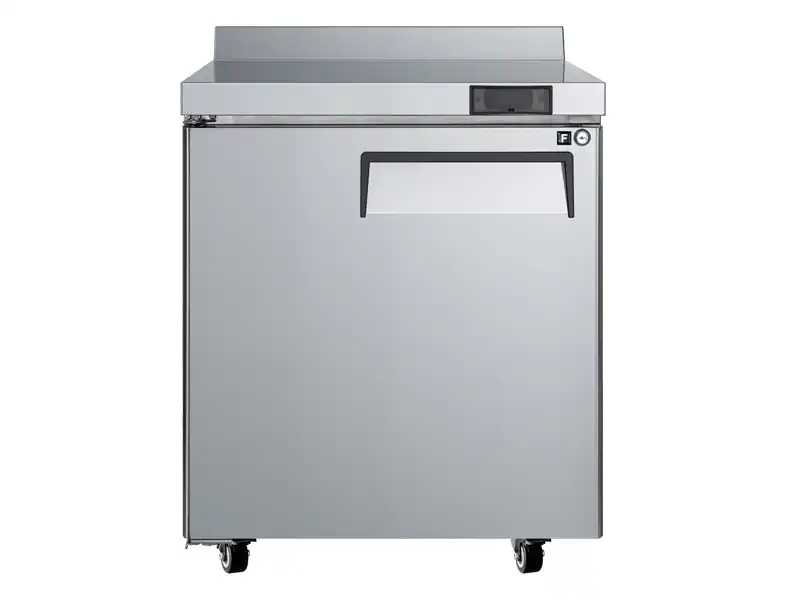
If the bar uses undercounter refrigeration for mixers, citrus, and garnishes, the ice maker and cold storage should be planned together so the service well is compact and the bartender can work without extra steps. That is why Camay equipment is often specified as a system: cube ice production supported by reach-in, undercounter, or worktop refrigeration around the bar.
If you are selecting a machine now, contact Sales@hzcamay.com or +86 181 5720 2219 with your drink menu and peak-hour workflow. Our engineering team can help specify ice type, production capacity, bin storage, and water filtration.
Build a Reliable Ice Program for Your Bar
Choosing cube, flake, or nugget ice is not a matter of one being universally better. It is about matching physical behavior to the drink program and the rhythm of service. Cube ice offers the most everyday control, nugget ice adds customer-facing softness and speed for soft drinks, and flake ice supports rapid chilling, display, and blending work. Many successful bars use more than one type, but each additional ice form means another machine, another cleaning routine, and another point of maintenance.
At Zhejiang Kaimei Catering Equipment Co., Ltd., we manufacture Camay commercial refrigeration and ice equipment for restaurants, hotels, cafés, and bar operations. Our team supports partners with product selection, OEM/ODM requirements, and long-term equipment planning. If you are building a new bar or upgrading an existing ice system, contact us at Sales@hzcamay.com or +86 181 5720 2219 to discuss the right specification for your service style.
FAQ
Which ice type is best for a cocktail bar?
Cube ice is usually the best primary choice for a cocktail bar. Dense cubes melt slowly, allow better dilution control, and hold their shape in spirit-forward drinks. Large-format cubes are especially useful for premium slow-sipping cocktails.
Is nugget ice worth the extra maintenance for a bar?
Nugget ice can be worth the maintenance if the bar sells a high volume of fountain sodas, iced coffee, or other non-carbonated drinks where customers prefer a soft chewable texture. Bars that focus on classic cocktails may not need it and may prefer cube ice for better dilution control.
Does flake ice work for regular bar drinks?
Flake ice is not usually ideal for regular carbonated or mixed bar drinks because it melts quickly and can dilute the drink. It is better for frozen drinks, rapid bottle chilling, garnish displays, and seafood presentation.
How do I calculate daily ice production for a bar?
Use drink count and glass fill weight rather than a single generic number. Review your peak-hour drink mix, calculate the ice weight per drink, and add a reserve for surge periods, spillage, and display or garnish stations. The machine should be able to meet the rush, not only the daily average.
What maintenance does an ice machine need to keep bar ice safe?
An ice machine needs scheduled cleaning, sanitizing, water filtration, and descaling based on water hardness and usage. Drains, bins, and ice scoops should be kept clean and dry where possible. Ice should always be handled as food, using clean scoops and covered storage [1].
References
[1] U.S. Food and Drug Administration, “Food Code,” 2022. [Online]. Available: https://www.fda.gov/food/fda-food-code/food-code-2022
[2] NSF International, “NSF/ANSI 12: Automatic Ice Making Equipment,” Ann Arbor, MI, USA. [Online]. Available: https://www.nsf.org/standards/nsf-ansi-12-automatic-ice-making-equipment
[3] U.S. Environmental Protection Agency, “ENERGY STAR Commercial Ice Makers,” Washington, DC, USA. [Online]. Available: https://www.energystar.gov/products/commercial_ice_makers
If you’re interested, check out these related articles:
Boost Kitchen Efficiency Workflow Optimization with Chef Base Fridges
Boost Efficiency Energy Efficient Chef Base Units for Commercial Kitchens
How to Choose the Best Chef Base Refrigerator for Your Kitchen
Ultimate Buyers Guide for Commercial Reach In Refrigerators