

A commercial under-counter fridge is one of the hardest-working appliances in a busy kitchen, expected to hold temperature reliably through hot cooks’ lines, constant door openings, and the weight of full gastronorm pans. When the unit fails, it disrupts prep rhythms and puts inventory at risk, so the real purchase question is not just capacity or price but how long the fridge will last and what it will cost to keep running. Based on 26 years of engineering and manufacturing commercial refrigeration systems, I have seen that a fridge assembled from real 304 stainless steel, a branded compressor, and properly foamed insulation can reach a service life above 10 years with negligible repair cost, while a unit that cuts corners on these three elements drains money from the first year. This analysis breaks down the specific durability factors and maintenance costs that separate a long-term asset from a recurring headache.
Material Quality Drives Durability
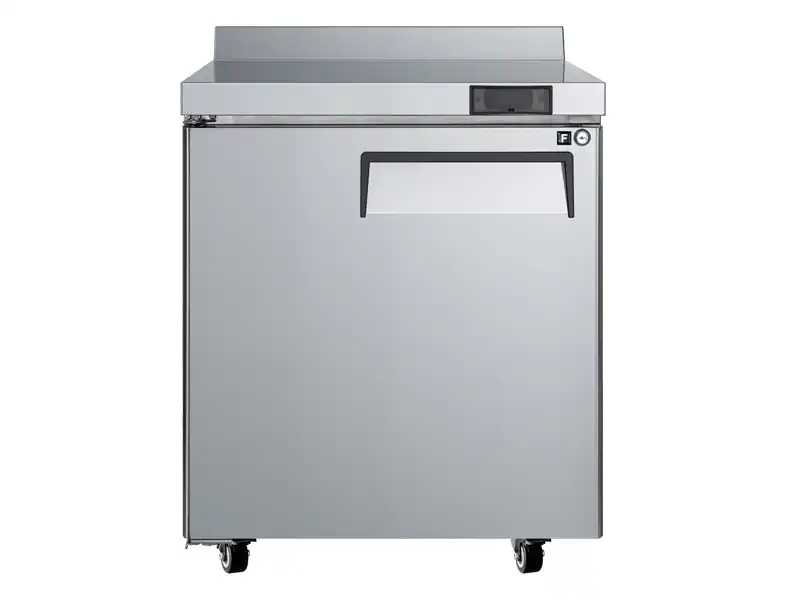
The strongest predictor of how an under-counter fridge ages is the grade and gauge of the materials used in its construction. In commercial kitchen conditions—regular exposure to hot equipment, acidic cleaning agents, and physical knocks—the difference between a 201 stainless steel cabinet and a 304 stainless steel cabinet becomes obvious within 18 to 24 months. 304 stainless, which Camay uses on all under-counter models such as the MTR-48 and MTR-60, holds its finish and resists pitting corrosion even in humid kitchen environments. A lower-grade stainless will eventually develop rust spots around door seals and hinge mounting points, weakening the frame and leading to seal failure. The door itself must also take daily abuse; a self-closing design with a recessed handle, as found on the MTR series, protects the gasket from edge damage and reduces the chance of warm air leaks. In my experience, a well-built stainless cabinet with a reinforced door hinge will remain dimensionally stable and airtight for more than a decade, while a thinner cabinet will start showing gap issues and hinge fatigue after the third or fourth year.
Maintenance Costs Over the Equipment Lifecycle
Year-by-year maintenance spending on a commercial under-counter fridge follows a predictable curve that is driven almost entirely by component quality at manufacture. In the first five years, a fridge built with a Cubigel compressor and properly cycled automatic defrost should need nothing beyond routine cleaning of the condenser coil and occasional gasket inspection. For a unit like the MTR-48, the polyurethane insulation and R290 refrigerant system are designed so that the compressor duty cycle remains moderate even under heavy use, which reduces wear on the electrical components and avoids early control board failure. The real cost divergence happens between years five and eight. A fridge with a low-cost compressor and weak condenser coil begins to pull higher amperage as the compressor loses efficiency, raising the electricity bill and stressing relays and capacitors. When the compressor finally fails, a replacement including labour can cost half the original unit price, effectively turning a “value” purchase into an above-budget total cost of ownership. I have seen program after program where the cumulative maintenance cost of a budget fridge overtakes the Camay purchase price within six years, with the added business cost of a broken fridge in the middle of service.
| Cost Type | Years 1–5 (Quality-Built) | Years 1–5 (Budget-Built) | Years 5–8 (Quality-Built) | Years 5–8 (Budget-Built) |
|---|---|---|---|---|
| Coil cleaning / gasket check | $0–50/year | $0–50/year | $50–100/year for gasket replacement | $100–200/year for parts and labour |
| Compressor failure risk | Very low | Moderate | Low | High (often full replacement) |
| Energy efficiency decline | Minimal | Noticeable drop | Slight decline | Significant spike in power usage |
How Compressor Choice Affects Long-Term Value
The compressor is the heart of the fridge, and the difference between a recognized brand and an unbranded unit is the difference between reliable thermostatic control and gradual performance erosion. Camay under-counter fridges use Cubigel compressors, which maintain their suction and discharge volumes consistently over hundreds of thousands of cycles. A refrigerant like R290, combined with a ventilated cooling system, further reduces the thermal stress on the compressor because the heat from the condenser is removed effectively. This means the compressor does not have to run longer cycles to maintain setpoint, even in a kitchen where ambient temperature often exceeds 35°C. By contrast, an unbranded compressor in a poorly ventilated cabinet will overheat, suffer insulation breakdown of the motor windings, and eventually lock up. Replacing a compressor on an under-counter unit is a major repair—often not worthwhile economically—so the compressor brand is effectively a durability guarantee. For a buyer specifying equipment for a chain of restaurants, selecting a fridge with a Cubigel or equivalent compressor and a forced-air condenser coil is one of the simplest ways to reduce warranty claims and unplanned maintenance across the fleet.
If your kitchen layout places the under-counter fridge near a cooking line where ambient temperatures are routinely high, it is worth confirming the compressor’s operating range and cooling system type with your supplier before finalizing the specification. Reaching out at Sales@hzcamay.com can help you match the right unit to your heat conditions.
Insulation and Energy Efficiency Considerations
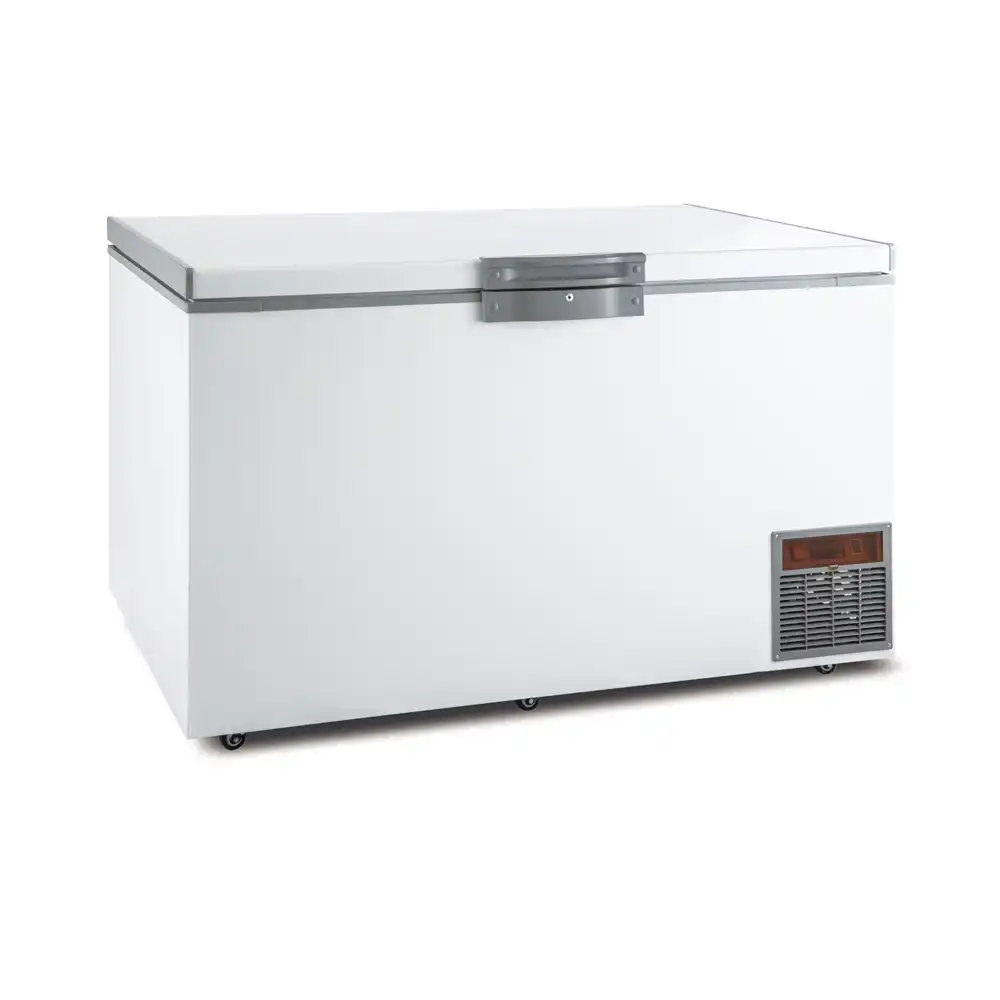
Foamed-in insulation is easy to overlook, but it controls two large cost drivers: energy consumption and moisture ingress. Camay uses CFC-free polyurethane/cyclopentane insulation that is applied under pressure into the cabinet walls, eliminating gaps and cold bridges. This thermal integrity keeps the R290 refrigerant loop efficient, so the compressor runs shorter cycles and uses less electricity. Over an 8–10 year lifespan, a well-insulated fridge can save several hundred dollars in reduced energy bills compared to a unit with thinner or uneven insulation. More importantly, high-quality insulation prevents condensation from forming inside the cabinet walls. If moisture migrates into the insulation foam, it degrades the insulating value and can freeze, causing bulging or metal fatigue in the outer skin. In coastal or high-humidity environments, this failure mode has killed many under-counter fridges prematurely. The polyurethane foam with cyclopentane we use is closed-cell and moisture-resistant, which is why we see a very low incidence of cabinet failure even in tropical export markets. For a buyer, the insulation specification should be as non-negotiable as the compressor brand—it directly influences the total cost of ownership.
Sourcing from a Reliable Manufacturer Reduces Risk
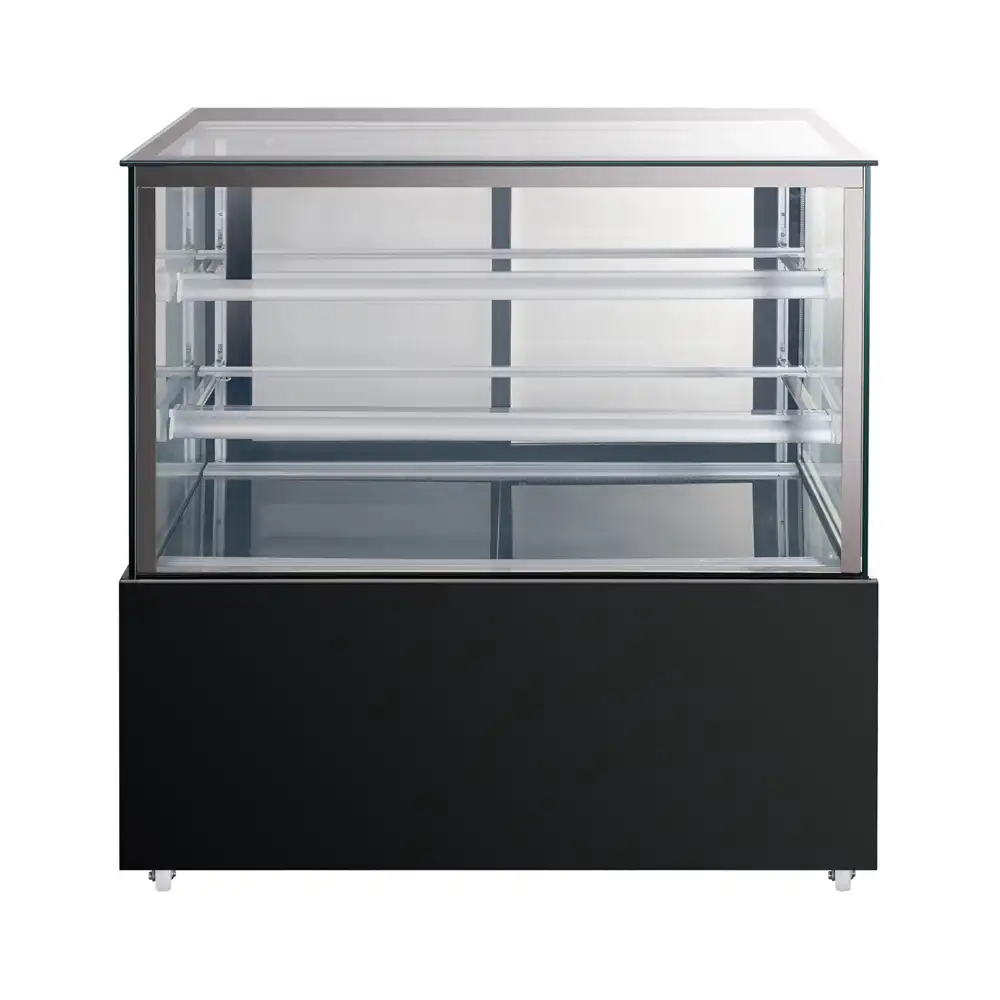
Even with the best component selection, the final assembly quality determines whether those components work together reliably for the intended lifespan. A fridge that is mass-produced without consistent quality control may have poorly aligned door hinges that stretch the gasket unevenly, or electrical connections that vibrate loose after a few months of compressor operation. When I walk through our production floor, the jigs and torque controls for door alignment are fixed so that every MTR-series unit comes off the line with the same seal compression, and every electrical terminal is clipped rather than soldered to survive vibration. This kind of production discipline is not visible in a spec sheet, but it shows up in a maintenance log—or the absence of one—over the years. Sourcing from a manufacturer that holds ISO 9001:2015, ISO 14001:2015, and ISO 45001:2018 certifications, and that regularly submits units for ETL, DOE, and ENERGY STAR testing, provides documentation that the build quality is repeatable and inspected. When comparing suppliers, ask for the production quality assurance plan and not just the unit features, because the features are only as good as the assembly that holds them together.
Questions Buyers Ask About Under-Counter Fridge Value
How do I compare total cost of ownership between two models?
Start by mapping out the expected lifespan and the likely repair costs in years five through eight. A unit with a Cubigel compressor, 304 stainless exterior, and polyurethane/cyclopentane insulation will typically run for 10–12 years with minimal repair beyond gasket replacement and coil cleaning. Budget models may cost 30% less upfront, but a compressor failure around year five or six can add 50% of the purchase price in a single repair. Factor in the energy cost savings from better insulation and a more efficient refrigerant circuit as well—those differences compound annually.
Is R290 refrigerant a durability risk or benefit?
In over two decades of working with R290, I have seen it perform reliably in under-counter applications. It runs at lower pressures than some older HFC refrigerants, which reduces stress on the compressor and piping joints, and it transfers heat efficiently, keeping the condenser side cooler. As a hydrocarbon, it requires the charging procedures to be exact, but once sealed, a well-brazed R290 system is leak-tight and stable. The flammability concern is managed by keeping charge sizes small and by using spark-free electrical components, which we design in from the start.
Does it matter whether the door is self-closing with a lock?
Yes, for durability it matters significantly. A self-closing door ensures the gasket seats firmly every time, which keeps cold air in and moisture out. The lock is a practical feature for storerooms, but from an engineering perspective, the hinge mechanism that enables self-closing also keeps the door aligned and reduces the twisting that eventually weakens welded door corners. In busy kitchens where staff move quickly, a door that can survive being nudged shut with a hip will outlast one that requires a careful pull.
What maintenance can I perform myself to extend the fridge’s life?
The two highest-impact tasks are cleaning the condenser coil every four to six weeks and inspecting the door gasket for cracks or flat spots. A dirty coil forces the compressor to work harder, raising its temperature and shortening its life. A compromised gasket lets humid air into the cabinet, which overloads the defrost cycle and can lead to ice build-up on the evaporator. Beyond that, keep the casters and cabinet exterior clean, and avoid blocking the ventilation grille—good airflow is free and protects the compressor more than any other single habit.
If your project involves multiple sites or you are comparing different under-counter fridge specifications for chain-wide rollout, sharing your part numbers and forecast with Sales@hzcamay.com allows us to confirm which models match your durability and cost expectations, and we can supply detailed lifecycle data from our quality records.
If you’re interested, check out these related articles:
Upright Freezer vs Refrigerator Key Differences Explained
Heavy Duty Chef Base Refrigeration for Efficient Commercial Kitchens
Essential Maintenance Tips for Your Commercial Chef Base Refrigerator
Optimizing Kitchen Efficiency with Integrated Worktop Refrigeration