

Energy-Saving Commercial Salad Tables: Design Principles and Application Strategies
Running a commercial kitchen means watching every line item, and refrigeration costs add up faster than most operators expect. Energy-saving commercial salad tables have become standard equipment for operations serious about controlling utility bills while keeping ingredients at safe temperatures. The technology has matured considerably over the past decade. Units built today can cut power consumption by a third or more compared to equipment from even five years ago, and the savings compound month after month. What makes the difference comes down to two things: how the equipment is designed and how it gets used day to day.
The Financial and Operational Case for Efficient Refrigeration
Energy efficiency in commercial salad tables shows up directly on the monthly utility statement. High power consumption chips away at margins, and in food service, margins are already thin. Optimized refrigeration systems can reduce electricity use by 30-50% compared to older models, which means the payback period on new equipment is often shorter than operators assume.
The benefits extend beyond the electric bill. Energy-saving commercial salad tables maintain more consistent temperatures, which matters for ingredient quality. Temperature swings stress produce and proteins, shortening shelf life and increasing waste. Stable cold holding keeps lettuce crisp and proteins safe longer, reducing both spoilage costs and food safety risks.
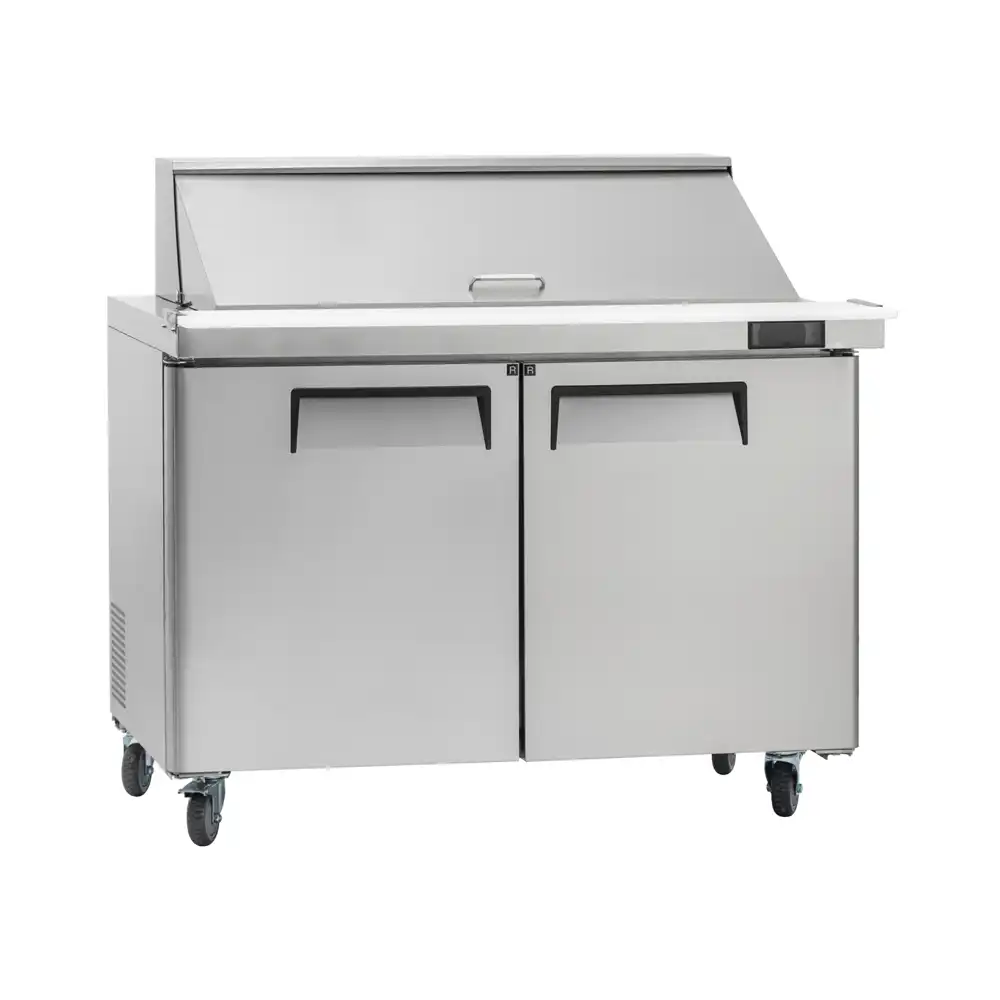
Regulatory pressure is also shifting. Health departments and sustainability certifications increasingly favor operations using efficient equipment. Consumer awareness has followed. Restaurants that can demonstrate environmental responsibility often find it resonates with customers. Units like the MSR-48M Salad Prep Table address both concerns through eco-friendly R290 refrigerant and foamed-in polyurethane insulation, meeting performance requirements while reducing environmental impact.
!13 cuft salad storage container for fridge
 ## How Design Determines Efficiency
Effective energy management starts at the engineering stage. Energy-saving commercial salad tables are built to minimize heat transfer and optimize cooling cycles through material selection, insulation techniques, and component placement. The R-value of insulation and the strategic arrangement of internal components determine how hard the system works to maintain temperature. Equipment designed with HACCP compliance in mind also ensures safe food holding temperatures throughout operation.
Insulation That Actually Performs
High-performance insulation is the foundation of efficient refrigeration. Polyurethane/cyclopentane foamed insulation, which is CFC-free, delivers excellent thermal retention. The material’s high R-value prevents heat from entering the cabinet, reducing the load on the compressor.
Thermal bridging presents a common problem in refrigeration design. Heat can bypass insulation entirely by traveling through structural components that connect the interior and exterior. Addressing this requires careful engineering of joints and supports. Food-grade stainless steel construction for both interior and exterior surfaces provides durability while maintaining thermal integrity. The combination keeps internal temperatures stable without forcing the refrigeration system to run constantly.
Component Placement and Airflow
Where components sit inside the unit affects how efficiently it operates. Compressor technology matters—Cubigel and Embraco compressors paired with high-efficiency fan motors draw less power while maintaining precise temperature control. But placement matters too. Strategically routed refrigerant lines improve heat exchange efficiency, and proper airflow design ensures consistent cooling throughout the cabinet rather than cold spots near the evaporator and warm zones elsewhere.
This kind of engineering attention means every component contributes to the overall efficiency rather than working against other parts of the system.
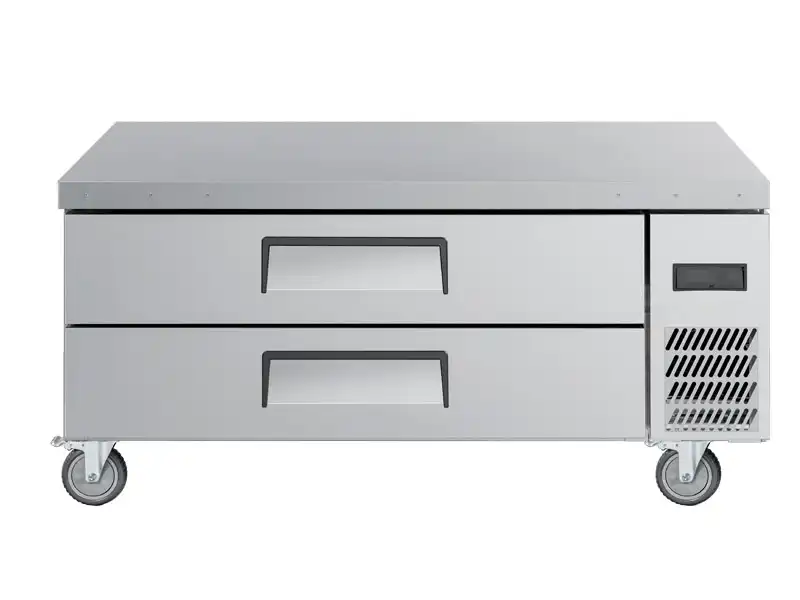
!Countertop cooking cooler 60 refrigeration chef base
 ## Operational Practices That Protect Your Investment
Design sets the ceiling for efficiency, but daily operation determines whether you actually reach it. Smart application strategies directly impact power consumption and equipment lifespan. Food loading patterns and ambient conditions influence refrigeration efficiency more than most operators realize.
Smart Controls and Remote Monitoring
Modern energy-saving commercial salad tables often include advanced controls that enable proactive energy management. Optional IoT and WiFi functions allow remote monitoring and intelligent temperature management, catching problems before they become expensive. Electronic thermostats provide precise regulation, preventing unnecessary cooling cycles that waste electricity and wear out components.
This level of automation supports predictive maintenance as well. Monitoring trends in temperature and compressor run time can identify developing issues early, reducing both repair costs and the risk of food safety incidents.
Loading and Temperature Practices That Matter
How food goes into the unit affects how hard it works. Overloading restricts air circulation, forcing the compressor to run longer to maintain temperature. Pre-chilling ingredients before loading reduces the refrigeration load significantly—warm product entering a cold cabinet creates a temperature spike that the system must work to correct.
Using lids on food pans whenever practical minimizes exposure to ambient air and helps maintain stable internal temperatures. Regular temperature logging serves both compliance and efficiency purposes, providing documentation for health inspections while also revealing patterns that might indicate developing problems.
These practices prevent the common mistake of loading hot or room-temperature food into refrigerated units, which stresses the system and compromises food safety.
Choosing Equipment That Delivers Long-Term Value
Selecting energy-saving commercial salad tables requires looking beyond the purchase price. Equipment with recognized energy ratings, such as ENERGY STAR certification, has been independently verified for efficiency. Features to prioritize include eco-friendly refrigerants like R290, robust insulation, and smart digital controls.
Manufacturer reputation matters for equipment that needs to perform reliably for years. Warranty terms and after-sales support indicate how confident a manufacturer is in their product and how accessible help will be when you need it.
Here’s how several energy-efficient models compare:
| Model | Classification | Capacity (L/Cuft) | Internal Temp (°C/°F) | Refrigerant | Insulation Type | Certifications (Key) |
|---|---|---|---|---|---|---|
| MSR-48M | Salad Side Prep Table | 368 L / 13 Cuft | 0.5–5°C / 33–41°F | R290 | Polyurethane/Cyclopentane | ETL Safety, ENERGY STAR |
| MAR-60A | Chef Base | 117 L / 4.13 Cuft | 0.5–5°C / 33–41°F | R290 | Polyurethane/Cyclopentane | ETL, DOE, ENERGY STAR |
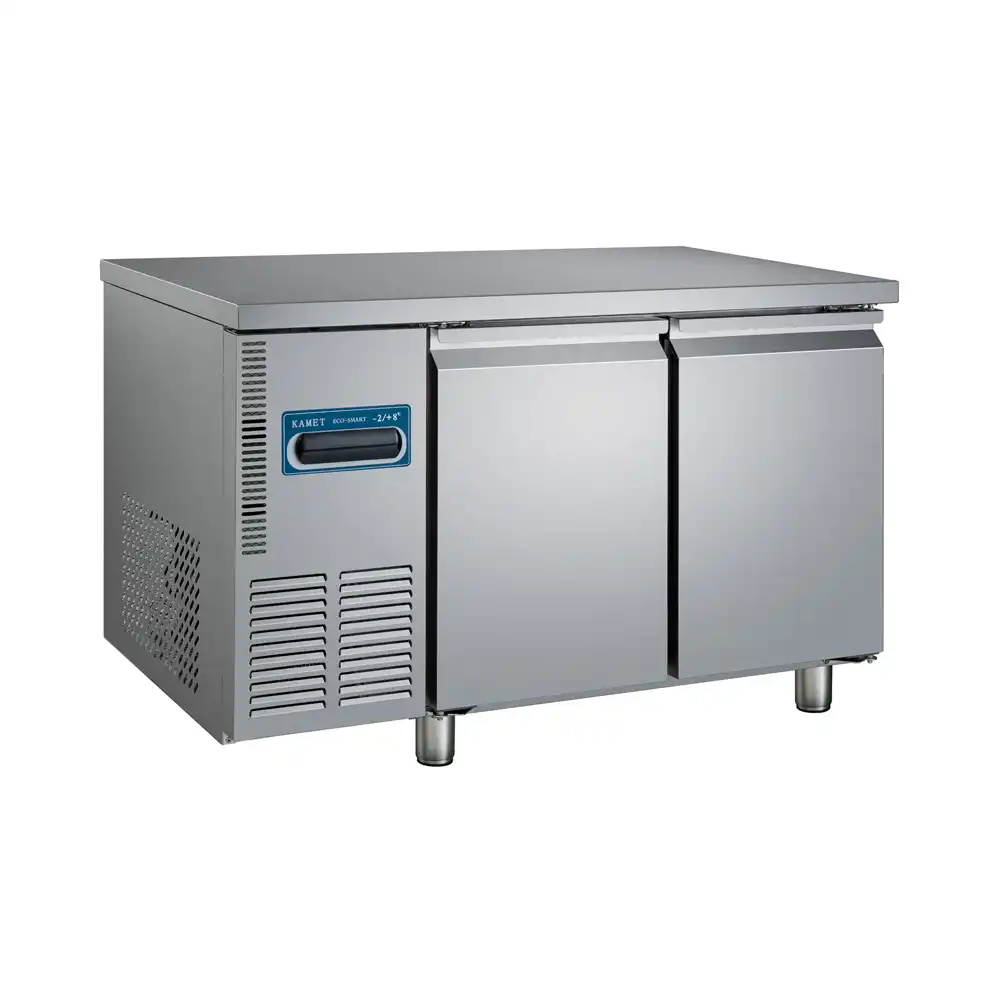
| MTR-48 | Refrigerator | 368 L / 13 Cuft | 0.5°C to 5°C / 33-41°F | R290 | Polyurethane/Cyclopentane | ETL, DOE, ENERGY STAR |
The MSR-48M features durable stainless steel construction with integrated foamed-in polyurethane insulation for temperature retention. ETL Safety and ENERGY STAR certifications verify both safety compliance and efficiency performance.
!Commercial Freezer Undercounter
 ## Maintenance Practices That Sustain Efficiency
Energy savings from commercial salad tables depend on consistent preventative maintenance. Regular upkeep preserves optimal efficiency and extends equipment lifespan. Neglecting maintenance leads to increased power consumption, premature component failure, and higher repair costs over time.
Key maintenance tasks include cleaning condenser coils routinely to ensure proper heat dissipation. Dirty coils force the compressor to work harder, increasing energy consumption and shortening component life. Checking refrigerant levels prevents efficiency losses from slow leaks. Inspecting door seals catches degradation before it allows significant cold air loss.
Thermostat calibration ensures accurate temperature control, preventing unnecessary cooling cycles. Periodic energy audits can identify optimization opportunities that routine maintenance might miss.
A 13-month after-sales service package that includes free spare parts and permanent online technical support makes comprehensive refrigeration system maintenance more accessible. Service contracts with qualified technicians provide additional protection for the investment.
Understanding the Return on Efficient Equipment
Calculating ROI for energy-saving upgrades involves comparing the initial investment against projected energy cost savings over time. The calculation reveals the payback period, demonstrating when the equipment begins generating net savings. Factors include purchase price, installation costs, and estimated annual energy reduction.
A new energy-saving commercial salad table typically costs more upfront than a basic model but can save 30-50% on electricity compared to older equipment. These savings accumulate over the equipment’s lifespan, often exceeding the price difference within a few years.
Many utility companies offer rebates for businesses investing in certified energy-efficient refrigeration equipment, improving the financial case further. Evaluating these factors for your specific operation clarifies whether upgrading makes sense now or should wait.
Frequently Asked Questions
How much energy can a modern energy-saving salad table save compared to older models?
Modern units typically reduce power consumption by 30-50% compared to older equipment through advanced insulation, efficient compressors, and smart controls. The actual savings depend on what you’re replacing and how the equipment is used, but the reduction translates to meaningful operational cost savings over the equipment’s lifespan. The MSR-48M Salad Prep Table exemplifies this efficiency-focused design approach.
What are the key features to look for in an energy-efficient commercial salad table?
Focus on high-density insulation such as polyurethane/cyclopentane, LED lighting, variable-speed compressors, electronic temperature controls, and eco-friendly refrigerants like R290. Energy certifications including ETL, DOE, and ENERGY STAR provide independent verification of efficiency claims. Manufacturer reputation for quality refrigeration equipment also indicates likely long-term performance.
How often should commercial salad table refrigeration systems be maintained to ensure optimal energy efficiency?
Professional service at least twice yearly keeps equipment operating efficiently. This should include cleaning condenser coils, checking refrigerant levels, inspecting door seals, and calibrating thermostats. Daily operational checks covering ventilation and cleanliness contribute to sustained energy savings and extend compressor life between service visits.
Partner with ZHEJIANG KAIMEI for Advanced Refrigeration Solutions
ZHEJIANG KAIMEI CATERING EQUIPMENT CO., LTD. provides expert guidance and innovative energy-saving commercial salad tables designed for specific operational requirements. As a professional one-stop-shop refrigeration equipment manufacturer, we help operations reduce costs and improve food preservation through efficient equipment selection. Contact our specialists for a personalized consultation. Phone: +8618157202219, Email: Sales@hzcamay.com.
If you’re interested, check out these related articles:
How to Choose the Best Chef Base Refrigerator for Your Kitchen
Essential Maintenance Tips for Your Commercial Chef Base Refrigerator
Upright Freezer vs Refrigerator Key Differences Explained
Boost Kitchen Efficiency Workflow Optimization with Chef Base Fridges
Choosing the Best Commercial Reach In Fridge for Your Restaurant