
We’re watching the field change quickly. By 2025, attention narrows to advanced technologies and sustainable practices. Businesses want solutions that protect products while lowering environmental impact and operating costs. The perspective here tracks those shifts and how they shape future-proof refrigeration infrastructure.
Technological Innovations Driving Future Refrigeration
The commercial refrigeration sector is undergoing a significant shift driven by technological advancements. These innovations target higher efficiency, better reliability, and sharper user control. We are seeing a move toward more sophisticated systems that leverage data and automation to improve performance across use cases from food service to ultra-low temperature storage.
IoT Enabled Smart Monitoring and Control
Integrating IoT (Internet of Things) into commercial refrigeration is reshaping how equipment is managed. IoT sensors and connectivity capture real-time data on key parameters like temperature and humidity. This enables remote monitoring, proactive issue resolution, and automated adjustments that cut downtime and operating costs. For instance, our Camay Commercial Worktop Refrigerator Cooler Fridge offers optional IoT and WiFi functions for intelligent monitoring, ensuring optimal temperature control between 0.5°C and 5°C. Similarly, the Camay 60” Countertop Refrigerated Chef Base also features optional IoT and WiFi for intelligent monitoring and management.
Advanced Compressor and Heat Exchange Systems
Improvements in compressor technology and heat exchange systems sit at the center of higher energy efficiency. Variable speed compressors, like those from Cubigel used in many of our products, adjust output to match cooling demands, reducing energy consumption. Microchannel heat exchangers deliver strong heat transfer in a compact design. Together, these advances drive meaningful energy savings and extend equipment lifespan. For example, the Cube Ice Making Machine (Model FB210A) utilizes a CUBIGEL compressor and a water-flow ice-making system for increased efficiency.
Sustainability Imperatives and Natural Refrigerant Adoption
Global environmental regulations and rising corporate responsibility are accelerating the shift to sustainable refrigeration practices. The industry is moving away from high Global Warming Potential (GWP) synthetic refrigerants toward natural alternatives. This transition is vital for reducing the carbon footprint of commercial refrigeration operations.
The Rise of CO2 and Propane Refrigerants
CO2 (R744) and propane (R290) are emerging as preferred natural refrigerants thanks to their ultra-low GWP. R290, for example, is utilized in our Camay Commercial Solid Door Undercounter and Camay Commercial Worktop Refrigerator Cooler Fridge, underscoring a commitment to eco-friendly solutions. These refrigerants offer strong thermodynamic properties, supporting energy-efficient commercial refrigeration. While CO2 systems require higher operating pressures, propane systems are highly efficient for smaller to medium-sized units. Adopting these natural refrigerants helps businesses comply with environmental mandates and achieve GWP reduction strategies.
Operational Excellence Through Integrated Cold Chain Solutions
Achieving operational excellence in commercial refrigeration involves more than efficient equipment; it calls for integrated cold chain solutions. These solutions leverage data analytics and greater visibility to streamline operations, minimize waste, and ensure food safety refrigeration.
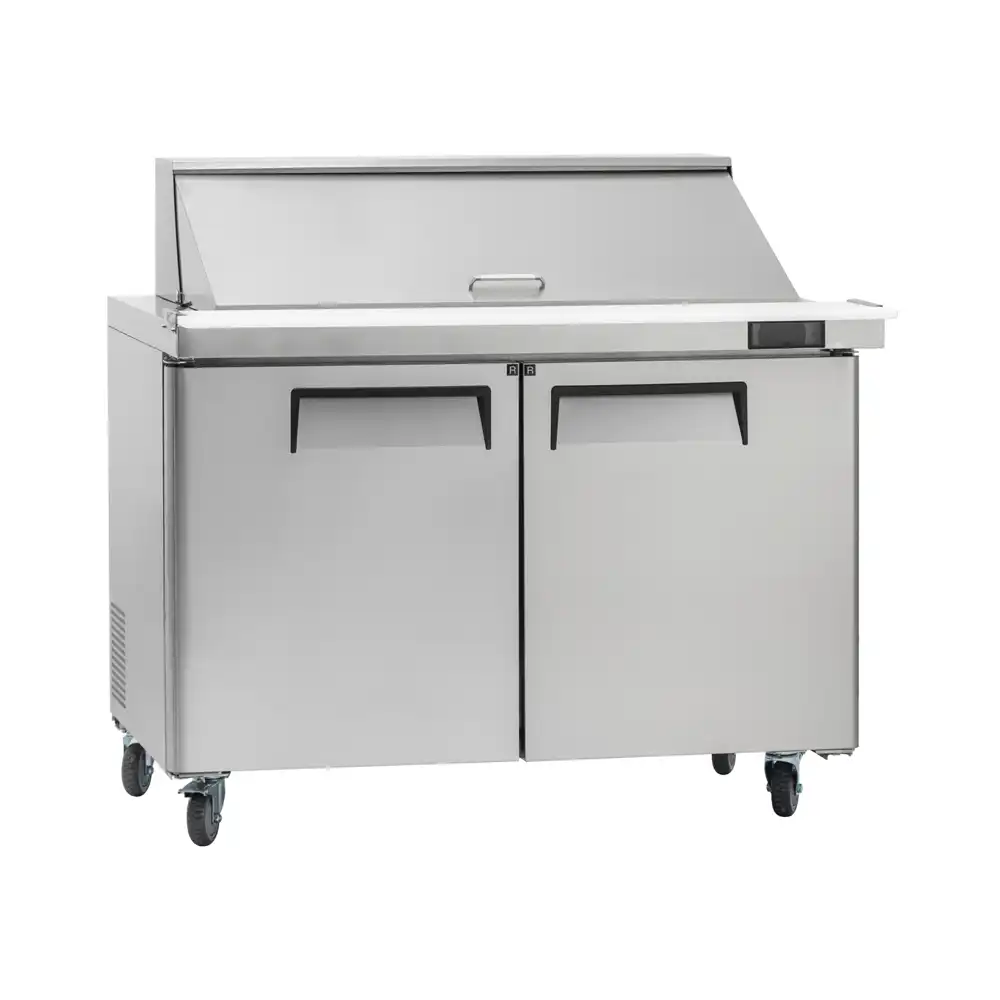
Modern systems support broad cold chain optimization. Remote monitoring refrigeration allows businesses to track conditions throughout the entire cold chain, from storage to transport. This capability is vital for maintaining product integrity and preventing spoilage. For example, our MSR-48M Salad Prep Table and various undercounter models feature smart digital temperature control systems with optional IoT and WiFi functions, facilitating precise temperature management and remote oversight. This level of control contributes directly to operational cost reduction by optimizing energy use and reducing product loss.
Article Recommendation: If you are looking to optimize your kitchen’s efficiency, explore our insights on how to choose the best commercial chef base refrigerator for your kitchen.
Market Dynamics and Future Investment Opportunities
The commercial refrigeration market reflects regulatory pressures, technological advances, and shifting customer expectations. These dynamics open new investment paths for businesses prioritizing efficiency and sustainability.
The refrigeration industry outlook for 2025 indicates continued growth in smart refrigeration systems and natural refrigerant technologies. Investment in cold storage solutions that are both energy-efficient and environmentally compliant will be critical. Businesses are increasingly seeking partners who offer complete solutions, from advanced equipment to expert installation and maintenance. For instance, the demand for ultra-low temperature storage, such as our -86°C ULT freezers for lab, highlights a specialized growth area driven by pharmaceutical and biological research needs. This market shift also emphasizes the importance of regulatory impact refrigeration, as compliance drives innovation and product development.
FAQs
What are the most significant commercial refrigeration trends expected by 2025?
By 2025, the most significant commercial refrigeration trends include the widespread adoption of smart, IoT-enabled systems for monitoring and control, a strong shift towards natural refrigerants like CO2 and propane, and a relentless focus on energy efficiency through advanced compressor and heat exchange technologies. These trends are driven by regulatory pressures, sustainability goals, and the demand for operational cost reductions.
How will smart technology impact commercial refrigeration efficiency?
Smart technology will profoundly impact commercial refrigeration efficiency by enabling real-time performance monitoring, predictive maintenance, and optimized energy consumption. IoT sensors will collect data on temperature, humidity, and equipment status, allowing for remote diagnostics, automated adjustments, and early detection of potential failures, significantly reducing downtime and operational costs. Our products, like the Camay Commercial Worktop Refrigerator Cooler Fridge, offer optional IoT and WiFi for smart digital temperature control.
Why are natural refrigerants a key trend in commercial refrigeration for 2025?
Natural refrigerants are a key trend for 2025 due to increasing global environmental regulations, such as the F-gas phase-down, targeting high Global Warming Potential (GWP) synthetic refrigerants. Natural alternatives like CO2 (R744) and propane (R290) offer ultra-low GWP, making them environmentally sustainable choices that help businesses comply with regulations and reduce their carbon footprint, aligning with broader sustainability imperatives. Many of our units, including the Camay Commercial Solid Door Undercounter, use R290 refrigerant.
Partnering for Future Refrigeration Solutions
We are committed to providing cutting-edge commercial refrigeration solutions that align with the trends of 2025. We offer advanced, energy-efficient, and sustainable equipment designed for your operational excellence. Contact us today to discuss your specific needs and strengthen your refrigeration infrastructure. Phone: +8618157202219, Email: Sales@hzcamay.com